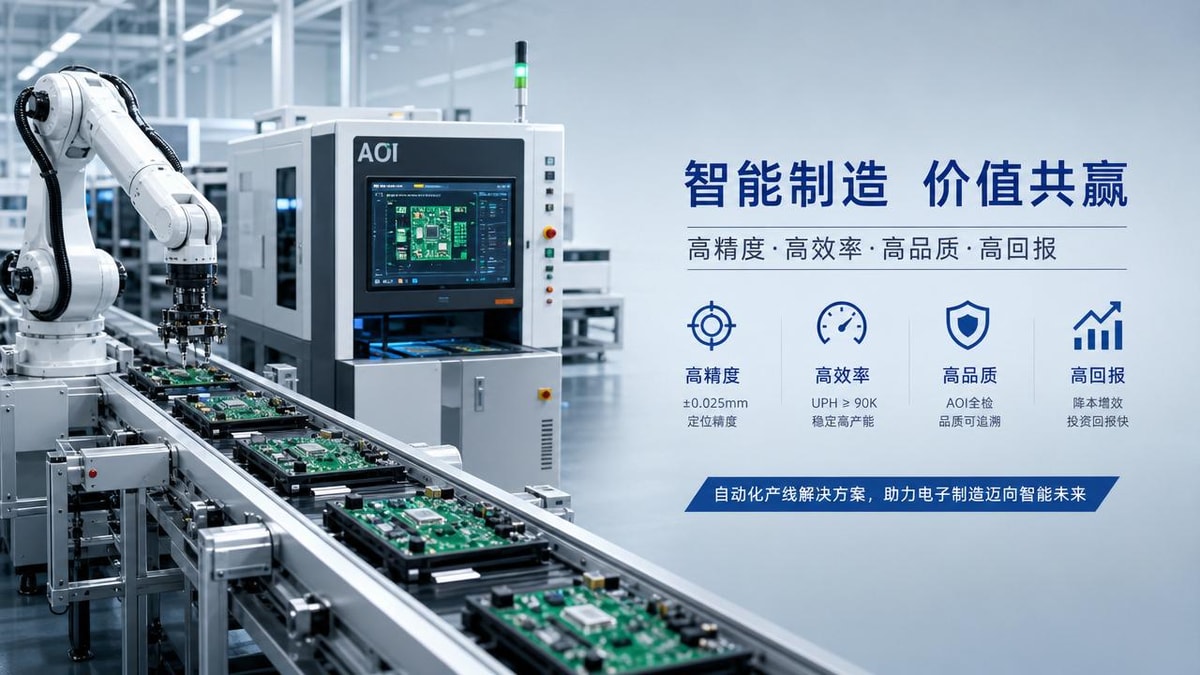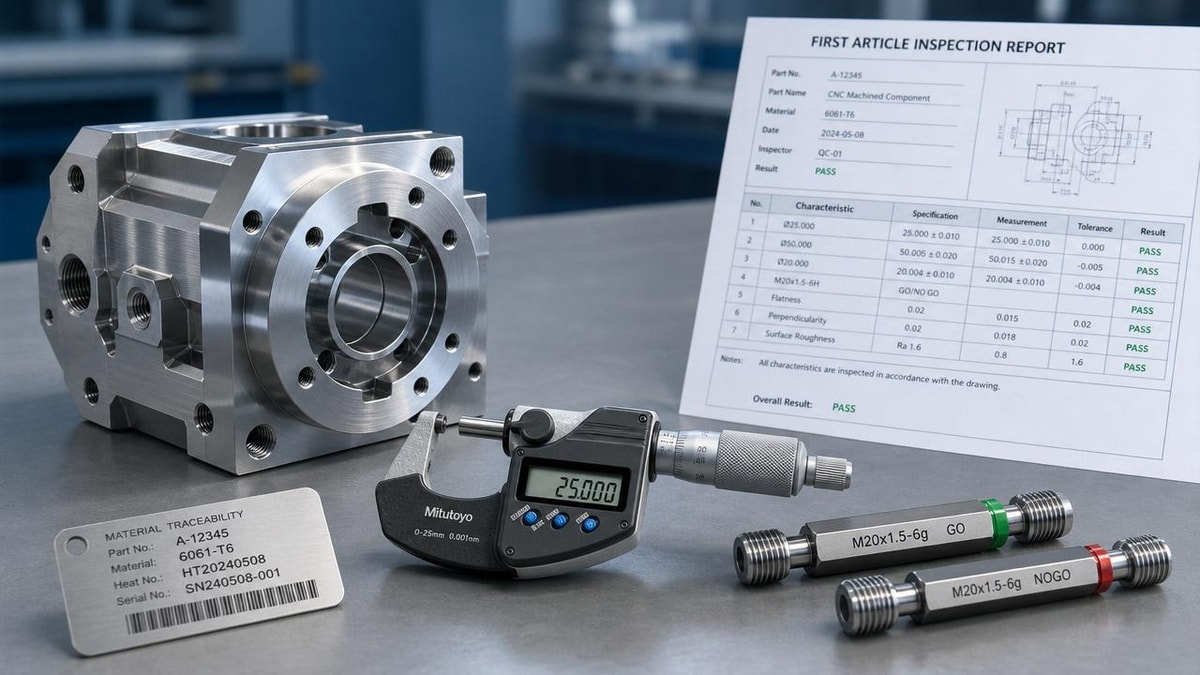
Smart manufacturing for pharma fails when data stays isolated
Smart manufacturing for pharmaceutical industry promises speed, compliance, and resilience, yet many initiatives stall when critical data remains trapped in disconnected systems. For enterprise decision-makers, this gap turns digital investment into operational friction. This article explores why isolated data undermines transformation and how integrated intelligence can unlock measurable value across pharma production, quality, and supply chains.
What smart manufacturing means in a pharmaceutical context
In broad terms, smart manufacturing for pharmaceutical industry refers to the use of connected digital systems, automated workflows, advanced analytics, and real-time operational visibility to improve how medicines are developed, produced, released, and delivered. Unlike conventional factory modernization, pharma transformation operates under stricter regulatory requirements, higher documentation standards, and more severe consequences for quality deviation. That means digital progress is not only about equipment automation. It is about creating trustworthy data flows across production, quality assurance, maintenance, planning, warehousing, and supplier management.
For many manufacturers, the vision includes electronic batch records, Manufacturing Execution Systems, laboratory integration, Industrial IoT monitoring, predictive maintenance, digital quality management, and planning tools that react to changes in demand or material availability. However, these tools create business value only when they share context. A machine alarm without batch history, a quality trend without supplier traceability, or a planning dashboard without shop-floor status cannot support confident decisions. In practice, smart manufacturing for pharmaceutical industry succeeds when data becomes connected, governed, and usable across functions.
Why the industry is paying closer attention now
Several structural pressures are pushing pharmaceutical companies toward smarter operations. First, global supply chains remain vulnerable to disruption, making planning accuracy and inventory visibility more important than before. Second, regulators increasingly expect strong data integrity, auditability, and controlled processes. Third, product portfolios are becoming more complex, with smaller batches, personalized therapies, and shorter commercialization windows. Fourth, cost pressure is rising at the same time that quality expectations remain non-negotiable.
These realities explain why enterprise leaders are investing in connected manufacturing programs. They want faster deviation resolution, stronger right-first-time performance, better overall equipment effectiveness, reduced waste, and more resilient networks. Yet the hardest challenge is often not technology selection. It is organizational and architectural fragmentation. Legacy systems, site-by-site implementations, isolated data ownership, and inconsistent master data all limit the return on digital investment.

How isolated data causes smart manufacturing programs to fail
The central failure pattern is simple: systems are digitized, but intelligence remains fragmented. A site may deploy modern sensors, an MES, or a quality platform, yet each system stores data in its own structure, with different naming conventions, access rules, and timing logic. Leaders then see multiple dashboards but no shared operational truth. Instead of accelerating decisions, the organization spends time reconciling reports, validating numbers, and escalating issues manually.
In pharmaceutical operations, this fragmentation creates five major business risks. The first is slow exception handling. If a deviation appears during blending, compression, filling, or packaging, teams need immediate access to equipment data, environmental conditions, operator actions, batch genealogy, and lab results. When those records sit in separate applications, root-cause analysis becomes slower and more subjective.
The second risk is weak release efficiency. Batch disposition depends on complete, accurate, reviewable data. When review by exception is impossible because records are not integrated, quality teams are forced back into manual verification. This extends cycle times and ties up working capital.
The third risk is poor planning responsiveness. Demand planners and plant schedulers cannot optimize throughput if they lack real-time visibility into machine status, material shortages, changeover readiness, and quality holds. As a result, service levels suffer or inventory rises unnecessarily.
The fourth risk is underused analytics. AI and advanced analytics require clean, contextualized, and governed data. Many companies talk about predictive quality or predictive maintenance, but their datasets remain incomplete or inconsistent across sites, making scaling difficult.
The fifth risk is compliance exposure. Data gaps, duplicate entries, and unclear audit trails weaken confidence during inspections. In a regulated environment, disconnected systems are not only inefficient; they can become a governance liability.
A practical overview of where integration matters most
For decision-makers evaluating smart manufacturing for pharmaceutical industry, it helps to focus on the operational zones where integrated data delivers the clearest impact. The table below summarizes the most common areas.
The business value for enterprise decision-makers
The strongest case for smart manufacturing for pharmaceutical industry is not that it looks innovative. It is that integrated intelligence improves business performance in measurable ways. For chief operations officers, it can increase line utilization and plant agility. For quality leaders, it can reduce investigation backlog and strengthen data confidence. For supply chain executives, it can improve planning reliability and reduce disruption response time. For finance stakeholders, it can unlock better asset efficiency and lower the hidden costs of manual coordination.
Importantly, value does not come only from one breakthrough project. It often emerges from the removal of recurring friction: duplicate data entry, delayed approvals, inconsistent KPIs, slow escalations, and poor cross-site comparability. When digital systems are connected, organizations can build a more reliable operating model. They can detect process drift sooner, standardize best practices faster, and support network-level decision-making with less ambiguity.
This is where high-quality market and technology intelligence also matters. Platforms such as TradeNexus Pro help enterprise leaders interpret not just the tools available, but the broader supply chain shifts, manufacturing priorities, and integration patterns shaping long-term competitiveness. In sectors where regulatory discipline and operational complexity intersect, informed strategy is as important as software deployment.
Typical application paths in pharma manufacturing
Although the keyword smart manufacturing for pharmaceutical industry can sound broad, most real-world programs follow a set of recognizable paths. These paths differ by maturity, product type, and site complexity, but they usually cluster around four priorities.
1. Digital batch execution
Companies replace fragmented paper and siloed execution records with connected batch workflows. This supports stronger traceability, more consistent process adherence, and faster review cycles.
2. Integrated quality operations
Lab data, deviation management, environmental monitoring, and CAPA processes are linked to production context. This improves root-cause investigations and supports proactive quality management.
3. Real-time asset and process visibility
Sensors, historian data, and maintenance systems are connected to identify abnormal behavior early. This is especially valuable for high-value production assets, utility systems, and critical cleanroom environments.
4. End-to-end planning and supply synchronization
Production status, material availability, supplier signals, and warehouse information are aligned to support more resilient planning. This helps organizations absorb shocks without compromising service or compliance.
What organizations should evaluate before scaling
Before expanding smart manufacturing for pharmaceutical industry across sites or product lines, leaders should assess readiness in a disciplined way. The first question is whether critical data objects are defined consistently. If materials, equipment, process steps, deviations, and product hierarchies mean different things across systems, integration will remain fragile.
The second question is whether governance is clear. Data ownership, change control, validation requirements, access management, and lifecycle accountability must be explicit. Smart manufacturing initiatives often slow down not because teams resist change, but because governance was treated as an afterthought.
The third question is whether use cases are prioritized by business value rather than technical novelty. It is tempting to launch AI pilots before solving foundational integration gaps. In regulated manufacturing, the more sustainable sequence is usually to connect core workflows first, then layer analytics on top.
The fourth question is whether scale has been designed from the beginning. A successful single-site deployment does not automatically become a global model. Template design, interoperability standards, validation strategy, and local operating differences must be addressed early to avoid expensive rework.
Practical recommendations for a more connected manufacturing strategy
A pragmatic strategy starts with a narrow but high-impact integration point. For some companies, that is batch execution linked to quality review. For others, it is production status connected to planning and inventory decisions. The key is to choose a process where fragmented data already creates visible cost, delay, or compliance risk.
Next, establish a data architecture that supports context, not only collection. Many organizations gather large volumes of machine and transaction data but fail to map it to product, lot, recipe, operator, and event relationships. Context is what turns raw signals into actionable manufacturing intelligence.
It is also important to align operational technology and enterprise technology teams. Smart manufacturing for pharmaceutical industry sits at the intersection of equipment control, business systems, quality governance, and cybersecurity. If these groups work in silos, the transformation will reproduce the very fragmentation it aims to solve.
Finally, measure success through operational outcomes. Useful metrics include deviation closure time, batch review cycle time, schedule adherence, unplanned downtime, right-first-time performance, and release lead time. These indicators show whether integration is changing real work, not just increasing software usage.
A closing perspective for leaders shaping the next phase
The future of smart manufacturing for pharmaceutical industry will not be defined by the number of digital tools a company owns. It will be defined by whether those tools create one operational language across manufacturing, quality, and supply chain functions. Isolated data turns modernization into a patchwork of local improvements. Integrated data turns it into a strategic capability.
For enterprise decision-makers, the lesson is clear: prioritize connected intelligence over disconnected digitization. Build around trusted data models, cross-functional workflows, and scalable governance. Organizations that do so will be better positioned to improve compliance, accelerate release, absorb supply volatility, and make smarter capital decisions. In a market where resilience and accountability matter as much as speed, that is where lasting advantage will be created.
Get weekly intelligence in your inbox.
No noise. No sponsored content. Pure intelligence.
 May 04, 2026FDA AI Diagnostic Software Guidance: Continuous Validation for Overseas FirmsFDA AI Diagnostic Software Guidance: Continuous Validation for Overseas Firms
 May 04, 2026MIIT Launches Export Compliance Support for Warehouse RoboticsMIIT Launches Export Compliance Support for Warehouse Robotics
 May 04, 2026India BIS Mandates ISI Certification for Smart Home Devices from July 2026India BIS Mandates ISI Certification for Smart Home Devices from July 2026
 May 04, 2026Global Shipping Alliance Raises Heavy-Lift Surcharges from May 2026Global Shipping Alliance Raises Heavy-Lift Surcharges from May 2026
 May 04, 2026GCC EV Charging Certification Unified: 35% Cost Cut for Chinese ExportersGCC EV Charging Certification Unified: 35% Cost Cut for Chinese Exporters
 May 04, 2026TÜV Rheinland Updates IoT Security Standard with AI Voice Data AnonymizationTÜV Rheinland Updates IoT Security Standard with AI Voice Data Anonymization
 May 04, 2026Yangshan Port Launches Green Energy Equipment Express LaneYangshan Port Launches Green Energy Equipment Express Lane
 May 04, 2026Vietnam Enforces Local IoT Certification for Smart Home Devices from May 2026Vietnam Enforces Local IoT Certification for Smart Home Devices from May 2026
 May 04, 2026US CBP Launches Battery Cargo Inspection: ESS Export Delays to 7–12 DaysUS CBP Launches Battery Cargo Inspection: ESS Export Delays to 7–12 Days
 May 04, 2026EU SVHC Update Effective May 1, 2026: Impact on Electronic Components ExportsEU SVHC Update Effective May 1, 2026: Impact on Electronic Components Exports
 May 04, 2026Portable power stations: what matters more than wattage on paperPortable power stations: what matters more than wattage on paper
 May 04, 2026Automotive injection molding machines and the scrap rate problemAutomotive injection molding machines and the scrap rate problem
 May 04, 2026Smart thermostats save energy only when setup is done rightSmart thermostats save energy only when setup is done right
 May 04, 2026Why TWS earbuds sound great in ads but not on callsWhy TWS earbuds sound great in ads but not on calls
 May 04, 2026Industrial robotics for material handling: where downtime startsIndustrial robotics for material handling: where downtime starts
 May 04, 2026LiFePO4 battery lifespan drops faster under these conditionsLiFePO4 battery lifespan drops faster under these conditions
 May 04, 2026Solar grid systems: when storage changes the project mathSolar grid systems: when storage changes the project math
 May 04, 2026Smart manufacturing for pharma fails when data stays isolatedSmart manufacturing for pharma fails when data stays isolated
 May 04, 2026Wearable technology trends that are finally useful in 2026Wearable technology trends that are finally useful in 2026
 May 04, 2026Bluetooth speakers: why battery life claims often miss real useBluetooth speakers: why battery life claims often miss real use
 May 04, 2026Home automation systems that solve everyday annoyances firstHome automation systems that solve everyday annoyances first
 May 04, 2026Solar street lights that underperform after the first rainy seasonSolar street lights that underperform after the first rainy season
 May 04, 2026Why sheet metal bending services in Canada cost more than expectedWhy sheet metal bending services in Canada cost more than expected
 May 04, 2026Factory automation systems for electronics and the ROI gapFactory automation systems for electronics and the ROI gap
 May 04, 2026OEM machined parts supplier Vietnam: quality checks that matterOEM machined parts supplier Vietnam: quality checks that matter
 May 04, 2026What to check before choosing a 5 axis machine for defenseWhat to check before choosing a 5 axis machine for defense
 May 04, 2026Smart grid solutions that fix peak load without major rebuildsSmart grid solutions that fix peak load without major rebuilds