Automotive injection molding machines and the scrap rate problem
For quality control and safety teams, scrap is more than wasted material—it signals unstable processes, rising costs, and compliance risk. In automotive production, choosing the right plastic injection molding machine for automotive applications can directly affect part consistency, defect rates, and traceability. This article explores why scrap happens, how machine capability influences outcomes, and what manufacturers can do to improve quality performance.
Why scrap rates remain a critical issue in automotive molding
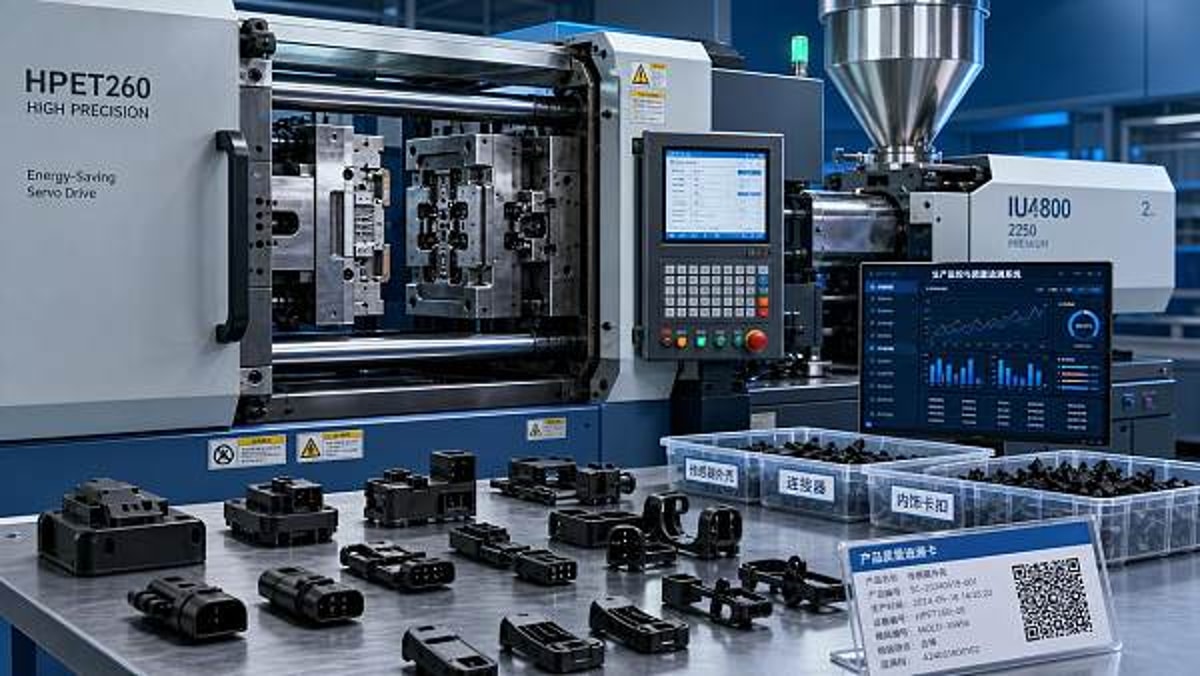
In automotive supply chains, scrap is rarely an isolated shop-floor problem. It affects part cost, delivery reliability, customer complaints, warranty exposure, and internal audit performance. For quality control and safety managers, a high scrap rate often points to a deeper mismatch between tooling, material behavior, machine stability, and process discipline.
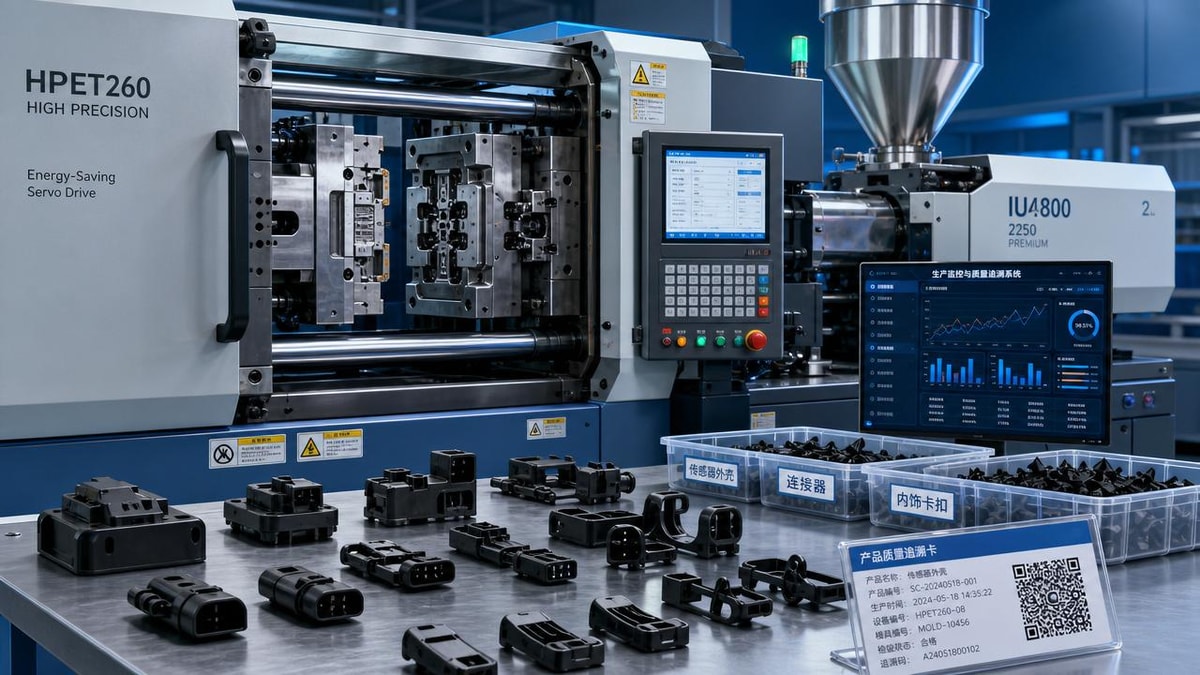
The challenge becomes more serious when molded parts serve structural, visible, or safety-adjacent functions. Interior clips, sensor housings, under-hood covers, connectors, and fluid system components may all have different tolerance windows, resin sensitivities, and traceability needs. A plastic injection molding machine for automotive production must therefore support repeatability, not just output.
Many factories still treat scrap as a material issue alone. In practice, recurring rejects usually come from interacting variables. Barrel temperature drift may trigger splay. Clamp inconsistency may create flash. Poor screw recovery control may produce short shots. Weak data capture may prevent root-cause verification. That is why machine capability matters directly to quality containment and corrective action.
- Scrap inflates resin consumption, regrind handling, labor time, and inspection workload.
- Unstable molding increases the probability of mixed lots and undocumented process deviations.
- Frequent defects reduce OEE and put shipment schedules under pressure during program launches.
- For safety and compliance teams, uncontrolled scrap can indicate insufficient process validation and weak traceability controls.
What usually causes scrap on a plastic injection molding machine for automotive parts?
Automotive molding defects are often grouped under generic labels, but quality teams need a more practical fault map. Scrap can originate from equipment limitations, mold design constraints, resin handling issues, or inconsistent operator settings. The fastest way to reduce losses is to classify defects by process origin rather than by visual symptom alone.
Machine-related causes that quality teams should monitor
A plastic injection molding machine for automotive programs should maintain stable shot size, pressure response, clamp force, platen parallelism, and thermal control. When one of these variables drifts, the process window narrows and scrap rises. This is especially visible in thin-wall parts, multi-cavity molds, and engineering plastics with tight processing ranges.
- Injection pressure response lag can create incomplete filling or dimensional variation.
- Poor clamp control can lead to flash, parting line mismatch, and mold wear.
- Inconsistent back pressure affects melt homogeneity and surface appearance.
- Weak temperature control contributes to sink marks, warpage, and resin degradation.
- Limited monitoring features make corrective action slower and less evidence-based.
Material and process causes that amplify machine instability
Even a capable machine cannot compensate for poor material preparation. Moisture-sensitive resins, contamination, inconsistent regrind ratios, and unstable drying conditions can all trigger scrap patterns that appear random. For safety managers, this matters because uncontrolled material handling undermines both product integrity and audit readiness.
Quality teams should also review mold venting, cooling balance, gate design, and preventive maintenance frequency. In many plants, the chosen plastic injection molding machine for automotive jobs is technically acceptable, but the installed process ecosystem is not robust enough to keep scrap low over long production runs.
How machine capability influences defect rates and traceability
When procurement teams compare equipment, they often focus first on tonnage and shot size. Those are necessary, but not sufficient, for automotive quality control. Scrap reduction depends more on repeatability, control resolution, sensor feedback, and process data retention than on headline capacity alone.
The table below summarizes which machine capabilities most directly influence scrap on a plastic injection molding machine for automotive manufacturing, especially where part approval, dimensional consistency, and batch traceability matter.
For quality and safety functions, the most valuable feature is often not speed but visibility. A machine that records cycle curves, alarms on deviation, and integrates with MES or quality systems allows faster disposition decisions. That reduces not only scrap volume, but also the spread of suspect parts across downstream operations.
Procurement guide: how to evaluate the right plastic injection molding machine for automotive use
Selecting a machine for automotive molding should start with risk profile, not catalog claims. A part used in cabin trim has different acceptance criteria from a connector housing near heat, vibration, or chemical exposure. QC and safety teams should be involved early so machine selection reflects defect prevention, containment speed, and validation burden.
Key questions before supplier comparison
- What is the part family? Cosmetic, structural support, electrical enclosure, fluid-contact, or under-hood application?
- Which resins will run most often? PP, ABS, PA, PBT, PC/ABS, or glass-filled engineering materials?
- How tight are the dimensional tolerances, Cp/Cpk targets, and customer documentation requirements?
- Does the program require cavity pressure monitoring, barcode traceability, or recipe locking?
- How quickly can the supplier support commissioning, spare parts, and troubleshooting in your operating region?
The following table can help cross-check machine selection criteria from a quality and risk perspective rather than a price-only perspective.
This framework helps prevent a common mistake: buying a machine that can make the part once, but cannot hold the process over months of production, personnel changes, resin lot variation, and customer audits.
Comparison analysis: cheaper equipment vs process-stable equipment
Budget pressure is real, especially when automotive suppliers balance launch timing, tooling costs, and uncertain demand forecasts. However, lower initial machine cost can become expensive if scrap, downtime, sorting, and claims rise later. For quality teams, the key issue is total cost of instability.
A lower-priced plastic injection molding machine for automotive production may still be suitable for less critical components, stable resins, or lower-volume programs. But for high-mix production, engineering materials, or parts with traceability obligations, process-stable equipment usually creates lower lifecycle risk.
- Cheaper equipment may limit monitoring depth, making root-cause analysis slower after a defect spike.
- Less precise control can widen process variation and increase the need for manual inspection.
- Higher-stability equipment may reduce rejects, mold wear, and adjustment frequency over long runs.
- The right decision depends on part criticality, customer tolerance, validation burden, and plant discipline.
For organizations making purchasing decisions across regions, TradeNexus Pro helps compare supplier positioning, technology maturity, and support readiness in a more structured way. That is valuable when sourcing teams need to align finance, operations, and quality criteria rather than choosing on quotation alone.
Implementation steps to reduce scrap after machine selection
Even the right machine will not solve scrap if launch discipline is weak. Automotive plants should treat implementation as a controlled quality project. That includes parameter validation, material handling standards, mold readiness, operator training, and alarm response rules.
Practical rollout checklist
- Define approved process windows for melt temperature, mold temperature, injection speed, hold pressure, cooling time, and cushion.
- Set user permissions so unauthorized recipe edits cannot bypass quality controls.
- Validate resin drying parameters and lot identification before start-up.
- Link machine alarms to containment actions, including part segregation and first-piece reapproval rules.
- Monitor defect trends by cavity, shift, material lot, and machine condition to identify recurring causes.
- Review preventive maintenance records for screw wear, check rings, heaters, thermocouples, and clamping components.
For quality and safety leaders, traceability is a critical part of scrap prevention. If the plastic injection molding machine for automotive workflows can export cycle data, connect with inspection checkpoints, and document parameter excursions, suspect batches can be isolated faster. That reduces both customer exposure and internal sorting cost.
Standards, compliance, and documentation expectations
Machine selection in automotive environments is shaped by more than productivity. Plants may need to align with customer-specific requirements, internal quality systems, machine safety expectations, and documented process controls. While requirements vary, the underlying principle is consistent: stable equipment makes compliance easier to prove.
Quality teams commonly look for compatibility with documented process validation, inspection traceability, maintenance logs, and operator authorization structures. Safety managers may also review guarding, emergency stop architecture, lockout procedures, and safe interface behavior with robots or downstream automation.
- Documented parameter control supports internal audits and customer process reviews.
- Alarm history and batch traceability strengthen nonconformance investigations.
- Consistent maintenance documentation helps explain drift before defects escalate.
- Safer automation interfaces reduce manual intervention and handling-related quality loss.
A plastic injection molding machine for automotive plants should therefore be assessed not only by engineering teams, but also by those responsible for audit readiness, product containment, and operational risk control.
FAQ: common questions from quality control and safety managers
How do we know whether scrap is caused by the machine or the mold?
Look for repeatable patterns. If the same mold performs differently across machines, machine control or mechanical condition may be the issue. If defects stay tied to cavity location or venting behavior, mold factors are more likely. The most reliable approach is controlled comparison using the same resin lot, same settings logic, and documented cycle data.
What should we prioritize when buying a plastic injection molding machine for automotive parts?
Prioritize repeatability, traceability, control access, pressure and temperature stability, and service support. Tonnage and speed are important, but they do not guarantee low scrap. If the part has tight tolerances or customer traceability requirements, monitoring depth and process data retention should carry significant weight.
Are all automotive plastic parts equally sensitive to machine quality?
No. Cosmetic trim, electrical housings, fluid-contact parts, and under-hood components each respond differently to process variation. Engineering plastics and glass-filled materials are generally less forgiving. High-cavity molds and thin-wall parts also place more demands on machine consistency.
Can automation reduce scrap even if the machine itself is only average?
Automation can reduce handling damage, sorting errors, and cycle inconsistency, but it cannot fully compensate for unstable injection, clamping, or thermal control. The strongest results come from combining a stable machine, a maintained mold, disciplined material handling, and automated part separation or in-line inspection.
Why choose us for sourcing insight and next-step evaluation
TradeNexus Pro supports procurement directors, supply chain managers, and enterprise decision-makers who need more than broad market listings. For teams evaluating a plastic injection molding machine for automotive production, we help connect equipment decisions with supply chain resilience, quality risk, and long-term operational fit.
If your team is reviewing scrap trends, planning a new line, or comparing supplier capabilities, you can use TradeNexus Pro to structure the conversation around facts that matter to quality and safety functions.
- Request support for parameter confirmation based on part type, resin family, and production volume.
- Compare product selection options for different risk levels, from standard interior parts to tighter-tolerance technical components.
- Discuss delivery cycle expectations, service response considerations, and spare-parts planning for multi-region operations.
- Review custom solution needs such as traceability integration, automation interface requirements, or quality data capture priorities.
- Clarify certification and documentation expectations relevant to your internal audit or customer approval process.
- Start quotation discussions with a clearer checklist so technical, procurement, and quality teams evaluate suppliers on the same basis.
When scrap is treated as a strategic indicator rather than a routine loss, machine selection becomes a quality decision, a safety decision, and a supply chain decision at the same time. That is the point where better market intelligence and better procurement judgment create measurable advantage.
Get weekly intelligence in your inbox.
No noise. No sponsored content. Pure intelligence.
 May 04, 2026FDA AI Diagnostic Software Guidance: Continuous Validation for Overseas FirmsFDA AI Diagnostic Software Guidance: Continuous Validation for Overseas Firms
 May 04, 2026MIIT Launches Export Compliance Support for Warehouse RoboticsMIIT Launches Export Compliance Support for Warehouse Robotics
 May 04, 2026India BIS Mandates ISI Certification for Smart Home Devices from July 2026India BIS Mandates ISI Certification for Smart Home Devices from July 2026
 May 04, 2026Global Shipping Alliance Raises Heavy-Lift Surcharges from May 2026Global Shipping Alliance Raises Heavy-Lift Surcharges from May 2026
 May 04, 2026GCC EV Charging Certification Unified: 35% Cost Cut for Chinese ExportersGCC EV Charging Certification Unified: 35% Cost Cut for Chinese Exporters
 May 04, 2026TÜV Rheinland Updates IoT Security Standard with AI Voice Data AnonymizationTÜV Rheinland Updates IoT Security Standard with AI Voice Data Anonymization
 May 04, 2026Yangshan Port Launches Green Energy Equipment Express LaneYangshan Port Launches Green Energy Equipment Express Lane
 May 04, 2026Vietnam Enforces Local IoT Certification for Smart Home Devices from May 2026Vietnam Enforces Local IoT Certification for Smart Home Devices from May 2026
 May 04, 2026US CBP Launches Battery Cargo Inspection: ESS Export Delays to 7–12 DaysUS CBP Launches Battery Cargo Inspection: ESS Export Delays to 7–12 Days
 May 04, 2026EU SVHC Update Effective May 1, 2026: Impact on Electronic Components ExportsEU SVHC Update Effective May 1, 2026: Impact on Electronic Components Exports
 May 04, 2026Portable power stations: what matters more than wattage on paperPortable power stations: what matters more than wattage on paper
 May 04, 2026Automotive injection molding machines and the scrap rate problemAutomotive injection molding machines and the scrap rate problem
 May 04, 2026Smart thermostats save energy only when setup is done rightSmart thermostats save energy only when setup is done right
 May 04, 2026Why TWS earbuds sound great in ads but not on callsWhy TWS earbuds sound great in ads but not on calls
 May 04, 2026Industrial robotics for material handling: where downtime startsIndustrial robotics for material handling: where downtime starts
 May 04, 2026LiFePO4 battery lifespan drops faster under these conditionsLiFePO4 battery lifespan drops faster under these conditions
 May 04, 2026Solar grid systems: when storage changes the project mathSolar grid systems: when storage changes the project math
 May 04, 2026Smart manufacturing for pharma fails when data stays isolatedSmart manufacturing for pharma fails when data stays isolated
 May 04, 2026Wearable technology trends that are finally useful in 2026Wearable technology trends that are finally useful in 2026
 May 04, 2026Bluetooth speakers: why battery life claims often miss real useBluetooth speakers: why battery life claims often miss real use
 May 04, 2026Home automation systems that solve everyday annoyances firstHome automation systems that solve everyday annoyances first
 May 04, 2026Solar street lights that underperform after the first rainy seasonSolar street lights that underperform after the first rainy season
 May 04, 2026Why sheet metal bending services in Canada cost more than expectedWhy sheet metal bending services in Canada cost more than expected
 May 04, 2026Factory automation systems for electronics and the ROI gapFactory automation systems for electronics and the ROI gap
 May 04, 2026OEM machined parts supplier Vietnam: quality checks that matterOEM machined parts supplier Vietnam: quality checks that matter
 May 04, 2026What to check before choosing a 5 axis machine for defenseWhat to check before choosing a 5 axis machine for defense
 May 04, 2026Smart grid solutions that fix peak load without major rebuildsSmart grid solutions that fix peak load without major rebuilds