How Remote Patient Monitoring Cuts Readmissions
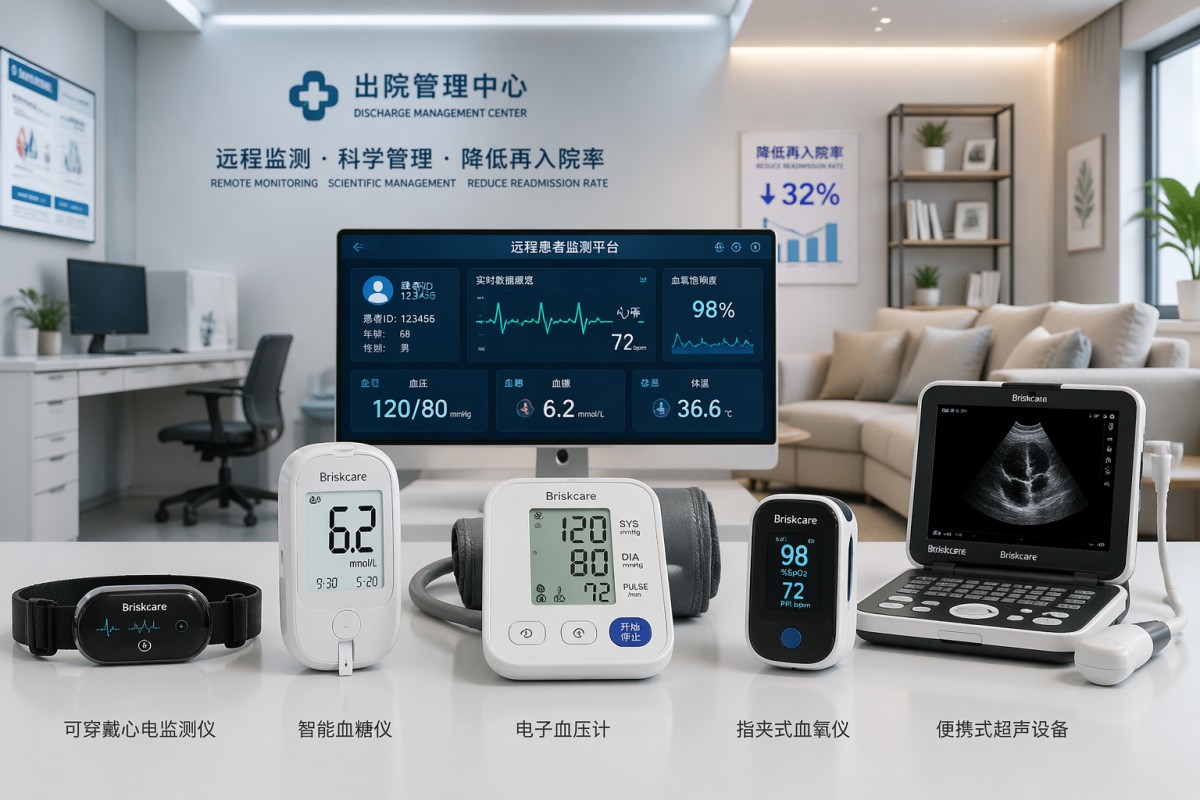
Remote patient monitoring is reshaping post-acute care by helping providers detect risk earlier, improve follow-up, and reduce avoidable hospital returns. From wearable ECG monitors and smart glucometers to digital blood pressure monitors and portable ultrasound scanners, connected devices now support faster intervention, better patient engagement, and stronger care continuity. This article explores how remote patient monitoring cuts readmissions while creating strategic value for healthcare technology buyers, operators, and decision-makers.
For hospitals, home health providers, distributors, procurement teams, and healthcare technology investors, the core question is no longer whether remote patient monitoring has value. The real question is how to design an RPM program that lowers 30-day readmission risk, fits clinical workflows, meets safety expectations, and delivers measurable operational return within 6 to 12 months.
In B2B healthcare technology markets, RPM sits at the intersection of device quality, data connectivity, care coordination, and reimbursement logic. That makes it relevant not only to clinicians, but also to project managers, safety officers, purchasing leads, finance approvers, and channel partners assessing long-term product adoption.
Why Readmissions Happen and Where Remote Patient Monitoring Changes the Equation
Hospital readmissions often occur because patient deterioration is detected too late. After discharge, many high-risk patients experience worsening blood pressure, rising blood glucose, fluid retention, arrhythmia symptoms, medication confusion, or poor follow-up adherence within the first 7 to 14 days. That window is clinically sensitive and operationally difficult to manage through traditional phone calls alone.
Remote patient monitoring changes this model by replacing intermittent check-ins with continuous or scheduled data collection. A connected blood pressure monitor may transmit readings once or twice daily. A smart pulse oximeter may flag a saturation drop below a pre-set threshold. A wearable ECG patch can capture rhythm trends over several days instead of relying on a single in-clinic snapshot.
For care teams, this means earlier escalation. Instead of discovering a problem when a patient arrives in the emergency department, nurses and physicians can intervene when a risk pattern first appears. In many post-acute programs, the difference between a same-day nurse outreach and a 72-hour delay can determine whether the patient stabilizes at home or returns to the hospital.
For buyers and operators, RPM also improves process discipline. It creates a repeatable framework for triage, documented follow-up, and risk segmentation. Programs that define 3 response levels, such as routine review, same-day outreach, and urgent escalation, usually outperform loosely managed monitoring efforts where alerts accumulate without clear action ownership.
Key Drivers of Avoidable Readmission
- Missed early warning signs in the first 30 days after discharge, especially during days 3 to 10.
- Limited medication adherence and poor understanding of discharge instructions.
- Fragmented communication between inpatient teams, outpatient clinicians, and home caregivers.
- Low-frequency follow-up models that rely on weekly calls rather than daily or near-real-time data.
Why timing matters
A practical RPM program is less about collecting more data and more about shortening the time from signal to action. In operational terms, reducing review lag from 24 hours to 4 hours for high-risk alerts can improve intervention speed, protect nursing capacity, and reduce avoidable utilization pressure on acute care settings.
Which Devices and Data Streams Have the Highest Impact in Post-Acute Care
Not every connected device contributes equally to readmission reduction. The right mix depends on diagnosis, acuity, patient capability, and staffing design. For example, heart failure pathways often prioritize weight, blood pressure, pulse, and oxygen saturation, while diabetes pathways depend more heavily on glucometer uploads, medication logging, and exception-based alerts.
In procurement and deployment planning, it helps to separate devices into 3 categories: core vital-sign tools, condition-specific tools, and engagement support tools. Core tools usually include digital blood pressure monitors, pulse oximeters, and thermometers. Condition-specific tools may include ECG monitors, glucometers, spirometers, or portable ultrasound for selected home-based programs.
Device selection should also reflect patient adherence realities. A device that delivers highly precise data but requires 8 setup steps may underperform compared with a simpler device that can be used correctly in under 2 minutes. Ease of onboarding, battery life, Bluetooth stability, and multilingual instructions are not secondary details; they directly affect data completeness and clinical usefulness.
For channel partners and distributors, interoperability is another commercial factor. Buyers increasingly prefer RPM components that integrate with existing EHR, telehealth, or care management systems through standard APIs or structured export formats. A device ecosystem that reduces manual re-entry can lower administrative workload by several hours per 100 patients each month.
Common RPM Device Roles in Readmission Prevention
The following comparison helps operators and sourcing teams match common device types to post-discharge monitoring priorities, staffing impact, and suitable use cases.
The strongest RPM outcomes usually come from pairing a small number of high-relevance devices with defined clinical rules, not from deploying the largest possible kit. In many programs, 2 to 4 device types are enough to support reliable monitoring without overwhelming patients or staff.
Selection Criteria for Procurement Teams
- Connectivity reliability across home environments, including Wi-Fi, cellular, or offline sync fallback.
- Battery endurance and replacement cycle, ideally supporting at least 5 to 7 days of routine use before recharge.
- Calibration, maintenance, and cleaning requirements for infection control and quality assurance.
- Data export, dashboard clarity, and alert configurability for different care pathways.
How to Build an RPM Workflow That Actually Reduces Readmissions
Technology alone does not cut readmissions. The reduction comes from an operational model that combines patient selection, onboarding, alert management, and rapid intervention. Organizations that treat RPM as a device shipment project often see weak outcomes because they fail to define response ownership, escalation windows, and discharge-to-home handoff procedures.
A practical workflow usually begins before discharge. The patient is stratified into low, medium, or high-risk groups based on diagnosis, prior admissions, comorbidities, medication complexity, and home support. High-risk patients may need device activation before leaving the facility, while moderate-risk patients may complete setup within 24 to 48 hours after arriving home.
The next step is protocol design. Teams should define which values trigger outreach, who responds first, and how documentation is captured. A program with 5 clearly documented workflow steps can scale more safely than one built around informal staff judgment alone. This is especially important for enterprises managing 200, 500, or more monitored patients across multiple sites.
Equally important is patient engagement. Readmission risk rises when monitoring participation drops after the first week. Programs that combine device use with short coaching messages, multilingual support, and caregiver involvement often maintain stronger adherence through days 10 to 30, when many post-discharge complications surface.
A 5-Step RPM Implementation Model
- Identify target patient cohorts based on diagnosis, utilization history, and discharge risk score.
- Assign the minimum effective device set and confirm connectivity before home deployment.
- Configure thresholds, review frequency, and a 3-tier escalation path for abnormal values.
- Train patients and caregivers in under 20 minutes using plain-language instructions and return demonstration.
- Audit alert closure times, adherence rates, and readmission outcomes every 2 to 4 weeks.
Workflow metrics worth tracking
Operators should monitor at least 6 core metrics: enrollment-to-activation time, daily data completion rate, alert volume per 100 patients, median response time, percentage of resolved alerts without ED transfer, and 30-day readmission rate by diagnosis group. These metrics help separate device issues from staffing or protocol issues.
Where projects often fail
The most common failures are alert fatigue, weak onboarding, and poor interoperability. If every minor fluctuation creates a same-level alert, staff quickly lose trust in the system. If onboarding is delayed by more than 3 days, data gaps appear during the highest-risk period. If platform data cannot flow into existing workflows, manual work erodes ROI.
Procurement, Compliance, and Vendor Evaluation for Healthcare Technology Buyers
For procurement directors, finance approvers, and enterprise decision-makers, RPM should be evaluated as a care operations asset rather than a standalone hardware purchase. The strongest purchasing decisions balance 4 dimensions: clinical fit, technical integration, service support, and cost-to-outcome alignment. A lower device price may become more expensive if support tickets, replacement rates, or manual workflows increase.
Compliance and quality teams should review data handling, device hygiene, battery safety, firmware update policy, and traceability processes. In home-use medical technology, product reliability in non-controlled environments matters as much as lab performance. Procurement documents should specify service-level expectations such as replacement turnaround, onboarding support hours, and escalation routes for device failure.
Distributors and resellers also need clarity on channel readiness. Questions such as packaging localization, documentation language, training materials, and spare-unit planning directly affect rollout success. In multi-country projects, a 2 to 6 week delay often comes not from device supply itself, but from incomplete implementation documentation and unclear ownership across sites.
From a financial perspective, RPM value should be tested against a defined review period, often 6 months for pilot assessment and 12 months for broader scaling. Decision-makers typically want evidence that the program can lower avoidable utilization, improve staff productivity, or support reimbursable care models without adding unmanageable IT overhead.
Vendor Evaluation Matrix
The table below provides a practical structure for comparing RPM vendors, device platforms, or integration partners during an RFP or pilot-stage review.
A useful sourcing principle is to evaluate RPM in terms of total operational fit, not isolated device specifications. In many healthcare technology projects, the winning vendor is the one that can reduce deployment friction, speed up clinician review, and support consistent patient usage across 30, 60, and 90-day care windows.
Checklist for approval teams
- Confirm whether the solution fits target diagnoses and post-discharge workflows.
- Review expected replacement rates, consumables planning, and support staffing needs.
- Assess integration scope, implementation timeline, and data security responsibilities.
- Model pilot success criteria before contract expansion, ideally with 3 to 5 measurable targets.
Common Risks, Frequently Asked Questions, and Practical Next Steps
Even well-designed RPM programs face risks. The most frequent ones include low patient adherence, inconsistent data transmission, too many non-actionable alerts, and weak coordination between technology teams and clinical users. These issues are manageable when addressed early through workflow design, device choice, and phased implementation rather than broad deployment from day one.
A phased rollout often works best. Many organizations start with 50 to 100 patients in one service line, review outcomes for 8 to 12 weeks, then expand to additional diagnoses or sites. This allows teams to refine thresholds, training scripts, and escalation logic before scaling capital commitments or channel inventory.
For B2B buyers, RPM is also a strategic sourcing category. It creates demand for reliable connected devices, integration services, training support, and post-sales operations. That makes it relevant for healthcare manufacturers, digital health platforms, distributors, and trade-focused enterprises looking to build durable market positioning in the broader healthcare technology value chain.
For decision-makers using TradeNexus Pro to assess solutions, the key advantage is clarity: understanding which device combinations, workflow models, and vendor support structures are most likely to reduce readmissions without introducing hidden operational cost. In this market, disciplined implementation is the difference between a pilot that stalls and a program that scales.
FAQ: How long does RPM deployment usually take?
A focused pilot can often be prepared in
Get weekly intelligence in your inbox.
No noise. No sponsored content. Pure intelligence.
 Apr 30, 2026Tangshan Beijiao Thermal Power Unit #1 A-Grade Maintenance LaunchTangshan Beijiao Thermal Power Unit #1 A-Grade Maintenance Launch
 Apr 30, 2026SAMR to Finalize 1,800+ Standards in 2026 Affecting Industrial Materials ExportsSAMR to Finalize 1,800+ Standards in 2026 Affecting Industrial Materials Exports
 Apr 30, 2026UAE Becomes Global AI Hub: New CE-ADAS+ Pathway for Chinese Smart Industrial EquipmentUAE Becomes Global AI Hub: New CE-ADAS+ Pathway for Chinese Smart Industrial Equipment
 Apr 30, 2026Vietnam’s SMT Expansion Drives CNC Fixture Export DelaysVietnam’s SMT Expansion Drives CNC Fixture Export Delays
 Apr 30, 2026USITC Launches 337 Investigation on Wi-Fi 7 RF Modules from ChinaUSITC Launches 337 Investigation on Wi-Fi 7 RF Modules from China
 Apr 30, 2026Morocco Enforces PV Mounting Structure Certification from Q3 2026Morocco Enforces PV Mounting Structure Certification from Q3 2026
 Apr 30, 2026TÜV Rheinland Launches Fast-Track Certification for Chinese Warehouse RobotsTÜV Rheinland Launches Fast-Track Certification for Chinese Warehouse Robots
 Apr 30, 2026Red Sea Crisis Deepens: Suez Canal Fees Up 12%, China-Europe Rail Premium Hits 35%Red Sea Crisis Deepens: Suez Canal Fees Up 12%, China-Europe Rail Premium Hits 35%
 Apr 30, 2026EU Enforces Battery Passport Checks: Storage Export Delays RiseEU Enforces Battery Passport Checks: Storage Export Delays Rise
 Apr 29, 2026USITC Launches Section 337 Investigation into Chinese Wi-Fi 7 RF ModulesUSITC Launches Section 337 Investigation into Chinese Wi-Fi 7 RF Modules
 Apr 29, 2026Côte d'Ivoire Launches $500M Grid Storage Tender, Chinese BESS Fast-TrackedCôte d'Ivoire Launches $500M Grid Storage Tender, Chinese BESS Fast-Tracked
 Apr 29, 2026Morocco Enforces IEC 61427-2:2025 PV Mounting Certification from Q3 2026Morocco Enforces IEC 61427-2:2025 PV Mounting Certification from Q3 2026
 Apr 29, 2026UAE Becomes Global AI Hub: New CE-ADAS+ Path for Chinese Smart Industrial EquipmentUAE Becomes Global AI Hub: New CE-ADAS+ Path for Chinese Smart Industrial Equipment
 Apr 29, 2026Red Sea Crisis: Suez Canal Fees Up 12%, China-Europe Rail Premium at 35%Red Sea Crisis: Suez Canal Fees Up 12%, China-Europe Rail Premium at 35%
 Apr 29, 2026TÜV Rheinland Launches Fast-Track Certification for Chinese Warehouse RobotsTÜV Rheinland Launches Fast-Track Certification for Chinese Warehouse Robots
 Apr 29, 2026Vietnam's SMT Expansion Drives CNC Fixture Export DelaysVietnam's SMT Expansion Drives CNC Fixture Export Delays
![]() Apr 29, 2026NEOM Smart Infrastructure Phase II Opens Bidding: Chinese PV Mounting & BESS Pre-QualifiedNEOM Smart Infrastructure Phase II Opens Bidding: Chinese PV Mounting & BESS Pre-Qualified
Apr 29, 2026NEOM Smart Infrastructure Phase II Opens Bidding: Chinese PV Mounting & BESS Pre-QualifiedNEOM Smart Infrastructure Phase II Opens Bidding: Chinese PV Mounting & BESS Pre-Qualified Apr 29, 2026EU Enforces Battery Passport for Energy Storage Imports from July 2026EU Enforces Battery Passport for Energy Storage Imports from July 2026
 Apr 29, 2026Maine Bans New >20MW Data Centers — AI Hardware Delivery ImpactedMaine Bans New >20MW Data Centers — AI Hardware Delivery Impacted
 Apr 28, 2026Suez Canal Fee Hike & China-Europe Rail Premium: Q2 2026 ImpactSuez Canal Fee Hike & China-Europe Rail Premium: Q2 2026 Impact
 Apr 28, 2026TÜV Rheinland Launches Fast-Track Certification for Chinese Warehouse RobotsTÜV Rheinland Launches Fast-Track Certification for Chinese Warehouse Robots
 Apr 28, 2026EU Enforces Battery Passport Rule for Chinese ESS Exports from 2027EU Enforces Battery Passport Rule for Chinese ESS Exports from 2027
 Apr 28, 2026ADB Raises Vietnam GDP Forecast to 7.2%: SMT & Precision Fixture Demand RisesADB Raises Vietnam GDP Forecast to 7.2%: SMT & Precision Fixture Demand Rises
 Apr 28, 2026US ITC Launches Section 337 Investigation into Chinese Wi-Fi 7 RF FEMsUS ITC Launches Section 337 Investigation into Chinese Wi-Fi 7 RF FEMs
 Apr 28, 2026Côte d'Ivoire Opens $500M Power Tender: Chinese BESS Get Fast-Track AccessCôte d'Ivoire Opens $500M Power Tender: Chinese BESS Get Fast-Track Access
 Apr 28, 2026BP’s Algeria East Basin Permit Spurs Valve Demand, Lead Times Extend to 18 WeeksBP’s Algeria East Basin Permit Spurs Valve Demand, Lead Times Extend to 18 Weeks
") Apr 28, 2026Vietnam Mandates V-Trust for Smart Appliances Export (July 2026)Vietnam Mandates V-Trust for Smart Appliances Export (July 2026)
Apr 28, 2026Vietnam Mandates V-Trust for Smart Appliances Export (July 2026)Vietnam Mandates V-Trust for Smart Appliances Export (July 2026)