US CPSC Recalls Chinese Smart Thermostats Over FCC Part 15B Noncompliance
On April 16, 2026, the U.S. Consumer Product Safety Commission (CPSC) issued an urgent recall of 230,000 smart thermostats manufactured in China across eight brands, citing noncompliance of their Wi-Fi modules with FCC Part 15B radiated emission limits. This incident directly impacts exporters, component suppliers, and e-commerce channel operators serving the North American smart home electronics market — highlighting growing regulatory scrutiny on embedded wireless functionality in consumer IoT devices.
Event Overview
The U.S. Consumer Product Safety Commission (CPSC) announced an emergency recall on April 16, 2026, covering 230,000 units of smart thermostats produced in China and marketed under eight brand names. The stated cause is failure of the integrated Wi-Fi modules to meet radiated emission limits specified in FCC Part 15B. As a result, the importer was held jointly liable under CPSC’s traceability mechanism. Amazon has since removed functionally similar unverified products from its U.S. marketplace and now requires valid FCC-ID registration and Supplier’s Declaration of Conformity (SDoC) for listing.
Industries Affected by Segment
Direct Exporters & Importers
These entities face immediate liability under CPSC’s importer accountability framework. The recall triggers mandatory corrective actions including product retrieval, notification to distributors, and submission of remediation plans to CPSC. Financial exposure includes potential civil penalties, logistics costs for recall execution, and reputational risk in U.S. retail channels.
Electronic Component Manufacturers (Wi-Fi Module Suppliers)
Suppliers of off-the-shelf Wi-Fi modules — especially those without pre-certified FCC-ID or validated SDoC documentation — are exposed to downstream compliance failures. Their modules may be deemed non-compliant even if previously approved for other end products, due to integration-specific emissions behavior. This affects qualification timelines and contractual liability clauses in supply agreements.
OEM/ODM Smart Device Manufacturers
Contract manufacturers integrating wireless modules into finished goods bear responsibility for final-system emissions testing. The recall underscores that module-level certification does not automatically ensure compliance at the system level. Design validation must now include full-device radiated emissions testing under FCC Part 15B — adding cost and lead time to new product introductions.
E-Commerce Platform Sellers & Marketplace Operators
U.S.-facing sellers on Amazon and other platforms must now verify FCC-ID and SDoC status before listing. Noncompliant listings risk removal, account suspension, or forced delisting without notice. Platform-level enforcement shifts compliance verification from post-sale audit to pre-listing gatekeeping — increasing operational burden for sellers managing multiple SKUs.
What Relevant Companies or Practitioners Should Focus On Now
Monitor official updates from CPSC and FCC on enforcement scope
CPSC’s recall notice references specific model numbers and importers, but broader guidance on whether similar models from other brands will be reviewed remains pending. Stakeholders should track CPSC’s public docket and FCC’s Equipment Authorization Search database for emerging patterns in enforcement focus.
Prioritize FCC-ID verification for all Wi-Fi-enabled SKUs destined for the U.S.
For any product incorporating intentional radiators (e.g., Wi-Fi, Bluetooth), confirm whether the device qualifies for SDoC or requires full FCC-ID certification. Note: SDoC is permissible only if the device meets all applicable technical requirements *and* the responsible party maintains test reports. Self-declaration without valid test data carries legal risk.
Distinguish between module-level and system-level compliance obligations
Analysis来看, a certified Wi-Fi module does not guarantee system-level FCC compliance. Radiated emissions depend on PCB layout, shielding, enclosure design, and firmware behavior. Current best practice requires full-system testing per ANSI C63.4, performed by an FCC-recognized lab, prior to import or listing.
Review supply chain contracts for compliance transfer clauses
From industry perspective, many OEM agreements assign full regulatory responsibility to the manufacturer — even when components are sourced from third-party module vendors. Companies should audit existing contracts to clarify liability for FCC noncompliance and update procurement terms to require verifiable test reports and FCC-ID/SDoC documentation prior to shipment.
Editorial Perspective / Industry Observation
This recall is better understood as a signal of tightening enforcement convergence between CPSC and FCC on wireless-enabled consumer products. While CPSC holds statutory authority over product safety, it increasingly relies on FCC compliance data — particularly Part 15B — as a proxy for electromagnetic safety risk. Observation来看, this reflects a broader trend where regulatory boundaries blur across agencies when evaluating integrated IoT devices. It is not yet a systemic policy shift, but rather a targeted escalation indicating higher scrutiny for products combining connectivity with physical interaction (e.g., HVAC controls). Continued attention is warranted as similar coordination may emerge with Health Canada (ISED) and EU market surveillance authorities.
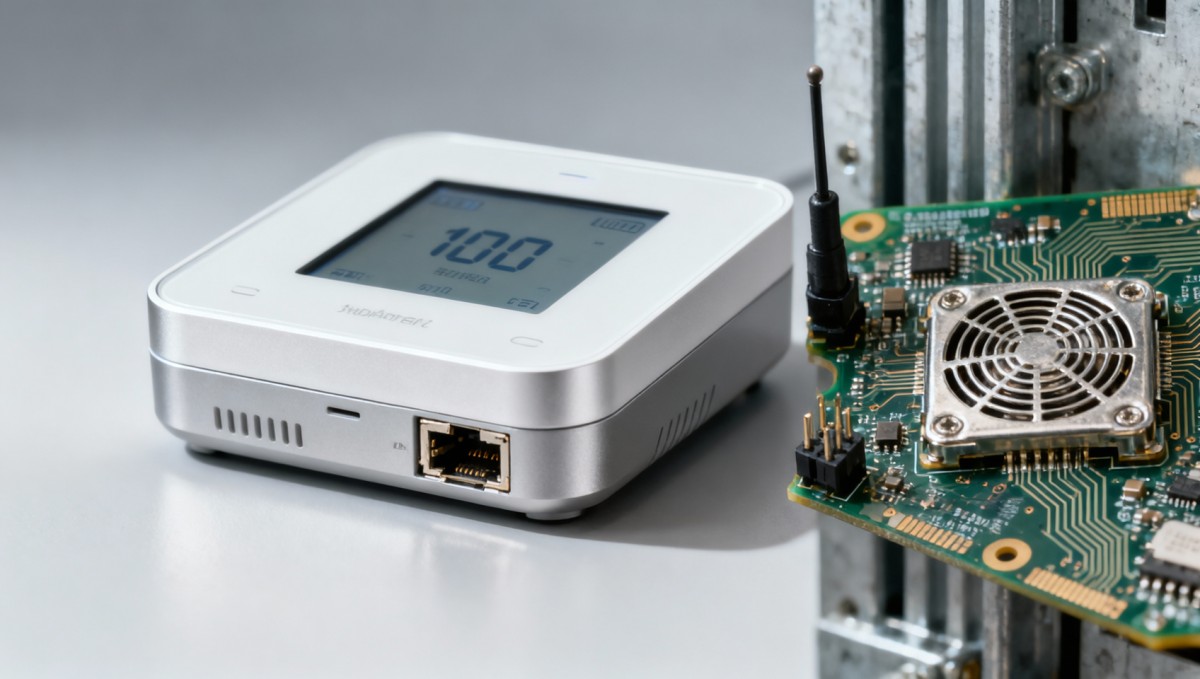
In summary, this recall marks a concrete enforcement action with narrow technical grounds — noncompliant radiated emissions — but broad operational implications across the export supply chain. It is not a blanket warning against Chinese-made smart devices, nor a revision of FCC rules; rather, it reinforces long-standing requirements now being actively enforced at the point of market entry. For affected stakeholders, the appropriate response is procedural rigor — not strategic retreat.
Source: U.S. Consumer Product Safety Commission (CPSC) Recall Notice, issued April 16, 2026. FCC Equipment Authorization Rules (47 CFR Part 15, Subpart B). Amazon Seller Central Policy Update (April 2026, U.S. marketplace).
Note: Ongoing monitoring is advised for potential expansion of CPSC’s review to additional models or brands not currently listed in the recall notice.
Get weekly intelligence in your inbox.
No noise. No sponsored content. Pure intelligence.
 Apr 17, 2026Temperature data loggers drift unpredictably inside lithium-ion battery storage enclosuresTemperature data loggers drift unpredictably inside lithium-ion battery storage enclosures
 Apr 17, 2026Are solar microinverters really worth the extra cost?Are solar microinverters really worth the extra cost?
 Apr 17, 2026Bifacial solar panels: How much more energy can they generate?Bifacial solar panels: How much more energy can they generate?
 Apr 17, 2026Gear manufacturing: How to optimize production for high precision?Gear manufacturing: How to optimize production for high precision?
 Apr 17, 2026Why power transmission components fail earlier than expectedWhy power transmission components fail earlier than expected
 Apr 17, 2026Linear motion systems: belt drive or ball screw for speed?Linear motion systems: belt drive or ball screw for speed?
 Apr 17, 2026Industrial bearing suppliers: what signals reliable quality?Industrial bearing suppliers: what signals reliable quality?
 Apr 17, 2026When pneumatic valves wholesale gets expensive laterWhen pneumatic valves wholesale gets expensive later
 Apr 17, 2026Hydraulic cylinder fabrication mistakes that cause oil leaksHydraulic cylinder fabrication mistakes that cause oil leaks
 Apr 17, 2026Heavy equipment manufacturing delays often start hereHeavy equipment manufacturing delays often start here
 Apr 17, 2026Custom heatsinks: when a larger size solves nothingCustom heatsinks: when a larger size solves nothing
 Apr 17, 2026Electronic enclosure fabrication: steel or aluminum?Electronic enclosure fabrication: steel or aluminum?
 Apr 17, 2026Automotive parts machining tolerances that drive up scrapAutomotive parts machining tolerances that drive up scrap
 Apr 17, 2026Medical device manufacturing changes under tighter traceabilityMedical device manufacturing changes under tighter traceability
 Apr 17, 2026How to Choose Solid State Batteries in 2026How to Choose Solid State Batteries in 2026
 Apr 17, 2026Are Solid State Batteries Worth the Cost Yet?Are Solid State Batteries Worth the Cost Yet?
 Apr 17, 2026Commercial Energy Storage Sizing: What Matters Most?Commercial Energy Storage Sizing: What Matters Most?
 Apr 17, 2026Commercial Energy Storage ROI: How to Assess ItCommercial Energy Storage ROI: How to Assess It
 Apr 17, 2026Off Grid Solar Systems: What to Avoid FirstOff Grid Solar Systems: What to Avoid First
 Apr 17, 2026Who Should Use Off Grid Solar Systems?Who Should Use Off Grid Solar Systems?
 Apr 17, 2026Solar Microinverters vs String Inverters: Which Fits?Solar Microinverters vs String Inverters: Which Fits?
 Apr 17, 2026When Do Solar Microinverters Make More Sense?When Do Solar Microinverters Make More Sense?
 Apr 17, 2026How digital freight matching for international shipping cuts transit time by up to 22% in 2026How digital freight matching for international shipping cuts transit time by up to 22% in 2026
 Apr 17, 2026Why port automation tech for smart logistics reduces container handling errors by 37% at Tier-1 terminalsWhy port automation tech for smart logistics reduces container handling errors by 37% at Tier-1 terminals
 Apr 17, 2026What yard management systems for port operations actually deliver in real-world deploymentsWhat yard management systems for port operations actually deliver in real-world deployments
 Apr 17, 2026Can digital customs clearance for sea freight reduce D/O processing from 48 hours to under 90 minutesCan digital customs clearance for sea freight reduce D/O processing from 48 hours to under 90 minutes
 Apr 17, 2026How returnable transport packaging for automotive parts lowers TCO by 18–25% over 3 yearsHow returnable transport packaging for automotive parts lowers TCO by 18–25% over 3 years