Deep Cycle Batteries: Which Type Holds Up Best Off-Grid?
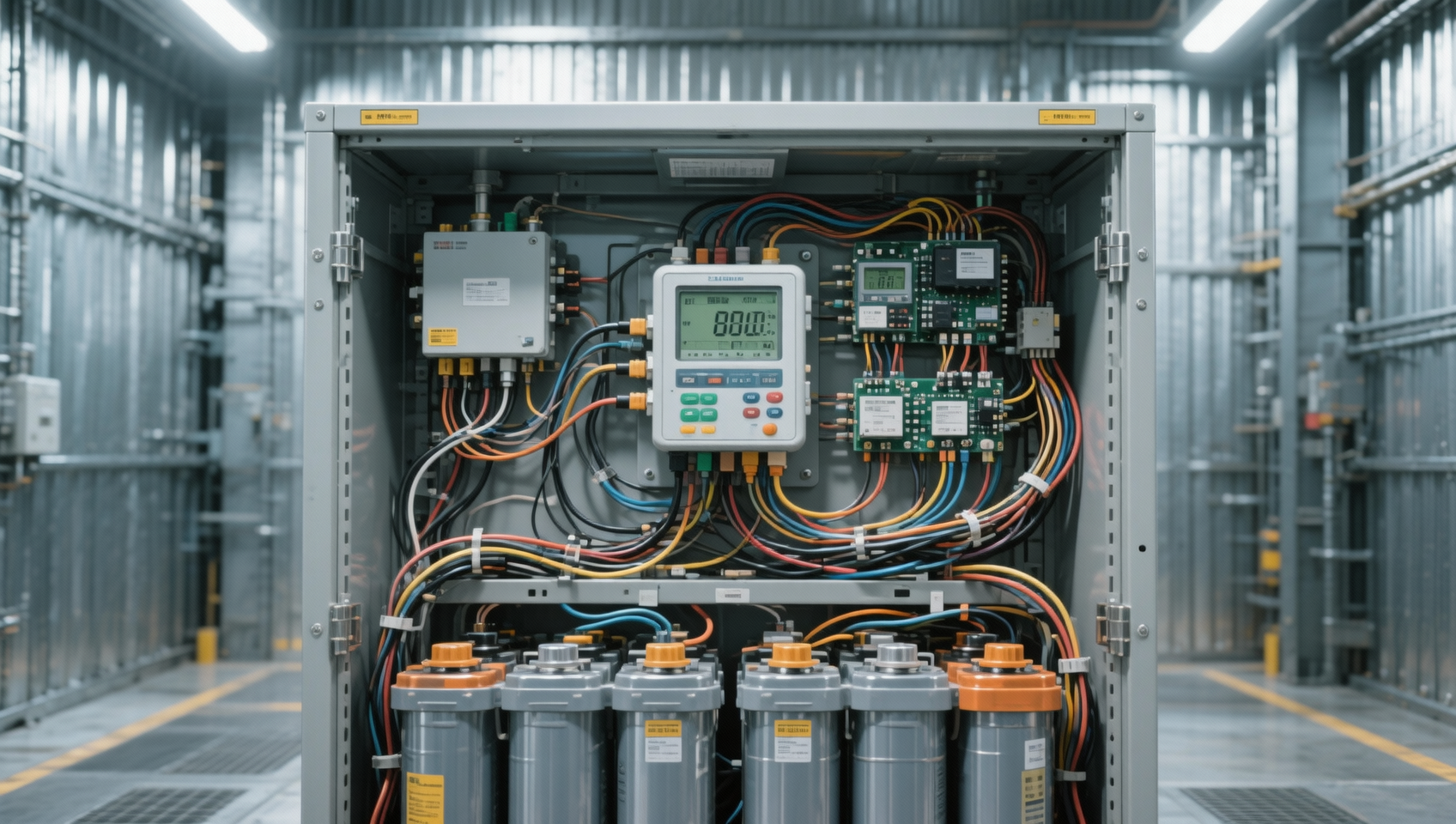
Choosing the right deep cycle batteries for off-grid use can determine system uptime, maintenance costs, and long-term ROI. From AGM options in agm batteries wholesale markets to lithium systems supported by advanced bms boards and battery management systems, buyers must weigh durability, charging efficiency, and application fit. This guide compares the leading battery types and explains how mppt controllers and solar charge controllers influence real-world performance.
What matters most when deep cycle batteries are used off-grid?
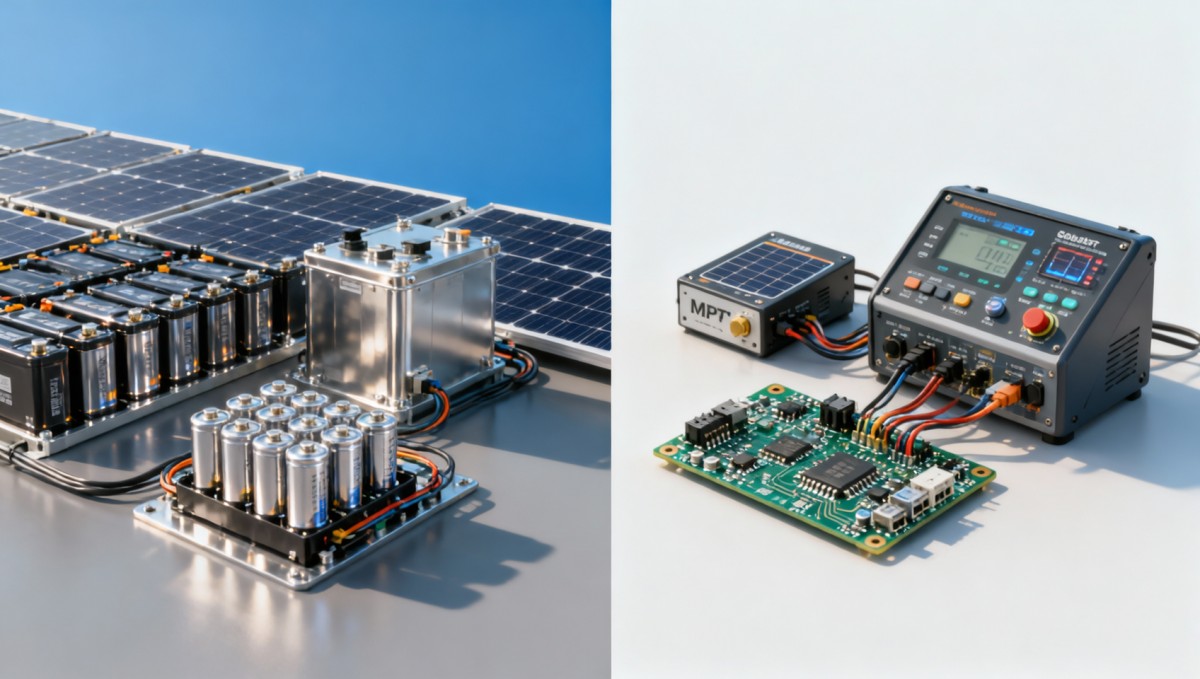
For off-grid systems, the best battery is rarely the one with the lowest unit price. Operators care about runtime, charge acceptance, and failure risk during repeated cycling. Procurement teams look deeper: usable capacity, replacement intervals, transport constraints, supplier consistency, and compatibility with inverters, solar charge controllers, and battery management systems all affect total project value over 3–10 years.
In practical terms, off-grid applications usually face 4 linked pressures: daily cycling, variable weather, irregular charging windows, and field maintenance limits. A telecom backup bank, a remote farm, and a mobile service vehicle may all use deep cycle batteries, but their duty cycles differ sharply. Systems cycling once per day need different chemistry priorities than systems sitting at partial state of charge for weeks.
This is where battery type selection becomes a business decision rather than a simple technical choice. Flooded lead-acid, AGM, gel, and lithium iron phosphate each bring trade-offs in weight, charging speed, depth of discharge, ventilation needs, and operator workload. For distributors and project managers, the challenge is not finding a battery category, but matching that category to the site profile and service model.
TradeNexus Pro tracks these decisions through a B2B lens. That means comparing component ecosystems, supplier readiness, common lead-time ranges of 2–8 weeks, and integration points such as mppt controllers, low-temperature protection, and scalable battery racks. For enterprise buyers, a battery purchase is often part of a wider energy architecture, not a stand-alone item.
The 5 evaluation dimensions that drive off-grid battery performance
- Cycle life under realistic depth of discharge, often assessed over 50%, 80%, or occasional deep discharge conditions.
- Charge acceptance and recharge speed, especially where solar harvest may only be strong for 4–6 effective hours per day.
- Maintenance burden, including watering, ventilation, equalization, terminal checks, and state-of-charge monitoring.
- System integration requirements, such as BMS communications, inverter compatibility, and current limits on mppt controllers.
- Delivered cost over the service window, not just initial purchase price or freight line item.
A recurring procurement mistake is to compare nominal amp-hours without adjusting for usable energy. A 100Ah battery is not equal across chemistries if one should routinely stay above 50% depth of discharge and another can operate more comfortably near 80% or higher under a managed BMS. That difference directly changes the quantity needed, rack space, and shipping weight.
Which battery chemistry holds up best under repeated off-grid cycling?
The answer depends on what “holds up” means in the field. If the definition is low upfront cost and broad availability, flooded lead-acid remains relevant in many markets. If the definition is sealed operation and easier distribution through agm batteries wholesale channels, AGM has a strong position. If the definition is long cycle life, fast charging, and lower maintenance, lithium iron phosphate is often the benchmark for modern off-grid systems.
Gel batteries sit between traditional sealed lead-acid options and more specialized applications. They can perform well where low discharge rates and stable charge control are expected, but they are less forgiving of charging errors than many buyers assume. For this reason, the quality of the solar charge controller and voltage profile matters as much as the battery label itself.
The table below compares the most common deep cycle battery types used in off-grid installations. It is designed for purchasing teams, technical evaluators, and distributors who need a fast way to assess fit by maintenance level, charging behavior, and likely service model.
For most buyers comparing lifetime operational stability, lithium iron phosphate usually holds up best where cycling is frequent and maintenance access is limited. However, that advantage only materializes when the system includes a competent battery management system, correct charger settings, and realistic low-temperature controls. Poor integration can erase a chemistry advantage very quickly.
Why AGM still wins some tenders
AGM batteries remain attractive in projects that prioritize quick deployment, simpler replacement logistics, and lower technical barriers for local installers. In regions where agm batteries wholesale supply is mature, buyers can often source mixed quantities faster than custom lithium packs. That matters when a project has a 7–15 day replacement window and cannot wait for configuration reviews.
AGM also fits legacy 12V and 24V installations with less redesign. For distributors, this reduces training requirements and after-sales complexity. The trade-off is shorter effective service life under deep cycling, especially if daily discharge is aggressive and recharge is incomplete.
When lithium clearly outperforms lead-based options
Lithium becomes the stronger commercial choice when there is a premium on weight reduction, faster solar recovery, frequent cycling, or lower site visits. In remote assets where a technician visit may take half a day, reducing maintenance events from monthly checks to occasional inspections can materially improve project economics. That is especially true in hybrid solar-storage deployments and mobile industrial platforms.
How do MPPT controllers, solar charge controllers, and BMS shape real-world battery life?
Deep cycle batteries do not fail in isolation. They fail inside systems. Buyers who focus only on chemistry often miss the three components that most influence real-world life: the solar charge controller, the mppt controller sizing and settings, and the battery management system. In off-grid systems, incorrect charging logic causes chronic undercharge, overheating, premature sulfation, or unnecessary BMS cutoffs.
An mppt controller can improve harvest efficiency compared with simpler controller architectures when array voltage and battery voltage differ substantially. But higher conversion sophistication does not excuse poor programming. Absorption voltage, float behavior, temperature compensation, and low-voltage disconnect settings must match the selected battery type. Even a well-built battery can age early if charging stages are mismatched for 30–90 days.
For lithium systems, the battery management system is not optional electronics added for marketing appeal. It is the protective layer that manages cell balancing, high and low voltage thresholds, overcurrent events, and, in many products, temperature lockout during charging. Buyers should review whether the bms board supports communication protocols needed by the inverter or controller rather than assuming all BMS units behave the same way.
Lead-based systems need discipline too. Flooded and AGM batteries are highly sensitive to repeated partial-charge operation. If the array is undersized for a 2–3 day weather event, the bank may never recover to full state of charge. That pattern is common in under-budgeted rural systems and is one reason why “battery quality problems” are sometimes really charging architecture problems.
A practical integration checklist for technical buyers
- Confirm battery voltage architecture first: 12V, 24V, 48V, or rack-based modular expansion.
- Match controller charge profiles to chemistry-specific voltage windows and temperature rules.
- Check whether the BMS communicates with inverter equipment or only provides internal protection.
- Review peak current demand for motors, pumps, compressors, or startup surges lasting 1–10 seconds.
- Plan for cable sizing, fuse coordination, and enclosure ventilation rather than treating them as late-stage extras.
The table below helps connect battery type with system control requirements. This is often where project teams separate a workable bill of materials from a battery bank that looks correct on paper but disappoints in the field.
For B2B buyers, the insight is simple: battery life is a systems outcome. A procurement package should request settings sheets, communication details, and commissioning parameters, not just a battery datasheet. This is one reason TNP emphasizes component ecosystem analysis rather than single-item sourcing snapshots.
How should procurement teams compare cost, lifecycle, and supply risk?
In off-grid procurement, initial price can mislead. A lower-cost battery may require more units to achieve the same usable energy, more frequent replacement, and higher labor per maintenance cycle. Enterprise buyers should compare at least 3 layers of cost: acquisition, operation, and replacement. This is particularly important when project ROI is measured over 5–8 years rather than over the first installation quarter.
Supply risk also matters. Some buyers choose a chemistry that looks attractive on paper but has limited channel depth in their destination market. For example, a custom lithium pack may deliver strong performance, but if the replacement path depends on a narrow supplier base or long validation cycle, the project may carry avoidable continuity risk. By contrast, agm batteries wholesale networks can offer easier replenishment in some regions.
Commercial evaluation should also include shipping class, storage conditions, installation training, and after-sales diagnostics. A battery that reduces field intervention from quarterly visits to annual checks can free up service capacity across multiple sites. That operational gain is often invisible if procurement compares only ex-works unit price.
The table below outlines a practical decision matrix for business evaluators and project owners. It is not a substitute for engineering review, but it helps structure supplier discussions around total value rather than headline cost.
A disciplined sourcing process should include 5 key checks: expected cycle pattern, usable capacity assumptions, controller compatibility, operating temperature range, and replacement path. If even one of these remains unclear, the project risks hidden cost later. For distributors and resellers, this same matrix improves customer qualification and reduces warranty disputes tied to application mismatch.
A 4-step sourcing workflow for off-grid battery projects
- Define the daily load profile, backup duration target, and charging source mix before asking for quotations.
- Shortlist battery options by chemistry, voltage platform, and controller compatibility rather than by price alone.
- Request technical documents covering charging settings, protection limits, and recommended installation conditions.
- Compare delivery timeline, spare strategy, and support responsiveness across a 12–24 month operating horizon.
This workflow is particularly useful for enterprise decision-makers managing multiple remote sites. It keeps procurement, engineering, and operations aligned, and it creates a common framework for supplier comparison.
Which common mistakes shorten off-grid battery life?
Many battery failures blamed on product quality start with avoidable planning errors. Oversized expectations, undersized solar arrays, and poorly configured charge controllers are the three most common causes. In field reviews, it is not unusual to find systems designed for full-day autonomy but charged by arrays that only recover a fraction of daily consumption during cloudy weeks.
Another frequent issue is mixing old and new batteries in the same bank without a controlled replacement strategy. This tends to pull the entire bank toward the weaker unit behavior. Chemistry mixing is even more problematic. Lead-based and lithium systems have different charging logic and protection assumptions, so ad hoc hybridization can create unstable results unless engineered carefully.
Temperature management is also underappreciated. Sustained high ambient temperatures accelerate aging across most battery types, while sub-zero charging can be damaging for lithium systems if low-temperature protection is absent or bypassed. For projects spanning 0°C to 40°C seasonal ranges, enclosure design and controller settings are not secondary details; they are core reliability factors.
Finally, some buyers treat battery management systems as interchangeable components. In reality, a bms board may differ in balancing method, cutoff logic, communication support, and fault recovery behavior. That difference affects diagnostics, remote monitoring, and compatibility with inverter-charger ecosystems.
FAQ for operators, buyers, and project teams
How do I choose between AGM and lithium for a remote solar site?
Start with service access and cycling intensity. If the site is easy to reach, budget is tight, and the system is a modest upgrade to an existing 12V or 24V setup, AGM may be acceptable. If the site needs frequent cycling, faster recovery during short solar windows, and fewer maintenance visits over 3–5 years, lithium is often the stronger option, provided the BMS and controller integration are confirmed.
Are mppt controllers always necessary for off-grid deep cycle batteries?
Not always, but they are often beneficial where array voltage is significantly above battery voltage and energy harvest efficiency matters. In larger off-grid systems, the extra control can improve charging outcomes. Still, an mppt controller only adds value when current ratings, voltage windows, and charge parameters are correctly matched to the battery bank.
What should procurement teams ask suppliers before ordering?
Ask for 5 items: recommended charge settings, discharge current limits, operating temperature guidance, communication details for the battery management system, and expected delivery window. Also ask whether field replacement requires matching production batches or firmware versions. These questions help prevent integration issues that only surface after installation.
How long is a normal lead time for off-grid battery supply?
Lead times vary by chemistry, quantity, and market. Common channel-stock items may move in 7–15 days, while project-configured systems can take 2–8 weeks or longer when transport scheduling, documentation, or pack-level configuration is involved. Buyers should confirm not only production lead time but also test, packing, and shipment readiness milestones.
Why work with a market intelligence platform before final battery selection?
Off-grid battery procurement now sits at the intersection of energy storage, component integration, channel reliability, and lifecycle economics. That makes sourcing decisions harder than a simple chemistry comparison. TradeNexus Pro supports buyers, distributors, and project leaders by mapping supply-side capabilities, technical fit, and emerging shifts across green energy, smart electronics, and supply chain software environments.
For enterprise teams, the value is speed with context. Instead of screening broad directories, buyers can narrow decisions around battery type, bms board expectations, mppt controller compatibility, deployment timeline, and commercial viability. This is useful when projects move through 3 stages: feasibility review, supplier qualification, and implementation planning.
For distributors and channel partners, TNP helps identify where demand is shifting between AGM replacement markets and lithium-led upgrades. For project managers, it helps connect component choices to operational realities such as maintenance intervals, regional stocking patterns, and likely system expansion paths. Those insights reduce the risk of buying a battery that works in isolation but underperforms in the actual business environment.
If you are evaluating deep cycle batteries for off-grid use, you can use TNP to clarify battery type selection, compare controller and battery management system fit, assess expected delivery windows, and refine the sourcing shortlist. Consultation can focus on parameter confirmation, product selection, sample planning, supply continuity, certification-related questions, and quotation alignment for your specific project scope.
What you can discuss with us next
- Battery chemistry selection for solar, telecom, RV, marine, industrial mobile, or remote facility applications.
- Matching deep cycle batteries with solar charge controllers, mppt controllers, and inverter requirements.
- Reviewing BMS communication needs, protection logic, and integration checkpoints before purchase.
- Checking delivery timelines, sample support, replacement strategy, and commercial quotation structure.
- Building a more defensible procurement decision for stakeholders across engineering, sourcing, and management.
The strongest off-grid battery choice is the one that stays stable under your actual load profile, charging conditions, and service model. If you want a clearer comparison between AGM, gel, flooded, and lithium options, or need help structuring supplier discussions around compatibility and lifecycle value, TNP can help turn a broad search into a practical procurement decision.
Get weekly intelligence in your inbox.
No noise. No sponsored content. Pure intelligence.
 Apr 17, 2026Temperature data loggers drift unpredictably inside lithium-ion battery storage enclosuresTemperature data loggers drift unpredictably inside lithium-ion battery storage enclosures
 Apr 17, 2026Are solar microinverters really worth the extra cost?Are solar microinverters really worth the extra cost?
 Apr 17, 2026Bifacial solar panels: How much more energy can they generate?Bifacial solar panels: How much more energy can they generate?
 Apr 17, 2026Gear manufacturing: How to optimize production for high precision?Gear manufacturing: How to optimize production for high precision?
 Apr 17, 2026Why power transmission components fail earlier than expectedWhy power transmission components fail earlier than expected
 Apr 17, 2026Linear motion systems: belt drive or ball screw for speed?Linear motion systems: belt drive or ball screw for speed?
 Apr 17, 2026Industrial bearing suppliers: what signals reliable quality?Industrial bearing suppliers: what signals reliable quality?
 Apr 17, 2026When pneumatic valves wholesale gets expensive laterWhen pneumatic valves wholesale gets expensive later
 Apr 17, 2026Hydraulic cylinder fabrication mistakes that cause oil leaksHydraulic cylinder fabrication mistakes that cause oil leaks
 Apr 17, 2026Heavy equipment manufacturing delays often start hereHeavy equipment manufacturing delays often start here
 Apr 17, 2026Custom heatsinks: when a larger size solves nothingCustom heatsinks: when a larger size solves nothing
 Apr 17, 2026Electronic enclosure fabrication: steel or aluminum?Electronic enclosure fabrication: steel or aluminum?
 Apr 17, 2026Automotive parts machining tolerances that drive up scrapAutomotive parts machining tolerances that drive up scrap
 Apr 17, 2026Medical device manufacturing changes under tighter traceabilityMedical device manufacturing changes under tighter traceability
 Apr 17, 2026How to Choose Solid State Batteries in 2026How to Choose Solid State Batteries in 2026
 Apr 17, 2026Are Solid State Batteries Worth the Cost Yet?Are Solid State Batteries Worth the Cost Yet?
 Apr 17, 2026Commercial Energy Storage Sizing: What Matters Most?Commercial Energy Storage Sizing: What Matters Most?
 Apr 17, 2026Commercial Energy Storage ROI: How to Assess ItCommercial Energy Storage ROI: How to Assess It
 Apr 17, 2026Off Grid Solar Systems: What to Avoid FirstOff Grid Solar Systems: What to Avoid First
 Apr 17, 2026Who Should Use Off Grid Solar Systems?Who Should Use Off Grid Solar Systems?
 Apr 17, 2026Solar Microinverters vs String Inverters: Which Fits?Solar Microinverters vs String Inverters: Which Fits?
 Apr 17, 2026When Do Solar Microinverters Make More Sense?When Do Solar Microinverters Make More Sense?
 Apr 17, 2026How digital freight matching for international shipping cuts transit time by up to 22% in 2026How digital freight matching for international shipping cuts transit time by up to 22% in 2026
 Apr 17, 2026Why port automation tech for smart logistics reduces container handling errors by 37% at Tier-1 terminalsWhy port automation tech for smart logistics reduces container handling errors by 37% at Tier-1 terminals
 Apr 17, 2026What yard management systems for port operations actually deliver in real-world deploymentsWhat yard management systems for port operations actually deliver in real-world deployments
 Apr 17, 2026Can digital customs clearance for sea freight reduce D/O processing from 48 hours to under 90 minutesCan digital customs clearance for sea freight reduce D/O processing from 48 hours to under 90 minutes
 Apr 17, 2026How returnable transport packaging for automotive parts lowers TCO by 18–25% over 3 yearsHow returnable transport packaging for automotive parts lowers TCO by 18–25% over 3 years