How to Avoid Early Failure in Deep Cycle Batteries
Early failure in deep cycle batteries can undermine system reliability, increase replacement costs, and disrupt projects across solar and backup power applications. Whether you source agm batteries wholesale or integrate battery management systems, bms boards, mppt controllers, solar charge controllers, wind generator kits, portable solar panels, or folding solar chargers, understanding the root causes of battery degradation is essential for buyers, operators, and decision-makers seeking longer service life and better ROI.
Why do deep cycle batteries fail early in real projects?
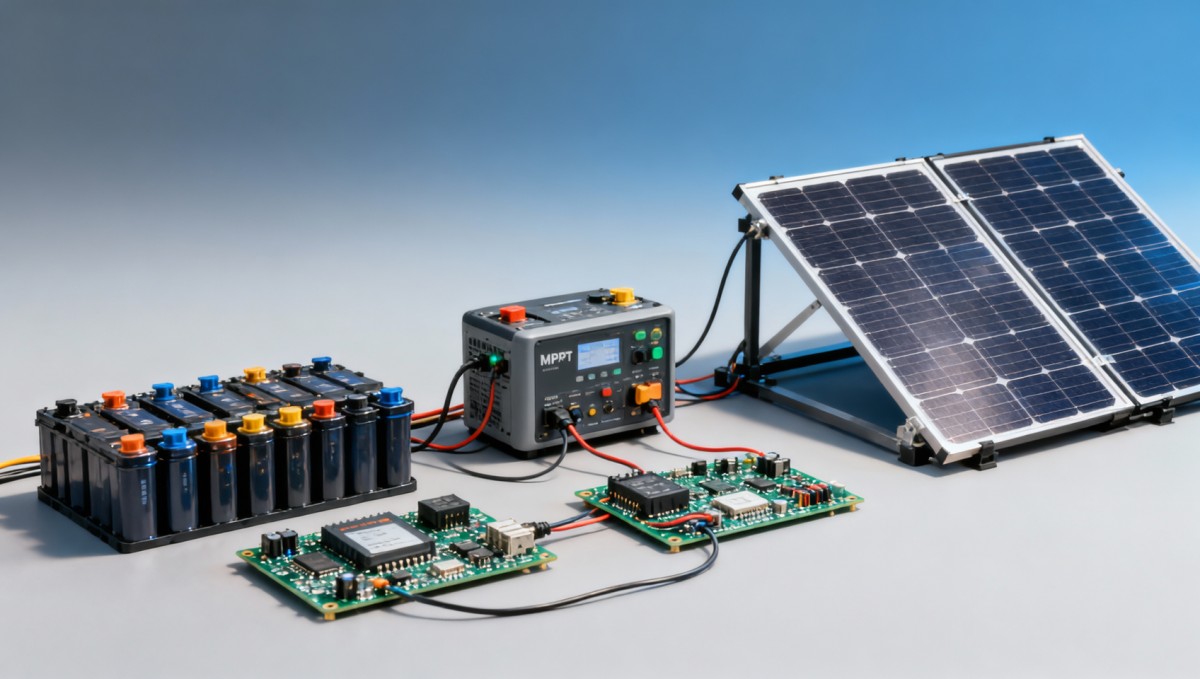
Deep cycle battery failure rarely comes from one dramatic event. In most commercial and industrial settings, early degradation is the result of repeated stress: chronic undercharging, excessive depth of discharge, poor temperature control, wrong charger settings, and irregular maintenance. Across off-grid solar, backup power, mobility equipment, and hybrid energy systems, these factors often build up over 3–12 months before visible performance loss appears.
For operators, the first warning signs are usually reduced runtime, slower recharge acceptance, voltage instability under load, or abnormal heat during charging. For procurement teams, the problem is more expensive: a battery pack that should support a multi-year service interval may require replacement far earlier, creating unplanned inventory pressure and warranty disputes. For project managers, this can also delay site acceptance and disrupt power continuity targets.
In practical terms, deep cycle batteries are designed for repeated discharge and recharge, but they still have operating boundaries. A system that cycles at 20%–50% depth of discharge behaves very differently from one repeatedly pushed to 80% or deeper. Likewise, a battery stored at partial state of charge for weeks will age faster than one maintained within a healthy charging window.
The most common root causes seen in B2B applications
- Improper charging profiles, especially when chargers, MPPT controllers, or solar charge controllers are not matched to battery chemistry and voltage.
- Repeated deep discharge beyond planned limits, common in undersized systems or poorly managed backup applications.
- Heat exposure above typical room conditions, which accelerates internal chemical aging and can reduce useful service life.
- Long idle storage without refresh charging, often seen in seasonal equipment, dealer inventory, or delayed project commissioning.
- Weak integration between batteries, BMS boards, inverters, and load profiles, causing imbalance and inconsistent protection behavior.
This is where a platform like TradeNexus Pro adds value for enterprise buyers. Instead of reviewing products in isolation, decision-makers can compare component compatibility, supply-side positioning, and application-specific risk signals across sectors such as green energy, smart electronics, and advanced manufacturing. That broader procurement view helps prevent a battery purchase from becoming a lifecycle cost problem.
Which operating conditions shorten deep cycle battery life fastest?
If your goal is to avoid early failure in deep cycle batteries, start by controlling the conditions that do the most damage. In field installations, three variables matter most: state of charge management, temperature, and discharge depth. A battery may appear electrically functional, yet still lose a meaningful portion of usable capacity when exposed to poor operating discipline for only a few quarters.
Temperature is a major driver. In many applications, a moderate ambient range around 20°C–25°C is far kinder to battery life than prolonged exposure above 30°C. High heat increases internal corrosion and electrolyte stress. Extremely low temperatures can also reduce available capacity and charging efficiency, which leads some users to overcompensate with unsuitable charging behavior.
Depth of discharge is equally important. A battery cycled shallowly on a regular basis generally lasts longer than one pushed close to empty every day. This is especially relevant for solar-plus-storage systems that rely on portable solar panels, folding solar chargers, or wind generator kits in variable weather. If generation is inconsistent and storage is undersized, repeated deep discharge becomes almost unavoidable.
Charging quality matters just as much as charging speed. A charger or controller that uses the wrong voltage thresholds can cause undercharging, overcharging, or incomplete absorption. AGM batteries, for example, can suffer when charging parameters are copied from other battery types without validation. In wholesale procurement, specification mismatch is one of the most overlooked reasons for early battery complaints.
Quick reference: failure accelerators and control actions
The table below helps procurement teams and operators assess which conditions most often contribute to premature battery degradation and what practical control action should be built into project planning, commissioning, and routine operation.
For distributors and project evaluators, this kind of matrix supports better pre-sales risk screening. It also helps define service scope before the first shipment leaves the warehouse. In many cases, avoiding early failure is less about changing the battery itself and more about correcting the surrounding system design in the first 2–4 weeks of deployment.
How should buyers evaluate battery type, system matching, and procurement risk?
Battery procurement should not be treated as a single-line item decision. Buyers need to evaluate battery type, charger compatibility, duty cycle, storage conditions, replacement logistics, and site-level support requirements. A low unit price may look attractive during bidding, but if the battery experiences early failure under actual field conditions, the total cost of ownership quickly rises through downtime, transport, labor, and warranty administration.
For AGMs and other deep cycle battery formats, one of the most practical questions is whether the system is energy-balanced. If daily energy input from solar charge controllers or other charging sources is regularly lower than energy consumption, battery stress becomes structural. In that case, even a better brand or thicker spec sheet may not solve the underlying issue. Procurement teams should therefore request operating assumptions, not just battery data sheets.
Commercial buyers should also think in batches and service intervals. Small pilot orders can hide scaling issues that only emerge in medium or large deployment. A system that performs acceptably across 10 units may expose charging inconsistency, enclosure heat buildup, or cable loss when expanded to 100 or 500 units. This matters for distributors, OEM partners, and engineering teams planning repeatable delivery across regions.
A practical 5-point procurement checklist
- Confirm the battery chemistry, nominal voltage, and charging profile match the MPPT controller, inverter, and BMS logic.
- Review expected daily discharge depth and backup duration, rather than relying only on nameplate capacity.
- Check transport, storage, and commissioning timelines, especially if goods may remain in inventory for 30–90 days before installation.
- Ask what monitoring data will be available after deployment, including voltage, temperature, cycle count, and alarm history.
- Define warranty handling responsibilities in advance, including evidence requirements, replacement triggers, and local support response.
Comparison table for procurement review
The following comparison framework helps procurement specialists, project owners, and business evaluators judge whether a deep cycle battery offer is operationally sound, not just commercially attractive.
For B2B sourcing teams using TNP to assess supply options, the strongest offers are usually the ones that connect battery specifications with actual duty conditions, integration notes, and support boundaries. That level of visibility helps reduce hidden risk before RFQ finalization and gives enterprise buyers stronger negotiating leverage.
What maintenance and monitoring practices actually extend service life?
Avoiding early failure in deep cycle batteries requires a repeatable maintenance routine, not occasional troubleshooting. In many projects, a simple monthly inspection combined with quarterly performance review is enough to catch the majority of preventable issues. The goal is to identify drift before the battery becomes the visible failure point of the entire system.
At the operator level, monitoring should focus on charge completion, resting voltage trends, temperature patterns, and unusual discharge behavior. At the project level, managers should review whether actual usage still matches original sizing assumptions. Loads often increase after deployment, especially in field systems where additional devices are added without updating battery capacity or charge infrastructure.
For systems using BMS boards or integrated monitoring electronics, alarm history is highly valuable. Repeated low-voltage cutoff, persistent imbalance, or over-temperature flags are not just technical events; they are early procurement and asset-management signals. They indicate whether the installation environment, user behavior, or component selection is creating unnecessary wear.
Recommended inspection routine for operators and service teams
- Every week in critical backup systems: check alarm records, cable integrity, terminal tightness, and enclosure heat buildup.
- Every month in standard operating systems: verify charging completion, review discharge events, and inspect for dust, corrosion, or ventilation blockage.
- Every quarter: compare actual runtime against expected runtime and investigate any significant deviation.
- Before seasonal changes: review whether temperature shifts, lower solar irradiation, or higher load cycles require revised settings or reserve capacity.
Common maintenance mistakes that shorten battery life
A frequent mistake is treating all low performance as a battery defect. In reality, weak charging input, poor cable sizing, load spikes, or incorrect controller configuration often create the same symptoms. Another mistake is leaving replacement stock in storage too long without refresh charging. Dealers and distributors should include storage rotation rules in warehouse SOPs, especially when lead times extend beyond several weeks.
A more strategic maintenance approach also supports business decisions. It gives procurement teams better evidence during supplier review, helps finance teams model replacement cycles more accurately, and allows project owners to compare initial battery pricing with actual lifecycle cost. That is especially useful in sectors where uptime matters more than nominal capacity on paper.
FAQ: what do buyers and project teams ask most often?
The questions below reflect common search intent from users, engineering teams, sourcing managers, and enterprise decision-makers trying to reduce battery replacement risk while improving system reliability.
How do I know if early failure is caused by the battery or the charging system?
Start with system evidence. Review charger settings, charge completion history, low-voltage events, and ambient temperature records over the previous 30–60 days. If multiple units show similar degradation under the same controller configuration, the issue may be systemic rather than cell-specific. This is why installation records and monitoring logs are critical in B2B environments.
Are AGM batteries a good choice for solar and backup projects?
They can be, especially where sealed construction, manageable maintenance, and broad application compatibility are priorities. However, AGM performance depends heavily on correct charging voltage, thermal conditions, and realistic discharge planning. If the system frequently stays undercharged or experiences extreme cycling, the battery may fail early regardless of nominal suitability.
What should procurement teams ask before placing an order?
Ask for five things at minimum: charging parameter guidance, recommended operating temperature range, expected storage requirements before installation, evidence of compatibility with your controller setup, and warranty claim documentation requirements. These questions help prevent costly misunderstandings later in the project lifecycle.
How long is a typical delivery and commissioning window?
That depends on the region, order volume, and whether the package includes batteries alone or an integrated solution with BMS boards, MPPT controllers, or portable solar accessories. In many B2B scenarios, delivery and site readiness can fall within 2–8 weeks. If commissioning is delayed, storage management becomes part of battery life protection, not just logistics.
Why work with TradeNexus Pro when evaluating battery risk and supply options?
Battery reliability is not only a product question. It is a sourcing, integration, and lifecycle management question that sits across green energy systems, smart electronics, and supply chain execution. TradeNexus Pro helps buyers and business evaluators move beyond surface-level sourcing by connecting technical selection with market intelligence, supplier positioning, and project-fit analysis.
For procurement directors and enterprise decision-makers, this means faster assessment of whether an offer is aligned with application realities. For project managers, it means clearer visibility into where battery failure risk comes from before rollout. For distributors and channel partners, it supports better portfolio decisions by comparing not just components, but use-case resilience, replacement exposure, and implementation practicality.
If you are evaluating deep cycle batteries, AGM batteries wholesale, solar charge controllers, MPPT setups, BMS boards, or integrated storage solutions, TradeNexus Pro can support more informed decisions around parameter confirmation, product selection, deployment timing, certification expectations, and supplier communication. This is especially useful when projects involve multiple regions, mixed duty cycles, or strict commercial review.
Contact us for decision support that is specific and actionable
- Confirm battery and controller parameter compatibility before RFQ or purchase approval.
- Compare solution paths for backup power, solar storage, portable energy systems, and hybrid charging environments.
- Discuss delivery windows, sample support, and staged deployment planning for small, medium, or large project batches.
- Review storage, commissioning, and monitoring requirements to reduce early failure risk after shipment.
- Align commercial evaluation with technical risk so that pricing decisions also reflect lifecycle performance.
If your team needs a clearer path on product selection, charging configuration, delivery planning, compliance questions, or quotation communication, reach out through TradeNexus Pro for a focused discussion built around your application, constraints, and procurement goals.
Get weekly intelligence in your inbox.
No noise. No sponsored content. Pure intelligence.
 Apr 17, 2026Temperature data loggers drift unpredictably inside lithium-ion battery storage enclosuresTemperature data loggers drift unpredictably inside lithium-ion battery storage enclosures
 Apr 17, 2026Are solar microinverters really worth the extra cost?Are solar microinverters really worth the extra cost?
 Apr 17, 2026Bifacial solar panels: How much more energy can they generate?Bifacial solar panels: How much more energy can they generate?
 Apr 17, 2026Gear manufacturing: How to optimize production for high precision?Gear manufacturing: How to optimize production for high precision?
 Apr 17, 2026Why power transmission components fail earlier than expectedWhy power transmission components fail earlier than expected
 Apr 17, 2026Linear motion systems: belt drive or ball screw for speed?Linear motion systems: belt drive or ball screw for speed?
 Apr 17, 2026Industrial bearing suppliers: what signals reliable quality?Industrial bearing suppliers: what signals reliable quality?
 Apr 17, 2026When pneumatic valves wholesale gets expensive laterWhen pneumatic valves wholesale gets expensive later
 Apr 17, 2026Hydraulic cylinder fabrication mistakes that cause oil leaksHydraulic cylinder fabrication mistakes that cause oil leaks
 Apr 17, 2026Heavy equipment manufacturing delays often start hereHeavy equipment manufacturing delays often start here
 Apr 17, 2026Custom heatsinks: when a larger size solves nothingCustom heatsinks: when a larger size solves nothing
 Apr 17, 2026Electronic enclosure fabrication: steel or aluminum?Electronic enclosure fabrication: steel or aluminum?
 Apr 17, 2026Automotive parts machining tolerances that drive up scrapAutomotive parts machining tolerances that drive up scrap
 Apr 17, 2026Medical device manufacturing changes under tighter traceabilityMedical device manufacturing changes under tighter traceability
 Apr 17, 2026How to Choose Solid State Batteries in 2026How to Choose Solid State Batteries in 2026
 Apr 17, 2026Are Solid State Batteries Worth the Cost Yet?Are Solid State Batteries Worth the Cost Yet?
 Apr 17, 2026Commercial Energy Storage Sizing: What Matters Most?Commercial Energy Storage Sizing: What Matters Most?
 Apr 17, 2026Commercial Energy Storage ROI: How to Assess ItCommercial Energy Storage ROI: How to Assess It
 Apr 17, 2026Off Grid Solar Systems: What to Avoid FirstOff Grid Solar Systems: What to Avoid First
 Apr 17, 2026Who Should Use Off Grid Solar Systems?Who Should Use Off Grid Solar Systems?
 Apr 17, 2026Solar Microinverters vs String Inverters: Which Fits?Solar Microinverters vs String Inverters: Which Fits?
 Apr 17, 2026When Do Solar Microinverters Make More Sense?When Do Solar Microinverters Make More Sense?
 Apr 17, 2026How digital freight matching for international shipping cuts transit time by up to 22% in 2026How digital freight matching for international shipping cuts transit time by up to 22% in 2026
 Apr 17, 2026Why port automation tech for smart logistics reduces container handling errors by 37% at Tier-1 terminalsWhy port automation tech for smart logistics reduces container handling errors by 37% at Tier-1 terminals
 Apr 17, 2026What yard management systems for port operations actually deliver in real-world deploymentsWhat yard management systems for port operations actually deliver in real-world deployments
 Apr 17, 2026Can digital customs clearance for sea freight reduce D/O processing from 48 hours to under 90 minutesCan digital customs clearance for sea freight reduce D/O processing from 48 hours to under 90 minutes
 Apr 17, 2026How returnable transport packaging for automotive parts lowers TCO by 18–25% over 3 yearsHow returnable transport packaging for automotive parts lowers TCO by 18–25% over 3 years