Small Wind Turbine vs Solar: Which Pays Back Faster?
For buyers and project teams weighing a wind turbine against solar battery systems, payback speed depends on far more than headline equipment costs. From lithium ion batteries and portable power stations to smart thermostats and broader electrification trends, the right choice varies by site conditions, load profile, and long-term operating goals. This comparison breaks down the financial, technical, and practical factors that matter most to enterprise decision-makers.
What actually determines whether small wind turbine or solar pays back faster?
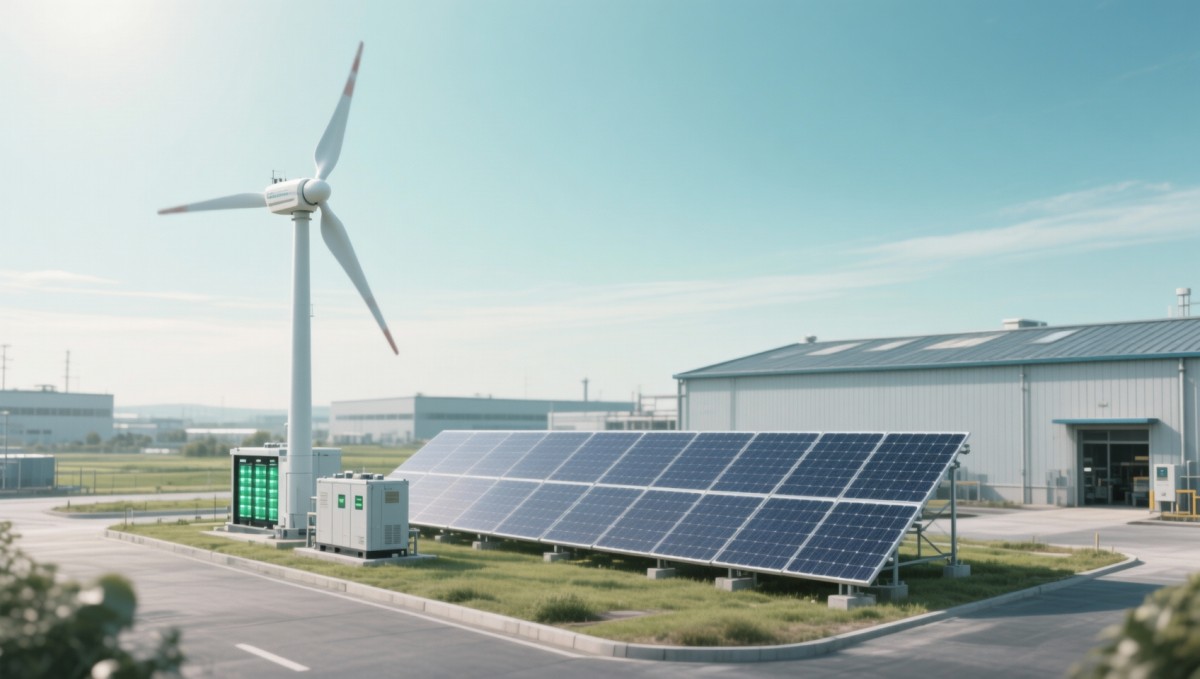
Many procurement teams start with equipment price, but payback is shaped by at least 5 core variables: local wind resource, solar irradiation, hourly load profile, installation complexity, and maintenance burden over a 5–15 year planning horizon. In mixed commercial and industrial settings, the cheapest system on day one is often not the fastest-returning system over the asset life.
A small wind turbine can generate power through day and night when wind conditions are stable, which may improve utilization in exposed coastal sites, high ridgelines, farms, ports, or remote compounds. Solar, however, usually benefits from simpler installation, broader contractor availability, and more predictable output modeling. For many B2B buyers, faster payback comes from fewer surprises rather than higher theoretical generation.
The financial approval team also looks beyond simple ROI. They care about cash flow timing, maintenance visits per quarter, spare parts availability, inverter replacement cycles, and whether the system reduces diesel use, peak tariffs, or grid outage losses. A project that pays back in 4–7 years on paper can stretch longer if permitting, civil works, or service access are underestimated.
From the operator perspective, the best option is the one that matches how energy is consumed. If the site has daytime demand concentrated between 9:00 and 17:00, solar often aligns naturally. If loads continue overnight or the site is windy during non-solar hours, a small wind turbine may close the gap faster, especially when paired with lithium ion batteries or a right-sized battery system.
A quick decision frame for cross-functional teams
- Technical evaluators should validate annual wind speed range, turbulence, shading, rooftop or tower constraints, and usable generation hours before comparing vendors.
- Commercial reviewers should separate CAPEX from total cost of ownership, including service contracts, replacement parts, and downtime risk over 3, 5, and 10 years.
- Project managers should review delivery lead times, crane or lifting needs, permitting sequence, and site safety controls, since these often drive hidden delay costs.
- Finance approvers should test sensitivity under three scenarios: expected resource, weaker resource, and stronger resource, rather than approving on a single output assumption.
Side-by-side comparison: where solar usually wins, and where small wind turbine can outperform
The table below gives a practical comparison for enterprise buyers evaluating small wind turbine systems against solar with or without battery storage. It focuses on procurement-relevant criteria rather than generic consumer claims. In most urban and suburban commercial sites, solar tends to pay back faster. In strong-wind locations with high evening demand, small wind can become competitive or even superior.
For most general-industry buyers, solar has the advantage of repeatability. Engineering firms, EPCs, and insurers are usually more familiar with solar scopes, and installation can often move from design to commissioning in 4–12 weeks depending on system size, roof condition, and interconnection review. Small wind turbine projects can require longer due diligence because micro-siting errors can severely affect production.
That said, the comparison changes when daytime solar output does not match the load. A logistics yard, telecom relay station, agricultural facility, or remote operations base with late evening or overnight demand may benefit from wind-generated energy during off-solar hours. In those cases, the avoided cost of diesel runtime or battery cycling can improve small wind economics.
Another overlooked factor is usable land or roof area. A site with limited roof capacity but strong wind exposure may not have enough room to install the solar array needed for target savings. Conversely, a site with strict height restrictions, nearby buildings, or noise sensitivity may rule out small wind before financial modeling even begins.
Typical payback pattern by site type
Buyers often ask for a universal answer, but the better approach is to compare common scenarios. The table below helps project teams filter the likely faster-payback option based on site exposure, operations profile, and complexity. These are directional judgments, not substitutes for a detailed site assessment.
This comparison shows why enterprise energy projects should not rely on generic online calculators alone. A site may look ideal for solar based on annual irradiation, yet tariff structure, outage cost, and night loads may point toward a hybrid design. Likewise, a windy location may still underperform if turbulence, maintenance access, or permitting constraints are not screened early.
How should technical and finance teams calculate payback in a realistic way?
A realistic payback model should use a 7-step framework rather than a single spreadsheet line. Start with annual energy yield, then map it against the site’s hourly load, local tariff schedule, outage costs, maintenance plan, replacement assumptions, and financing structure. This is especially important when comparing a small wind turbine with solar battery systems, because generation timing matters almost as much as generation volume.
For example, a solar system may produce more total energy on paper, but if 20%–40% of that energy is exported at a low compensation rate while a wind system offsets expensive evening power, the payback gap can narrow. On the other hand, if a small wind turbine needs more frequent service visits or specialized parts, those operating costs may erase the timing advantage.
Battery integration also changes the equation. Lithium ion batteries can improve solar self-consumption and resilience, but they add CAPEX and eventual replacement considerations. In some facilities, adding a modest battery to solar is still more economical than installing a small wind turbine. In other cases, a hybrid system lowers diesel dependency and stabilizes power quality better than either resource alone.
Project teams should also define which payback metric they mean. Simple payback, discounted payback, internal rate of return, and cost of energy each answer different approval questions. Financial approvers often prefer a 3-case model: base case, conservative case, and downside case. This makes it easier to compare vendor assumptions without overstating savings.
A practical 7-step payback review process
- Measure or estimate resource quality using at least 12 months of relevant local data where possible, or use credible modeled data with on-site validation.
- Profile load by hour, not just by month, to see whether generation matches actual consumption windows.
- Include full installed cost: equipment, civil works, structure, wiring, metering, grid interconnection, protection, and commissioning.
- Model maintenance frequency, expected service labor, and replacement cycles for inverters, batteries, and rotating components.
- Account for downtime risk, especially where access equipment, tower service, or remote site logistics can delay repairs.
- Test policy and tariff sensitivity, including self-consumption value, export value, demand charges, and diesel offset value.
- Review compliance, insurance, and safety measures early so they do not become late-stage cost surprises.
Which hidden costs most often distort the payback result?
The most common hidden costs are structural reinforcement, ground works, crane access, export limitation devices, battery HVAC, inverter replacement, and recurring inspection. For small wind turbine projects, turbulence assessment, foundation design, and service access can materially change total installed cost. For solar, roof remediation and electrical upgrades are common omissions in early budgets.
Quality and safety managers should also budget for inspection routines. Depending on the site, checks may be monthly, quarterly, or tied to severe weather events. A project that saves energy but raises safety intervention frequency may face internal resistance, particularly in healthcare technology, electronics, or manufacturing environments where uptime and compliance are closely monitored.
This is where TradeNexus Pro becomes useful to enterprise buyers. Instead of relying on broad, shallow comparisons, decision-makers can benchmark supply-side trends, compare integration pathways across sectors, and identify which solution aligns with procurement strategy, serviceability, and long-term operational resilience.
Which option fits which business scenario across industry operations?
In advanced manufacturing, smart electronics, healthcare technology, green energy operations, and supply chain facilities, energy assets are judged by uptime support and operational fit, not only by headline savings. A warehouse with refrigeration, a factory with compressed air demand, and a remote telecom-support node may all have very different answers to the question of whether solar or small wind pays back faster.
For daytime-heavy facilities, solar often wins because the generation window aligns with HVAC, office loads, charging infrastructure, and production support systems. Smart thermostats, load controls, and energy management software can further improve self-consumption. In these cases, the return is strengthened not just by generation but by demand optimization.
For off-grid or weak-grid sites, the calculation changes. If diesel costs, fuel transport, or outage losses are high, the value of kilowatt-hours generated outside daylight hours rises sharply. A small wind turbine can complement solar and reduce battery cycling. This may not always produce the shortest simple payback, but it can lower operational risk and improve resilience metrics over 24-hour operations.
Project owners should therefore classify sites into 3 broad groups: grid-tied daytime sites, mixed-load sites with evening demand, and remote or resilience-critical sites. That simple segmentation often clarifies whether the buyer should compare solar versus wind directly, or whether the real choice is solar-only versus a hybrid system.
Scenario-based selection signals
- Choose solar first when roof or ground area is available, daytime consumption is high, and the organization wants faster deployment with lower maintenance complexity.
- Consider a small wind turbine when the site has verified wind exposure, night loads are meaningful, and the business can support specialized maintenance access.
- Consider solar plus battery when resilience, peak shaving, or outage backup matters more than maximizing annual generation alone.
- Consider a hybrid wind-solar-battery design when diesel displacement, round-the-clock operations, or remote supply chain risk justify a more resilient architecture.
Implementation timing buyers should expect
Typical pre-purchase evaluation can take 2–6 weeks depending on data quality and internal approvals. For straightforward solar, procurement to commissioning may take roughly 4–12 weeks. Small wind turbine projects may require a longer cycle because tower placement, environmental review, height limits, and safety planning often need additional sign-off. Hybrid systems usually add controls integration and therefore require more coordination.
This timing matters for payback because delays defer savings. A solution with slightly weaker long-term economics can still be attractive if it is implementable within the current budget cycle or before a seasonal tariff increase. Decision-makers should therefore compare not only return on capital, but return on execution speed.
Common mistakes, compliance checks, and questions buyers ask before approval
One of the biggest mistakes in the small wind turbine versus solar debate is assuming that renewable generation alone guarantees value. In practice, value depends on usable generation, maintainability, and integration quality. Another common error is comparing solar with batteries against wind without applying the same reliability and replacement logic to both systems.
Compliance should also be checked early. Depending on the market and site type, project teams may need to review electrical codes, structural approvals, grounding, inverter requirements, fire safety provisions, noise considerations, and utility interconnection procedures. Quality and safety managers should document at least 5 key checks before final vendor selection to avoid scope drift during installation.
A disciplined buyer will ask whether the project can be serviced locally within 48–72 hours for critical faults, what spares are stocked regionally, and which components are considered long-lead items. These are not minor details. A faster nominal payback can quickly erode if a failed controller or inverter causes extended downtime during peak operating periods.
Because TradeNexus Pro tracks supply chain movement and technology developments across green energy and adjacent sectors, procurement leaders can use it to compare vendor readiness, integration patterns, and strategic sourcing implications before committing to a specific energy pathway.
FAQ for procurement, engineering, and finance teams
Does a small wind turbine always produce more useful power at night than solar with batteries?
Not always. A small wind turbine only adds value if the site has sufficient and consistent wind at the actual turbine height, with manageable turbulence. Solar with batteries may still be more practical if the site has strong daytime generation, moderate evening loads, and a limited maintenance budget. The choice depends on resource quality, load timing, and service capability.
What should be measured before comparing payback?
At minimum, measure or model local wind and solar resource, hourly electricity use, tariff structure, outage cost, available space, and maintenance access. Without those 6 inputs, any payback claim is only preliminary. If the site is remote, add fuel logistics and service travel time as explicit cost lines.
Is hybrid always the best answer?
No. Hybrid systems can improve resilience and fuel displacement, but they also increase design complexity, controls scope, and capital cost. For a simple warehouse or office site, solar may remain the clearest choice. Hybrid becomes more compelling when there is weak-grid exposure, 24-hour operations, or high penalties from outages and diesel use.
How long does vendor evaluation usually take?
For a structured B2B process, technical and commercial screening often takes 2–4 weeks, followed by detailed review, negotiation, and internal approval. If permitting or interconnection is complex, the process may extend further. Buyers should align technical, finance, safety, and project teams early to avoid repeated review cycles.
Why consult TradeNexus Pro before selecting a wind or solar pathway?
When buyers search for “small wind turbine vs solar,” they often find generic articles that ignore procurement risk, supply chain exposure, and cross-functional approval needs. TradeNexus Pro is built for a different audience: procurement directors, technical evaluators, project owners, and enterprise decision-makers who need deeper market intelligence across green energy, advanced manufacturing, electronics, healthcare technology, and supply chain SaaS.
TNP helps teams move from surface-level comparison to decision-ready evaluation. That includes tracking technology shifts, understanding vendor positioning, identifying integration patterns, and benchmarking how different energy options affect cost structure, resilience planning, and sourcing strategy. For businesses balancing payback speed against operational risk, that context is often as valuable as the equipment quote itself.
If your team is comparing a small wind turbine, solar PV, solar battery systems, lithium ion batteries, or portable power support for a facility upgrade, TNP can help frame the decision around site fit, implementation timing, serviceability, and long-term commercial impact. This is especially useful when internal stakeholders have conflicting priorities around CAPEX, maintenance, compliance, and uptime.
Contact TradeNexus Pro to discuss the points that matter before approval: parameter confirmation, site-fit screening, technology pathway selection, delivery lead times, integration scope, compliance considerations, sample or pilot planning, and quotation comparison. For enterprise buyers, faster payback starts with better evaluation, not just lower price.
Get weekly intelligence in your inbox.
No noise. No sponsored content. Pure intelligence.
 Apr 30, 2026Tangshan Beijiao Thermal Power Unit #1 A-Grade Maintenance LaunchTangshan Beijiao Thermal Power Unit #1 A-Grade Maintenance Launch
 Apr 30, 2026SAMR to Finalize 1,800+ Standards in 2026 Affecting Industrial Materials ExportsSAMR to Finalize 1,800+ Standards in 2026 Affecting Industrial Materials Exports
 Apr 30, 2026UAE Becomes Global AI Hub: New CE-ADAS+ Pathway for Chinese Smart Industrial EquipmentUAE Becomes Global AI Hub: New CE-ADAS+ Pathway for Chinese Smart Industrial Equipment
 Apr 30, 2026Vietnam’s SMT Expansion Drives CNC Fixture Export DelaysVietnam’s SMT Expansion Drives CNC Fixture Export Delays
 Apr 30, 2026USITC Launches 337 Investigation on Wi-Fi 7 RF Modules from ChinaUSITC Launches 337 Investigation on Wi-Fi 7 RF Modules from China
 Apr 30, 2026Morocco Enforces PV Mounting Structure Certification from Q3 2026Morocco Enforces PV Mounting Structure Certification from Q3 2026
 Apr 30, 2026TÜV Rheinland Launches Fast-Track Certification for Chinese Warehouse RobotsTÜV Rheinland Launches Fast-Track Certification for Chinese Warehouse Robots
 Apr 30, 2026Red Sea Crisis Deepens: Suez Canal Fees Up 12%, China-Europe Rail Premium Hits 35%Red Sea Crisis Deepens: Suez Canal Fees Up 12%, China-Europe Rail Premium Hits 35%
 Apr 30, 2026EU Enforces Battery Passport Checks: Storage Export Delays RiseEU Enforces Battery Passport Checks: Storage Export Delays Rise
 Apr 29, 2026USITC Launches Section 337 Investigation into Chinese Wi-Fi 7 RF ModulesUSITC Launches Section 337 Investigation into Chinese Wi-Fi 7 RF Modules
 Apr 29, 2026Côte d'Ivoire Launches $500M Grid Storage Tender, Chinese BESS Fast-TrackedCôte d'Ivoire Launches $500M Grid Storage Tender, Chinese BESS Fast-Tracked
 Apr 29, 2026Morocco Enforces IEC 61427-2:2025 PV Mounting Certification from Q3 2026Morocco Enforces IEC 61427-2:2025 PV Mounting Certification from Q3 2026
 Apr 29, 2026UAE Becomes Global AI Hub: New CE-ADAS+ Path for Chinese Smart Industrial EquipmentUAE Becomes Global AI Hub: New CE-ADAS+ Path for Chinese Smart Industrial Equipment
 Apr 29, 2026Red Sea Crisis: Suez Canal Fees Up 12%, China-Europe Rail Premium at 35%Red Sea Crisis: Suez Canal Fees Up 12%, China-Europe Rail Premium at 35%
 Apr 29, 2026TÜV Rheinland Launches Fast-Track Certification for Chinese Warehouse RobotsTÜV Rheinland Launches Fast-Track Certification for Chinese Warehouse Robots
 Apr 29, 2026Vietnam's SMT Expansion Drives CNC Fixture Export DelaysVietnam's SMT Expansion Drives CNC Fixture Export Delays
![]() Apr 29, 2026NEOM Smart Infrastructure Phase II Opens Bidding: Chinese PV Mounting & BESS Pre-QualifiedNEOM Smart Infrastructure Phase II Opens Bidding: Chinese PV Mounting & BESS Pre-Qualified
Apr 29, 2026NEOM Smart Infrastructure Phase II Opens Bidding: Chinese PV Mounting & BESS Pre-QualifiedNEOM Smart Infrastructure Phase II Opens Bidding: Chinese PV Mounting & BESS Pre-Qualified Apr 29, 2026EU Enforces Battery Passport for Energy Storage Imports from July 2026EU Enforces Battery Passport for Energy Storage Imports from July 2026
 Apr 29, 2026Maine Bans New >20MW Data Centers — AI Hardware Delivery ImpactedMaine Bans New >20MW Data Centers — AI Hardware Delivery Impacted
 Apr 28, 2026Suez Canal Fee Hike & China-Europe Rail Premium: Q2 2026 ImpactSuez Canal Fee Hike & China-Europe Rail Premium: Q2 2026 Impact
 Apr 28, 2026TÜV Rheinland Launches Fast-Track Certification for Chinese Warehouse RobotsTÜV Rheinland Launches Fast-Track Certification for Chinese Warehouse Robots
 Apr 28, 2026EU Enforces Battery Passport Rule for Chinese ESS Exports from 2027EU Enforces Battery Passport Rule for Chinese ESS Exports from 2027
 Apr 28, 2026ADB Raises Vietnam GDP Forecast to 7.2%: SMT & Precision Fixture Demand RisesADB Raises Vietnam GDP Forecast to 7.2%: SMT & Precision Fixture Demand Rises
 Apr 28, 2026US ITC Launches Section 337 Investigation into Chinese Wi-Fi 7 RF FEMsUS ITC Launches Section 337 Investigation into Chinese Wi-Fi 7 RF FEMs
 Apr 28, 2026Côte d'Ivoire Opens $500M Power Tender: Chinese BESS Get Fast-Track AccessCôte d'Ivoire Opens $500M Power Tender: Chinese BESS Get Fast-Track Access
 Apr 28, 2026BP’s Algeria East Basin Permit Spurs Valve Demand, Lead Times Extend to 18 WeeksBP’s Algeria East Basin Permit Spurs Valve Demand, Lead Times Extend to 18 Weeks
") Apr 28, 2026Vietnam Mandates V-Trust for Smart Appliances Export (July 2026)Vietnam Mandates V-Trust for Smart Appliances Export (July 2026)
Apr 28, 2026Vietnam Mandates V-Trust for Smart Appliances Export (July 2026)Vietnam Mandates V-Trust for Smart Appliances Export (July 2026)