TÜV SÜD Updates PV Inverter Certification: EN IEC 62109-3:2026 Now Enforced
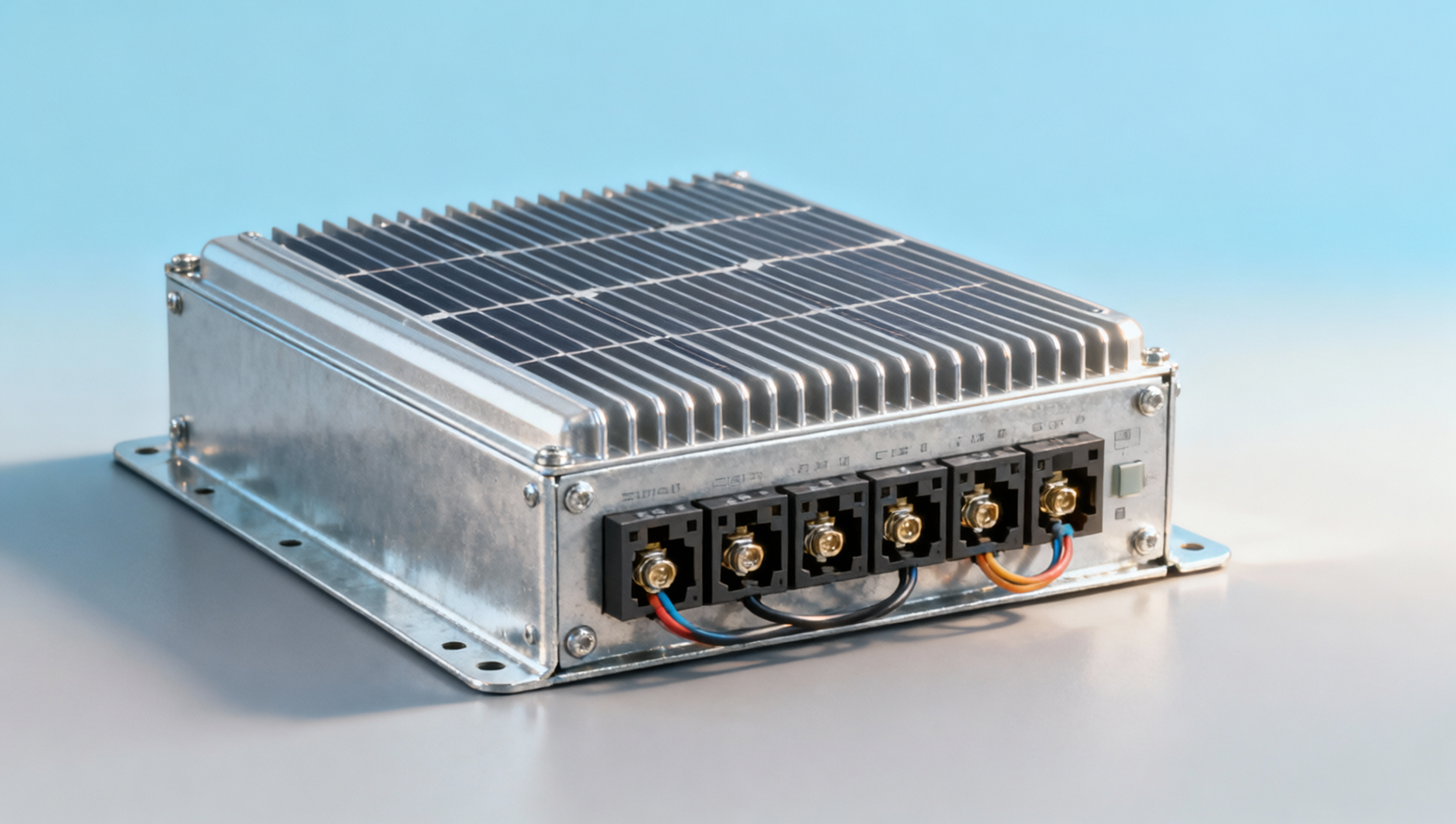
On April 15, 2026, TÜV SÜD Germany announced the full implementation of the updated safety standard EN IEC 62109-3:2026 for photovoltaic inverters. This change directly affects manufacturers exporting grid-connected inverters to EU markets — particularly those targeting certification after July 2026 — and signals a tightening of technical compliance requirements for distributed solar integration.
Event Overview
TÜV SÜD Germany officially activated EN IEC 62109-3:2026 on April 15, 2026. From July 2026 onward, all new inverter models submitted for certification must pass the newly mandated ‘robustness test for islanding detection in multi-source grid-connected scenarios’. The test simulates complex distributed PV cluster environments where multiple inverters operate concurrently near grid interconnection points. As of the announcement, 11 major Chinese inverter manufacturers have completed pre-testing; however, smaller manufacturers are expected to face certification delays of 6–8 weeks.
Which Subsectors Are Affected
Manufacturers (OEMs & Tier-1 Suppliers)
Manufacturers producing grid-tied inverters for EU export are directly affected because compliance with EN IEC 62109-3:2026 is now a prerequisite for TÜV SÜD certification. The new ‘multi-source islanding detection robustness’ test adds functional validation beyond prior versions, requiring hardware-level design review and firmware updates — especially for inverters supporting peer-to-peer communication or dynamic reactive power control.
Export-Oriented Trading Companies
Trading firms acting as EU market representatives or authorized representatives for Chinese inverter brands must verify whether submitted models meet the updated test requirement before submission. Non-compliant submissions risk rejection or extended evaluation cycles — impacting shipment timelines and contractual delivery windows under CE-marking supply agreements.
Testing & Certification Service Providers
Laboratories and third-party testing entities accredited by TÜV SÜD must update their test protocols and calibration procedures to align with EN IEC 62109-3:2026. Capacity constraints may emerge in Q2–Q3 2026 due to increased demand for the new islanding robustness test, potentially affecting turnaround times for clients.
Supply Chain Integrators (e.g., EPC Contractors, System Designers)
EPC contractors specifying inverters for EU utility-scale or commercial rooftop projects must now confirm certified model numbers against TÜV SÜD’s updated database. Use of non-certified or legacy-certified inverters post-July 2026 may invalidate project-level conformity assessments required under EU Construction Products Regulation (CPR) or national grid codes.
What Relevant Enterprises or Practitioners Should Focus On and How to Respond
Monitor official TÜV SÜD technical bulletins and test plan revisions
While EN IEC 62109-3:2026 is now active, TÜV SÜD may issue supplementary guidance documents (e.g., interpretation notes, test setup specifications, or transitional provisions). Stakeholders should subscribe to TÜV SÜD’s official technical alerts and review any updates published between April and June 2026.
Verify certification status of current and upcoming inverter SKUs
Manufacturers and importers should cross-check existing TÜV SÜD certificates against the new standard’s scope. Models certified only under EN IEC 62109-1:2010 or EN IEC 62109-2:2011 are not grandfathered. Any new sub-model variants (e.g., firmware updates, enclosure changes, or grid code adaptations) require re-evaluation under the 2026 edition.
Distinguish between policy enforcement timing and practical certification lead time
The July 2026 deadline applies to submission dates, not issuance dates. Given typical TÜV SÜD certification cycles (8–12 weeks), stakeholders aiming for timely certification should initiate applications no later than early May 2026 — especially if internal pre-testing has not yet been completed.
Prepare firmware, documentation, and lab coordination in advance
The new islanding robustness test requires precise synchronization of multiple inverters and controlled grid disturbance profiles. Manufacturers should allocate engineering resources to revise test reports, update user manuals with revised anti-islanding logic descriptions, and coordinate with labs on test bed availability well ahead of submission.
Editorial Perspective / Industry Observation
From an industry perspective, this update is less a standalone regulatory shift and more a technical signal reflecting evolving grid stability expectations in high-penetration PV markets. The emphasis on ‘multi-source’ islanding detection robustness suggests increasing scrutiny of how inverters behave not in isolation — but as coordinated components within decentralized energy systems. Analysis来看, this reflects broader EU grid code trends (e.g., EN 50549, VDE-AR-N 4105 revisions) rather than an isolated certification hurdle. Current更值得关注的是 how quickly national grid operators adopt EN IEC 62109-3:2026 as a de facto reference in technical acceptance criteria — which would extend its influence beyond TÜV SÜD’s certification scope. It is better understood as an early-stage compliance signal, not yet a fully enforced market access barrier — but one that is likely to cascade into procurement and system integration practices over the next 12 months.
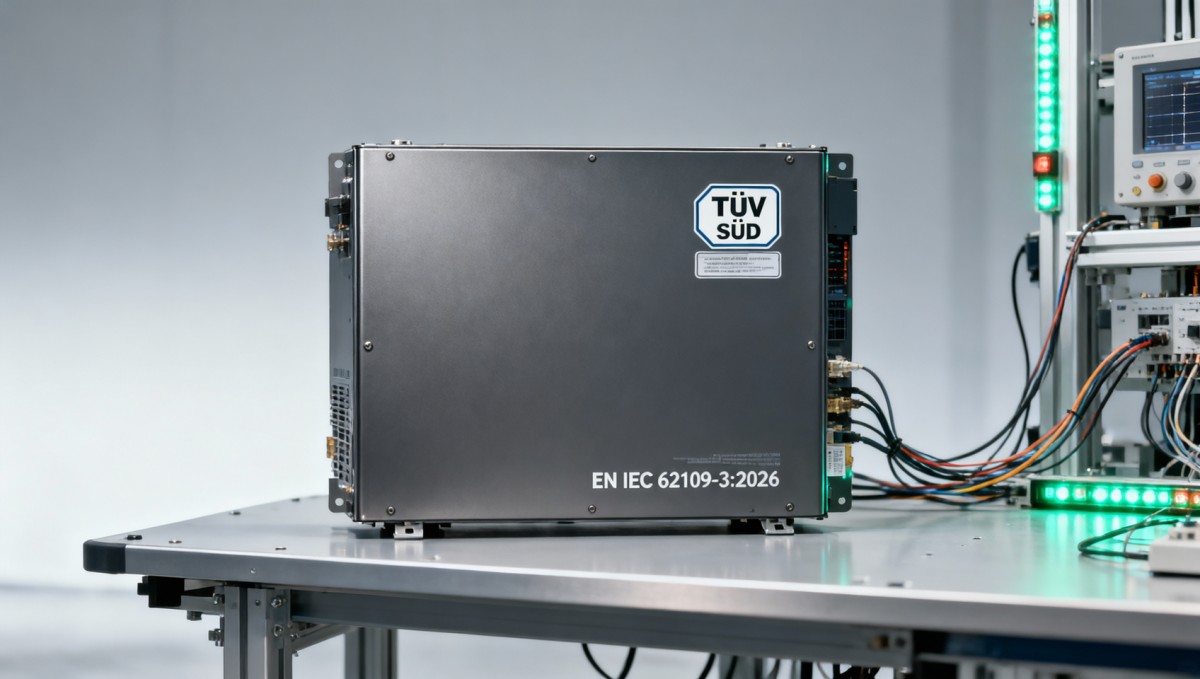
In summary, TÜV SÜD’s adoption of EN IEC 62109-3:2026 marks a targeted technical escalation in PV inverter safety assessment — focused specifically on real-world multi-inverter grid interaction. Its immediate impact lies in certification timing and engineering validation effort, not broad product bans or retroactive recalls. For stakeholders, it is best interpreted not as a disruption, but as a calibrated step toward harmonized, system-aware inverter performance standards in European markets.
Source: Official announcement by TÜV SÜD Germany, dated April 15, 2026. Note: Implementation timeline and test methodology details remain subject to ongoing clarification by TÜV SÜD; further updates are expected through Q2 2026.
Get weekly intelligence in your inbox.
No noise. No sponsored content. Pure intelligence.
 Apr 17, 2026Temperature data loggers drift unpredictably inside lithium-ion battery storage enclosuresTemperature data loggers drift unpredictably inside lithium-ion battery storage enclosures
 Apr 17, 2026Are solar microinverters really worth the extra cost?Are solar microinverters really worth the extra cost?
 Apr 17, 2026Bifacial solar panels: How much more energy can they generate?Bifacial solar panels: How much more energy can they generate?
 Apr 17, 2026Gear manufacturing: How to optimize production for high precision?Gear manufacturing: How to optimize production for high precision?
 Apr 17, 2026Why power transmission components fail earlier than expectedWhy power transmission components fail earlier than expected
 Apr 17, 2026Linear motion systems: belt drive or ball screw for speed?Linear motion systems: belt drive or ball screw for speed?
 Apr 17, 2026Industrial bearing suppliers: what signals reliable quality?Industrial bearing suppliers: what signals reliable quality?
 Apr 17, 2026When pneumatic valves wholesale gets expensive laterWhen pneumatic valves wholesale gets expensive later
 Apr 17, 2026Hydraulic cylinder fabrication mistakes that cause oil leaksHydraulic cylinder fabrication mistakes that cause oil leaks
 Apr 17, 2026Heavy equipment manufacturing delays often start hereHeavy equipment manufacturing delays often start here
 Apr 17, 2026Custom heatsinks: when a larger size solves nothingCustom heatsinks: when a larger size solves nothing
 Apr 17, 2026Electronic enclosure fabrication: steel or aluminum?Electronic enclosure fabrication: steel or aluminum?
 Apr 17, 2026Automotive parts machining tolerances that drive up scrapAutomotive parts machining tolerances that drive up scrap
 Apr 17, 2026Medical device manufacturing changes under tighter traceabilityMedical device manufacturing changes under tighter traceability
 Apr 17, 2026How to Choose Solid State Batteries in 2026How to Choose Solid State Batteries in 2026
 Apr 17, 2026Are Solid State Batteries Worth the Cost Yet?Are Solid State Batteries Worth the Cost Yet?
 Apr 17, 2026Commercial Energy Storage Sizing: What Matters Most?Commercial Energy Storage Sizing: What Matters Most?
 Apr 17, 2026Commercial Energy Storage ROI: How to Assess ItCommercial Energy Storage ROI: How to Assess It
 Apr 17, 2026Off Grid Solar Systems: What to Avoid FirstOff Grid Solar Systems: What to Avoid First
 Apr 17, 2026Who Should Use Off Grid Solar Systems?Who Should Use Off Grid Solar Systems?
 Apr 17, 2026Solar Microinverters vs String Inverters: Which Fits?Solar Microinverters vs String Inverters: Which Fits?
 Apr 17, 2026When Do Solar Microinverters Make More Sense?When Do Solar Microinverters Make More Sense?
 Apr 17, 2026How digital freight matching for international shipping cuts transit time by up to 22% in 2026How digital freight matching for international shipping cuts transit time by up to 22% in 2026
 Apr 17, 2026Why port automation tech for smart logistics reduces container handling errors by 37% at Tier-1 terminalsWhy port automation tech for smart logistics reduces container handling errors by 37% at Tier-1 terminals
 Apr 17, 2026What yard management systems for port operations actually deliver in real-world deploymentsWhat yard management systems for port operations actually deliver in real-world deployments
 Apr 17, 2026Can digital customs clearance for sea freight reduce D/O processing from 48 hours to under 90 minutesCan digital customs clearance for sea freight reduce D/O processing from 48 hours to under 90 minutes
 Apr 17, 2026How returnable transport packaging for automotive parts lowers TCO by 18–25% over 3 yearsHow returnable transport packaging for automotive parts lowers TCO by 18–25% over 3 years