Wind Turbine Buying Guide: What Matters Before You Commit?
Choosing the right wind turbine is not just about price or power output—it requires evaluating performance, site conditions, safety, lifecycle cost, and supplier credibility. For buyers comparing wind turbine options alongside broader energy assets such as solar battery systems, lithium ion batteries, and portable power stations, understanding the key decision factors early can reduce risk and improve long-term returns.
For procurement teams, technical evaluators, project managers, and financial approvers, a wind turbine purchase is rarely a standalone equipment decision. It affects grid strategy, maintenance planning, insurance exposure, energy yield, and the broader economics of distributed or utility-scale power assets. A low upfront quotation can look attractive, but if the turbine is mismatched to wind class, tower design, or service availability, the long-term cost can rise sharply within the first 3–5 years.
This guide is designed for B2B buyers who need a practical framework before committing capital. It covers technical sizing, site readiness, safety and compliance, total cost of ownership, supplier screening, and implementation planning. Whether your organization is evaluating a small turbine in the 5kW–100kW range for remote operations or a multi-megawatt platform for commercial generation, the same principle applies: buying discipline upfront reduces performance risk later.
Start with the Real Use Case, Not the Nameplate Rating
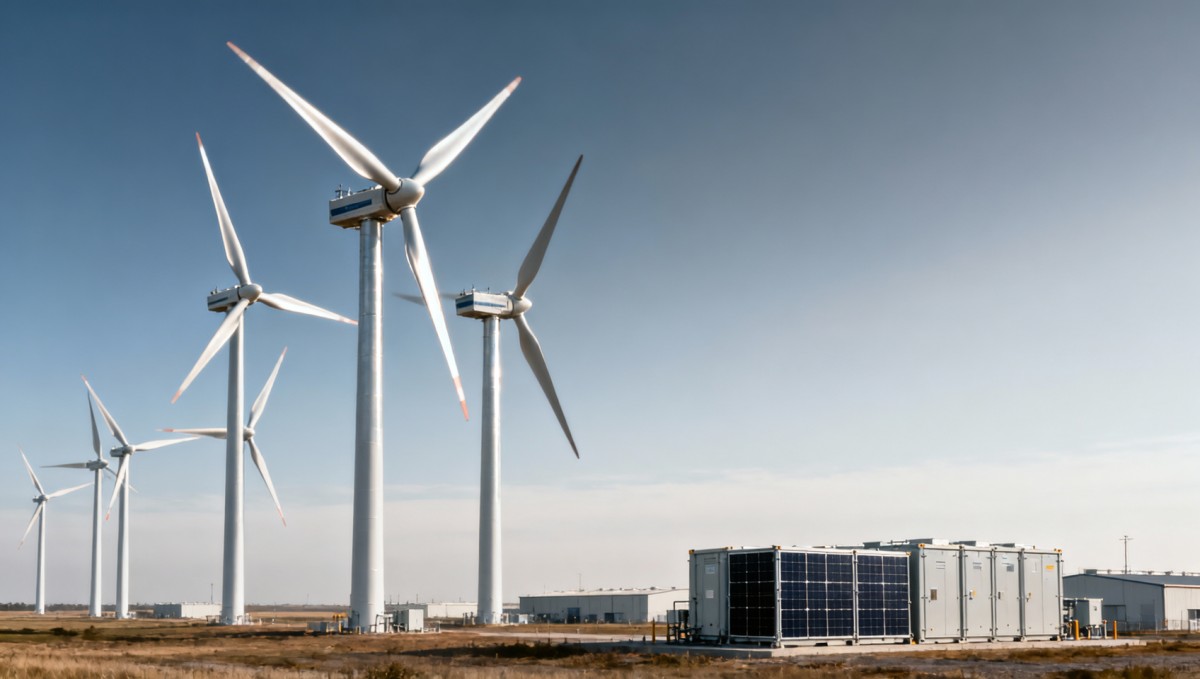
One of the most common mistakes in wind turbine procurement is selecting by rated power alone. A turbine labeled 100kW does not produce 100kW continuously. Rated output is typically achieved only at a specific wind speed, often around 11–15 m/s depending on design. What matters more is annual energy production under your actual site conditions, not the peak number on a brochure.
Buyers should first define the operating objective. Is the turbine intended to offset 15%–30% of facility electricity demand, supply a remote microgrid, support hybrid storage, or feed power into a commercial grid connection? A mining outpost, industrial campus, agricultural site, and coastal logistics hub each have very different load profiles, downtime tolerance, and storage integration needs.
For technical and commercial review teams, three baseline questions should be answered before requesting final quotations. First, what is the average wind speed at hub height over at least 12 months? Second, what is the expected capacity factor range, such as 20%–35% for modest sites or 35%–50% for stronger utility-grade locations? Third, how will intermittent output be balanced with batteries, diesel backup, solar, or the grid?
Key application scenarios to define early
- Remote or off-grid power: often paired with lithium ion batteries and a backup generator, where reliability matters more than peak output.
- Commercial self-consumption: focused on reducing daytime and seasonal electricity purchases, with attention to tariff structure and demand charges.
- Hybrid renewable systems: combined with solar battery systems or portable power assets for resilience and load smoothing.
- Grid-export projects: driven by interconnection rules, curtailment risk, and longer project finance review cycles.
The table below helps decision-makers compare turbine selection priorities across common business cases. This is particularly useful when technical, finance, safety, and procurement teams are evaluating the same project from different angles.
The most important takeaway is that the “right” turbine is use-case specific. A smaller machine with stronger low-speed performance and easier maintenance access may outperform a larger alternative in real commercial conditions. Matching the turbine to the site, duty cycle, and energy strategy is usually worth more than chasing the highest advertised rating.
Assess Site Conditions, Wind Resource, and Installation Constraints
A wind turbine is only as good as the site that supports it. Before technical approval or budget release, buyers should evaluate wind resource quality, terrain roughness, turbulence, access roads, soil conditions, and distance from neighboring structures. Even a strong average wind speed can be undermined by high turbulence caused by ridgelines, warehouses, tree lines, or uneven topography.
As a rule of thumb, wind data should ideally be measured at or near hub height for 12 months, though some projects use a combination of shorter on-site measurement and long-term correlation from nearby datasets. Hub height matters because a change from 30 meters to 50 meters can materially improve annual energy production. In many cases, a taller tower increases output more effectively than a modest increase in generator rating.
Installation constraints also affect project feasibility. Transportation of blades, nacelles, and towers may require road turning radii, crane pads, and unloading zones. Remote projects can face 6–12 week logistics windows if port handling, inland transport permits, or seasonal road conditions create bottlenecks. Project managers should therefore review not just the turbine design, but the total deployment path from factory to commissioning.
Site review checklist
- Confirm mean annual wind speed and turbulence intensity at the planned hub height.
- Verify setback distances, aviation or zoning restrictions, and local noise requirements.
- Review geotechnical conditions for foundation design, including bearing capacity and drainage.
- Check grid connection point, cable route length, and protection interface requirements.
- Assess access for cranes, heavy haul transport, and future maintenance visits.
Practical thresholds buyers often review
While each project differs, buyers often compare cut-in wind speed, rated wind speed, and cut-out wind speed during technical review. For example, a turbine that cuts in around 2.5–4 m/s may be better suited for moderate-wind locations than one optimized for higher-speed sites. Noise values, tower height options, and allowable ambient temperature ranges such as -20°C to 45°C should also be checked against local operating conditions.
The following table summarizes site factors that frequently alter procurement decisions. It can help technical and business stakeholders understand why two turbines with similar rated capacity may perform very differently after installation.
In many projects, site limitations decide the final turbine choice more than catalog specifications do. A disciplined feasibility review reduces redesign, permit delays, and hidden installation cost. For buyers under time pressure, a structured site screen in the first 2–4 weeks is often the most cost-effective step in the entire process.
Evaluate Safety, Quality, and Long-Term Serviceability
Wind turbine buying decisions should include operational safety and maintainability from the start. Quality managers and safety officers need to look beyond the generator and blades. Access systems, braking methods, overspeed protection, lightning protection, emergency stop logic, and lockout procedures all affect operational risk. A turbine that is difficult to inspect or service can create recurring exposure for both personnel and uptime.
Maintenance intervals and spare parts availability are equally important. Depending on turbine class and operating environment, planned service may be needed every 6 months or every 12 months, with additional inspections after severe weather. Buyers should ask which components are wear items, what lead times apply for replacement parts, and whether remote diagnostics are included. A 2-week spare part lead time and a 14-week lead time create very different business risks.
For enterprise users, supplier support capability matters almost as much as hardware quality. If the turbine is deployed in a remote industrial location, the value of local service partners, multilingual documentation, and clearly defined escalation procedures can outweigh a lower equipment price. Downtime cost for a production site, refrigerated warehouse, or remote infrastructure asset can easily exceed expected savings from a marginally cheaper unit.
Questions procurement teams should ask suppliers
- What preventive maintenance schedule is recommended during years 1–5?
- Which spare parts should be stocked on site, and what is the normal replenishment cycle?
- Is remote monitoring available, and what data points are visible to the customer?
- What training is included for operators, lockout-tagout procedures, and first-line troubleshooting?
- How are warranty claims, field failures, and performance disputes handled contractually?
Common quality and safety blind spots
Some buyers focus on blade material, generator type, or controller brand but overlook field service practicality. Ask whether technicians need a large crane for routine component access, whether internal tower climbing systems are provided, and how often major gearbox or pitch system inspections are expected. Service complexity directly affects annual operating expenditure.
Another blind spot is environmental exposure. Sites with salt spray, desert dust, icing, or high humidity may need additional protection measures and inspection frequency. A turbine suitable for temperate inland conditions may not perform equally well at a coastal terminal or remote cold-climate site without design adaptations and stricter maintenance planning.
Compare Lifecycle Cost, Commercial Terms, and Supplier Credibility
A sound wind turbine buying guide must move beyond capex and into total cost of ownership. Decision-makers should model the full 10–20 year cost profile, including transport, civil works, electrical balance of plant, installation, commissioning, preventive maintenance, major component replacement risk, insurance implications, and decommissioning or repowering considerations. The cheapest proposal on day one is not always the most economical by year eight.
Finance approvers often want clear payback and risk scenarios. Instead of using a single optimistic yield assumption, build at least three cases: conservative, base, and strong wind resource performance. Include downtime assumptions, for example 2%, 5%, and 8%, and test sensitivity to spare parts delays or curtailment. This creates a more credible investment view than a single headline return number.
Supplier credibility is another major decision factor. Buyers should review manufacturing track record, reference project relevance, engineering documentation quality, after-sales response structure, and transparency in warranty language. A supplier does not need to be the largest in the market to be credible, but they should be able to explain design assumptions, service responsibilities, and delivery scope without ambiguity.
Commercial elements worth negotiating
Strong procurement teams typically negotiate more than price. Payment milestones, performance acceptance criteria, spare parts packages, training hours, response-time commitments, and liquidated damages for late delivery or underperformance all deserve attention. In many B2B transactions, a better warranty and clearer service response agreement can produce more value than a 3% equipment discount.
The table below outlines practical cost and supplier screening factors that can support cross-functional approval between procurement, engineering, operations, and finance.
When comparing offers, normalize them. Some suppliers include tower sections, SCADA access, commissioning, or first-year spare parts, while others price these separately. A procurement matrix with 15–25 weighted line items often provides a better basis for approval than a simple three-quote comparison.
Plan Integration, Delivery, and Post-Purchase Operations
The buying decision does not end at purchase order issuance. A successful wind turbine project depends on implementation planning across engineering, logistics, civil works, electrical integration, training, and commissioning. If the turbine is part of a hybrid energy architecture, integration with solar battery systems, lithium ion batteries, EMS controls, or backup generation should be specified before factory release, not after equipment arrives on site.
Typical project execution involves 5 major phases: feasibility, design and contracting, manufacturing and logistics, site construction and installation, then commissioning and handover. Depending on turbine size and site complexity, the full cycle can range from 3–6 months for smaller distributed systems to 9–18 months for larger commercial or grid-connected projects. Delays often occur not in manufacturing, but in permits, foundation readiness, and grid approval.
Operators should also prepare for the first 12 months of ownership. This includes alarm response workflows, spare parts stocking strategy, maintenance scheduling, and performance review against expected output. A turbine should be monitored not only for energy production, but for vibration trends, availability, fault patterns, and environmental operating conditions that may signal early degradation.
A practical implementation framework
- Feasibility and site screening: 2–6 weeks for wind review, access check, and preliminary economics.
- Technical alignment and contracting: 3–8 weeks for scope definition, supplier review, and commercial negotiation.
- Manufacturing and shipping: commonly 8–20 weeks depending on specification, market demand, and transport route.
- Civil, electrical, and erection works: often 2–10 weeks based on weather, crane availability, and foundation curing time.
- Commissioning and training: 3–10 days for tests, operator handover, and baseline performance verification.
FAQ for buyers before final commitment
How do you know whether a wind turbine fits your site? Start with measured or bankable wind data, then compare annual energy production rather than rated output only. If your average wind speed is marginal, a larger rotor or higher tower may be more valuable than a larger generator.
What should financial approvers focus on? Review 10–20 year lifecycle cost, downtime scenarios, service contract scope, and sensitivity to actual wind performance. Do not approve based solely on a short payback claim without testing downside cases.
How important is service access? Extremely important. A supplier with clear spare parts pathways, remote monitoring, and defined field response can reduce operational risk significantly, especially for remote or multi-site portfolios.
Can wind turbines work well in hybrid systems? Yes, especially where wind patterns complement solar generation. In many industrial or remote settings, combining wind, battery storage, and backup generation improves resilience and can reduce fuel or grid dependence across seasonal demand cycles.
A disciplined wind turbine purchase starts with the right questions: what energy problem needs solving, what the site can realistically support, how safety and maintenance will be managed, and which supplier can stand behind the asset over time. Buyers who evaluate wind resource, installation constraints, serviceability, and lifecycle economics together are far more likely to secure stable performance and predictable returns.
For organizations comparing wind turbines with broader distributed energy investments, the strongest outcomes come from cross-functional review rather than isolated price comparisons. TradeNexus Pro helps procurement leaders, engineers, and enterprise decision-makers assess technologies with deeper market context, supplier intelligence, and solution-fit analysis across green energy and related B2B sectors.
If you are planning a wind turbine project or comparing hybrid energy options, contact us to discuss your requirements, obtain a tailored evaluation framework, and explore solutions aligned with your site, budget, and long-term operating goals.
Get weekly intelligence in your inbox.
No noise. No sponsored content. Pure intelligence.
 Apr 30, 2026Tangshan Beijiao Thermal Power Unit #1 A-Grade Maintenance LaunchTangshan Beijiao Thermal Power Unit #1 A-Grade Maintenance Launch
 Apr 30, 2026SAMR to Finalize 1,800+ Standards in 2026 Affecting Industrial Materials ExportsSAMR to Finalize 1,800+ Standards in 2026 Affecting Industrial Materials Exports
 Apr 30, 2026UAE Becomes Global AI Hub: New CE-ADAS+ Pathway for Chinese Smart Industrial EquipmentUAE Becomes Global AI Hub: New CE-ADAS+ Pathway for Chinese Smart Industrial Equipment
 Apr 30, 2026Vietnam’s SMT Expansion Drives CNC Fixture Export DelaysVietnam’s SMT Expansion Drives CNC Fixture Export Delays
 Apr 30, 2026USITC Launches 337 Investigation on Wi-Fi 7 RF Modules from ChinaUSITC Launches 337 Investigation on Wi-Fi 7 RF Modules from China
 Apr 30, 2026Morocco Enforces PV Mounting Structure Certification from Q3 2026Morocco Enforces PV Mounting Structure Certification from Q3 2026
 Apr 30, 2026TÜV Rheinland Launches Fast-Track Certification for Chinese Warehouse RobotsTÜV Rheinland Launches Fast-Track Certification for Chinese Warehouse Robots
 Apr 30, 2026Red Sea Crisis Deepens: Suez Canal Fees Up 12%, China-Europe Rail Premium Hits 35%Red Sea Crisis Deepens: Suez Canal Fees Up 12%, China-Europe Rail Premium Hits 35%
 Apr 30, 2026EU Enforces Battery Passport Checks: Storage Export Delays RiseEU Enforces Battery Passport Checks: Storage Export Delays Rise
 Apr 29, 2026USITC Launches Section 337 Investigation into Chinese Wi-Fi 7 RF ModulesUSITC Launches Section 337 Investigation into Chinese Wi-Fi 7 RF Modules
 Apr 29, 2026Côte d'Ivoire Launches $500M Grid Storage Tender, Chinese BESS Fast-TrackedCôte d'Ivoire Launches $500M Grid Storage Tender, Chinese BESS Fast-Tracked
 Apr 29, 2026Morocco Enforces IEC 61427-2:2025 PV Mounting Certification from Q3 2026Morocco Enforces IEC 61427-2:2025 PV Mounting Certification from Q3 2026
 Apr 29, 2026UAE Becomes Global AI Hub: New CE-ADAS+ Path for Chinese Smart Industrial EquipmentUAE Becomes Global AI Hub: New CE-ADAS+ Path for Chinese Smart Industrial Equipment
 Apr 29, 2026Red Sea Crisis: Suez Canal Fees Up 12%, China-Europe Rail Premium at 35%Red Sea Crisis: Suez Canal Fees Up 12%, China-Europe Rail Premium at 35%
 Apr 29, 2026TÜV Rheinland Launches Fast-Track Certification for Chinese Warehouse RobotsTÜV Rheinland Launches Fast-Track Certification for Chinese Warehouse Robots
 Apr 29, 2026Vietnam's SMT Expansion Drives CNC Fixture Export DelaysVietnam's SMT Expansion Drives CNC Fixture Export Delays
![]() Apr 29, 2026NEOM Smart Infrastructure Phase II Opens Bidding: Chinese PV Mounting & BESS Pre-QualifiedNEOM Smart Infrastructure Phase II Opens Bidding: Chinese PV Mounting & BESS Pre-Qualified
Apr 29, 2026NEOM Smart Infrastructure Phase II Opens Bidding: Chinese PV Mounting & BESS Pre-QualifiedNEOM Smart Infrastructure Phase II Opens Bidding: Chinese PV Mounting & BESS Pre-Qualified Apr 29, 2026EU Enforces Battery Passport for Energy Storage Imports from July 2026EU Enforces Battery Passport for Energy Storage Imports from July 2026
 Apr 29, 2026Maine Bans New >20MW Data Centers — AI Hardware Delivery ImpactedMaine Bans New >20MW Data Centers — AI Hardware Delivery Impacted
 Apr 28, 2026Suez Canal Fee Hike & China-Europe Rail Premium: Q2 2026 ImpactSuez Canal Fee Hike & China-Europe Rail Premium: Q2 2026 Impact
 Apr 28, 2026TÜV Rheinland Launches Fast-Track Certification for Chinese Warehouse RobotsTÜV Rheinland Launches Fast-Track Certification for Chinese Warehouse Robots
 Apr 28, 2026EU Enforces Battery Passport Rule for Chinese ESS Exports from 2027EU Enforces Battery Passport Rule for Chinese ESS Exports from 2027
 Apr 28, 2026ADB Raises Vietnam GDP Forecast to 7.2%: SMT & Precision Fixture Demand RisesADB Raises Vietnam GDP Forecast to 7.2%: SMT & Precision Fixture Demand Rises
 Apr 28, 2026US ITC Launches Section 337 Investigation into Chinese Wi-Fi 7 RF FEMsUS ITC Launches Section 337 Investigation into Chinese Wi-Fi 7 RF FEMs
 Apr 28, 2026Côte d'Ivoire Opens $500M Power Tender: Chinese BESS Get Fast-Track AccessCôte d'Ivoire Opens $500M Power Tender: Chinese BESS Get Fast-Track Access
 Apr 28, 2026BP’s Algeria East Basin Permit Spurs Valve Demand, Lead Times Extend to 18 WeeksBP’s Algeria East Basin Permit Spurs Valve Demand, Lead Times Extend to 18 Weeks
") Apr 28, 2026Vietnam Mandates V-Trust for Smart Appliances Export (July 2026)Vietnam Mandates V-Trust for Smart Appliances Export (July 2026)
Apr 28, 2026Vietnam Mandates V-Trust for Smart Appliances Export (July 2026)Vietnam Mandates V-Trust for Smart Appliances Export (July 2026)