Who Should Use Wearable ECG Monitors?
Wearable ECG monitors are not for everyone, but they are highly valuable for people and organizations that need more than occasional, in-clinic heart checks. In practical terms, they are best suited for patients with intermittent or hard-to-capture symptoms, clinicians running remote monitoring programs, and healthcare buyers comparing connected diagnostic tools for telehealth and chronic care pathways. For hospitals, digital health providers, distributors, and procurement teams, the key question is not simply what these devices are, but who should use wearable ECG monitors, in which scenarios, and how to evaluate whether they deliver clinical and operational value.
Who benefits most from wearable ECG monitors?
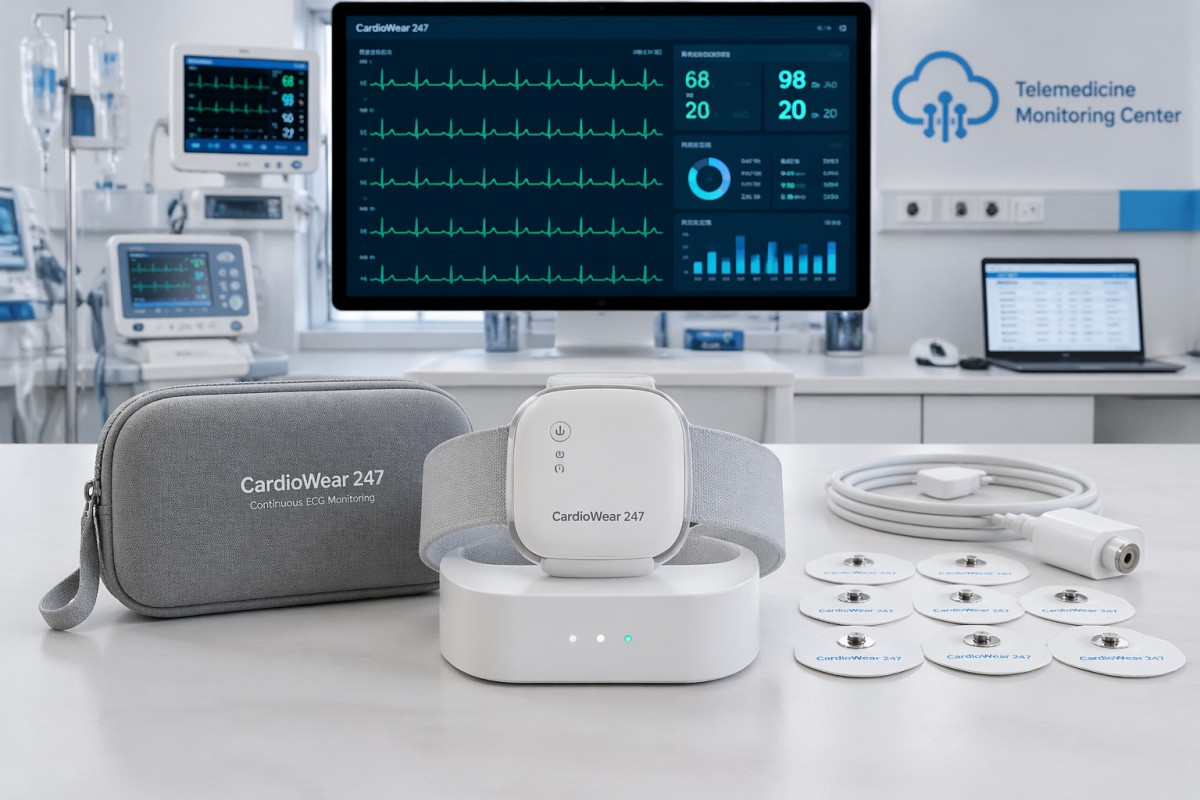
The strongest use cases for wearable ECG monitors fall into three broad groups: patients who need continuous or event-based cardiac rhythm tracking, care teams that need scalable remote patient monitoring, and enterprise buyers assessing connected healthcare technology investments.
For patients, wearable ECG monitors are especially useful when symptoms do not happen during a short clinic visit. Palpitations, dizziness, unexplained fatigue, episodic chest discomfort, suspected arrhythmias, or post-treatment rhythm surveillance often require data collected over time rather than a single reading. In these cases, a wearable device can improve the chance of detecting clinically relevant abnormalities.
For clinicians and telehealth providers, these devices support earlier intervention, better longitudinal visibility, and more efficient follow-up. Instead of relying only on patient recall or occasional in-office ECGs, care teams can review rhythm data over extended periods and prioritize outreach based on actual findings.
For procurement leaders and healthcare decision-makers, wearable ECG monitors make the most sense when they fit into a broader connected care strategy. They can complement digital blood pressure monitors, smart glucometers, pulse oximeters, and patient engagement platforms in remote care programs designed to reduce avoidable visits and support chronic disease management.
Which patient groups are the clearest fit?
From a clinical and operational perspective, the clearest candidates are patients whose heart rhythm needs closer observation than a standard spot check can provide.
Patients with suspected arrhythmias: Individuals experiencing intermittent irregular heartbeat, fainting episodes, or unexplained dizziness are often strong candidates. If symptoms are infrequent, a wearable ECG monitor may capture events that a standard clinic ECG misses.
People with known cardiac conditions: Patients already diagnosed with atrial fibrillation, tachycardia, bradycardia, or other rhythm disorders may use wearable ECG monitoring to support ongoing management, recurrence detection, or treatment follow-up.
Post-procedure or post-discharge patients: After cardiac procedures, medication changes, or hospital discharge, temporary remote ECG tracking can help identify complications early and support safer transitions of care.
High-risk populations under remote supervision: Elderly patients, patients with multiple chronic conditions, and those in rural or access-limited areas may benefit when wearable ECG monitoring is integrated into a structured remote monitoring workflow.
Patients engaged in telemedicine care models: When health systems are expanding virtual cardiology or remote patient monitoring programs, wearable ECG monitors can provide a useful diagnostic layer that improves the quality of virtual consultations.
That said, not every patient needs one. For low-risk individuals without cardiac symptoms or a clear monitoring objective, the device may add cost and data complexity without meaningful benefit.
When are wearable ECG monitors more useful than traditional periodic checks?
This is one of the most important questions for both users and buyers. The answer usually comes down to frequency, unpredictability, and actionability.
Traditional periodic checks work well when symptoms are persistent enough to appear during a scheduled exam or when routine screening is sufficient. Wearable ECG monitors become more useful when:
- Symptoms occur sporadically and are hard to reproduce in clinic
- Continuous or repeated monitoring is needed over days or weeks
- Care teams need better visibility between visits
- Remote follow-up is preferred due to geography, capacity, or convenience
- There is a need to correlate symptoms with actual heart rhythm data
For enterprise healthcare environments, this distinction matters because it affects utilization rates and return on investment. A wearable ECG monitor creates value when it fills a real diagnostic or workflow gap, not when it duplicates existing processes without improving outcomes.
What should hospitals, clinics, and telehealth providers evaluate before adopting them?
For institutional buyers and business evaluators, the purchase decision should go beyond device features. The more strategic question is whether the solution fits the organization’s care model, reimbursement environment, operational capacity, and data workflow.
Key evaluation points include:
Clinical fit: Is the device intended for arrhythmia detection, post-discharge monitoring, chronic care support, or general wellness? Medical-grade and consumer-grade use cases should not be confused.
Data quality and reliability: Signal accuracy, artifact resistance, wear comfort, battery life, and event capture performance all matter. In real-world settings, patient adherence is just as important as technical specifications.
Integration with digital health systems: A strong wearable ECG monitor should align with telehealth platforms, remote monitoring dashboards, EMR or EHR workflows, and alert management processes.
Regulatory and compliance status: Buyers should verify applicable certifications, market approvals, cybersecurity safeguards, privacy protections, and data handling standards.
Workflow burden: More data is not automatically better. Organizations need a clear plan for triage, interpretation, escalation, and documentation. Otherwise, device adoption can create monitoring fatigue rather than efficiency.
Total cost of ownership: Procurement should examine device cost, software fees, onboarding requirements, support services, replacement cycles, and training overhead, not just unit price.
What concerns do procurement teams and financial approvers usually have?
In B2B healthcare technology decisions, concerns usually center on cost justification, implementation risk, and measurable impact.
Will the device be used enough to justify the spend? This depends on patient selection and program design. If wearable ECG monitors are deployed without clear eligibility criteria, utilization may be low.
Will they improve outcomes or only generate more data? Decision-makers want evidence that monitoring leads to faster intervention, better patient engagement, reduced readmissions, improved follow-up compliance, or stronger telemedicine capability.
Can the care team absorb the workflow? A technically advanced product can still fail if nurses, physicians, or monitoring staff are overwhelmed by alerts or manual review tasks.
Are there liability or safety risks? Quality leaders and safety managers will want to understand false positives, false negatives, escalation protocols, and patient instruction quality.
How does this compare with adjacent connected devices? In many remote care programs, wearable ECG monitors are reviewed alongside digital blood pressure monitors, glucose monitoring tools, and other connected diagnostics. The right comparison is not always device versus device, but device versus care objective.
These concerns are valid. The best way to address them is through pilot-based evaluation with defined clinical targets, operational metrics, and procurement criteria.
How can buyers tell whether a wearable ECG monitor is the right investment?
A practical decision framework should include five questions:
- Is there a clear patient population? If the organization cannot define who should use wearable ECG monitors, the program may lack focus.
- Is there a defined use case? Examples include arrhythmia detection, post-discharge observation, virtual cardiology support, or chronic disease monitoring.
- Can the data be acted on efficiently? Monitoring only has value when findings can trigger review, intervention, or documentation.
- Does it fit the digital ecosystem? Integration with care management and IT systems is critical for scale.
- Can value be measured? Buyers should track adherence, alert relevance, diagnostic yield, escalation rates, avoidable visit reduction, and patient satisfaction.
For distributors, resellers, and channel partners, these same questions are useful in market positioning. Instead of selling wearable ECG monitors as generic smart health devices, it is more effective to position them around defined clinical and operational outcomes.
Who should not be the primary target for wearable ECG monitoring?
This is often overlooked, but it matters for both clinical appropriateness and commercial efficiency. Wearable ECG monitors are usually not the best first-line solution for broad, untargeted wellness populations with no symptoms, no identified risk, and no ongoing care pathway. In such cases, simpler consumer wearables or routine health screenings may be more appropriate.
They are also less suitable when the organization lacks the infrastructure to review incoming data, respond to alerts, or educate patients on correct use. Without that support, even a high-quality device may fail to produce actionable value.
Final takeaway: who should use wearable ECG monitors?
Wearable ECG monitors are best used by patients with intermittent cardiac symptoms, individuals needing ongoing rhythm surveillance, and healthcare providers building structured remote monitoring or telehealth programs. They are also highly relevant for hospitals, enterprise buyers, and procurement teams evaluating connected care tools that can improve visibility between visits and support scalable digital health delivery.
The most important decision criterion is fit. If the device matches a defined patient group, a real monitoring objective, and an operational workflow that can act on the data, wearable ECG monitors can deliver meaningful clinical and business value. If those conditions are missing, adoption may create cost and complexity without clear benefit. For healthcare technology decision-makers, the smartest approach is targeted deployment, measurable outcomes, and evaluation based on care pathway impact rather than device novelty alone.
Get weekly intelligence in your inbox.
No noise. No sponsored content. Pure intelligence.
 Apr 30, 2026Tangshan Beijiao Thermal Power Unit #1 A-Grade Maintenance LaunchTangshan Beijiao Thermal Power Unit #1 A-Grade Maintenance Launch
 Apr 30, 2026SAMR to Finalize 1,800+ Standards in 2026 Affecting Industrial Materials ExportsSAMR to Finalize 1,800+ Standards in 2026 Affecting Industrial Materials Exports
 Apr 30, 2026UAE Becomes Global AI Hub: New CE-ADAS+ Pathway for Chinese Smart Industrial EquipmentUAE Becomes Global AI Hub: New CE-ADAS+ Pathway for Chinese Smart Industrial Equipment
 Apr 30, 2026Vietnam’s SMT Expansion Drives CNC Fixture Export DelaysVietnam’s SMT Expansion Drives CNC Fixture Export Delays
 Apr 30, 2026USITC Launches 337 Investigation on Wi-Fi 7 RF Modules from ChinaUSITC Launches 337 Investigation on Wi-Fi 7 RF Modules from China
 Apr 30, 2026Morocco Enforces PV Mounting Structure Certification from Q3 2026Morocco Enforces PV Mounting Structure Certification from Q3 2026
 Apr 30, 2026TÜV Rheinland Launches Fast-Track Certification for Chinese Warehouse RobotsTÜV Rheinland Launches Fast-Track Certification for Chinese Warehouse Robots
 Apr 30, 2026Red Sea Crisis Deepens: Suez Canal Fees Up 12%, China-Europe Rail Premium Hits 35%Red Sea Crisis Deepens: Suez Canal Fees Up 12%, China-Europe Rail Premium Hits 35%
 Apr 30, 2026EU Enforces Battery Passport Checks: Storage Export Delays RiseEU Enforces Battery Passport Checks: Storage Export Delays Rise
 Apr 29, 2026USITC Launches Section 337 Investigation into Chinese Wi-Fi 7 RF ModulesUSITC Launches Section 337 Investigation into Chinese Wi-Fi 7 RF Modules
 Apr 29, 2026Côte d'Ivoire Launches $500M Grid Storage Tender, Chinese BESS Fast-TrackedCôte d'Ivoire Launches $500M Grid Storage Tender, Chinese BESS Fast-Tracked
 Apr 29, 2026Morocco Enforces IEC 61427-2:2025 PV Mounting Certification from Q3 2026Morocco Enforces IEC 61427-2:2025 PV Mounting Certification from Q3 2026
 Apr 29, 2026UAE Becomes Global AI Hub: New CE-ADAS+ Path for Chinese Smart Industrial EquipmentUAE Becomes Global AI Hub: New CE-ADAS+ Path for Chinese Smart Industrial Equipment
 Apr 29, 2026Red Sea Crisis: Suez Canal Fees Up 12%, China-Europe Rail Premium at 35%Red Sea Crisis: Suez Canal Fees Up 12%, China-Europe Rail Premium at 35%
 Apr 29, 2026TÜV Rheinland Launches Fast-Track Certification for Chinese Warehouse RobotsTÜV Rheinland Launches Fast-Track Certification for Chinese Warehouse Robots
 Apr 29, 2026Vietnam's SMT Expansion Drives CNC Fixture Export DelaysVietnam's SMT Expansion Drives CNC Fixture Export Delays
![]() Apr 29, 2026NEOM Smart Infrastructure Phase II Opens Bidding: Chinese PV Mounting & BESS Pre-QualifiedNEOM Smart Infrastructure Phase II Opens Bidding: Chinese PV Mounting & BESS Pre-Qualified
Apr 29, 2026NEOM Smart Infrastructure Phase II Opens Bidding: Chinese PV Mounting & BESS Pre-QualifiedNEOM Smart Infrastructure Phase II Opens Bidding: Chinese PV Mounting & BESS Pre-Qualified Apr 29, 2026EU Enforces Battery Passport for Energy Storage Imports from July 2026EU Enforces Battery Passport for Energy Storage Imports from July 2026
 Apr 29, 2026Maine Bans New >20MW Data Centers — AI Hardware Delivery ImpactedMaine Bans New >20MW Data Centers — AI Hardware Delivery Impacted
 Apr 28, 2026Suez Canal Fee Hike & China-Europe Rail Premium: Q2 2026 ImpactSuez Canal Fee Hike & China-Europe Rail Premium: Q2 2026 Impact
 Apr 28, 2026TÜV Rheinland Launches Fast-Track Certification for Chinese Warehouse RobotsTÜV Rheinland Launches Fast-Track Certification for Chinese Warehouse Robots
 Apr 28, 2026EU Enforces Battery Passport Rule for Chinese ESS Exports from 2027EU Enforces Battery Passport Rule for Chinese ESS Exports from 2027
 Apr 28, 2026ADB Raises Vietnam GDP Forecast to 7.2%: SMT & Precision Fixture Demand RisesADB Raises Vietnam GDP Forecast to 7.2%: SMT & Precision Fixture Demand Rises
 Apr 28, 2026US ITC Launches Section 337 Investigation into Chinese Wi-Fi 7 RF FEMsUS ITC Launches Section 337 Investigation into Chinese Wi-Fi 7 RF FEMs
 Apr 28, 2026Côte d'Ivoire Opens $500M Power Tender: Chinese BESS Get Fast-Track AccessCôte d'Ivoire Opens $500M Power Tender: Chinese BESS Get Fast-Track Access
 Apr 28, 2026BP’s Algeria East Basin Permit Spurs Valve Demand, Lead Times Extend to 18 WeeksBP’s Algeria East Basin Permit Spurs Valve Demand, Lead Times Extend to 18 Weeks
") Apr 28, 2026Vietnam Mandates V-Trust for Smart Appliances Export (July 2026)Vietnam Mandates V-Trust for Smart Appliances Export (July 2026)
Apr 28, 2026Vietnam Mandates V-Trust for Smart Appliances Export (July 2026)Vietnam Mandates V-Trust for Smart Appliances Export (July 2026)