Smart Glucometers vs Standard Meters
Choosing between smart glucometers and standard meters is no longer a simple device comparison—it shapes remote patient monitoring, workflow efficiency, and procurement value across modern healthcare settings. For buyers, operators, and decision-makers evaluating smart glucometers alongside digital blood pressure monitors, wearable ecg monitors, portable ultrasound scanners, telemedicine carts, and broader healthcare technology investments, understanding performance, connectivity, compliance, and long-term cost is essential.
In B2B healthcare procurement, the choice is rarely about a single device alone. It affects how data moves into care systems, how frontline staff document readings, how distributors position product lines, and how finance teams measure total cost over 24–60 months. A standard glucose meter may still fit low-complexity use cases, but connected models are increasingly evaluated as part of a larger digital care ecosystem.
For hospitals, clinics, home-care networks, channel partners, and project leaders, the real question is not whether one category is universally better. The question is which device architecture best matches patient volume, compliance requirements, connectivity needs, and service capacity. The sections below compare smart glucometers and standard meters from an operational, technical, and procurement perspective.
What Separates Smart Glucometers from Standard Meters
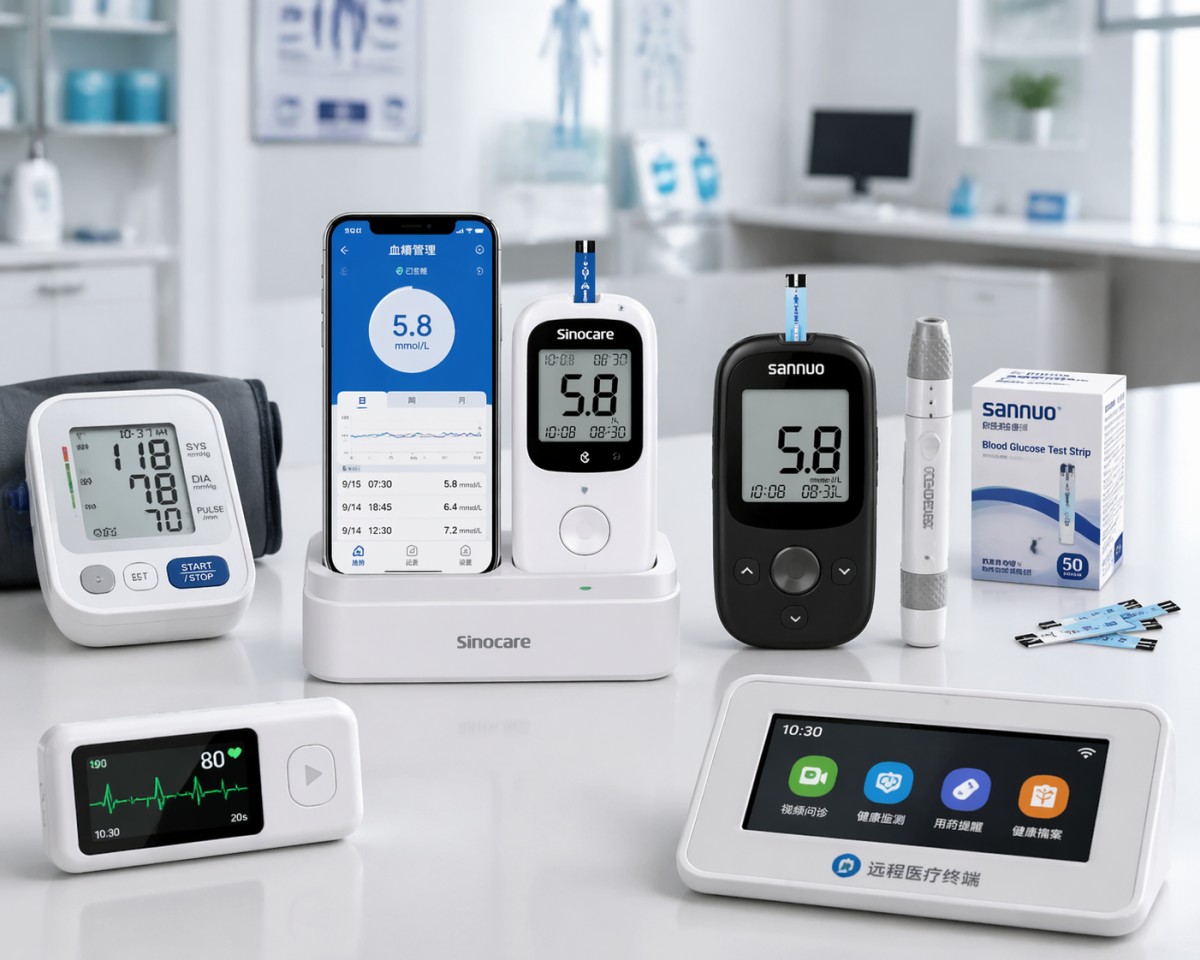
At the core, both device types measure blood glucose from a small blood sample, usually within 5–10 seconds. The difference lies in data handling, software integration, and workflow support. Standard meters typically display the result locally and store a limited reading history, often between 100 and 1,000 records depending on the product tier.
Smart glucometers add digital functions such as Bluetooth, app synchronization, cloud transmission, reminders, trend analysis, and in some cases API-based integration with telehealth platforms. In remote care programs, these features can reduce manual transcription steps from 3–4 actions to 1 automated upload, which matters when staff manage dozens or hundreds of patients per day.
For operators and quality teams, usability is another dividing line. A standard meter is often easier to deploy in resource-limited settings because there are fewer dependencies. A smart device, however, may offer stronger audit trails, timestamp accuracy, user tagging, and structured data export, all of which support multi-site monitoring and service-level reporting.
Procurement teams should also distinguish between one-time hardware purchase and digital platform dependency. Some smart glucometers work as standalone connected devices, while others rely on subscriptions, mobile app maintenance, firmware updates, and IT onboarding. That difference can shift the annual operating budget by 10%–30% compared with basic meter programs.
Feature comparison at a practical level
The table below outlines the most relevant differences for B2B evaluation, especially where healthcare technology procurement overlaps with telemedicine, home monitoring, and device fleet management.
The comparison shows that smart glucometers are not simply “advanced meters.” They are data-enabled care tools. That creates value in connected care environments, but only if the buyer is prepared for software management, device enrollment, and data governance.
Key decision checkpoints
- Assess whether readings must be shared in real time, within 24 hours, or only during periodic visits.
- Check if the device will be used by 1 user, multiple staff members, or a distributed home-care population.
- Confirm whether data must interface with EMR, telemedicine, or analytics software in the next 12–36 months.
Operational Impact in Clinics, Hospitals, and Remote Monitoring Programs
In clinical operations, glucose measurement is a routine task, but routine tasks become costly when repeated at scale. A facility handling 200 glucose tests per day can lose significant staff time if results must be manually copied into paper logs or uploaded later. Smart glucometers reduce this friction by linking readings to patient records, time stamps, and alerts.
For hospital wards and ambulatory centers, the biggest operational gain often comes from traceability. Standard meters may work well for point-of-care use, but they can create gaps in chain-of-custody documentation when multiple users share the same unit. Smart models can support operator identification, device assignment, and centralized review, helping project managers and compliance teams monitor usage across 2–10 departments or more.
Remote patient monitoring changes the equation even further. In chronic disease programs, care teams may review glucose data weekly or daily rather than at each in-person visit. When readings flow automatically into a digital dashboard, nurses and coordinators can prioritize outliers, such as repeated high or low values over a 3-day period, instead of spending time collecting raw numbers.
That said, standard meters remain practical in outreach, field use, humanitarian settings, and decentralized supply chains where smartphone access, stable connectivity, or cloud approval is limited. In these environments, simplicity can outweigh digital capability, especially when the goal is reliable testing under low-infrastructure conditions.
Use-case alignment by healthcare setting
The choice should follow workflow design, not marketing language. The matrix below helps buyers match the device type to actual operating conditions.
A practical pattern emerges: when the care model depends on shared data, smart devices usually justify their added complexity. When testing is local, infrequent, or infrastructure-light, standard meters may deliver better operational fit.
Operational risks to review before rollout
- Connectivity failures can delay uploads if mobile pairing or Wi-Fi access is inconsistent.
- User training gaps may increase errors during the first 2–6 weeks of deployment.
- Battery management, strip storage, and calibration workflows must be standardized across sites.
- Data ownership and access rules should be defined before remote monitoring begins.
Procurement Criteria: Cost, Compliance, Integration, and Supply Reliability
For procurement teams, the first mistake is comparing only unit price. A basic meter may cost less upfront, but program economics depend on consumables, device life cycle, support obligations, and staff time. Smart glucometers often carry higher initial cost, yet they may reduce manual reporting, missed readings, and follow-up delays over a 2–5 year planning horizon.
A second issue is compliance readiness. Buyers should verify intended-use labeling, data protection obligations, software maintenance responsibilities, and documentation for quality review. In cross-border sourcing, distributors and enterprise buyers should also clarify packaging language, traceability, after-sales handling, and firmware control before committing to annual volumes.
Supply chain resilience matters as much as technical specification. Glucose monitoring programs depend not only on meters but also on strips, lancets, control solutions, chargers, and replacement logistics. A strong sourcing decision looks at 3 layers: hardware availability, consumable continuity, and service response. A meter with a 2-week lead time can still become a poor choice if test strips fluctuate or require long replenishment cycles.
Integration should be scored realistically. Some organizations only need CSV export once per week. Others need API connectivity, role-based dashboards, and compatibility with telemedicine carts or remote vital sign platforms. Overbuying software features can inflate cost, while underbuying can force expensive replacement within 12–18 months.
B2B evaluation framework
A structured procurement scorecard helps align technical, commercial, and operational stakeholders before vendor shortlisting.
This type of framework prevents procurement from focusing on device price alone. In many healthcare technology projects, the strongest commercial outcome comes from a balanced choice that protects both workflow efficiency and supply reliability.
Recommended sourcing questions
- What is the expected consumable replenishment cycle: 30 days, 60 days, or longer?
- Can the device operate offline and sync later within 12–24 hours?
- What service response time is available for defective units or software issues?
- How many users or patient accounts can be managed per dashboard or deployment batch?
Implementation, Maintenance, and Common Selection Mistakes
A successful rollout depends less on the brochure and more on implementation discipline. Whether the organization selects a smart glucometer or a standard meter, teams should define patient eligibility, testing frequency, consumable storage, cleaning procedure, and result escalation rules before go-live. In most enterprise settings, a 4-step deployment plan is more effective than ad hoc distribution.
Maintenance requirements are often underestimated. Standard meters may appear simple, but they still require strip quality checks, battery replacement, periodic control testing, and user instruction refreshers. Smart devices add another layer: app version control, device pairing support, login management, and software update scheduling. Without ownership, even a technically capable platform can become underused within the first 90 days.
Another common mistake is selecting a connected device for populations that are not ready to use it. Older users, low-digital-literacy groups, or field environments with shared phones may struggle with app-based workflows. In these cases, the right answer may be a simpler meter paired with structured follow-up, rather than a smart device that delivers poor adoption.
Buyers also misjudge scale. A pilot of 20 users can hide problems that emerge at 200 or 2,000 users, such as dashboard overload, consumable forecasting errors, or help-desk demand. Project managers should stress-test deployment assumptions before contract expansion.
Practical rollout sequence
- Define the target workflow, including who tests, who reviews data, and how exceptions are handled.
- Run a pilot for 30–60 days with measurable indicators such as successful readings, sync rate, and support tickets.
- Validate consumable logistics, replacement process, and user training materials before scaling.
- Expand in phases across departments, sites, or channel partners with monthly performance review.
Common selection errors to avoid
The most frequent error is assuming smart means automatically better. A connected device only creates value when the organization can use the data. If there is no clinical review process, no telehealth workflow, and no digital reporting requirement, the extra cost may not translate into measurable benefit.
The second error is ignoring consumables and after-sales support. Meters are relatively durable, but strip compatibility, lot consistency, and regional availability can determine program success. Procurement, quality, and distributor teams should review these details as carefully as the hardware itself.
Maintenance checklist for device programs
- Inspect storage conditions for strips and accessories at least every 30 days.
- Verify battery or charging status before each shift or dispatch cycle.
- Review user logs, sync status, and support incidents every month for smart deployments.
- Reinforce operator training every 6–12 months or when workflow changes occur.
FAQ for Buyers, Operators, and Healthcare Project Teams
How do I know if a smart glucometer is worth the extra cost?
It is usually worth the premium when glucose data must be reviewed remotely, shared across teams, or integrated into broader healthcare technology systems. If your program manages recurring monitoring for 50+ users, requires trend visibility, or needs fewer manual documentation steps, smart glucometers often provide stronger long-term value than standard meters.
Are standard meters still suitable for professional healthcare environments?
Yes. Standard meters remain suitable for basic outpatient care, low-volume testing, backup inventory, and settings with limited digital infrastructure. They are also useful in projects where rapid deployment matters more than software connectivity, especially when staff can manage manual records without significant efficiency loss.
What should distributors and resellers focus on when building a product portfolio?
Channel partners should balance 2 categories: dependable standard meters for price-sensitive accounts and smart glucometers for digital care programs. The portfolio should also include stable strip supply, training support, and clear positioning by use case. Selling only on features is risky; selling on workflow fit, replenishment logic, and serviceability is more sustainable.
What is a reasonable implementation timeline?
A straightforward standard meter rollout may take 1–2 weeks if stock is available and training is simple. A smart glucometer deployment with app setup, staff onboarding, dashboard configuration, and workflow validation often takes 4–8 weeks for a structured pilot. Larger multi-site programs may require phased expansion over 2–3 months.
Smart glucometers and standard meters each have a valid place in modern healthcare procurement. The stronger choice depends on care model complexity, data requirements, IT readiness, consumable reliability, and the total operating impact over time. Buyers who evaluate workflow, supply chain resilience, and service responsibilities together are more likely to select a device strategy that performs beyond the purchase order.
For organizations comparing glucose monitoring solutions within a wider healthcare technology portfolio, a structured assessment can reduce procurement risk and improve deployment outcomes. To explore tailored sourcing guidance, product positioning, or digital care solution mapping, contact us to discuss your requirements, request a customized plan, or learn more about practical healthcare technology solutions.
Get weekly intelligence in your inbox.
No noise. No sponsored content. Pure intelligence.
 Apr 30, 2026Tangshan Beijiao Thermal Power Unit #1 A-Grade Maintenance LaunchTangshan Beijiao Thermal Power Unit #1 A-Grade Maintenance Launch
 Apr 30, 2026SAMR to Finalize 1,800+ Standards in 2026 Affecting Industrial Materials ExportsSAMR to Finalize 1,800+ Standards in 2026 Affecting Industrial Materials Exports
 Apr 30, 2026UAE Becomes Global AI Hub: New CE-ADAS+ Pathway for Chinese Smart Industrial EquipmentUAE Becomes Global AI Hub: New CE-ADAS+ Pathway for Chinese Smart Industrial Equipment
 Apr 30, 2026Vietnam’s SMT Expansion Drives CNC Fixture Export DelaysVietnam’s SMT Expansion Drives CNC Fixture Export Delays
 Apr 30, 2026USITC Launches 337 Investigation on Wi-Fi 7 RF Modules from ChinaUSITC Launches 337 Investigation on Wi-Fi 7 RF Modules from China
 Apr 30, 2026Morocco Enforces PV Mounting Structure Certification from Q3 2026Morocco Enforces PV Mounting Structure Certification from Q3 2026
 Apr 30, 2026TÜV Rheinland Launches Fast-Track Certification for Chinese Warehouse RobotsTÜV Rheinland Launches Fast-Track Certification for Chinese Warehouse Robots
 Apr 30, 2026Red Sea Crisis Deepens: Suez Canal Fees Up 12%, China-Europe Rail Premium Hits 35%Red Sea Crisis Deepens: Suez Canal Fees Up 12%, China-Europe Rail Premium Hits 35%
 Apr 30, 2026EU Enforces Battery Passport Checks: Storage Export Delays RiseEU Enforces Battery Passport Checks: Storage Export Delays Rise
 Apr 29, 2026USITC Launches Section 337 Investigation into Chinese Wi-Fi 7 RF ModulesUSITC Launches Section 337 Investigation into Chinese Wi-Fi 7 RF Modules
 Apr 29, 2026Côte d'Ivoire Launches $500M Grid Storage Tender, Chinese BESS Fast-TrackedCôte d'Ivoire Launches $500M Grid Storage Tender, Chinese BESS Fast-Tracked
 Apr 29, 2026Morocco Enforces IEC 61427-2:2025 PV Mounting Certification from Q3 2026Morocco Enforces IEC 61427-2:2025 PV Mounting Certification from Q3 2026
 Apr 29, 2026UAE Becomes Global AI Hub: New CE-ADAS+ Path for Chinese Smart Industrial EquipmentUAE Becomes Global AI Hub: New CE-ADAS+ Path for Chinese Smart Industrial Equipment
 Apr 29, 2026Red Sea Crisis: Suez Canal Fees Up 12%, China-Europe Rail Premium at 35%Red Sea Crisis: Suez Canal Fees Up 12%, China-Europe Rail Premium at 35%
 Apr 29, 2026TÜV Rheinland Launches Fast-Track Certification for Chinese Warehouse RobotsTÜV Rheinland Launches Fast-Track Certification for Chinese Warehouse Robots
 Apr 29, 2026Vietnam's SMT Expansion Drives CNC Fixture Export DelaysVietnam's SMT Expansion Drives CNC Fixture Export Delays
![]() Apr 29, 2026NEOM Smart Infrastructure Phase II Opens Bidding: Chinese PV Mounting & BESS Pre-QualifiedNEOM Smart Infrastructure Phase II Opens Bidding: Chinese PV Mounting & BESS Pre-Qualified
Apr 29, 2026NEOM Smart Infrastructure Phase II Opens Bidding: Chinese PV Mounting & BESS Pre-QualifiedNEOM Smart Infrastructure Phase II Opens Bidding: Chinese PV Mounting & BESS Pre-Qualified Apr 29, 2026EU Enforces Battery Passport for Energy Storage Imports from July 2026EU Enforces Battery Passport for Energy Storage Imports from July 2026
 Apr 29, 2026Maine Bans New >20MW Data Centers — AI Hardware Delivery ImpactedMaine Bans New >20MW Data Centers — AI Hardware Delivery Impacted
 Apr 28, 2026Suez Canal Fee Hike & China-Europe Rail Premium: Q2 2026 ImpactSuez Canal Fee Hike & China-Europe Rail Premium: Q2 2026 Impact
 Apr 28, 2026TÜV Rheinland Launches Fast-Track Certification for Chinese Warehouse RobotsTÜV Rheinland Launches Fast-Track Certification for Chinese Warehouse Robots
 Apr 28, 2026EU Enforces Battery Passport Rule for Chinese ESS Exports from 2027EU Enforces Battery Passport Rule for Chinese ESS Exports from 2027
 Apr 28, 2026ADB Raises Vietnam GDP Forecast to 7.2%: SMT & Precision Fixture Demand RisesADB Raises Vietnam GDP Forecast to 7.2%: SMT & Precision Fixture Demand Rises
 Apr 28, 2026US ITC Launches Section 337 Investigation into Chinese Wi-Fi 7 RF FEMsUS ITC Launches Section 337 Investigation into Chinese Wi-Fi 7 RF FEMs
 Apr 28, 2026Côte d'Ivoire Opens $500M Power Tender: Chinese BESS Get Fast-Track AccessCôte d'Ivoire Opens $500M Power Tender: Chinese BESS Get Fast-Track Access
 Apr 28, 2026BP’s Algeria East Basin Permit Spurs Valve Demand, Lead Times Extend to 18 WeeksBP’s Algeria East Basin Permit Spurs Valve Demand, Lead Times Extend to 18 Weeks
") Apr 28, 2026Vietnam Mandates V-Trust for Smart Appliances Export (July 2026)Vietnam Mandates V-Trust for Smart Appliances Export (July 2026)
Apr 28, 2026Vietnam Mandates V-Trust for Smart Appliances Export (July 2026)Vietnam Mandates V-Trust for Smart Appliances Export (July 2026)