When Are Wire EDM Services the Better Choice?
When precision, tight tolerances, and complex geometries matter most, wire EDM services often outperform conventional machining. For engineers, buyers, and project leaders evaluating gear manufacturing, custom molded rubber assemblies, or ultrasonic welding compatibility, understanding when EDM is the better choice can reduce scrap, improve quality, and control production costs. This guide explains the practical scenarios where wire EDM delivers the strongest value.
In advanced manufacturing and cross-sector B2B sourcing, wire EDM is rarely the cheapest option per machine hour. However, it often becomes the lower-risk and lower-total-cost option when part failure is expensive, geometry is difficult, or secondary finishing would otherwise add 2 to 4 extra operations. For technical evaluators, operators, quality teams, and finance approvers, the right question is not simply whether wire EDM costs more than milling or grinding, but when it avoids downstream losses.
This matters across sectors represented in modern industrial supply chains, from smart electronics tooling and healthcare device components to energy-system precision parts and automated production fixtures. In these environments, tolerance drift of even ±0.01 mm, burr formation, or heat distortion can delay validation, increase inspection time, or compromise assembly performance. That is why wire EDM services are often assessed not only by machining capability, but by risk control, repeatability, and fit with production strategy.
Where Wire EDM Creates the Most Value
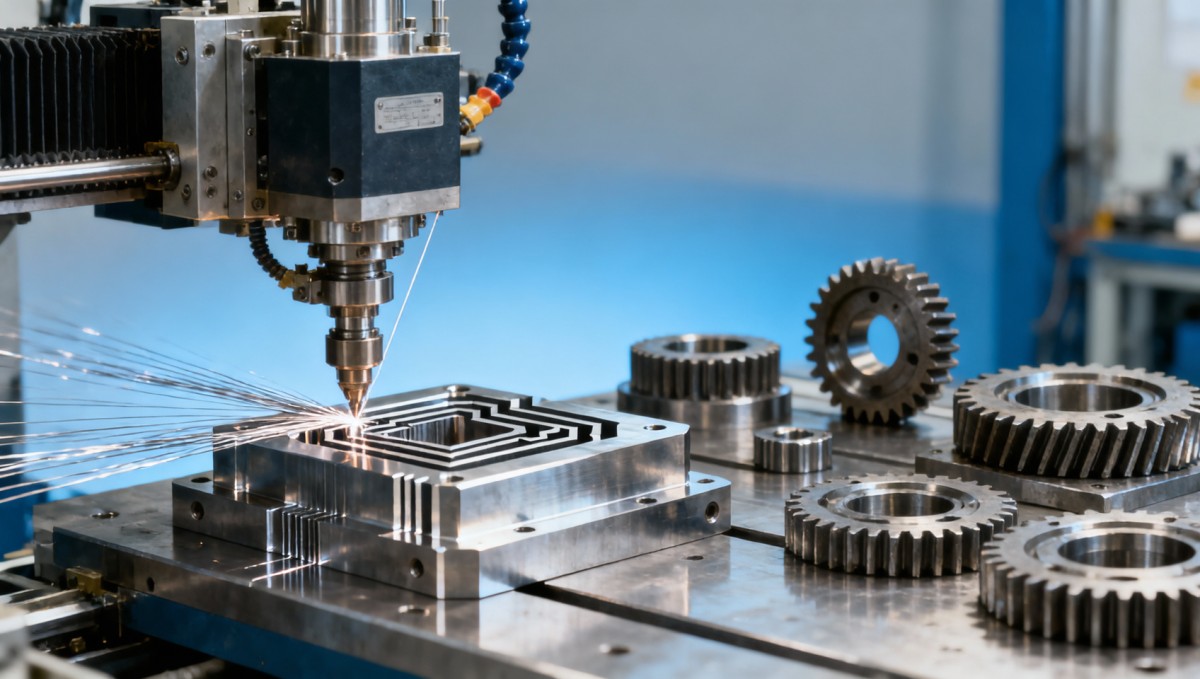
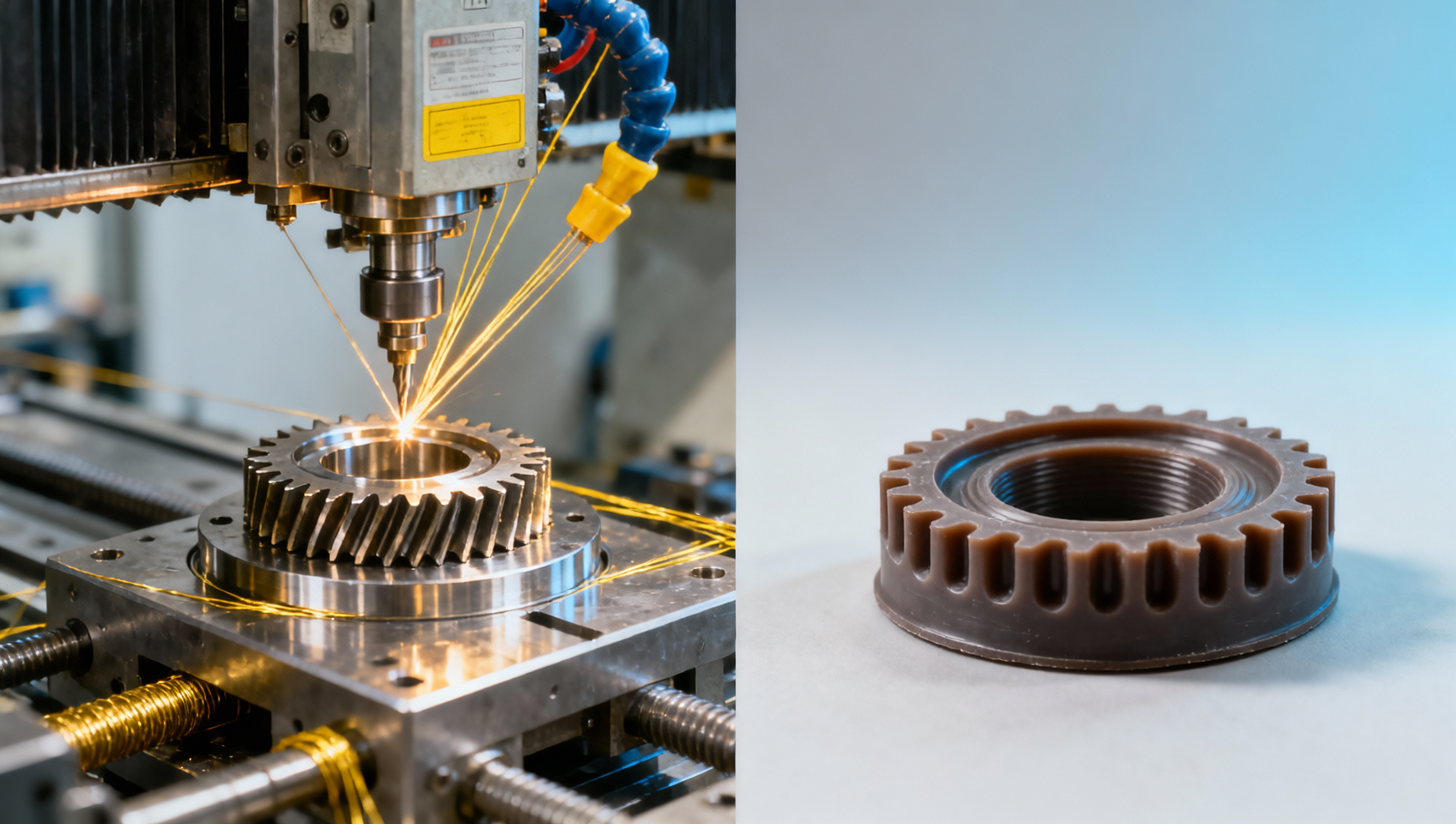
Wire EDM, or wire electrical discharge machining, removes material using controlled electrical sparks between a wire electrode and a conductive workpiece. Because the process is non-contact, it does not apply cutting force in the same way as conventional machining. That single difference becomes highly valuable when working with thin walls, hard alloys, fragile features, or profiles that would deflect under mechanical cutting loads.
The process is especially effective for conductive materials such as tool steel, stainless steel, titanium, carbide, Inconel, and hardened alloys above 50 HRC. In many shops, wire diameters commonly range from 0.10 mm to 0.30 mm, allowing precise corner control and narrow slots. Typical tolerance capability for qualified suppliers often falls in the ±0.002 mm to ±0.010 mm range, depending on part thickness, material, and number of skim passes.
For procurement teams, the main value appears when the alternative process would require special cutters, multiple setups, or high scrap risk. For operators and project leaders, wire EDM also helps when intricate internal profiles, sharp inside corners, or repeatable matching parts are mandatory. In regulated or quality-sensitive sectors, fewer burrs and predictable dimensional control can shorten inspection and rework cycles by 1 to 3 days on a typical batch workflow.
Common part types that favor wire EDM
- Precision dies, punches, and stamping tools requiring clean edges and accurate profiles.
- Medical and electronics fixtures where slots, micro-features, or matched components must hold tight tolerances.
- Gear tooling, prototype transmission elements, and hardened wear parts that are difficult to cut after heat treatment.
- Custom automation parts with narrow radii, internal contours, or difficult-to-reach sections.
The table below summarizes situations where wire EDM services tend to deliver stronger value than common mechanical processes.
A key conclusion is that wire EDM services become more attractive as geometry complexity, hardness, and quality risk increase. The process is less about speed in raw cubic removal and more about achieving precision without introducing force-related defects or expensive follow-up work.
When Wire EDM Is Better Than Milling, Grinding, or Laser Cutting
Many sourcing decisions fail because teams compare only headline hourly rates. A CNC mill may appear less expensive, but once a part needs 3 setups, custom small-diameter tools, deburring, and post-heat-treatment correction, the cost picture changes. Wire EDM services are often the better choice when the process chain can be shortened, especially on precision components where dimensional variation creates expensive downstream issues.
Compared with milling, wire EDM handles very hard materials with no cutting force and much less concern about tool chatter. Compared with grinding, it can create intricate internal contours that a wheel cannot access easily. Compared with laser cutting, wire EDM generally offers tighter dimensional control and lower thermal distortion on thick conductive materials, although laser remains faster for high-volume sheet applications where tolerances are more forgiving.
This comparison is highly relevant in sectors such as healthcare technology, smart electronics tooling, and precision energy components. If a part must fit with molded elastomers, welded plastic assemblies, or tightly aligned bearings, small edge defects or taper variation can affect full-system performance. In such cases, wire EDM often reduces cumulative tolerance stack-up and improves first-pass acceptance rates.
Side-by-side process comparison
The following matrix helps technical and commercial teams compare process fit beyond unit price.
In practical sourcing, wire EDM is often the better choice when rework costs exceed 10% to 15% of part value, when tolerance windows fall below ±0.01 mm, or when post-processing steps would otherwise erode schedule confidence. For finance reviewers, that means the process can justify a higher direct price by lowering scrap, inspection time, and supplier performance risk.
Signs that another process may be better
- If the material is non-conductive, wire EDM is not applicable.
- If the design is simple and volume is high, stamping, laser, or milling may offer lower unit cost.
- If turnaround must be measured in hours rather than days, the slow cut rate of EDM may not fit the schedule.
That is why the strongest procurement decisions compare total process suitability, not only machining speed. In many industrial programs, the winning process is the one that protects validation timelines and quality performance, even if the quoted part price is moderately higher.
Selection Criteria for Buyers, Engineers, and Quality Teams
Choosing wire EDM services should start with five core checks: material conductivity, tolerance target, geometry complexity, surface integrity requirements, and delivery urgency. If at least 3 of these 5 factors strongly favor EDM, the process deserves serious consideration. This framework helps align engineering preference with commercial review and avoids conflict between design intent and sourcing strategy.
Buyers should request more than a simple quotation. At minimum, ask the supplier to confirm achievable tolerance range, maximum workpiece thickness, expected skim-pass strategy, and inspection capability. On high-value parts, it is reasonable to request sample measurement reports or discuss whether critical dimensions are checked by CMM, optical systems, or calibrated gauges. A capable supplier should be able to explain not just what they can cut, but how they control variation across a batch of 20, 100, or 500 pieces.
Quality and safety teams should also look at edge condition, recast layer management, and burr expectations. In some applications, especially medical devices, electronic connectors, or sealing interfaces, surface integrity is not a cosmetic issue. It affects assembly, wear, and performance. Multi-pass wire EDM can improve finish significantly, and in many precision jobs 2 to 4 skim passes are used to reduce surface roughness and improve dimensional stability.
Practical supplier evaluation checklist
- Confirm tolerance capability for your actual material and thickness, not a generic brochure claim.
- Ask whether the part will be cut in 1 setup or requires multiple handling steps that may affect repeatability.
- Review lead time for prototypes versus production batches; common windows may be 3 to 7 days for prototypes and 1 to 3 weeks for repeat orders.
- Check inspection documentation, packaging method, and traceability if parts feed regulated or validated assemblies.
- Discuss whether the supplier can support design-for-manufacturability feedback before release.
Cost drivers that should be visible in the quote
A transparent wire EDM quote should reflect material type, thickness, contour length, tolerance level, number of passes, setup complexity, and inspection burden. A part cut once to a moderate tolerance is very different from a part requiring 3 skim passes, edge-critical finishing, and 100% dimensional verification. Buyers who understand these drivers are better positioned to compare suppliers on a like-for-like basis.
Project managers should also map the process to the larger production plan. If an EDM-cut tooling insert prevents repeated line stoppages or reduces mold tuning time by even 1 shift, the commercial value may exceed the machining premium. This broader view is especially important in global B2B programs where delayed qualification can affect launch schedules, inventory planning, and customer commitments.
Implementation, Lead Time, and Risk Control in Real Projects
Once wire EDM has been selected, execution quality becomes the next differentiator. In most projects, the workflow follows 5 stages: drawing review, manufacturability check, programming and setup, cutting and inspection, then packaging and delivery. While the sequence is straightforward, the risk points are concentrated in specification clarity. Missing details on datum structure, edge condition, or permissible taper can create avoidable delays of 24 to 72 hours.
Lead time depends heavily on part complexity and queue conditions. For simple prototype parts, many suppliers can deliver within 3 to 5 working days. For hardened tooling components, high-accuracy multi-pass parts, or mixed-material project lots, 7 to 15 working days is more realistic. Enterprise buyers should confirm whether inspection reports, export packaging, and revision-controlled documentation are included in that timeline.
Risk control should not wait until final inspection. Operators and quality teams should define in-process checks for start-hole position, wire path stability, taper, and critical dimensions. On complex parts, early first-article review can prevent repeating the same issue across an entire batch. For approved suppliers, a short pre-production review meeting often reduces misunderstanding and helps keep first-pass yield high.
Typical project risks and mitigation actions
The table below shows common project-level concerns and the controls that usually produce better outcomes.
The main lesson is simple: wire EDM services perform best when specification discipline matches machining capability. For project leaders, that means investing time upfront in drawing clarity and acceptance criteria. It often saves far more time than it costs.
A practical 4-point approval model
- Technical fit: material, thickness, and geometry are EDM-compatible.
- Commercial fit: higher process cost is offset by lower rework or better yield.
- Schedule fit: lead time aligns with prototype or production milestone.
- Quality fit: supplier can document and verify critical dimensions reliably.
This kind of structured approval is particularly useful for distributors, sourcing agents, and multinational procurement teams managing supplier comparisons across regions. It creates a more objective basis for vendor selection and reduces dependence on sales claims alone.
FAQ and Final Guidance for Decision-Makers
Even after a technical review, teams often have practical questions about cost, speed, and application fit. The answers below reflect common buying and engineering concerns seen in precision manufacturing and B2B sourcing programs.
How tight can wire EDM services typically hold?
For many production suppliers, practical tolerance capability is often in the ±0.002 mm to ±0.010 mm range, though actual results depend on material, thickness, machine condition, and pass strategy. Buyers should always request capability relative to the specific part, not only a general machine specification.
Is wire EDM only suitable for tooling and dies?
No. Tooling remains a major application, but wire EDM services are also used for precision fixture parts, medical and electronics components, energy-system wear parts, prototype mechanisms, and complex conductive parts that require low-distortion cutting. The process is most valuable wherever profile accuracy and repeatability matter more than raw speed.
What is a normal lead time for outsourced EDM work?
For standard prototypes, 3 to 7 working days is common. More complex or quality-critical orders may take 1 to 3 weeks, especially if they require multiple skim passes, formal inspection reporting, or export handling. If timing is critical, confirm queue position and inspection scope before purchase order release.
What is the biggest sourcing mistake?
The most common mistake is selecting or rejecting wire EDM services based only on line-item price. In reality, the better decision comes from comparing total manufacturing cost, quality risk, fit-to-assembly performance, and schedule impact. A part that costs 12% more to machine but avoids a failed validation lot can be the better commercial choice.
For organizations operating across advanced manufacturing, healthcare technology, smart electronics, green energy, and supply chain-driven procurement networks, wire EDM is best viewed as a precision risk-management tool as much as a machining process. It excels when geometry is complex, materials are hard, tolerances are tight, and defect cost is high.
If your team is assessing precision parts, tooling components, or cross-border manufacturing partners, a structured review of wire EDM services can reveal hidden savings in quality, speed-to-approval, and lifecycle reliability. To evaluate fit for your next project, contact us to discuss your drawings, tolerance targets, and delivery needs, or request a tailored sourcing and manufacturing solution aligned with your application.
Get weekly intelligence in your inbox.
No noise. No sponsored content. Pure intelligence.
 Apr 17, 2026Temperature data loggers drift unpredictably inside lithium-ion battery storage enclosuresTemperature data loggers drift unpredictably inside lithium-ion battery storage enclosures
 Apr 17, 2026Are solar microinverters really worth the extra cost?Are solar microinverters really worth the extra cost?
 Apr 17, 2026Bifacial solar panels: How much more energy can they generate?Bifacial solar panels: How much more energy can they generate?
 Apr 17, 2026Gear manufacturing: How to optimize production for high precision?Gear manufacturing: How to optimize production for high precision?
 Apr 17, 2026Why power transmission components fail earlier than expectedWhy power transmission components fail earlier than expected
 Apr 17, 2026Linear motion systems: belt drive or ball screw for speed?Linear motion systems: belt drive or ball screw for speed?
 Apr 17, 2026Industrial bearing suppliers: what signals reliable quality?Industrial bearing suppliers: what signals reliable quality?
 Apr 17, 2026When pneumatic valves wholesale gets expensive laterWhen pneumatic valves wholesale gets expensive later
 Apr 17, 2026Hydraulic cylinder fabrication mistakes that cause oil leaksHydraulic cylinder fabrication mistakes that cause oil leaks
 Apr 17, 2026Heavy equipment manufacturing delays often start hereHeavy equipment manufacturing delays often start here
 Apr 17, 2026Custom heatsinks: when a larger size solves nothingCustom heatsinks: when a larger size solves nothing
 Apr 17, 2026Electronic enclosure fabrication: steel or aluminum?Electronic enclosure fabrication: steel or aluminum?
 Apr 17, 2026Automotive parts machining tolerances that drive up scrapAutomotive parts machining tolerances that drive up scrap
 Apr 17, 2026Medical device manufacturing changes under tighter traceabilityMedical device manufacturing changes under tighter traceability
 Apr 17, 2026How to Choose Solid State Batteries in 2026How to Choose Solid State Batteries in 2026
 Apr 17, 2026Are Solid State Batteries Worth the Cost Yet?Are Solid State Batteries Worth the Cost Yet?
 Apr 17, 2026Commercial Energy Storage Sizing: What Matters Most?Commercial Energy Storage Sizing: What Matters Most?
 Apr 17, 2026Commercial Energy Storage ROI: How to Assess ItCommercial Energy Storage ROI: How to Assess It
 Apr 17, 2026Off Grid Solar Systems: What to Avoid FirstOff Grid Solar Systems: What to Avoid First
 Apr 17, 2026Who Should Use Off Grid Solar Systems?Who Should Use Off Grid Solar Systems?
 Apr 17, 2026Solar Microinverters vs String Inverters: Which Fits?Solar Microinverters vs String Inverters: Which Fits?
 Apr 17, 2026When Do Solar Microinverters Make More Sense?When Do Solar Microinverters Make More Sense?
 Apr 17, 2026How digital freight matching for international shipping cuts transit time by up to 22% in 2026How digital freight matching for international shipping cuts transit time by up to 22% in 2026
 Apr 17, 2026Why port automation tech for smart logistics reduces container handling errors by 37% at Tier-1 terminalsWhy port automation tech for smart logistics reduces container handling errors by 37% at Tier-1 terminals
 Apr 17, 2026What yard management systems for port operations actually deliver in real-world deploymentsWhat yard management systems for port operations actually deliver in real-world deployments
 Apr 17, 2026Can digital customs clearance for sea freight reduce D/O processing from 48 hours to under 90 minutesCan digital customs clearance for sea freight reduce D/O processing from 48 hours to under 90 minutes
 Apr 17, 2026How returnable transport packaging for automotive parts lowers TCO by 18–25% over 3 yearsHow returnable transport packaging for automotive parts lowers TCO by 18–25% over 3 years