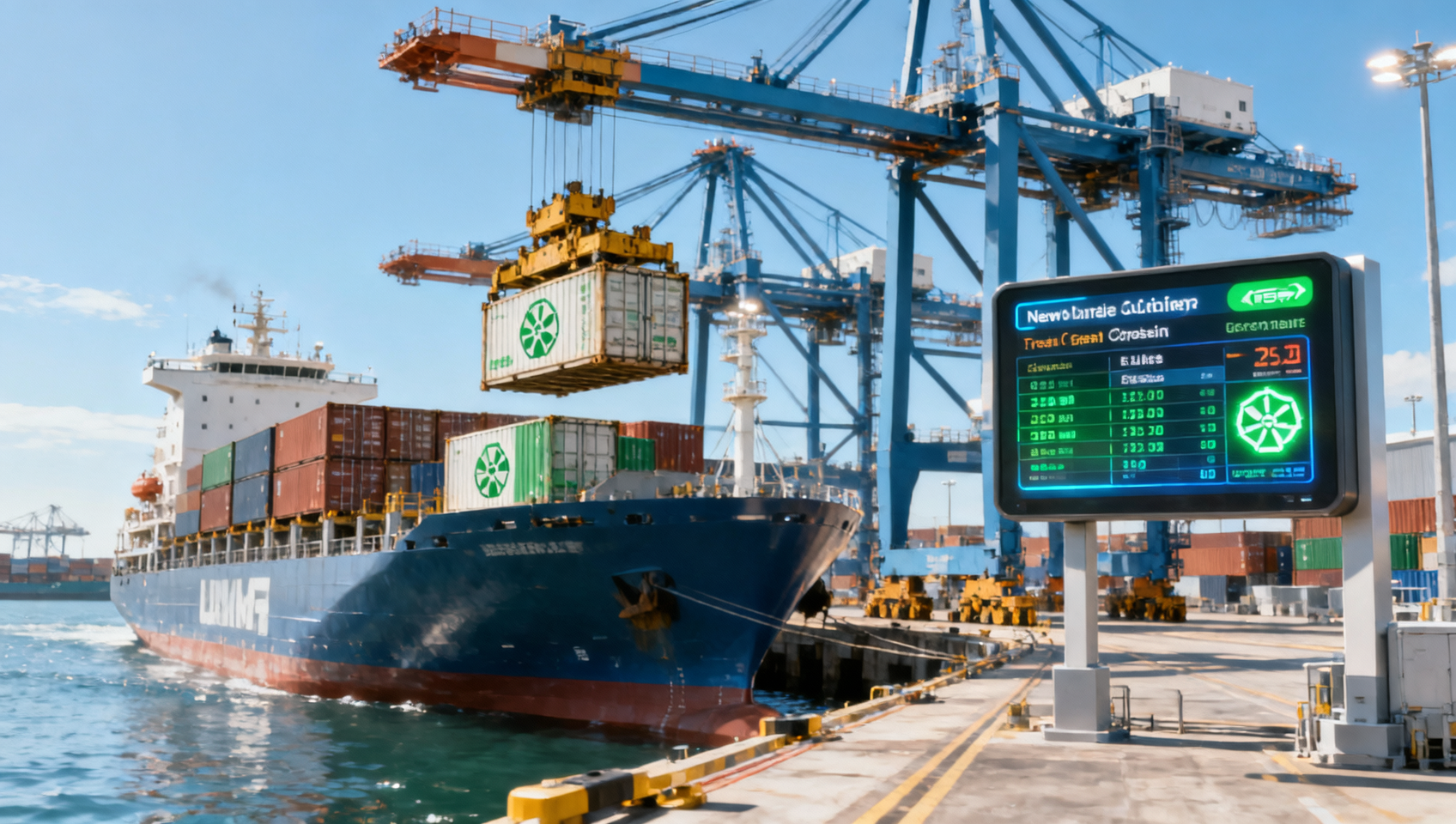
Global Shipping Alliances Cut Shanghai–Rotterdam Direct Sails
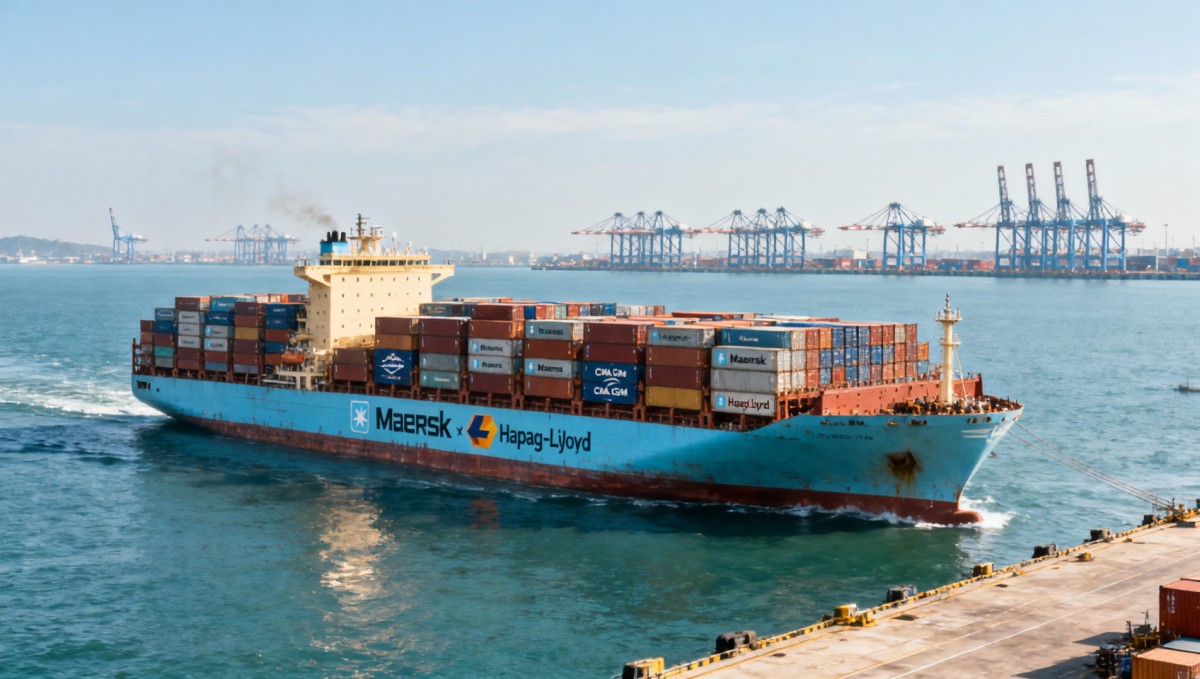
On April 16, 2026, Maersk, CMA CGM, and Hapag-Lloyd jointly announced a reduction in direct container vessel services between Shanghai Port and Rotterdam Port—effective May 2026. This adjustment affects exporters, importers, and logistics providers across Asia–Europe supply chains, particularly those relying on time-sensitive or compliance-sensitive cargo movements.
Event Overview
Effective May 2026, the three carriers will reduce weekly direct sailings from Shanghai to Rotterdam from 12 to 9. The remaining volume will be rerouted via transshipment hubs—including Singapore and Colombo. The decision follows a 40% increase in Suez Canal transit fees and the ongoing normalization of Red Sea detours. No further operational details (e.g., vessel capacity adjustments, surcharge structures, or long-term schedule revisions) have been publicly confirmed.
Industries Affected by Segment
Direct Exporters (e.g., electronics, machinery, textiles)
These companies face longer end-to-end transit times due to mandatory transshipment. The added 7–10 days may disrupt just-in-time delivery commitments, especially for high-value or seasonally sensitive goods. Lead time visibility and documentation consistency across two ports (origin + transshipment) also increase administrative burden.
Import-Dependent Manufacturers (e.g., automotive parts, industrial equipment)
Manufacturers sourcing components from China for European assembly lines may experience production scheduling volatility. Delays at transshipment hubs—especially if customs clearance is not pre-validated—can trigger line-stop risks. Inventory planning models calibrated for direct routing now require recalibration.
Third-Party Logistics Providers & Freight Forwarders
Service providers must adapt quoting, documentation, and tracking protocols to reflect dual-port handling. Liability exposure increases where cargo is subject to additional inspections, storage fees, or regulatory scrutiny at Singapore or Colombo—particularly for restricted commodities (e.g., batteries, chemicals).
Distribution & Retail Channel Operators
Brands managing pan-European retail fulfillment from Chinese warehouses may see extended order-to-delivery windows. Stock availability forecasts for Q3–Q4 2026 campaigns—especially holiday-season inventory—require updated assumptions on port dwell time and inland transport synchronization post-transshipment.
What Stakeholders Should Monitor and Do Now
Track official service updates from carrier alliances
Confirm whether the 9-weekly direct sailings will remain stable beyond May—or whether further reductions are planned. Monitor announcements regarding vessel reallocation (e.g., redeployment to alternative routes such as Shanghai–Hamburg or Ningbo–Rotterdam), which could shift capacity pressure elsewhere.
Validate transshipment port compliance requirements
Review customs procedures, documentation standards (e.g., ISF, ENS), and permitted cargo classifications for Singapore and Colombo. Pre-clearance readiness—especially for regulated goods—is critical to avoid unexpected holds or demurrage.
Reassess lead time buffers and safety stock levels
Adjust internal planning calendars to absorb the minimum +7-day extension. Where possible, pilot dual-sourcing or staggered shipment batches to mitigate single-point delay risk. Document revised timelines for customer-facing SLAs and procurement contracts.
Update communication protocols with European partners
Proactively inform overseas buyers, distributors, and customs brokers about expected changes in arrival windows and document flows. Align on who manages transshipment-related declarations—especially where origin-of-goods or preferential tariff claims depend on consistent data across legs.
Editorial Perspective / Industry Observation
This adjustment is better understood as an operational recalibration—not a structural route abandonment. Analysis来看, it reflects short-to-mid-term cost optimization amid persistent canal cost inflation and security-related routing constraints, rather than a permanent withdrawal from the Shanghai–Rotterdam corridor. From industry角度看, the shift signals growing reliance on resilient, multi-hub network design—but also highlights systemic vulnerability when primary chokepoints (Suez) face sustained cost or access pressure. Current more relevant to watch is how consistently carriers maintain the new 9-vessel baseline—and whether competing alliances (e.g., Ocean Alliance) adjust their own schedules in response.
Conclusion
This development underscores that maritime connectivity between major Asian and European ports is increasingly shaped by geopolitical and infrastructural variables—not just demand or capacity. It is best interpreted not as a disruption, but as a signal of adaptive routing becoming standard practice. Stakeholders should treat it as a catalyst for reviewing end-to-end visibility, documentation governance, and contingency planning—not merely a timetable change.
Information Sources
Primary source: Joint statement issued by Maersk, CMA CGM, and Hapag-Lloyd on April 16, 2026.
Note: Ongoing monitoring is advised for potential follow-up announcements regarding surcharges, equipment availability, or transshipment port-specific operational guidelines—none of which have been confirmed as of publication.
Get weekly intelligence in your inbox.
No noise. No sponsored content. Pure intelligence.
 Apr 17, 2026Temperature data loggers drift unpredictably inside lithium-ion battery storage enclosuresTemperature data loggers drift unpredictably inside lithium-ion battery storage enclosures
 Apr 17, 2026Are solar microinverters really worth the extra cost?Are solar microinverters really worth the extra cost?
 Apr 17, 2026Bifacial solar panels: How much more energy can they generate?Bifacial solar panels: How much more energy can they generate?
 Apr 17, 2026Gear manufacturing: How to optimize production for high precision?Gear manufacturing: How to optimize production for high precision?
 Apr 17, 2026Why power transmission components fail earlier than expectedWhy power transmission components fail earlier than expected
 Apr 17, 2026Linear motion systems: belt drive or ball screw for speed?Linear motion systems: belt drive or ball screw for speed?
 Apr 17, 2026Industrial bearing suppliers: what signals reliable quality?Industrial bearing suppliers: what signals reliable quality?
 Apr 17, 2026When pneumatic valves wholesale gets expensive laterWhen pneumatic valves wholesale gets expensive later
 Apr 17, 2026Hydraulic cylinder fabrication mistakes that cause oil leaksHydraulic cylinder fabrication mistakes that cause oil leaks
 Apr 17, 2026Heavy equipment manufacturing delays often start hereHeavy equipment manufacturing delays often start here
 Apr 17, 2026Custom heatsinks: when a larger size solves nothingCustom heatsinks: when a larger size solves nothing
 Apr 17, 2026Electronic enclosure fabrication: steel or aluminum?Electronic enclosure fabrication: steel or aluminum?
 Apr 17, 2026Automotive parts machining tolerances that drive up scrapAutomotive parts machining tolerances that drive up scrap
 Apr 17, 2026Medical device manufacturing changes under tighter traceabilityMedical device manufacturing changes under tighter traceability
 Apr 17, 2026How to Choose Solid State Batteries in 2026How to Choose Solid State Batteries in 2026
 Apr 17, 2026Are Solid State Batteries Worth the Cost Yet?Are Solid State Batteries Worth the Cost Yet?
 Apr 17, 2026Commercial Energy Storage Sizing: What Matters Most?Commercial Energy Storage Sizing: What Matters Most?
 Apr 17, 2026Commercial Energy Storage ROI: How to Assess ItCommercial Energy Storage ROI: How to Assess It
 Apr 17, 2026Off Grid Solar Systems: What to Avoid FirstOff Grid Solar Systems: What to Avoid First
 Apr 17, 2026Who Should Use Off Grid Solar Systems?Who Should Use Off Grid Solar Systems?
 Apr 17, 2026Solar Microinverters vs String Inverters: Which Fits?Solar Microinverters vs String Inverters: Which Fits?
 Apr 17, 2026When Do Solar Microinverters Make More Sense?When Do Solar Microinverters Make More Sense?
 Apr 17, 2026How digital freight matching for international shipping cuts transit time by up to 22% in 2026How digital freight matching for international shipping cuts transit time by up to 22% in 2026
 Apr 17, 2026Why port automation tech for smart logistics reduces container handling errors by 37% at Tier-1 terminalsWhy port automation tech for smart logistics reduces container handling errors by 37% at Tier-1 terminals
 Apr 17, 2026What yard management systems for port operations actually deliver in real-world deploymentsWhat yard management systems for port operations actually deliver in real-world deployments
 Apr 17, 2026Can digital customs clearance for sea freight reduce D/O processing from 48 hours to under 90 minutesCan digital customs clearance for sea freight reduce D/O processing from 48 hours to under 90 minutes
 Apr 17, 2026How returnable transport packaging for automotive parts lowers TCO by 18–25% over 3 yearsHow returnable transport packaging for automotive parts lowers TCO by 18–25% over 3 years