OEM consumer electronics projects often stall at this stage
Many OEM consumer electronics projects do not fail because of weak ideas—they stall when engineering, sourcing, compliance, and timeline control stop moving in sync. For project managers and engineering leads, this stage is where hidden risks multiply, costs rise, and launch confidence drops. Understanding why momentum breaks here is the first step to restoring execution speed and protecting delivery targets.
In OEM consumer electronics, a project can look healthy on paper for the first 30 to 60 days, then suddenly lose momentum when prototype revisions, component lead times, test failures, and approval loops begin to overlap. This is the stage where program teams often realize that a launch plan built around optimistic assumptions is no longer aligned with factory realities.
For project managers, NPI leaders, and engineering owners, the challenge is not only technical. It is operational. A missed connector specification, a late firmware handoff, or a compliance document that arrives 2 weeks behind schedule can delay pilot production, trigger rework, and weaken supplier confidence. In fast-moving smart electronics categories, even a 14-day slip can disrupt channel commitments and procurement planning.
This article breaks down where OEM consumer electronics programs most often stall, how to identify the warning signs early, and which control mechanisms help teams recover execution speed without compromising quality, cost, or regulatory readiness.
Where OEM Consumer Electronics Projects Commonly Lose Momentum
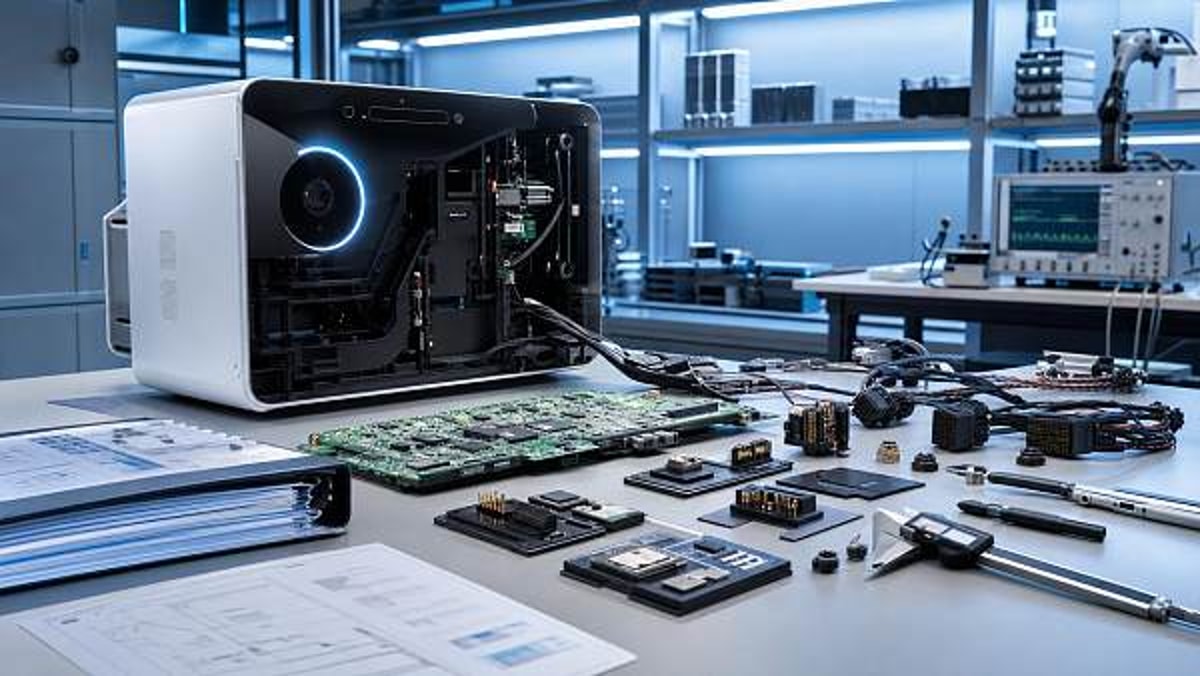
The most fragile phase usually sits between EVT and DVT, or between final design freeze and pilot build readiness. At this point, product definition appears mature, but execution dependencies are still moving. Mechanical engineering may be done at 90%, while tooling is only 60% locked, firmware is one sprint behind, and two critical ICs remain on long lead procurement status.
The four functions that must stay synchronized
In OEM consumer electronics programs, stalling typically begins when four tracks drift apart: engineering validation, sourcing continuity, compliance preparation, and timeline governance. If one function slips by 7 to 10 days, the others usually absorb the impact. If two or more slip together, the project enters a compounding delay pattern that is harder to recover.
- Engineering: unresolved design changes, tolerance issues, firmware instability, thermal or EMC failures
- Sourcing: MOQ conflict, substitute part approval delays, supplier response time beyond 72 hours
- Compliance: incomplete material declarations, labeling errors, missing pre-certification test readiness
- Timeline control: weak ownership, milestone ambiguity, delayed escalation, and poor version control
Why this stage is more dangerous than early concept risk
Early-stage uncertainty is expected. Mid-stage uncertainty is more dangerous because teams often keep committing to original ship dates while hidden work expands. A small redesign at week 8 can affect tooling steel cut, packaging dimensions, drop test preparation, and accessory sourcing. The delay is not linear; it can multiply across 3 to 5 linked workstreams.
The table below outlines the most common stall points in OEM consumer electronics projects and the operational effect each one creates for project owners.
The key takeaway is that projects rarely stall because of one dramatic failure. They slow down because unresolved items accumulate in parallel. By the time a PMO dashboard turns red, the recovery path may already require 2 to 4 extra weeks unless decision-making is tightened immediately.
Signals that a delay is becoming systemic
Experienced project leads watch for a cluster of symptoms rather than a single issue. If your issue list grows by more than 15% week over week, prototype rebuild frequency exceeds one major spin per 10 business days, or open supplier clarifications remain unresolved for longer than 5 working days, the project may be entering a stall pattern.
Other warning signs include repeated milestone relabeling instead of true closure, rising use of temporary parts, and test reports that generate more exceptions than decisions. In OEM consumer electronics, momentum depends on closure speed, not meeting volume. Ten meetings without a locked owner and due date create noise, not progress.
Root Causes Behind Mid-Stage Delays in OEM Consumer Electronics
When teams investigate stalled OEM consumer electronics programs, the underlying causes usually fall into 5 categories: incomplete product definition, unrealistic sourcing assumptions, fragmented compliance planning, change control weakness, and supplier capability mismatch. These causes often start small, but they become expensive once tooling, test bookings, and procurement deposits are already underway.
1. Product definition looks finished before it is manufacturable
A design can pass internal reviews and still be difficult to build at scale. In smart electronics, common examples include antenna placement conflicts, heat concentration near battery zones, cosmetic finish sensitivity, and connector stress after repeated use cycles. A product may be technically functional but still fail manufacturability thresholds during pilot preparation.
For engineering project leaders, the critical distinction is between prototype success and repeatable production readiness. If the yield target for pilot is 95% but the current build is closer to 82% to 88%, the program is not ready for confident ramp planning, even if the demo unit performs well.
2. Sourcing plans depend on parts that are not truly secured
In OEM consumer electronics, a BOM is only as stable as its most fragile component. Long lead items such as MCUs, displays, sensors, camera modules, memory, and power management devices can shift from a 4-week forecast to a 12-week supply reality with little warning. If alternates have not been pre-qualified, the program schedule becomes highly exposed.
Many stalled programs share the same sourcing pattern: procurement assumes availability based on quotation, while engineering assumes equivalence between primary and backup parts. When the approved substitute later requires PCB, firmware, or regulatory review, the “backup” part no longer protects timeline performance.
3. Compliance is treated as a final gate instead of a parallel workstream
Consumer electronics programs often underestimate the documentation load behind testing and market entry. Depending on destination markets, teams may need material declarations, battery transport data, safety labeling, RF evaluation readiness, packaging marks, and user instruction updates. Missing one item can delay lab scheduling or force retesting after a design adjustment.
A practical rule is to open compliance readiness at least 6 to 8 weeks before final submission, not after engineering signs off. This is especially important when a product includes wireless modules, rechargeable batteries, external power supplies, or region-specific labeling requirements.
4. Change requests move faster than change control
During the middle phase of OEM consumer electronics development, change requests increase rapidly. Teams may adjust housings, firmware logic, packaging inserts, cable lengths, or testing criteria within the same 2-week window. If change approval is informal, revision mismatch becomes almost inevitable.
A disciplined ECO process should define at least 4 fields for every change: business reason, affected parts, implementation date, and cross-functional signoff. Without these controls, factories can build from outdated drawings while sourcing orders revised material, creating rework that consumes both labor and trust.
A Practical Control Framework for Project Managers and Engineering Leads
Recovering a stalled OEM consumer electronics program is less about adding pressure and more about restoring control points. The most effective project leaders build a short, visible operating rhythm: one source of truth, one prioritized risk list, one owner per issue, and one escalation path for schedule threats above a defined threshold.
Build a 5-part execution dashboard
A useful dashboard should track five categories every week: design maturity, material readiness, compliance progress, build yield, and milestone confidence. Each category needs measurable criteria. “On track” is too vague. A better status method uses threshold logic such as 0 critical blockers, fewer than 3 high-risk open items, and less than 5% BOM without confirmed supply status.
- Design maturity: locked drawings, approved firmware baseline, test issue closure rate
- Material readiness: long lead coverage, approved alternates, supplier acknowledgment status
- Compliance progress: required documents, pre-test readiness, label review completion
- Build yield: defect Pareto, first-pass yield, retest frequency, station bottlenecks
- Milestone confidence: date realism, unresolved dependencies, escalation age in days
Set trigger points before the project turns critical
Trigger points help prevent passive delay. For example, if first-pass yield stays below 90% after 2 pilot runs, or if more than 8% of BOM value depends on unapproved alternates, the project should automatically move into corrective review. These thresholds create disciplined intervention before downstream costs rise further.
The following framework shows how project leaders can convert common OEM consumer electronics risks into concrete control actions and decision timing.
This type of framework improves decision speed because it replaces vague follow-up with structured escalation. For OEM consumer electronics teams working across suppliers, labs, and internal departments, a 72-hour decision standard is often more valuable than a perfect but delayed analysis.
Reduce friction at the supplier interface
Many delays blamed on suppliers are actually caused by unclear requests, incomplete files, or changing priorities. Project managers should standardize 3 basic supplier inputs for every critical item: current status, next dependency, and date at risk. This creates transparency without requiring lengthy status calls.
For complex OEM consumer electronics builds, weekly reviews should also include the contract manufacturer, key component vendors, and quality representatives when possible. A 30-minute cross-functional review with pre-read data is usually more effective than separate updates that never converge.
Protect launch dates by defining acceptable trade-offs
Not every issue deserves the same level of disruption. Strong project leaders define in advance which items are launch-critical and which can move to a controlled post-launch revision. Cosmetic refinements, accessory pack changes, or low-frequency firmware enhancements may be acceptable in phase 2. Battery safety, RF stability, and major connectivity performance are not.
A practical method is to group open issues into 3 classes: ship blockers, controlled deviations, and deferred improvements. This prevents teams from treating all problems as equal and helps protect the schedule from endless optimization.
What Procurement and Leadership Teams Should Ask Before Approving the Next Stage
Senior stakeholders often ask whether a project is “green” without probing the quality of the evidence behind that status. For OEM consumer electronics, gate approval should depend on proof, not confidence language. A project can move to the next phase only if material, test, and documentation readiness are supported by current records rather than verbal expectation.
Five questions that improve decision quality
- What percentage of the BOM is fully approved and supply-confirmed today?
- Which 3 open risks have the highest probability of delaying pilot or mass production?
- How many design changes are still pending cross-functional implementation?
- Is compliance readiness lagging engineering by more than 1 reporting cycle?
- What is the current recovery plan if one critical milestone slips by 7 days?
These questions are simple, but they force disciplined visibility. They also align technical teams with procurement, operations, and executive stakeholders who need launch decisions based on execution facts instead of optimism.
Why this matters in a data-driven B2B environment
In sectors such as smart electronics and advanced manufacturing, the companies that scale consistently are usually the ones that translate technical complexity into decision-ready operational intelligence. That is why B2B leaders increasingly rely on platforms like TradeNexus Pro for deeper visibility into sourcing patterns, manufacturing signals, and cross-border execution risks that broad market summaries often miss.
For project managers and engineering leads, the value of this intelligence is practical. Better market context improves supplier conversations, helps validate schedule assumptions, and supports earlier intervention when component risk, regional compliance, or production timing begins to shift.
OEM consumer electronics projects stall most often when cross-functional timing breaks down in the middle of execution, not because the original concept lacked value. The teams that recover fastest are those that make hidden dependencies visible, set numeric trigger points, tighten change control, and separate true launch blockers from manageable refinements.
If your organization is managing complex OEM consumer electronics development across sourcing, engineering, and market-entry milestones, TradeNexus Pro can help you sharpen decision quality with deeper industry intelligence and more actionable supply chain insight. Contact us to explore tailored solutions, discuss project-specific risks, or learn more about strategic guidance for smarter execution.
Get weekly intelligence in your inbox.
No noise. No sponsored content. Pure intelligence.
 May 04, 2026FDA AI Diagnostic Software Guidance: Continuous Validation for Overseas FirmsFDA AI Diagnostic Software Guidance: Continuous Validation for Overseas Firms
 May 04, 2026MIIT Launches Export Compliance Support for Warehouse RoboticsMIIT Launches Export Compliance Support for Warehouse Robotics
 May 04, 2026India BIS Mandates ISI Certification for Smart Home Devices from July 2026India BIS Mandates ISI Certification for Smart Home Devices from July 2026
 May 04, 2026Global Shipping Alliance Raises Heavy-Lift Surcharges from May 2026Global Shipping Alliance Raises Heavy-Lift Surcharges from May 2026
 May 04, 2026GCC EV Charging Certification Unified: 35% Cost Cut for Chinese ExportersGCC EV Charging Certification Unified: 35% Cost Cut for Chinese Exporters
 May 04, 2026TÜV Rheinland Updates IoT Security Standard with AI Voice Data AnonymizationTÜV Rheinland Updates IoT Security Standard with AI Voice Data Anonymization
 May 04, 2026Yangshan Port Launches Green Energy Equipment Express LaneYangshan Port Launches Green Energy Equipment Express Lane
 May 04, 2026Vietnam Enforces Local IoT Certification for Smart Home Devices from May 2026Vietnam Enforces Local IoT Certification for Smart Home Devices from May 2026
 May 04, 2026US CBP Launches Battery Cargo Inspection: ESS Export Delays to 7–12 DaysUS CBP Launches Battery Cargo Inspection: ESS Export Delays to 7–12 Days
 May 04, 2026EU SVHC Update Effective May 1, 2026: Impact on Electronic Components ExportsEU SVHC Update Effective May 1, 2026: Impact on Electronic Components Exports
 May 04, 2026Portable power stations: what matters more than wattage on paperPortable power stations: what matters more than wattage on paper
 May 04, 2026Automotive injection molding machines and the scrap rate problemAutomotive injection molding machines and the scrap rate problem
 May 04, 2026Smart thermostats save energy only when setup is done rightSmart thermostats save energy only when setup is done right
 May 04, 2026Why TWS earbuds sound great in ads but not on callsWhy TWS earbuds sound great in ads but not on calls
 May 04, 2026Industrial robotics for material handling: where downtime startsIndustrial robotics for material handling: where downtime starts
 May 04, 2026LiFePO4 battery lifespan drops faster under these conditionsLiFePO4 battery lifespan drops faster under these conditions
 May 04, 2026Solar grid systems: when storage changes the project mathSolar grid systems: when storage changes the project math
 May 04, 2026Smart manufacturing for pharma fails when data stays isolatedSmart manufacturing for pharma fails when data stays isolated
 May 04, 2026Wearable technology trends that are finally useful in 2026Wearable technology trends that are finally useful in 2026
 May 04, 2026Bluetooth speakers: why battery life claims often miss real useBluetooth speakers: why battery life claims often miss real use
 May 04, 2026Home automation systems that solve everyday annoyances firstHome automation systems that solve everyday annoyances first
 May 04, 2026Solar street lights that underperform after the first rainy seasonSolar street lights that underperform after the first rainy season
 May 04, 2026Why sheet metal bending services in Canada cost more than expectedWhy sheet metal bending services in Canada cost more than expected
 May 04, 2026Factory automation systems for electronics and the ROI gapFactory automation systems for electronics and the ROI gap
 May 04, 2026OEM machined parts supplier Vietnam: quality checks that matterOEM machined parts supplier Vietnam: quality checks that matter
 May 04, 2026What to check before choosing a 5 axis machine for defenseWhat to check before choosing a 5 axis machine for defense
 May 04, 2026Smart grid solutions that fix peak load without major rebuildsSmart grid solutions that fix peak load without major rebuilds