Servo Motors Wholesale: What Minimum Order Terms Often Hide
In servo motors wholesale, minimum order terms often look straightforward but can conceal pricing tiers, lead-time risks, customization limits, and after-sales obligations that directly affect distributors, agents, and resellers. Understanding what these clauses really mean is essential for protecting margins, planning inventory, and choosing suppliers that support long-term market growth rather than short-term volume commitments.
Why do minimum order terms matter so much in servo motors wholesale?
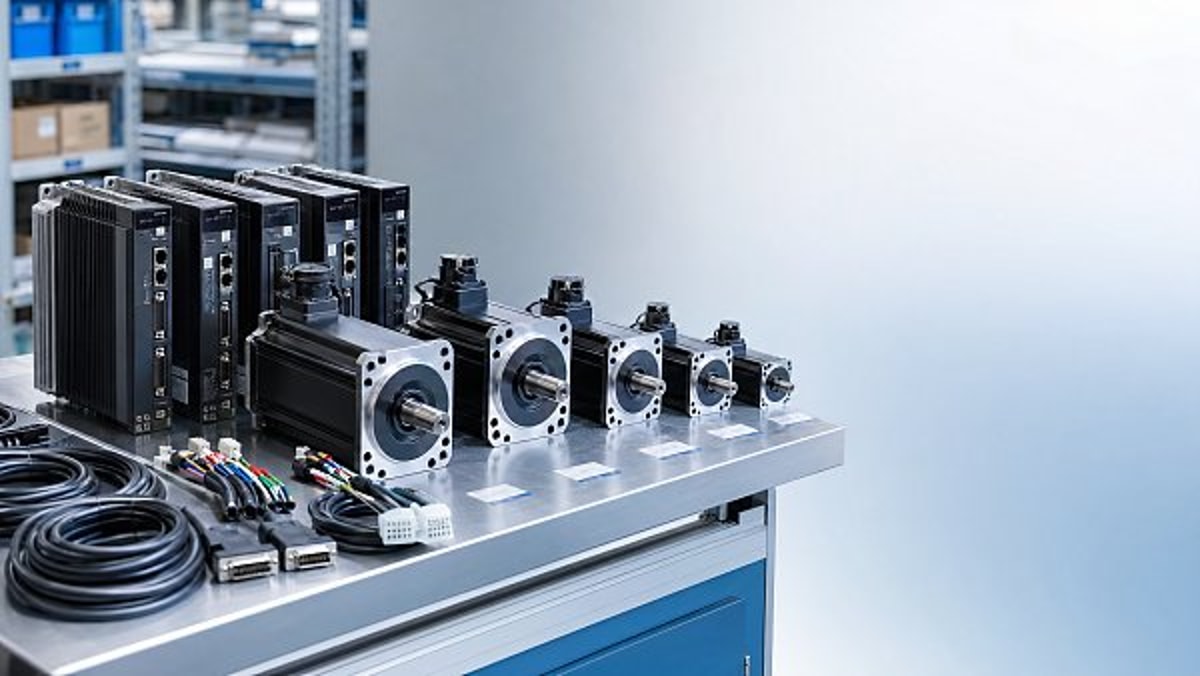
For distributors and agents, minimum order quantity is not just a number on a quotation sheet. In servo motors wholesale, an MOQ of 50, 100, or 300 units can change the entire economics of a deal, especially when the portfolio includes multiple frame sizes, voltage classes, encoder types, and control protocols. A supplier may present a low unit price at one volume tier, but the actual commitment can include bundled accessories, compulsory driver pairing, or packaging rules that raise the total capital tied up in stock.
The hidden issue is that minimum order terms often combine commercial and technical conditions. A distributor might believe the MOQ applies to one model family, only to find that the supplier defines it by shaft diameter, brake option, encoder resolution, or connector layout. That difference can turn what looked like 1 stock-keeping unit into 6 or 8 separate configurations, each requiring its own minimum run. In practical terms, inventory rotation can slow from 45 days to 120 days if the assortment is not clarified in advance.
This is why servo motors wholesale contracts deserve the same level of review as framework supply agreements in other industrial categories. Servo motors are frequently sold into packaging lines, CNC systems, robotics modules, conveyors, and automated assembly cells, where replacement timing and compatibility matter as much as price. If a reseller cannot replenish a motor-driver set within a 4 to 8 week service window, the end customer may switch brands entirely.
What is usually hidden behind an MOQ statement?
An MOQ can hide at least four different layers: the production batch threshold, the export packing threshold, the customization threshold, and the quotation validity threshold. In servo motors wholesale, these layers are not always disclosed together. A supplier may accept a trial order of 20 pieces but reserve standard pricing only for 100-piece runs, while lead time remains short only for the first 2 or 3 standard models. Once custom cable length or brake configuration is introduced, the real minimum may rise sharply.
- Production MOQ: the minimum quantity needed to schedule machining, winding, assembly, and testing efficiently.
- Commercial MOQ: the minimum quantity tied to a quoted unit price or discount bracket.
- Customization MOQ: the threshold above which non-standard encoder, flange, shaft, or cable options are accepted.
- Service MOQ: the quantity required before the supplier offers local spare parts support, labeling, or channel protection.
For channel partners, the best interpretation is not “What is your MOQ?” but “What changes at each quantity level?” That single question often reveals more useful information than the MOQ itself. In many servo motors wholesale negotiations, the difference between 30 units and 100 units is not only cost reduction of 3% to 8%, but also whether the supplier commits to firmware consistency, accessory continuity, and technical response time.
Quick signals that an MOQ needs deeper review
If a quotation uses phrases such as “standard model only,” “subject to final confirmation,” “mix models negotiable,” or “special options excluded,” the distributor should slow down. These phrases often indicate that the apparent minimum order applies only to the easiest-to-produce versions. In servo motors wholesale, this can become a margin problem later when customers request brake-equipped variants, absolute encoders, or specific communication interfaces.
Which minimum order clauses most often affect distributor margins?
Margin erosion in servo motors wholesale often begins when a distributor focuses only on ex-works unit price. The real margin is shaped by how many versions must be stocked, whether matching drives are mandatory, how returns are handled, and whether the supplier allows mixed containers or mixed cartons. A 6% lower price means little if 20% of the inventory stays idle because one connector standard was misread.
Another common issue is “annual volume promise” language. Some suppliers accept a low first order on the condition that the buyer reaches 500 or 1,000 units over 12 months. That can be workable for established distributors with stable industrial accounts, but risky for new agents testing market acceptance. If the annual target is missed, rebates may disappear, price protection may be withdrawn, or support for samples may be reduced in the next cycle.
The table below summarizes clauses that frequently look harmless at first glance but have a meaningful effect on landed cost, working capital, and channel profitability in servo motors wholesale.
The practical lesson is simple: the best price in servo motors wholesale is the price that remains profitable after sell-through, service support, returns exposure, and replenishment speed are considered. Many experienced resellers now model at least 3 landed-cost scenarios before signing an agency or volume agreement: conservative demand, expected demand, and delayed demand.
Should agents negotiate mixed-model MOQ arrangements?
Yes, especially when entering a new territory or adding a secondary brand. Mixed-model MOQ arrangements allow a distributor to build a broader starter portfolio without overcommitting to one unpopular specification. In servo motors wholesale, this is particularly useful where end-user demand is spread across 100W to 2kW ranges, with both brake and non-brake versions requested.
A workable structure might allow a total MOQ of 100 units spread across 5 to 8 standard models, while custom versions remain subject to separate thresholds. This protects the supplier’s production planning and gives the channel partner a realistic chance to test demand. The key is to confirm whether mixed-model pricing remains the same or whether each sub-model defaults to a higher tier.
How do minimum order terms affect lead time, stock planning, and service obligations?
Lead time in servo motors wholesale is often presented as a simple range, such as 2 to 4 weeks for standard items and 6 to 10 weeks for custom items. However, minimum order terms can change those timelines. A factory may prioritize small replenishment orders only when they align with a larger production batch already scheduled. If not, even a standard model may slip into the next cycle, adding 2 to 3 extra weeks.
This matters because distributors are usually judged by replacement speed, not by factory logic. If a servo motor fails in an automation line, the buyer expects quick confirmation of compatibility, stock, and dispatch. For resellers serving OEMs or integrators, carrying at least 4 to 6 fast-moving combinations can reduce emergency sourcing costs and improve account retention. But that stocking plan only works if minimum order terms permit repeatable replenishment in manageable lots.
After-sales obligations are also linked to MOQ. Some suppliers will provide troubleshooting support, parameter files, installation guidance, or spare-part kits only above certain volume levels. In servo motors wholesale, after-sales support can be the difference between one-off transactions and recurring channel business. A motor that ships cheaply but creates long commissioning delays may cost the distributor far more in support time than it saves in purchase price.
What service-related questions should be asked before accepting MOQ terms?
Before agreeing to any quantity commitment, distributors should verify the operational side of support. A factory that answers commercial emails quickly may still have limited technical documentation, slow firmware revision handling, or unclear warranty replacement rules. In servo motors wholesale, these details directly affect channel credibility.
- What is the standard lead time for repeat orders under 50 units, 50 to 200 units, and above 200 units?
- Are brake units, encoder variants, and cable sets stocked separately or built to order?
- What is the warranty handling flow for DOA cases, field failures, and compatibility disputes?
- Are spare connectors, seals, bearings, or drivers available for after-sales support?
- Will the supplier provide technical files, dimensional drawings, and commissioning guidance for channel partners?
If the answers are vague, the MOQ is not the main risk; the support model is. For servo motors wholesale, a lean but dependable replenishment structure is often more valuable than a large-volume deal with uncertain service commitments.
Typical planning ranges distributors can use
A practical planning approach is to classify products into A, B, and C groups. A items are fast-moving standard motors with repeat demand every 30 to 60 days; B items move every 60 to 120 days; C items are special-order products. In servo motors wholesale, this helps align MOQ negotiations with real market velocity instead of optimistic forecasts. It also supports better working-capital control across multi-spec portfolios.
What are the most common misunderstandings in servo motors wholesale negotiations?
One frequent misunderstanding is assuming that “standard model” means the same thing across factories. In reality, one supplier’s standard version may include common flange dimensions and default cables, while another treats cable exit direction, encoder type, and brake option as non-standard. In servo motors wholesale, this can create avoidable friction when a distributor receives a formal order from a customer and discovers that the exact requested version carries a higher MOQ and a 7-week lead time.
Another misunderstanding is treating samples as representative of batch supply conditions. A supplier may ship 2 trial units from available stock, but that does not guarantee stable future output of the same revision. For automation buyers, consistency matters. If connector layout, tuning behavior, or firmware generation changes between batches, service costs rise. Distributors should always ask whether sample units and mass-order units come from the same production configuration.
A third issue is overvaluing nominal discount levels. In servo motors wholesale, a 10% discount on a broad quote may still be less attractive than a 5% discount paired with better mixed-model flexibility, replacement stock access, and documentation support. Commercial headlines rarely tell the full story.
The FAQ-style comparison below helps clarify which assumptions are safe and which require verification before volume commitments are made.
The safest approach is to convert all verbal assumptions into written supply conditions. In servo motors wholesale, small wording differences can decide whether a partnership scales cleanly or becomes operationally expensive within the first 6 months.
Do certifications and documentation affect MOQ decisions too?
They do, especially in cross-border distribution. If end customers require standard documentation such as technical datasheets, dimensional drawings, wiring references, or general conformity materials, the distributor should confirm availability before ordering at scale. Some suppliers provide full documentation only for established standard models. In servo motors wholesale, new combinations or private-label requests may take additional review time, which can delay first shipments by 1 to 2 weeks.
This is not only a compliance issue. Documentation influences onboarding speed for installers, OEMs, and maintenance teams. Better documentation reduces support burden and lowers the hidden cost of market entry for agents building a new product line.
How should distributors evaluate suppliers before accepting servo motors wholesale terms?
A strong evaluation process blends commercial review with technical fit. In servo motors wholesale, the supplier should not be assessed only by quote response speed or headline pricing. The more reliable method is to score suppliers across at least 6 dimensions: product consistency, MOQ flexibility, repeat-order lead time, support depth, customization control, and channel policy. This creates a clearer basis for long-term decisions than comparing list prices alone.
Distributors should also compare the supplier’s willingness to support phased market development. A factory that insists on high opening volumes may still be suitable for mature markets, but less suitable for territories where demand needs validation. In servo motors wholesale, the best-fit partner is often the one that can scale from sample support to pilot stocking to regular replenishment without changing rules unpredictably.
One useful practice is to run a 90-day validation plan. During that period, the distributor can test quotation accuracy, documentation quality, engineering responsiveness, and delivery reliability across a small set of standard products. This reduces the risk of signing into annual commitments before operational behavior is understood.
What should be on a supplier evaluation checklist?
- Clarify whether MOQ is calculated by model family, exact SKU, or customized configuration.
- Request lead-time ranges for standard, mixed-model, and custom orders separately.
- Confirm whether drivers, cables, brakes, and feedback devices are optional or mandatory bundle items.
- Review technical support coverage for commissioning, troubleshooting, and replacement handling.
- Ask how engineering changes are communicated over 6 to 12 month supply cycles.
- Verify which standard documents are ready before purchase orders are placed.
What makes a wholesale setup more scalable?
Scalability in servo motors wholesale usually comes from predictable replenishment, transparent SKU logic, and support structures that match channel growth. A supplier does not need to offer the lowest MOQ in the market to be attractive. What matters more is whether quantity thresholds are stable, repeatable, and commercially sensible as demand expands from tens of units to several hundred units per quarter.
For distributors targeting automation, smart electronics, advanced manufacturing, or related industrial sectors, the most durable partnerships are built on operational clarity. If the wholesale model supports real forecasting, practical stocking, and manageable after-sales obligations, it is far easier to grow share without sacrificing service quality.
What should you confirm first before moving forward?
Before committing to servo motors wholesale terms, confirm five things in writing: how MOQ is defined, what pricing tier applies at each quantity range, which options are considered standard, what the repeat-order lead time is, and what after-sales support is included. These five points usually reveal whether a supplier is structured for channel growth or only for one-time volume pushes.
For many distributors, the smartest next step is not the biggest first order. It is a controlled opening structure that tests documentation, logistics rhythm, product consistency, and technical responsiveness over the first 60 to 90 days. In servo motors wholesale, early discipline often protects profitability better than aggressive opening discounts.
If you are reviewing suppliers, building a regional line card, or comparing terms across multiple factories, a structured evaluation can save both cash and market reputation. TradeNexus Pro helps procurement teams, distributors, and industrial channel partners examine supplier terms with greater clarity across product selection, delivery cycles, customization feasibility, and channel-fit strategy.
Why work with us?
We focus on the decision points that matter in real B2B trade: parameter confirmation, supplier comparison, lead-time risk, customization boundaries, and the commercial logic behind minimum order structures. If you need support evaluating servo motors wholesale offers, we can help organize the right questions before you negotiate volume commitments.
Contact us to discuss product selection, quantity planning, delivery schedules, sample support, documentation readiness, certification-related questions, or quotation alignment across different supplier options. A clear pre-purchase review today can prevent months of inventory pressure and service friction later.
Get weekly intelligence in your inbox.
No noise. No sponsored content. Pure intelligence.
 May 03, 2026AI Boom Drives Data Center Power Demand, Liquid Cooling Gains UrgencyAI Boom Drives Data Center Power Demand, Liquid Cooling Gains Urgency
 May 03, 2026Low-Altitude Economy in China's 15th Five-Year Plan Boosts Warehouse Robotics ExportsLow-Altitude Economy in China's 15th Five-Year Plan Boosts Warehouse Robotics Exports
 May 03, 2026EU REACH Adds 5 Organotin Compounds to SVHC List for ElectronicsEU REACH Adds 5 Organotin Compounds to SVHC List for Electronics
 May 03, 2026Western Land-Sea Expressway Boosts Solar PV Exports to ASEANWestern Land-Sea Expressway Boosts Solar PV Exports to ASEAN
 May 03, 2026Southeast Asia Smart Home E-commerce Grows 27.4% Amid New Matter 1.3+ Certification RulesSoutheast Asia Smart Home E-commerce Grows 27.4% Amid New Matter 1.3+ Certification Rules
 May 03, 2026FDA Updates IVD Software Guidance: AI Diagnostic Tools Require Independent Algorithm ValidationFDA Updates IVD Software Guidance: AI Diagnostic Tools Require Independent Algorithm Validation
 May 03, 2026Global Methanol EV Ecosystem Alliance LaunchedGlobal Methanol EV Ecosystem Alliance Launched
 May 03, 2026Vietnam GDP Growth Forecast Raised to 7.2% for 2026Vietnam GDP Growth Forecast Raised to 7.2% for 2026
 May 03, 2026UAE Emerges as Global AI Hub, Driving Demand for AI-Quality Inspection SystemsUAE Emerges as Global AI Hub, Driving Demand for AI-Quality Inspection Systems
 May 03, 2026OFID $500M Funding for Côte d'Ivoire Energy ProjectsOFID $500M Funding for Côte d'Ivoire Energy Projects
 May 03, 20265 Axis Milling Machines for Automotive: Buy New or Retrofit?5 Axis Milling Machines for Automotive: Buy New or Retrofit?
 May 03, 2026What to Check Before Sourcing OEM Machined Parts from IndiaWhat to Check Before Sourcing OEM Machined Parts from India
 May 03, 2026Why Sheet Metal Bending Machine Price Varies So MuchWhy Sheet Metal Bending Machine Price Varies So Much
 May 03, 2026Plastic Injection Molding Process Guide for Common Defect ControlPlastic Injection Molding Process Guide for Common Defect Control
 May 03, 2026Smart Manufacturing Technology Trends Reshaping Factory UpgradesSmart Manufacturing Technology Trends Reshaping Factory Upgrades
 May 03, 2026Automotive Die Casting Parts and the Hidden Cost of PorosityAutomotive Die Casting Parts and the Hidden Cost of Porosity
 May 03, 2026Assembly Line Robots: Flexibility Can Matter More Than SpeedAssembly Line Robots: Flexibility Can Matter More Than Speed
 May 03, 2026Smart Manufacturing in Energy: Which Upgrades Pay Back FasterSmart Manufacturing in Energy: Which Upgrades Pay Back Faster
 May 03, 2026Why Robotics Integration Fails After a Successful DemoWhy Robotics Integration Fails After a Successful Demo
 May 03, 2026How to Spot a Reliable Precision Components ManufacturerHow to Spot a Reliable Precision Components Manufacturer
 May 03, 2026Sheet Metal Bending Machine Specifications That Affect AccuracySheet Metal Bending Machine Specifications That Affect Accuracy
 May 03, 2026Oil and Gas Fabrication: Where Material Mismatch Gets ExpensiveOil and Gas Fabrication: Where Material Mismatch Gets Expensive
 May 03, 2026Construction Fabrication Delays Often Start at the Drawing StageConstruction Fabrication Delays Often Start at the Drawing Stage
 May 03, 2026Industrial Robotics Maintenance Guide for Fewer Surprise StopsIndustrial Robotics Maintenance Guide for Fewer Surprise Stops
 May 03, 2026Smart Manufacturing Technology Benefits Beyond Labor SavingsSmart Manufacturing Technology Benefits Beyond Labor Savings
 May 03, 2026Defense Components Need More Than Tight TolerancesDefense Components Need More Than Tight Tolerances
 May 03, 2026How to Vet a Die Casting Parts Supplier in MexicoHow to Vet a Die Casting Parts Supplier in Mexico