Smart door locks: the tradeoff between convenience and security
Smart door locks promise keyless access, remote control, and a smoother daily routine, but they also raise important questions about data privacy, hacking risks, and long-term reliability. For everyday consumers, understanding the real tradeoff between convenience and security is essential before upgrading. This article explores how smart door locks work, where the benefits are strongest, and what safeguards matter most.
What do smart door locks actually change in daily life?
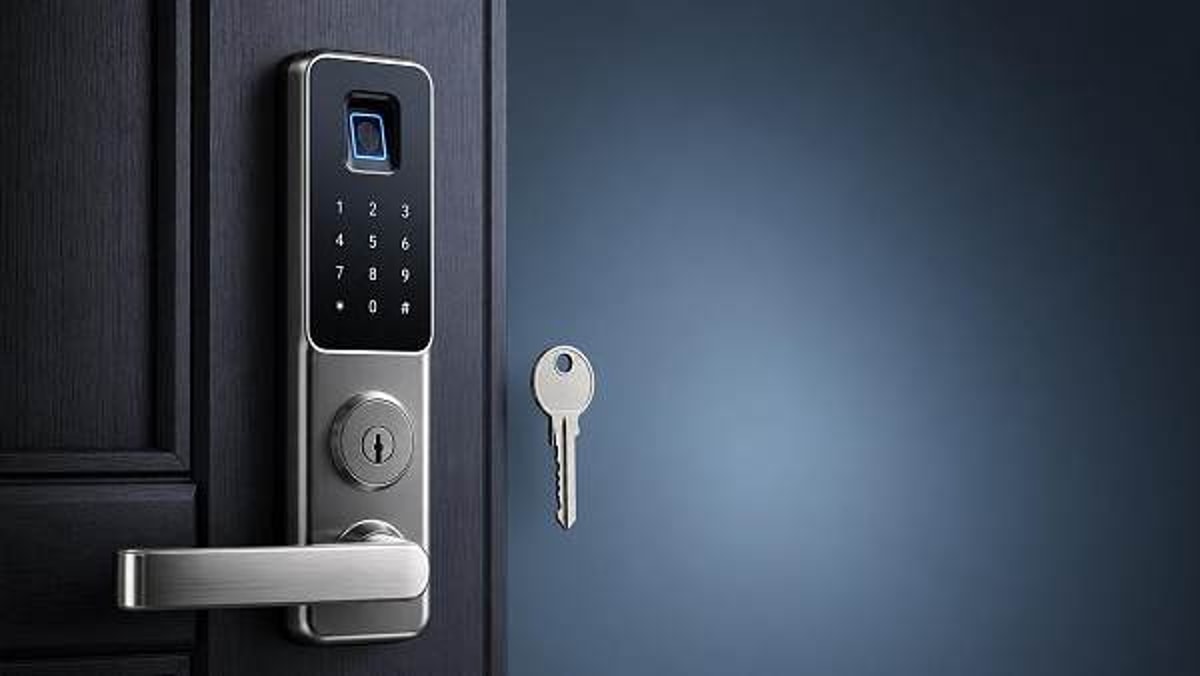
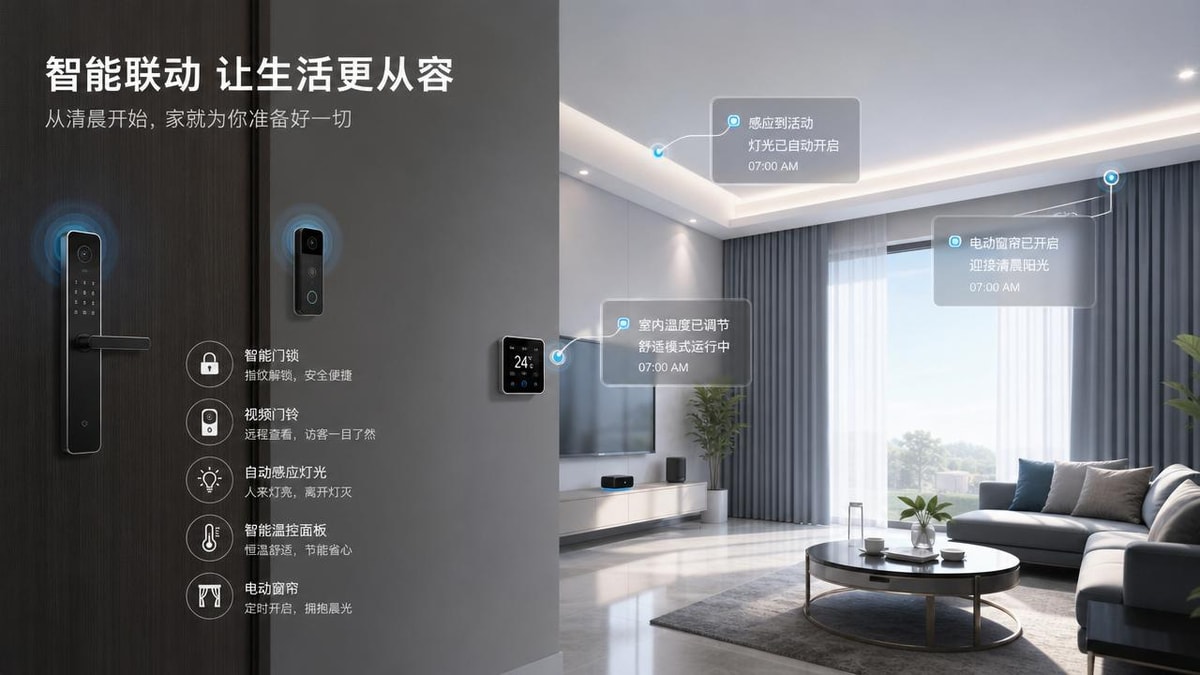
A traditional lock does one job: it secures a door with a physical key. Smart door locks expand that role into access control. Instead of relying only on metal keys, they may use PIN codes, smartphone apps, Bluetooth, Wi-Fi, fingerprint readers, or temporary digital credentials. For consumers, the appeal is simple: fewer lockouts, easier family access, and better visibility into who entered and when.
That said, convenience never comes free. The moment a lock becomes connected, the decision is no longer just about hardware quality. It becomes a mix of mechanical strength, software design, wireless security, account protection, and update support. This is why smart door locks sit at the intersection of smart electronics, home security, and digital trust.
For many households, the real question is not whether smart door locks are good or bad. It is whether a specific lock matches the door, the users, the building type, and the homeowner’s risk tolerance. A city apartment, a suburban family home, and a short-term rental do not need the same features.
- Keyless entry reduces dependence on spare keys and cuts the friction of daily access.
- Remote unlocking can help with deliveries, visitors, caregivers, or children arriving home.
- Activity logs create visibility, but they also introduce privacy questions about who can see access data.
- Battery operation and software maintenance mean ownership is ongoing, not one-time.
Where smart door locks deliver the most convenience
The strongest case for smart door locks appears in homes where multiple people need flexible access. Parents managing school schedules, households with cleaners or dog walkers, and residents who travel often can benefit more than single users who rarely share entry. The value grows when time-sensitive access matters more than the old habit of carrying a key.
Convenience also depends on how the lock is designed. A fingerprint sensor may feel faster than a PIN pad, but wet fingers or aging sensors can reduce reliability. A Wi-Fi lock enables remote control from anywhere, but that wider connectivity also enlarges the attack surface. A Bluetooth-only design may limit remote features, yet reduce internet exposure.
The table below compares common household scenarios where smart door locks are often considered, helping consumers judge whether the convenience is meaningful or mostly cosmetic.
The main takeaway is that convenience is highly situational. When smart door locks solve a recurring access problem, they can feel transformative. When they merely replace a perfectly manageable key routine, they may add cost and maintenance without enough everyday value.
What are the real security risks behind smart door locks?
Security debates around smart door locks often swing between two extremes. One camp assumes digital means unsafe. The other assumes modern means automatically safer. Neither is accurate. A good smart lock can outperform a cheap mechanical lock in access control, but a poorly secured connected lock can introduce risks that a traditional deadbolt never had.
Physical security still matters first
Consumers sometimes focus so much on hacking that they forget the basics: door material, frame strength, strike plate quality, and proper installation. A sophisticated smart door lock mounted on a weak frame does not create a secure entrance. Mechanical resistance remains the first line of defense.
Digital security adds new vulnerabilities
Once internet or wireless functions are involved, risk expands into software and account management. Potential weak points can include insecure mobile apps, reused passwords, missing two-factor authentication, outdated firmware, exposed APIs, or unencrypted communication between lock and hub. Not every product suffers from these issues, but buyers should assume that digital design quality varies sharply across the market.
Privacy can be overlooked
Entry logs, user schedules, and access records reveal behavior patterns. For a household, that can include when children return home, when the property is empty, or how often service providers visit. Consumers should ask where that data is stored, how long it is retained, and whether it can be deleted or exported.
- Look for clear firmware update policies rather than vague promises of future support.
- Check whether the brand explains encryption, account recovery, and access revocation.
- Confirm there is a safe fallback method if batteries fail or the app becomes unavailable.
- Avoid assuming biometric access is always more secure than a well-managed PIN system.
Smart door locks vs traditional locks: which tradeoff is easier to live with?
Many consumers do not need a perfect lock. They need a lock whose risks are predictable and manageable. That is why comparing smart door locks with traditional options should focus on ownership experience, not just feature count. The table below highlights the practical tradeoffs that influence long-term satisfaction.
This comparison shows why the best answer depends on lifestyle. Smart door locks are often easier to live with when access sharing is frequent. Traditional locks remain attractive for buyers who prioritize simplicity, low maintenance, and fewer connected risks.
How to choose smart door locks without overpaying or undersecuring
Selection mistakes usually come from buying features before defining needs. Some consumers pay for advanced integrations they never use. Others choose low-cost smart door locks that look modern but offer weak support, unclear battery life, or poor compatibility with existing doors. A disciplined checklist helps avoid both extremes.
Start with door and home compatibility
- Verify whether your door supports retrofit installation or full lock replacement.
- Check door thickness, backset, handing, and weather exposure.
- If you live in a shared building, confirm building rules for external hardware changes.
Choose connection type based on risk and use
Bluetooth models are often enough for owner-occupied homes that do not need remote unlocking from outside. Wi-Fi models are more flexible but increase dependence on home networking and vendor cloud design. Hub-based systems can improve automation but add complexity and another point of failure.
Review the support model, not just the device
A lock is part hardware, part service. If the app becomes unsupported or firmware updates stop, the product may age poorly even if the lock body still works. Consumers should favor brands and channels that provide clear documentation, return conditions, software support visibility, and spare part availability.
The following table can be used as a practical selection guide when comparing smart door locks before purchase.
A smart lock purchase is stronger when buyers score products across all three layers: mechanical security, digital security, and practical usability. Ignoring any one of these can lead to disappointment, even with a feature-rich product.
What standards, certifications, and technical signals should consumers notice?
Most end users are not expected to audit encryption protocols or teardown lock bodies. Still, a few technical and compliance signals can help separate better options from risky ones. In the smart electronics market, transparency is often more informative than marketing language.
- Look for mention of recognized lock performance grading where applicable in the target market.
- Check if the product includes clear wireless compliance information for the region where it is sold.
- Review privacy disclosures to see what user data is collected and how account deletion works.
- Confirm whether software updates are delivered securely and whether the brand publishes release notes.
Consumers should also be careful with broad claims such as military-grade security or unbreakable encryption unless those statements are explained in plain terms. In many cases, practical trust comes from clear support policies, stable app performance, and a product ecosystem that receives maintenance over time.
Common mistakes people make when buying smart door locks
The most expensive error is not necessarily choosing the priciest device. It is choosing the wrong type of device for the household. Smart door locks are often marketed around frictionless living, but consumers still need to ask what happens on a bad day: dead batteries, Wi-Fi outages, account lockouts, or a visitor who cannot get in.
- Buying for novelty instead of access needs. If remote sharing is rare, a simpler keypad model may be enough.
- Assuming any app-connected product gets long-term updates. Many do not, and support quality varies widely.
- Neglecting household habits. A lock is only as secure as the codes, passwords, and permission settings people actually use.
- Overlooking install quality. Poor alignment can cause jams, battery drain, or latch failures that users wrongly blame on software.
This is where market intelligence matters even for end consumers. The smart home category changes quickly, and not every vendor will maintain products with equal consistency. Platforms that track product direction, supply chain stability, and technology maturity can help buyers avoid short-lived ecosystems.
FAQ: what do consumers most often ask about smart door locks?
Are smart door locks safe enough for a main entrance?
They can be, provided the product combines solid mechanical construction, secure account management, and reliable fallback access. Safety depends less on the word smart and more on the total design. A well-built smart lock installed correctly can be suitable for a main entrance, while a poorly supported connected lock may not be.
Do smart door locks stop working when the battery dies?
Battery failure is a real ownership issue, which is why backup options matter. Many smart door locks provide low-battery alerts well in advance. Some also include emergency power contacts or mechanical key override. Consumers should never skip checking what the emergency access path looks like before buying.
Is Wi-Fi always better than Bluetooth for smart door locks?
Not always. Wi-Fi is better for remote control from anywhere, but it usually creates greater internet dependence and sometimes higher battery drain. Bluetooth may be a better fit for users who mainly want phone-based unlocking near the door without extensive cloud features.
What should I prioritize if my budget is limited?
Prioritize core reliability over premium features. Focus on installation fit, backup access, stable app support, and clear access management. A mid-range product with strong fundamentals is often a better choice than a low-cost lock with flashy features but weak support.
Why informed buyers increasingly rely on deeper market insight
The smart lock category does not exist in isolation. It is shaped by chip availability, wireless ecosystem shifts, cloud service models, manufacturing quality, and evolving consumer privacy expectations. For that reason, buying smart door locks is no longer only a hardware decision. It is also a decision about platform durability and vendor maturity.
TradeNexus Pro tracks these developments across smart electronics and adjacent supply chains, helping decision-makers understand which technology narratives are durable and which are mostly marketing. Even for end consumers, this kind of analysis can be valuable when comparing product claims, identifying realistic feature priorities, and understanding why support quality differs between brands and sales channels.
Why choose us for smarter smart door lock decisions
If you are evaluating smart door locks and want more than generic buying tips, TradeNexus Pro can help you assess the decision with a sharper market lens. Our coverage connects product features with technology maturity, supply-side reliability, and real-world selection criteria that matter before purchase.
You can contact us for support on practical topics such as feature comparison, parameter confirmation, product selection logic, compatibility questions, expected delivery cycles in relevant channels, certification and compliance considerations by market, and structured quote discussions when comparing smart home solutions. For buyers trying to balance convenience and security, better information is often the most cost-effective upgrade.
Get weekly intelligence in your inbox.
No noise. No sponsored content. Pure intelligence.
 May 04, 2026FDA AI Diagnostic Software Guidance: Continuous Validation for Overseas FirmsFDA AI Diagnostic Software Guidance: Continuous Validation for Overseas Firms
 May 04, 2026MIIT Launches Export Compliance Support for Warehouse RoboticsMIIT Launches Export Compliance Support for Warehouse Robotics
 May 04, 2026India BIS Mandates ISI Certification for Smart Home Devices from July 2026India BIS Mandates ISI Certification for Smart Home Devices from July 2026
 May 04, 2026Global Shipping Alliance Raises Heavy-Lift Surcharges from May 2026Global Shipping Alliance Raises Heavy-Lift Surcharges from May 2026
 May 04, 2026GCC EV Charging Certification Unified: 35% Cost Cut for Chinese ExportersGCC EV Charging Certification Unified: 35% Cost Cut for Chinese Exporters
 May 04, 2026TÜV Rheinland Updates IoT Security Standard with AI Voice Data AnonymizationTÜV Rheinland Updates IoT Security Standard with AI Voice Data Anonymization
 May 04, 2026Yangshan Port Launches Green Energy Equipment Express LaneYangshan Port Launches Green Energy Equipment Express Lane
 May 04, 2026Vietnam Enforces Local IoT Certification for Smart Home Devices from May 2026Vietnam Enforces Local IoT Certification for Smart Home Devices from May 2026
 May 04, 2026US CBP Launches Battery Cargo Inspection: ESS Export Delays to 7–12 DaysUS CBP Launches Battery Cargo Inspection: ESS Export Delays to 7–12 Days
 May 04, 2026EU SVHC Update Effective May 1, 2026: Impact on Electronic Components ExportsEU SVHC Update Effective May 1, 2026: Impact on Electronic Components Exports
 May 04, 2026Portable power stations: what matters more than wattage on paperPortable power stations: what matters more than wattage on paper
 May 04, 2026Automotive injection molding machines and the scrap rate problemAutomotive injection molding machines and the scrap rate problem
 May 04, 2026Smart thermostats save energy only when setup is done rightSmart thermostats save energy only when setup is done right
 May 04, 2026Why TWS earbuds sound great in ads but not on callsWhy TWS earbuds sound great in ads but not on calls
 May 04, 2026Industrial robotics for material handling: where downtime startsIndustrial robotics for material handling: where downtime starts
 May 04, 2026LiFePO4 battery lifespan drops faster under these conditionsLiFePO4 battery lifespan drops faster under these conditions
 May 04, 2026Solar grid systems: when storage changes the project mathSolar grid systems: when storage changes the project math
 May 04, 2026Smart manufacturing for pharma fails when data stays isolatedSmart manufacturing for pharma fails when data stays isolated
 May 04, 2026Wearable technology trends that are finally useful in 2026Wearable technology trends that are finally useful in 2026
 May 04, 2026Bluetooth speakers: why battery life claims often miss real useBluetooth speakers: why battery life claims often miss real use
 May 04, 2026Home automation systems that solve everyday annoyances firstHome automation systems that solve everyday annoyances first
 May 04, 2026Solar street lights that underperform after the first rainy seasonSolar street lights that underperform after the first rainy season
 May 04, 2026Why sheet metal bending services in Canada cost more than expectedWhy sheet metal bending services in Canada cost more than expected
 May 04, 2026Factory automation systems for electronics and the ROI gapFactory automation systems for electronics and the ROI gap
 May 04, 2026OEM machined parts supplier Vietnam: quality checks that matterOEM machined parts supplier Vietnam: quality checks that matter
 May 04, 2026What to check before choosing a 5 axis machine for defenseWhat to check before choosing a 5 axis machine for defense
 May 04, 2026Smart grid solutions that fix peak load without major rebuildsSmart grid solutions that fix peak load without major rebuilds