How Long Does a Solar Battery Last in Daily Use?
A solar battery is built to deliver years of reliable performance, but its actual lifespan in daily use depends on charging habits, climate, battery type, and system quality. If you are wondering how long a solar battery lasts before capacity starts to fade, this guide will walk you through the key factors that affect durability, efficiency, and long-term value.
Why Daily Use Looks Different From One Home to Another
The biggest mistake consumers make is assuming every solar battery ages in the same way. In reality, lifespan is highly dependent on how the system is used. A battery that supports occasional evening loads in a mild climate may last much longer than one that cycles heavily every day in extreme heat. That is why the right question is not only “How long does a solar battery last?” but also “How long will a solar battery last in my daily use scenario?”
For end users, this matters because battery life directly affects savings, backup reliability, and replacement timing. A family using stored power mostly at night will have a different wear pattern than a household relying on a solar battery for outage protection, electric vehicle charging, or near off-grid living. Understanding those use cases helps you make a smarter purchase and avoid disappointment later.
How Long Does a Solar Battery Last in Typical Daily Use?
In most residential settings, a modern solar battery lasts about 5 to 15 years, with premium lithium-ion models often reaching 10 to 15 years under good operating conditions. Older lead-acid options may last closer to 3 to 7 years, especially if they are discharged deeply and often. Some high-quality systems are also rated by cycles rather than calendar years, commonly between 4,000 and 10,000 cycles.
Daily use does not usually mean the battery suddenly stops working at year ten. Instead, the more common pattern is gradual capacity loss. For example, a solar battery that originally stored 10 kWh may still function after many years, but it may only hold 7 or 8 kWh. That means it can still power your home, just for a shorter time each evening or during an outage.
For consumers comparing options, it helps to look at three measures together: warranty years, cycle life, and end-of-warranty capacity. A battery with a 10-year warranty and 70% retained capacity often offers a clearer picture of real-life endurance than a simple lifespan claim in marketing materials.
Typical Home Scenarios and What They Mean for Solar Battery Lifespan
Different household scenarios place different demands on a solar battery. The table below shows how common daily use patterns influence wear, value, and lifespan expectations.
This is why the best solar battery for one home may be the wrong fit for another. The battery itself may be excellent, but if it is undersized for the load pattern, it will cycle harder and wear faster.
Scenario 1: Homes Using a Solar Battery for Evening Energy Savings
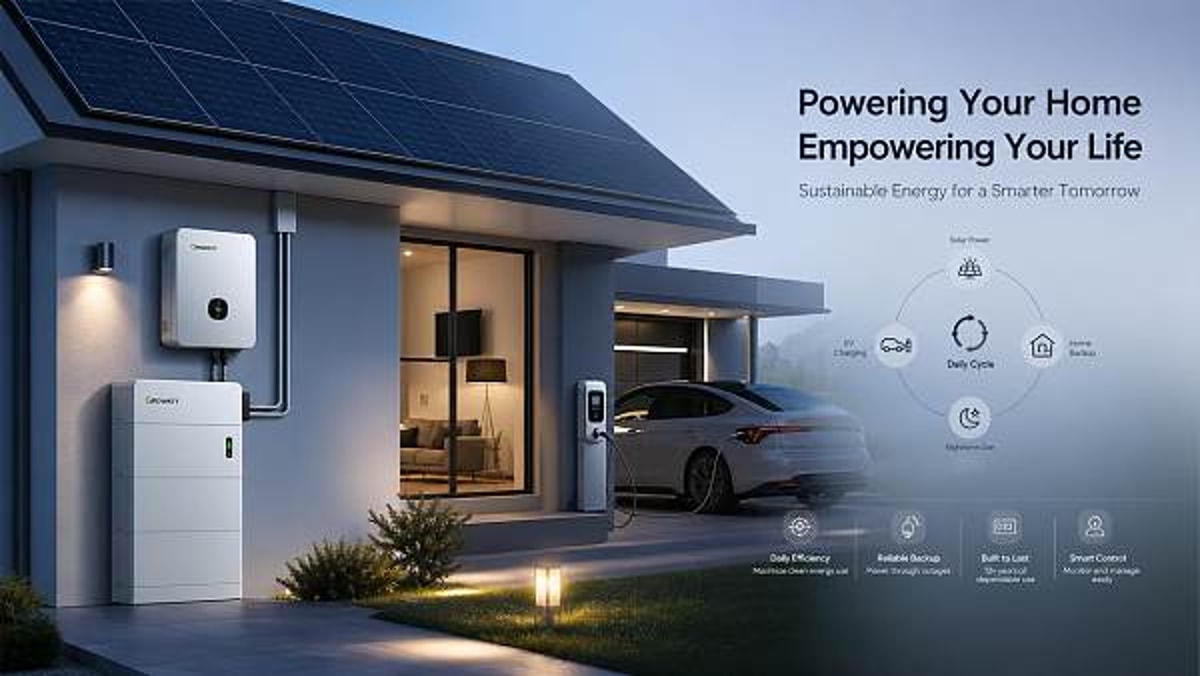
This is one of the most common residential applications. The solar battery charges during the day and discharges in the evening when utility rates are higher or solar generation drops. In this scenario, the battery usually cycles once per day, making cycle life a key factor.
For this use case, lithium iron phosphate and other modern lithium-ion chemistries are often the strongest fit. They handle regular cycling better, maintain usable capacity longer, and usually need less maintenance than lead-acid systems. If your household routine is predictable and your evening load is moderate, a quality solar battery can deliver reliable daily value for many years.
What matters most in this scenario is not maximum backup hours but sustainable daily cycling. Look for a battery with a strong throughput rating, good round-trip efficiency, and a warranty aligned with daily use rather than emergency-only use.
Scenario 2: Homes Buying a Solar Battery Mainly for Outage Protection
Some buyers install a solar battery primarily for resilience. In this scenario, the battery may sit partially charged for long periods and only activate when the grid fails. That means cycle wear may be low, but calendar aging and environmental conditions become more important.
If you live in an area with frequent storms, wildfire-related shutoffs, or unstable grid service, a solar battery can still be an excellent investment. However, lifespan depends on whether the unit is stored at a healthy state of charge, protected from excessive heat, and paired with a quality inverter and energy management system.
Consumers in this group should pay close attention to standby losses, emergency load planning, and temperature placement. A garage battery in a hot climate may degrade faster than the same product in a conditioned indoor utility space.
Scenario 3: High-Consumption Homes With EVs, Heat Pumps, or Large Appliances
In homes with electric vehicles, pool pumps, induction cooking, or heat pump systems, a solar battery may face more intense daily demands. The issue is not only how often it cycles, but how deeply and how quickly it discharges. Repeated deep discharges can reduce lifespan if the battery is not designed for that workload.
This scenario often calls for larger usable capacity, smart load scheduling, and sometimes more than one battery unit. If the battery is too small relative to consumption, it may hit low charge levels regularly, which increases stress over time. In other words, the wrong size can shorten the life of an otherwise good system.
For these households, lifespan planning should include expected load growth. If you plan to add an EV or electrify heating in the next few years, buy a solar battery system that can scale or already supports those future needs.
Scenario 4: Rural, Remote, or Partial Off-Grid Use
A solar battery in remote daily use often works harder than one in a grid-connected suburban home. It may support refrigeration, water pumping, communications, and essential appliances for longer periods. In this setting, lifespan depends heavily on proper sizing, charge control, and weather variability.
When batteries are undersized in partial off-grid situations, they cycle deeply and frequently, which can accelerate degradation. Seasonal solar changes also matter. A system that performs comfortably in summer may strain during winter, leading to lower state-of-charge periods and extra wear.
For this scenario, consumers should prioritize conservative sizing, durable battery chemistry, and a system installer who understands real load behavior instead of relying on theoretical averages alone.
What Actually Shortens Solar Battery Life?
Several factors consistently reduce how long a solar battery lasts in daily use. The first is depth of discharge. The more often the battery is drained close to empty, the faster it tends to age. The second is heat. High temperatures accelerate chemical degradation and can reduce both performance and long-term capacity.
Other important factors include poor installation, mismatched inverter settings, frequent overcharging, and low-quality components. Cheap systems can look attractive upfront but may deliver less usable storage and shorter service life. Daily stress also increases when the battery is undersized, forcing more aggressive cycling than necessary.
From a practical consumer viewpoint, the most avoidable causes of shorter lifespan are poor sizing, extreme heat exposure, and buying a battery chemistry that does not match the intended use case.
How to Match the Right Solar Battery to Your Scenario
A better buying decision starts with an honest assessment of your daily pattern. Ask whether your main goal is reducing bills, powering your home overnight, covering outages, or supporting a more independent energy lifestyle. Each scenario points to a different ideal balance of battery size, chemistry, and warranty structure.
If you are comparing quotes, do not ask only how long the solar battery lasts. Ask how long it lasts under your expected number of cycles, your climate conditions, and your future electricity profile.
Common Misjudgments Consumers Make
One common misunderstanding is treating warranty years as guaranteed full performance years. Most batteries slowly lose capacity over time, even within warranty. Another is assuming a bigger battery automatically lasts longer. If system controls are poor or the battery chemistry is not suitable, bigger alone does not solve the problem.
Some consumers also overlook climate. A solar battery installed in a very hot area without proper ventilation may age faster, even if daily use seems moderate. Finally, people often underestimate future demand. Adding an EV, home office equipment, or electric heating can dramatically change how the battery is used and how long it lasts.
FAQ About Solar Battery Lifespan in Daily Use
Can a solar battery last 20 years?
Some systems may operate that long, but most residential solar battery products will show meaningful capacity decline before then. For daily use, 10 to 15 years is a more realistic expectation for high-quality lithium-based units.
Does using the battery every day wear it out quickly?
Not necessarily. Daily use is normal for many battery systems. What matters is whether the battery is designed for frequent cycling and whether it is properly sized for the household load.
Which type of solar battery lasts the longest?
In most home applications, lithium-ion options, especially lithium iron phosphate, tend to offer the best combination of long cycle life, efficiency, and manageable maintenance.
How do I know when a solar battery is aging?
The most common sign is reduced usable storage. You may notice the battery empties earlier at night or provides less backup time during outages. Monitoring software can usually show declining performance trends over time.
Final Takeaway: Judge Lifespan by Scenario, Not by a Single Number
A solar battery can be a durable and valuable part of a home energy system, but its real lifespan depends on how closely the product matches your daily use scenario. Homes focused on evening savings, emergency backup, high electrification, or partial off-grid living all place different demands on battery storage. The smartest approach is to compare battery chemistry, cycle rating, warranty terms, climate suitability, and system sizing together.
If you are planning a purchase, start with your actual usage pattern rather than a generic lifespan estimate. That simple shift will help you choose a solar battery that not only lasts longer, but also delivers better value throughout its working life.
Get weekly intelligence in your inbox.
No noise. No sponsored content. Pure intelligence.
 May 06, 2026Hydraulic Cylinder Fabrication Errors That Shorten Service LifeHydraulic Cylinder Fabrication Errors That Shorten Service Life
 May 06, 2026Surface Finishing Services That Reduce Warranty ComplaintsSurface Finishing Services That Reduce Warranty Complaints
 May 06, 2026Waterjet Cutting Is Better Than Laser for These MaterialsWaterjet Cutting Is Better Than Laser for These Materials
 May 06, 2026Custom Molded Rubber Choices That Affect Seal PerformanceCustom Molded Rubber Choices That Affect Seal Performance
 May 06, 2026Linear Motion Systems Fail Faster When Alignment Is OverlookedLinear Motion Systems Fail Faster When Alignment Is Overlooked
 May 06, 2026How Accurate Is Energy Forecasting When Weather Turns Volatile?How Accurate Is Energy Forecasting When Weather Turns Volatile?
 May 06, 2026Medical Device Manufacturing Delays Often Start in ValidationMedical Device Manufacturing Delays Often Start in Validation
 May 06, 2026Anodizing Services: Which Finish Holds Up Outdoors LongerAnodizing Services: Which Finish Holds Up Outdoors Longer
 May 06, 2026Solar Tracker Maintenance Issues That Hurt Long-Term OutputSolar Tracker Maintenance Issues That Hurt Long-Term Output
 May 06, 2026What Changes the Real Cost of Pneumatic Valves WholesaleWhat Changes the Real Cost of Pneumatic Valves Wholesale
 May 06, 2026Solar Microinverters vs String Inverters for Shaded RoofsSolar Microinverters vs String Inverters for Shaded Roofs
 May 06, 2026Bifacial Solar Panels: Do They Pay Off on Every Site?Bifacial Solar Panels: Do They Pay Off on Every Site?
 May 06, 2026Why Heavy Equipment Manufacturing Lead Times Keep SlippingWhy Heavy Equipment Manufacturing Lead Times Keep Slipping
 May 06, 2026Metal Stamping Parts: When Tooling Cost Stops Making SenseMetal Stamping Parts: When Tooling Cost Stops Making Sense
 May 06, 2026Energy Storage Battery Sizing Mistakes That Raise Project CostsEnergy Storage Battery Sizing Mistakes That Raise Project Costs
 May 06, 2026What Causes Revenue Gaps in a Solar Farm ProjectWhat Causes Revenue Gaps in a Solar Farm Project
 May 06, 2026Low Volume Manufacturing Works Best When Demand Is UnclearLow Volume Manufacturing Works Best When Demand Is Unclear
 May 06, 2026Automotive Parts Machining Costs That Grow With Late Design ChangesAutomotive Parts Machining Costs That Grow With Late Design Changes
 May 06, 2026AS9100 Aerospace Machining: What Fails an Audit Most OftenAS9100 Aerospace Machining: What Fails an Audit Most Often
 May 06, 2026Plastic Extrusion Tolerances That Affect Final Product FitPlastic Extrusion Tolerances That Affect Final Product Fit
 May 06, 2026Is Renewable Power Getting Easier to Finance for Industry?Is Renewable Power Getting Easier to Finance for Industry?
 May 06, 2026Ultrasonic Welding Defects That Are Easy to Miss at FirstUltrasonic Welding Defects That Are Easy to Miss at First
 May 06, 2026How to Compare Industrial Bearing Suppliers by Failure RiskHow to Compare Industrial Bearing Suppliers by Failure Risk
 May 06, 2026Custom Heatsinks: When a Standard Profile Stops WorkingCustom Heatsinks: When a Standard Profile Stops Working
 May 06, 2026Gear Manufacturing Problems That Show Up After AssemblyGear Manufacturing Problems That Show Up After Assembly
 May 06, 2026Why Thin Film Solar Cells Still Matter in 2026Why Thin Film Solar Cells Still Matter in 2026
 May 06, 2026Wire EDM Services or CNC Milling for Tight Tolerance Parts?Wire EDM Services or CNC Milling for Tight Tolerance Parts?