How to Tell if an Industrial Gearbox Is Oversized
Selecting the right size among industrial gearboxes is critical for performance, cost control, and long-term reliability. An oversized unit may seem safer, but it can introduce inefficiencies, unnecessary capital expense, and maintenance challenges. For technical evaluators, understanding the warning signs of oversizing helps improve system matching and procurement decisions. This article outlines the key indicators to assess whether an industrial gearbox is larger than your application truly requires.
In most real-world installations, an industrial gearbox is oversized when its torque, thermal, or service-factor capacity significantly exceeds the actual operating demand for long periods, without a justified reason such as shock loading, future expansion, or severe duty cycles. The issue is not simply “bigger than needed” on paper. It is a mismatch between the gearbox’s designed operating window and the machine’s actual load profile, runtime, speed, and maintenance strategy.
For technical assessment teams, the practical question is straightforward: are you paying for capacity you do not use, while accepting side effects such as lower efficiency at light load, more difficult installation, higher lubricant volume, and potentially less responsive system behavior? The best way to answer that question is through a structured review of load data, service factor assumptions, duty cycle, thermal behavior, and total lifecycle cost rather than relying on nameplate ratings alone.
What usually signals that an industrial gearbox is oversized?
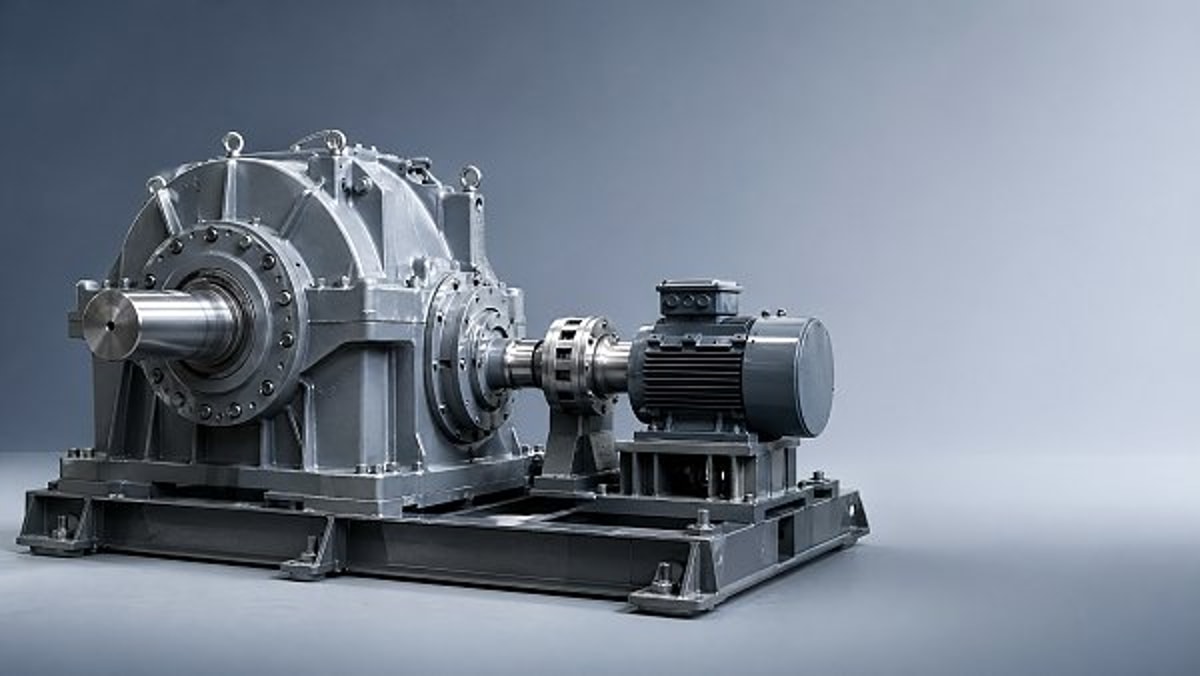
The clearest warning sign is persistently low operating load. If the gearbox routinely runs at only a small fraction of its rated torque capacity, especially in stable continuous-duty applications, oversizing is likely. Many units are selected with generous margins during early design stages, but if field conditions show that average torque remains far below the design assumption, the extra capacity may not be creating real value.
Another common sign is an inflated service factor driven by vague risk assumptions rather than measured duty conditions. In procurement and design reviews, teams often stack safety margins: one in motor sizing, another in process uncertainty, another in gearbox selection, and still another for “future-proofing.” The result can be a gearbox that is technically acceptable but economically and operationally excessive for the application.
Physical clues also matter. If the gearbox footprint is creating mounting constraints, requiring heavier foundations, increasing shaft and coupling size, or complicating alignment and lifting procedures, it may be larger than necessary. Oversizing is not just an engineering calculation issue; it affects packaging, maintenance access, spare parts handling, and installation complexity across the equipment lifecycle.
Start with the actual operating profile, not the catalog rating
A reliable oversizing assessment begins with real operating data. Technical evaluators should compare the gearbox’s rated torque, power, and thermal limits against the machine’s actual load spectrum. This includes average load, peak load, startup torque, shock events, operating hours, ambient conditions, and frequency of reversals or stops. A gearbox chosen for worst-case peaks may appear oversized if those peaks almost never occur in production.
Load duration is especially important. A gearbox that sees 120% of nominal torque for a few seconds during startup is very different from one that experiences the same overload several times per minute. Without a time-based duty profile, engineers may overreact to isolated peak values and specify more gearbox than the process really requires. Reviewing motor current trends, torque logs, SCADA records, or historian data can reveal whether the gearbox is living in a lightly loaded state most of the time.
Technical assessment should also separate normal operation from contingency scenarios. If a larger industrial gearbox was selected only to cover rare upset conditions, ask whether those conditions should instead be handled by controls, soft starts, torque limiting, process interlocks, or upstream redesign. In many cases, mechanical oversizing is used as a substitute for system-level problem solving.
Check whether the service factor reflects reality or caution stacking
Service factor is one of the most misunderstood reasons for oversizing industrial gearboxes. It is intended to account for operating severity such as shock, varying load, long runtime, and driven-machine characteristics. However, once service factors become disconnected from actual duty, they can drive unnecessary size escalation. If the selected gearbox has a very high effective margin after all corrections are applied, the specification may deserve a second look.
Technical evaluators should ask how the service factor was determined. Was it based on verified application class and manufacturer guidance, or on a generalized assumption that “heavier is safer”? Was there a separate overload requirement already covered by the motor, VFD controls, or coupling design? If multiple design teams added independent safety buffers, the final gearbox may reflect compounded conservatism rather than actual mechanical need.
A useful review method is to rebuild the sizing calculation from first principles. Start with transmitted power, output speed, nominal torque, peak torque, startup characteristics, and duty cycle. Then apply only those correction factors that are truly justified by the application. If the recalculated requirement falls well below the installed gearbox size, you may be looking at avoidable oversizing rather than prudent engineering.
Evaluate efficiency, thermal behavior, and light-load performance
Many buyers assume a larger gearbox always improves reliability. In reality, a gearbox designed for much higher torque may operate less efficiently when lightly loaded, depending on design type, lubrication regime, and mechanical losses. Churning losses, seal friction, bearing drag, and gear mesh losses do not disappear just because transmitted torque is low. That can lead to avoidable energy consumption, particularly in continuously running systems.
Thermal performance should be interpreted carefully. A cool-running gearbox may look like evidence of healthy design margin, but it can also indicate chronic underloading. While low temperature is not itself a problem, the question is whether the thermal reserve was purchased at an unjustified cost. If the application does not require that reserve, you may be carrying excess capital cost and operating losses with no corresponding benefit.
Lubrication behavior can also be affected. Oversized units usually contain more oil, require more lubricant during maintenance, and may need longer warm-up stabilization in some environments. In precision or intermittently operated systems, larger rotating mass can influence response characteristics as well. None of these factors automatically disqualify a gearbox, but together they can signal that the selected unit is larger than the process truly demands.
Look at system-level consequences, not just gearbox capacity
An oversized gearbox changes more than the reducer itself. It can affect shaft loading, baseplate design, coupling selection, motor mounting, transportation, and field service procedures. For procurement teams and technical evaluators, this matters because the true cost of oversizing often sits outside the gearbox line item. Heavier assemblies may require stronger supports, larger lifting equipment, more labor hours, and more expensive replacement logistics.
There is also a spare parts implication. Larger industrial gearboxes often mean larger bearings, seals, couplings, lubrication volumes, and sometimes longer lead times. If your installed fleet includes oversized units that are not standardized across similar assets, inventory carrying costs can increase. This becomes especially relevant for multisite operations trying to rationalize MRO strategy and reduce downtime exposure.
From a risk perspective, a larger gearbox is not always the safer choice. If oversizing pushes the design toward nonstandard mounting arrangements, alignment difficulty, or complex retrofit work, it may actually introduce failure opportunities elsewhere in the drivetrain. Good technical evaluation looks at the whole drive system: motor, coupling, gearbox, driven load, controls, base structure, and maintenance environment.
When oversizing may be justified
Not every large gearbox is incorrectly selected. Some applications legitimately need substantial margin. Examples include high-shock conveyors, crushers, mixers with unpredictable viscosity, heavy start-stop cycles, severe reversals, high ambient temperature environments, and duty profiles with frequent overload events. In such cases, what appears oversized against average load may be entirely appropriate against fatigue life, thermal reserve, or peak torque survival.
Future expansion is another valid reason, but it should be documented. If a plant expects a confirmed production increase, process intensification, or later-stage equipment modification, selecting a larger unit today may avoid replacement costs tomorrow. The key is that this decision should be traceable to a defined operating roadmap, not to a vague expectation that “we might need more someday.”
Reliability strategies may also support additional margin in remote or mission-critical applications where failure consequences are extraordinary. For example, if maintenance access is limited or downtime costs are extremely high, a technical team may intentionally choose a higher-capacity gearbox. Even then, the decision should be based on quantified risk and lifecycle economics, not on default preference for maximum size.
A practical checklist for technical evaluators
First, compare actual transmitted load to rated gearbox capacity over time. If average operating torque is consistently low and peaks are infrequent, document the utilization ratio. A gearbox repeatedly operating at a small fraction of its capability deserves review, especially in steady-state applications with predictable loads.
Second, audit the original sizing assumptions. Verify duty cycle, startup method, shock classification, service factor, ambient temperature, and future expansion requirements. Check whether margins were added more than once across different parts of the drivetrain. This single step often reveals why industrial gearboxes end up larger than necessary.
Third, evaluate total ownership impact. Include purchase price, installation complexity, structural implications, energy losses, lubricant use, maintenance burden, and spare parts strategy. The gearbox may still be acceptable technically, but if a smaller unit can meet duty requirements with lower total lifecycle cost, the oversized selection should be challenged during the next redesign or procurement cycle.
How to make better gearbox selection decisions going forward
The best defense against oversizing is a more disciplined specification process. Instead of selecting from maximum motor power alone, define the application by real output torque, speed, duty profile, startup behavior, overload frequency, thermal environment, and reliability target. Require suppliers to state clearly which assumptions drive the proposed gearbox size and which reserves are being included.
It also helps to request more than one technically compliant option. For example, ask vendors to provide a baseline selection, a high-margin selection, and the assumptions behind both. This allows technical evaluators to compare not just nominal ratings but expected efficiency, housing size, mass, lubrication needs, and lifecycle implications. Better procurement decisions emerge when sizing logic is visible rather than hidden behind catalog references.
Finally, close the loop with field data. Once a gearbox is in service, review load trends, temperatures, vibration, maintenance history, and energy consumption against the original design basis. This turns future gearbox selection from assumption-driven to evidence-driven. Over time, organizations that build this feedback process become much better at choosing industrial gearboxes that are neither undersized nor unnecessarily oversized.
Conclusion
To tell whether an industrial gearbox is oversized, do not focus on physical size alone. Look for sustained low load utilization, overly conservative service-factor assumptions, unnecessary thermal reserve, and system-level penalties in cost, installation, and maintenance. A gearbox is oversized when its extra capacity is not tied to a real duty requirement, measurable risk, or defined future need.
For technical evaluators, the most effective approach is to validate the operating profile, recalculate the true sizing basis, and assess lifecycle consequences across the full drivetrain. In many cases, the right answer is not the biggest gearbox, but the best-matched one. That is where performance, reliability, and commercial efficiency align.
When reviewing industrial gearboxes for procurement or redesign, aim for documented justification rather than default caution. A properly sized unit protects the process, controls cost, and supports long-term maintainability. In modern industrial operations, better sizing is not just an engineering improvement; it is a strategic asset decision.
Get weekly intelligence in your inbox.
No noise. No sponsored content. Pure intelligence.
 May 03, 2026AI Boom Drives Data Center Power Demand, Liquid Cooling Gains UrgencyAI Boom Drives Data Center Power Demand, Liquid Cooling Gains Urgency
 May 03, 2026Low-Altitude Economy in China's 15th Five-Year Plan Boosts Warehouse Robotics ExportsLow-Altitude Economy in China's 15th Five-Year Plan Boosts Warehouse Robotics Exports
 May 03, 2026EU REACH Adds 5 Organotin Compounds to SVHC List for ElectronicsEU REACH Adds 5 Organotin Compounds to SVHC List for Electronics
 May 03, 2026Western Land-Sea Expressway Boosts Solar PV Exports to ASEANWestern Land-Sea Expressway Boosts Solar PV Exports to ASEAN
 May 03, 2026Southeast Asia Smart Home E-commerce Grows 27.4% Amid New Matter 1.3+ Certification RulesSoutheast Asia Smart Home E-commerce Grows 27.4% Amid New Matter 1.3+ Certification Rules
 May 03, 2026FDA Updates IVD Software Guidance: AI Diagnostic Tools Require Independent Algorithm ValidationFDA Updates IVD Software Guidance: AI Diagnostic Tools Require Independent Algorithm Validation
 May 03, 2026Global Methanol EV Ecosystem Alliance LaunchedGlobal Methanol EV Ecosystem Alliance Launched
 May 03, 2026Vietnam GDP Growth Forecast Raised to 7.2% for 2026Vietnam GDP Growth Forecast Raised to 7.2% for 2026
 May 03, 2026UAE Emerges as Global AI Hub, Driving Demand for AI-Quality Inspection SystemsUAE Emerges as Global AI Hub, Driving Demand for AI-Quality Inspection Systems
 May 03, 2026OFID $500M Funding for Côte d'Ivoire Energy ProjectsOFID $500M Funding for Côte d'Ivoire Energy Projects
 May 03, 20265 Axis Milling Machines for Automotive: Buy New or Retrofit?5 Axis Milling Machines for Automotive: Buy New or Retrofit?
 May 03, 2026What to Check Before Sourcing OEM Machined Parts from IndiaWhat to Check Before Sourcing OEM Machined Parts from India
 May 03, 2026Why Sheet Metal Bending Machine Price Varies So MuchWhy Sheet Metal Bending Machine Price Varies So Much
 May 03, 2026Plastic Injection Molding Process Guide for Common Defect ControlPlastic Injection Molding Process Guide for Common Defect Control
 May 03, 2026Smart Manufacturing Technology Trends Reshaping Factory UpgradesSmart Manufacturing Technology Trends Reshaping Factory Upgrades
 May 03, 2026Automotive Die Casting Parts and the Hidden Cost of PorosityAutomotive Die Casting Parts and the Hidden Cost of Porosity
 May 03, 2026Assembly Line Robots: Flexibility Can Matter More Than SpeedAssembly Line Robots: Flexibility Can Matter More Than Speed
 May 03, 2026Smart Manufacturing in Energy: Which Upgrades Pay Back FasterSmart Manufacturing in Energy: Which Upgrades Pay Back Faster
 May 03, 2026Why Robotics Integration Fails After a Successful DemoWhy Robotics Integration Fails After a Successful Demo
 May 03, 2026How to Spot a Reliable Precision Components ManufacturerHow to Spot a Reliable Precision Components Manufacturer
 May 03, 2026Sheet Metal Bending Machine Specifications That Affect AccuracySheet Metal Bending Machine Specifications That Affect Accuracy
 May 03, 2026Oil and Gas Fabrication: Where Material Mismatch Gets ExpensiveOil and Gas Fabrication: Where Material Mismatch Gets Expensive
 May 03, 2026Construction Fabrication Delays Often Start at the Drawing StageConstruction Fabrication Delays Often Start at the Drawing Stage
 May 03, 2026Industrial Robotics Maintenance Guide for Fewer Surprise StopsIndustrial Robotics Maintenance Guide for Fewer Surprise Stops
 May 03, 2026Smart Manufacturing Technology Benefits Beyond Labor SavingsSmart Manufacturing Technology Benefits Beyond Labor Savings
 May 03, 2026Defense Components Need More Than Tight TolerancesDefense Components Need More Than Tight Tolerances
 May 03, 2026How to Vet a Die Casting Parts Supplier in MexicoHow to Vet a Die Casting Parts Supplier in Mexico