Industrial Dust Collectors and Filter Changes: What Gets Missed
Industrial dust collectors often seem straightforward—until a missed filter change triggers airflow loss, safety risks, or unplanned downtime. For after-sales maintenance teams, the real challenge is not just replacing filters, but spotting the hidden issues that shorten system life and reduce performance. This article highlights the commonly overlooked details that can make maintenance more effective, predictable, and cost-efficient.
Why filter change routines vary so much by application scenario
For after-sales teams, industrial dust collectors rarely fail for one single reason. In most service calls, filter replacement is only the visible event. The root causes often sit upstream or downstream: unstable dust loading, compressed air issues, poor sealing, fan imbalance, or maintenance intervals copied from another plant with a completely different process. A filter change that works in one workshop every 6 months may be too late in another line after just 6 weeks.
This matters across general industry because industrial dust collectors are used in mixed operating environments: metal grinding, powder transfer, packaging, woodworking, food handling, electronics assembly support, and bulk material movement. Each scenario creates a different combination of particle size, moisture, static risk, airflow demand, and shift intensity. A two-shift production line operating 16 hours per day puts very different stress on filters than a maintenance-only extraction point used 2 to 3 hours daily.
For maintenance personnel, the practical question is not “When should filters be changed?” but “What is being missed before the change becomes urgent?” In many sites, the hidden cost is not the filter element itself. It is the cascade effect: 10% to 20% airflow loss at hoods, rising fan energy draw, dust escape into sensitive equipment, and emergency stoppages that force unplanned labor allocation.
The most common reason maintenance plans drift off target
Many service plans use calendar-based replacement alone. That approach is easy to schedule, but it misses workload variation. If one customer runs seasonal peaks, introduces a new abrasive, or increases capture points from 8 to 12, the old interval no longer reflects actual filter loading. Differential pressure trends, pulse cleaning behavior, and visible hopper discharge patterns usually show the problem weeks before operators report poor suction.
What after-sales teams should classify first
- Dust type: fibrous, fine powder, sticky particulate, abrasive particulate, or mixed process dust.
- Operating pattern: intermittent duty, single shift, double shift, or continuous 24/7 duty.
- Collector configuration: cartridge, baghouse, portable unit, centralized system, or process-integrated extraction.
- Cleaning method: pulse-jet, shaker, reverse air, or manual cleaning support.
- Maintenance visibility: whether gauges, alarms, and access doors allow early diagnosis within 10 to 15 minutes on site.
When these four or five variables are documented at handover, industrial dust collectors become much easier to maintain consistently. When they are not, filter changes turn reactive. The result is familiar: emergency callouts, repeated seal leaks, and customer complaints that “new filters did not solve the issue.”
Three common operating scenarios where hidden filter problems get missed
The best way to improve industrial dust collectors service quality is to look at real operating scenarios, not generic instructions. The same filter media can behave very differently depending on dust loading velocity, humidity, spark potential, and cleaning frequency. For after-sales maintenance personnel, these scenarios help determine what should be inspected before, during, and after every filter change.
The comparison below highlights where routine maintenance often misses critical differences. It is especially useful when supporting customers across multiple sectors under one service network.
The table shows why a “standard” filter service checklist often fails. In grinding applications, media wear and fire risk matter more. In powders, flowability and humidity matter more. In fibrous dust systems, pre-separation and dust release characteristics can matter more than nominal filter life. That is why industrial dust collectors should be maintained by scenario-specific logic, not by part replacement alone.
Scenario 1: Metalworking lines with high abrasion and spark exposure
On metal grinding, deburring, and cutting lines, after-sales teams often focus on whether filters are clogged, but not whether they are being physically attacked. Fine metallic dust can abrade pleats, damage coatings, and settle in ducts where turbulence is highest. If elbows and transition sections are not checked every 1 to 3 months, airflow may degrade even after new filters are installed.
Another missed issue is spark carryover. Industrial dust collectors in these environments need inspection beyond the filter bank. Check spark arresting measures, dust buildup in hopper corners, and signs of heat discoloration. A filter change that ignores ignition risk does not restore safe operation. It only resets one consumable component while leaving the underlying hazard unchanged.
Maintenance teams should also compare fan amperage and hood capture performance before and after replacement. If pressure drop improves but capture remains weak, the problem may be branch balancing, worn impellers, or leaks in access doors. This is a classic case where industrial dust collectors appear serviced on paper but remain underperforming in real use.
Scenario 2: Powder transfer, mixing, and packaging systems
Powder handling operations create a different service profile. Here, the missed issues are often compacting, moisture influence, and hopper discharge instability. If the hopper is not emptying reliably, dust can be re-entrained back into the filter section. The result is premature loading, pressure spikes, and operator complaints that filters “plug too fast” even when they were changed recently.
Compressed air quality matters more in this scenario than many customers expect. Oil carryover or moisture in the pulse cleaning line can reduce cleaning efficiency within days. After-sales personnel should inspect drain points, regulator stability, and pulse valve response times, especially where differential pressure climbs steadily over 2 to 8 weeks rather than suddenly.
In packaging lines with frequent product changeovers, maintenance history should note which powders are hygroscopic, cohesive, or electrostatically active. One filter set may survive 9 months on free-flowing material but need replacement in under 4 months on sticky blends. Without that record, service intervals become guesswork.
Scenario 3: Wood, textile, and fibrous particulate collection
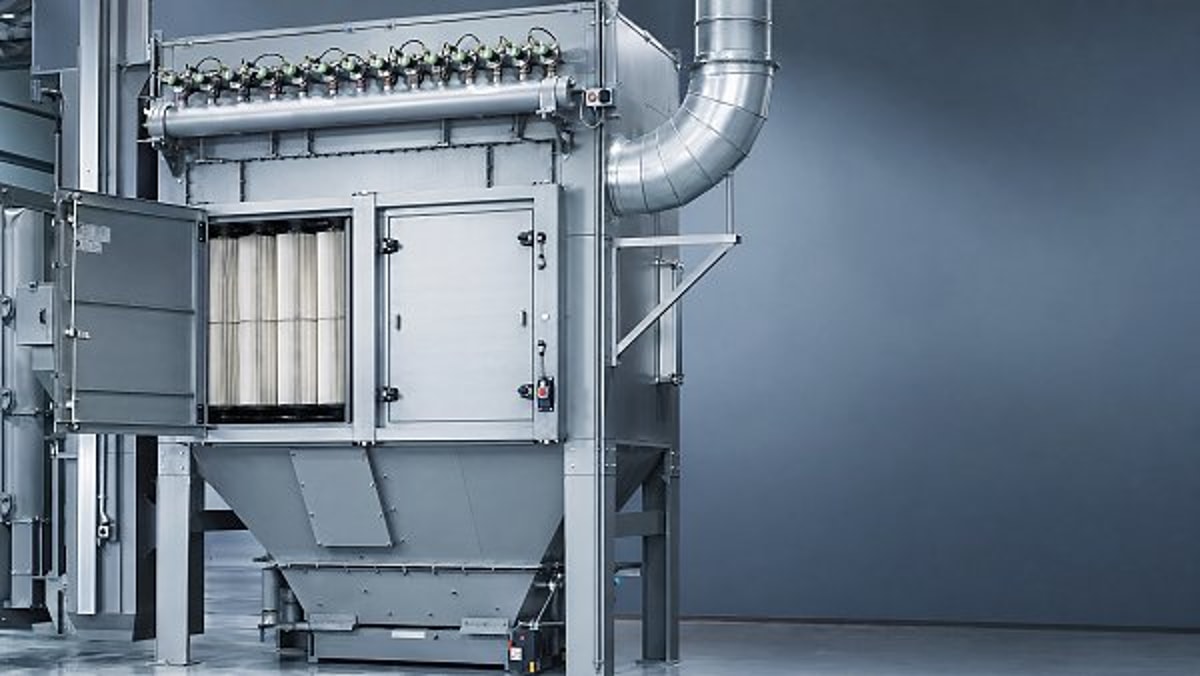
Fibrous dust behaves differently from dense fine powder. It tends to bridge, wrap, and build thick surface layers that pulse cleaning does not always release efficiently. In these systems, industrial dust collectors often suffer from gradual airflow loss that operators normalize over time. By the time a service call is raised, pickup point performance may already be 15% to 25% below required capture conditions.
A common missed point is the absence or poor function of pre-separation. If chips and fibers are reaching the filter section in high volume, the filter is doing work that should have been removed earlier in the process. Maintenance teams should inspect cyclone stages, drop-out boxes, or baffle arrangements where fitted. Filter changes alone cannot correct incorrect solids loading.
Another practical issue is mechanical access. In older systems, cramped filter access encourages partial replacement instead of full inspection. This leads to mixed-age filter sets, uneven pressure distribution, and recurring leaks at gaskets or tube sheets. For industrial dust collectors in older workshops, service planning should include access time, safe isolation steps, and verification of seal compression after restart.
What to inspect before replacing filters in industrial dust collectors
Replacing filters without pre-checks can hide the real fault and shorten the life of the new set. A disciplined pre-replacement inspection usually takes 20 to 40 minutes for smaller units and longer for centralized systems, but it prevents repeat visits. For after-sales teams, this is where service value becomes visible to the customer.
The checklist should be adapted by scenario, but several inspection points are universal across industrial dust collectors. They influence filter loading, cleaning effectiveness, and immediate post-service performance.
Pre-change inspection checklist
- Record differential pressure before shutdown and compare with the normal operating band used at commissioning or previous service visits.
- Inspect pulse cleaning components, including valves, diaphragms, solenoids, and compressed air pressure stability.
- Check hopper discharge, rotary valve condition, and any sign of dust bridging or backflow into the collector body.
- Examine door seals, tube sheet seating surfaces, and hardware torque consistency to reduce bypass leakage after installation.
- Assess fan condition, duct blockage, and branch balance if airflow complaints persist despite acceptable pressure readings.
One of the most useful maintenance habits is to inspect used filters as evidence, not waste. Uneven dust loading, pinholes, collapse marks, localized staining, or oily residue can reveal issues with process change, air quality, or sealing. In many cases, the used filter tells a clearer story than the alarm log.
The next table can help service personnel separate symptoms from likely causes. This improves troubleshooting speed and reduces unnecessary replacement cycles.
This symptom-to-cause approach is especially useful for general industry service teams handling multiple customer sites in one week. It keeps industrial dust collectors maintenance focused on system behavior rather than replacing parts by habit.
How different service priorities affect filter strategy and spare planning
Not every customer values the same outcome. Some prioritize uptime, others energy efficiency, containment, housekeeping, or maintenance labor reduction. For after-sales personnel, understanding that priority changes how industrial dust collectors should be serviced and how spare filters should be stocked.
A site running a critical process line may prefer early replacement to avoid a single hour of interruption. Another site with lower criticality may accept a tighter differential pressure range if changeouts can be grouped into monthly maintenance windows. In practice, there is no single “best” interval. There is only the best interval for that customer’s operating risk profile.
Service priorities by customer situation
- High-uptime factories: keep one complete filter set in stock and trend pressure weekly.
- Multi-line plants: group changeouts by area and standardize inspection forms across 3 to 5 collector types.
- Dust-sensitive production zones: emphasize sealing, bypass checks, and post-change leak verification.
- Older facilities: add fan, duct, and access hardware checks because mechanical degradation often drives repeat issues.
Spare planning should also match lead time risk. If replacement filters typically arrive in 2 weeks but the customer’s process cannot tolerate more than 24 hours of reduced extraction, on-site stock becomes part of maintenance strategy, not just procurement convenience. This is where B2B coordination between service teams, procurement managers, and operations becomes highly practical.
A strong after-sales team documents not just part numbers, but service windows, expected consumption range, installation constraints, and any scenario-specific risks such as abrasive wear or sticky dust. That level of detail improves the performance of industrial dust collectors over the full service cycle and reduces friction when procurement reviews reorder quantities or vendor alternatives.
Common misjudgments that shorten filter life after a “successful” change
One of the most frustrating outcomes in industrial dust collectors maintenance is when a filter change appears successful at startup but performance drops again soon afterward. Usually, the installation was not the only issue. The missed factors were operational and therefore harder to see in a short service window.
Misjudgment 1: Treating pressure drop as the only decision metric
Differential pressure is important, but it is not enough by itself. A collector can show acceptable pressure while still underperforming due to duct leakage, fan degradation, or poor hood design. If maintenance relies on one metric only, industrial dust collectors may pass inspection while actual dust capture remains inadequate.
Misjudgment 2: Assuming all fast failures are caused by bad filters
When a new set loads too quickly, the first reaction is often to question the filter media. Sometimes that is valid, but many premature failures come from moisture, pulse air problems, bypass leakage, or process dust changes. A filter that lasted 8 months last year may fail in 8 weeks if the application changed and service records did not capture it.
Misjudgment 3: Ignoring what changed at the customer site
After-sales teams should always ask whether material grade, shift pattern, machine speed, or extraction point count changed since the last visit. Even one additional pickup point can alter air distribution enough to change filter loading patterns. This is especially common in general industry plants where lines evolve gradually without a full dust system redesign.
A simple post-change verification routine
- Confirm seal integrity and housing closure before restart.
- Record initial differential pressure and compare after 24 to 72 hours of operation.
- Verify capture performance at the most critical hoods, not only at the collector panel.
- Check hopper discharge and pulse function under live process conditions.
- Update the service log with process changes, dust type notes, and recommended next review window.
This routine turns a replacement job into a performance check. It also gives procurement and plant management better forecasting input for the next 3, 6, or 12 months, depending on duty severity.
Work with us to assess the right maintenance approach for your scenario
TradeNexus Pro supports global B2B decision-makers who need clearer technical judgment across equipment, maintenance, and supply chain variables. If your team manages industrial dust collectors across different plants or customer accounts, the key is not just finding replacement filters. It is confirming the right maintenance logic for each operating scenario.
We can help you organize the questions that matter before the next service cycle: filter configuration, operating interval assumptions, dust behavior risks, spare planning, supplier coordination, and practical inspection points for after-sales teams. This is especially valuable when multiple application types are being managed under one maintenance framework.
Contact us if you want to discuss parameter confirmation, scenario-based product selection, expected delivery timelines, replacement planning, site-specific maintenance priorities, certification-related questions, sample support options, or quotation coordination. For industrial dust collectors, the best results come when service, procurement, and operational reality are aligned early rather than corrected late.
Get weekly intelligence in your inbox.
No noise. No sponsored content. Pure intelligence.
 May 03, 2026AI Boom Drives Data Center Power Demand, Liquid Cooling Gains UrgencyAI Boom Drives Data Center Power Demand, Liquid Cooling Gains Urgency
 May 03, 2026Low-Altitude Economy in China's 15th Five-Year Plan Boosts Warehouse Robotics ExportsLow-Altitude Economy in China's 15th Five-Year Plan Boosts Warehouse Robotics Exports
 May 03, 2026EU REACH Adds 5 Organotin Compounds to SVHC List for ElectronicsEU REACH Adds 5 Organotin Compounds to SVHC List for Electronics
 May 03, 2026Western Land-Sea Expressway Boosts Solar PV Exports to ASEANWestern Land-Sea Expressway Boosts Solar PV Exports to ASEAN
 May 03, 2026Southeast Asia Smart Home E-commerce Grows 27.4% Amid New Matter 1.3+ Certification RulesSoutheast Asia Smart Home E-commerce Grows 27.4% Amid New Matter 1.3+ Certification Rules
 May 03, 2026FDA Updates IVD Software Guidance: AI Diagnostic Tools Require Independent Algorithm ValidationFDA Updates IVD Software Guidance: AI Diagnostic Tools Require Independent Algorithm Validation
 May 03, 2026Global Methanol EV Ecosystem Alliance LaunchedGlobal Methanol EV Ecosystem Alliance Launched
 May 03, 2026Vietnam GDP Growth Forecast Raised to 7.2% for 2026Vietnam GDP Growth Forecast Raised to 7.2% for 2026
 May 03, 2026UAE Emerges as Global AI Hub, Driving Demand for AI-Quality Inspection SystemsUAE Emerges as Global AI Hub, Driving Demand for AI-Quality Inspection Systems
 May 03, 2026OFID $500M Funding for Côte d'Ivoire Energy ProjectsOFID $500M Funding for Côte d'Ivoire Energy Projects
 May 03, 20265 Axis Milling Machines for Automotive: Buy New or Retrofit?5 Axis Milling Machines for Automotive: Buy New or Retrofit?
 May 03, 2026What to Check Before Sourcing OEM Machined Parts from IndiaWhat to Check Before Sourcing OEM Machined Parts from India
 May 03, 2026Why Sheet Metal Bending Machine Price Varies So MuchWhy Sheet Metal Bending Machine Price Varies So Much
 May 03, 2026Plastic Injection Molding Process Guide for Common Defect ControlPlastic Injection Molding Process Guide for Common Defect Control
 May 03, 2026Smart Manufacturing Technology Trends Reshaping Factory UpgradesSmart Manufacturing Technology Trends Reshaping Factory Upgrades
 May 03, 2026Automotive Die Casting Parts and the Hidden Cost of PorosityAutomotive Die Casting Parts and the Hidden Cost of Porosity
 May 03, 2026Assembly Line Robots: Flexibility Can Matter More Than SpeedAssembly Line Robots: Flexibility Can Matter More Than Speed
 May 03, 2026Smart Manufacturing in Energy: Which Upgrades Pay Back FasterSmart Manufacturing in Energy: Which Upgrades Pay Back Faster
 May 03, 2026Why Robotics Integration Fails After a Successful DemoWhy Robotics Integration Fails After a Successful Demo
 May 03, 2026How to Spot a Reliable Precision Components ManufacturerHow to Spot a Reliable Precision Components Manufacturer
 May 03, 2026Sheet Metal Bending Machine Specifications That Affect AccuracySheet Metal Bending Machine Specifications That Affect Accuracy
 May 03, 2026Oil and Gas Fabrication: Where Material Mismatch Gets ExpensiveOil and Gas Fabrication: Where Material Mismatch Gets Expensive
 May 03, 2026Construction Fabrication Delays Often Start at the Drawing StageConstruction Fabrication Delays Often Start at the Drawing Stage
 May 03, 2026Industrial Robotics Maintenance Guide for Fewer Surprise StopsIndustrial Robotics Maintenance Guide for Fewer Surprise Stops
 May 03, 2026Smart Manufacturing Technology Benefits Beyond Labor SavingsSmart Manufacturing Technology Benefits Beyond Labor Savings
 May 03, 2026Defense Components Need More Than Tight TolerancesDefense Components Need More Than Tight Tolerances
 May 03, 2026How to Vet a Die Casting Parts Supplier in MexicoHow to Vet a Die Casting Parts Supplier in Mexico