Industrial Gearboxes and Downtime: The Cost of Delayed Replacement
When industrial gearboxes begin to fail, the real cost often extends far beyond the replacement itself. For enterprise decision-makers, delaying action can trigger unplanned downtime, production losses, supply chain disruption, and rising maintenance expenses. Understanding when to replace critical gearbox systems is essential for protecting operational continuity, controlling risk, and sustaining long-term competitiveness.
Understanding the Role of Industrial Gearboxes in Modern Operations
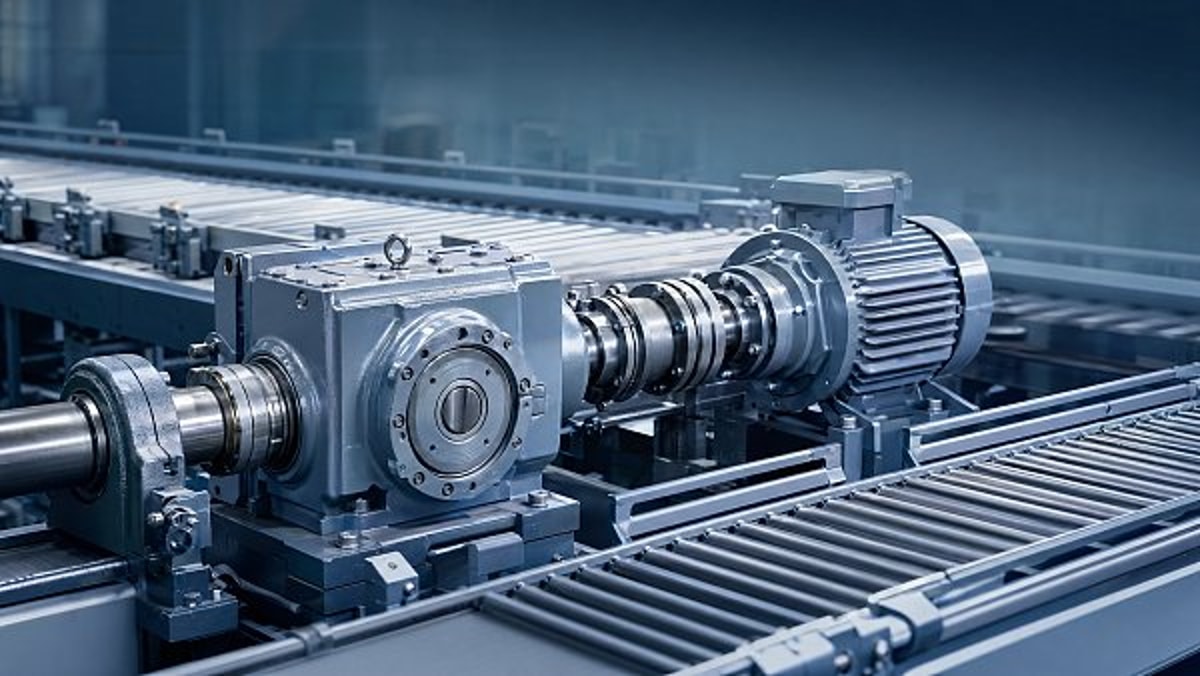
Industrial gearboxes are mechanical power transmission units designed to adjust torque, speed, and direction between a motor and a driven machine. In practical terms, they sit at the center of motion-critical systems used across advanced manufacturing lines, conveyor networks, processing plants, energy equipment, packaging systems, and material handling operations. For business leaders managing multi-site assets, industrial gearboxes are not minor components; they are production continuity assets with direct influence on throughput, quality consistency, and maintenance stability.
The reason industrial gearboxes deserve sustained attention is simple: failure rarely happens in isolation. A worn gearbox can elevate vibration, create heat buildup, misalign connected components, overload motors, and damage couplings, shafts, bearings, and downstream equipment. What begins as a manageable maintenance issue can expand into a plant-wide disruption within days or weeks, especially in operations running 16 to 24 hours per day.
In many sectors, replacement decisions are delayed because the gearbox still appears operational. However, “still running” is not the same as “fit for reliable service.” Once lubrication degradation, gear tooth wear, or bearing fatigue reaches a critical threshold, performance can decline rapidly. For decision-makers responsible for cost control and delivery reliability, the real question is not whether industrial gearboxes will eventually need replacement, but how to recognize the right timing before downtime becomes expensive.
Why this topic now matters more than before
Industrial operating environments have become more demanding over the last decade. Production schedules are tighter, inventory buffers are smaller, and many supply chains now depend on synchronized inbound and outbound timing. In this context, the failure of one gearbox can disrupt not only one machine but also packaging, warehousing, transport planning, and customer commitments. Even a 6-hour stoppage in a continuous process environment may have larger financial impact than the replacement unit itself.
The issue is also strategic. Organizations investing in digital maintenance programs, energy efficiency, and lean operations increasingly monitor industrial gearboxes as part of reliability engineering. Gearbox replacement is no longer just a workshop decision. It connects to asset lifecycle planning, spare parts policy, supplier qualification, and capital expenditure timing. That is why enterprise buyers and operations leaders benefit from a more structured understanding of gearbox replacement risk.
- A single failed gearbox can halt one line, one process cell, or an entire linked production sequence.
- Lead times for standard units may range from 2 to 8 weeks, while custom industrial gearboxes can take 10 to 16 weeks.
- Delayed replacement often increases secondary repair scope, including bearings, seals, couplings, and alignment work.
Core gearbox types often seen in industry
Across general industry, common industrial gearboxes include helical, bevel helical, worm, planetary, and parallel shaft designs. Each type supports different torque ranges, mounting constraints, efficiency levels, and duty cycles. Understanding the installed base is useful because replacement urgency and failure modes vary by design, lubrication method, and application severity.
The table below outlines representative gearbox categories and the environments where delayed replacement can create outsized operational consequences.
This classification highlights an important operational point: not all industrial gearboxes carry the same replacement urgency. A gearbox on a non-critical utility line may tolerate planned service windows. A gearbox on a bottleneck conveyor, filling line, or automated transfer system may justify preventive replacement earlier, because the cost of failure multiplies across output, labor, and customer delivery performance.
Why Delayed Replacement Becomes a Business Cost, Not Just a Maintenance Cost
Delayed replacement of industrial gearboxes is often framed as a cost-saving measure, but in practice it can become a hidden financial risk. Maintenance teams may extend service life to defer spending this quarter, only to encounter emergency failure during a peak production window. When this happens, the business absorbs not just the price of a new gearbox, but overtime labor, expedited shipping, lost production hours, contractor support, and potentially missed customer commitments.
For enterprise decision-makers, the most important distinction is between planned cost and unplanned cost. A planned replacement can be aligned with shutdown schedules, spare inventory, and engineering support. An unplanned replacement usually adds a disruption premium. In many facilities, emergency procurement alone can raise total replacement-related spending by 15% to 40%, especially if the unit requires non-standard mounting, shaft dimensions, or application-specific ratios.
There is also a broader operational consequence. Gearbox failure in one plant can alter production balancing across multiple locations. If a regional distribution center or contract manufacturing partner depends on that output, downstream effects may include inventory shortage, delayed shipping, line rescheduling, and customer service escalation. This is why industrial gearboxes should be evaluated not only from the maintenance bench but from the supply continuity perspective.
Typical cost areas affected by gearbox failure
The true cost profile of a failing gearbox becomes clearer when costs are separated into direct and indirect categories. Direct costs include the gearbox, installation labor, lubrication, alignment, and supporting parts. Indirect costs often exceed them, especially in automated or high-volume systems where a 4-hour outage can affect an entire shift’s output.
The following table summarizes common cost drivers that arise when industrial gearboxes are not replaced on time.
From a finance and operations standpoint, this comparison shows why delayed action often produces a worse total cost outcome. In a low-margin, high-throughput environment, avoiding one replacement invoice can create several larger losses elsewhere. That is particularly relevant in sectors where output commitments are measured weekly or daily and spare capacity is limited.
Operational warning signs leaders should not ignore
Not every issue requires immediate replacement, but recurring symptoms deserve structured review. If a gearbox repeatedly exceeds normal temperature bands, shows abnormal vibration trends over 2 to 3 inspection cycles, leaks lubricant after seal replacement, or produces metal particles in oil analysis, postponement should be carefully justified. These signs often indicate deterioration beyond routine service correction.
Decision-makers should also ask whether the gearbox supports a critical bottleneck machine. The same symptom has different business weight depending on where the asset sits in the process flow. A gearbox feeding the only palletizing line or primary process conveyor presents a significantly higher continuity risk than a gearbox on a redundant auxiliary system.
- Repeated overheating above normal operating range after lubrication correction
- Escalating vibration or noise over 2 to 3 monitoring intervals
- Visible wear debris in oil samples or drain inspections
- Frequent unplanned stops linked to torque transmission irregularities
Where Industrial Gearboxes Create the Greatest Operational Value
The replacement timing of industrial gearboxes matters most in environments where availability drives revenue, service performance, or compliance. In advanced manufacturing, gearbox reliability influences takt time, line synchronization, and yield. In green energy systems, gearbox health affects uptime targets and scheduled service windows. In smart electronics production, even minor mechanical instability can undermine precision handling. In healthcare technology manufacturing, unplanned downtime can interfere with validated production scheduling and documentation discipline.
Supply chain operations present another high-impact setting. Warehouses, fulfillment hubs, automated sortation systems, and packaging lines depend on industrial gearboxes embedded in conveyors, lifts, and transfer modules. A failed reducer in one zone can cascade into order backlogs, dock delays, and transport rescheduling within the same shift. This is why gearbox replacement planning increasingly connects maintenance strategy with logistics performance.
For executives evaluating asset reliability programs, industrial gearboxes offer a practical area where technical monitoring and business outcomes align. A replacement decision made 30 days earlier can protect service level performance, reduce emergency spend, and preserve customer confidence. That makes gearbox management a cross-functional topic involving operations, procurement, engineering, and supply chain teams.
Representative application environments
The table below groups typical environments where industrial gearboxes are critical and shows why replacement timing influences business performance differently by use case.
This overview helps decision-makers prioritize gearbox assets by business criticality instead of treating every replacement the same. Where product traceability, just-in-time flow, or output intensity is high, replacement timing carries strategic weight. In less critical systems, the priority may shift toward lifecycle optimization and spare planning rather than early intervention.
Value beyond failure prevention
Replacing aging industrial gearboxes at the right time can deliver benefits beyond avoiding breakdown. Newer units may improve efficiency, reduce lubrication issues, lower vibration, and simplify maintenance intervals. In some applications, redesigning the gearbox configuration during replacement can also improve service access or better match actual load conditions, extending reliable operating life over the next 3 to 7 years.
This makes replacement a decision with operational upside, not only risk mitigation. When leaders evaluate industrial gearboxes through the lens of lifecycle value, they often identify opportunities to reduce recurring service events, improve maintainability, and align spare parts policies with current production demands rather than legacy assumptions.
Practical Evaluation Criteria Before You Replace Industrial Gearboxes
A sound replacement decision should be based on structured criteria rather than age alone. Some industrial gearboxes perform reliably for many years in moderate service, while others degrade sooner due to shock loads, contamination, thermal stress, or poor alignment. The most effective evaluation combines condition indicators, application criticality, and sourcing feasibility.
For enterprise procurement and technical teams, one of the key questions is whether the current gearbox remains the best fit for the duty profile. If operating loads have increased, line speeds have changed, or duty cycles have extended from 8 hours to 20 hours per day, the original selection may no longer provide sufficient margin. In those cases, replacement is also an opportunity for specification correction.
It is equally important to review supply risk. If the installed gearbox uses a legacy design, discontinued ratio, or uncommon mounting interface, waiting until failure can create serious lead time exposure. A proactive replacement plan allows teams to validate alternatives, confirm interchange dimensions, and avoid rushed sourcing decisions under outage pressure.
A practical review framework
The following checklist supports a balanced evaluation of industrial gearboxes before replacement timing becomes urgent.
- Confirm actual operating load, duty cycle, ambient temperature, and start-stop frequency over the last 6 to 12 months.
- Review maintenance history for repeat seal failures, bearing issues, overheating, or lubrication contamination.
- Assess application criticality, including bottleneck status, redundancy level, and recovery time objective.
- Check spare availability, supplier lead time, dimensional interchangeability, and installation support needs.
- Compare repair versus replacement based on lifecycle cost, not only immediate invoice value.
Technical and commercial factors to align
A successful replacement project usually requires both engineering and commercial alignment. On the technical side, ratio, torque rating, mounting position, shaft configuration, thermal limits, lubrication method, and service factor should be confirmed. On the commercial side, lead time, packaging for international transit, after-sales support, and documentation availability should be reviewed early. This is especially relevant for globally distributed operations where one gearbox specification may affect multiple sites.
In many cases, buyers also benefit from discussing standards compatibility and application environment. General considerations may include ingress protection needs, food-grade lubrication requirements where applicable, or documentation needed for regulated production settings. These details do not always change the gearbox category, but they can affect delivery planning, installation readiness, and maintenance procedures.
When industrial gearboxes are evaluated with this broader lens, replacement becomes a controlled decision rather than a reactive event. That shift is valuable for companies seeking greater resilience in maintenance planning and more predictable total operating cost over the next maintenance cycle.
Building a More Resilient Replacement Strategy
The most effective organizations do not wait for industrial gearboxes to fail before taking action. Instead, they create a tiered asset strategy. Critical gearboxes are monitored more closely, associated spare units or components are identified, and replacement windows are aligned with planned shutdown calendars. This reduces emergency decisions and improves budget visibility over rolling 12-month and 24-month planning horizons.
A practical strategy often begins by ranking gearboxes into at least 3 categories: mission-critical, operationally important, and non-critical. The first category may justify predictive monitoring and contingency stock. The second may require scheduled inspection and replacement planning. The third can often be managed through standard preventive maintenance and normal sourcing channels. This structured approach helps allocate capital where downtime exposure is highest.
Digital maintenance tools also support better decisions. Vibration data, thermal trends, oil analysis, and maintenance records can reveal whether industrial gearboxes are entering a risk zone earlier than expected. Even when exact failure timing cannot be predicted, trend-based planning gives operations teams more control than waiting for audible noise or sudden seizure.
What enterprise teams should put in place
- A critical asset register that identifies which industrial gearboxes can stop production within 1 shift.
- A lead time map showing standard, long-lead, and legacy gearbox configurations.
- A replacement decision matrix covering repair threshold, supplier options, and shutdown timing.
- Cross-functional review between maintenance, procurement, and operations at least once per quarter.
This kind of preparation matters because replacement delays are rarely caused by technical uncertainty alone. They are often caused by unclear ownership, incomplete specifications, or poor visibility into sourcing timelines. Once these gaps are addressed, organizations are better positioned to replace industrial gearboxes at the economically sensible point rather than the operationally painful point.
For companies operating across international supply networks, this discipline has added value. It supports more stable procurement planning, fewer premium freight events, and smoother coordination between plants, suppliers, and service partners. In a period where supply resilience remains a board-level concern, gearbox replacement planning deserves more attention than it typically receives.
Why Work With a Specialized B2B Intelligence and Sourcing Partner
Industrial gearboxes are a technical product category, but the replacement decision is also a business intelligence challenge. Buyers need to compare application fit, specification clarity, delivery risk, and supplier responsiveness in a fast-moving operating environment. That is where a focused B2B intelligence platform adds value. Instead of sorting through fragmented information, decision-makers benefit from structured market insight, relevant technical context, and better visibility into sourcing considerations across key industrial sectors.
TradeNexus Pro supports enterprise teams that need more than broad directory-style information. For organizations evaluating industrial gearboxes, replacement timing, or related drive system risks, TNP provides a stronger basis for informed discussion across procurement, engineering, and supply chain functions. This is particularly useful when equipment decisions influence multiple sites, multiple suppliers, or multiple production priorities at once.
If your team is reviewing aging industrial gearboxes, facing uncertain lead times, or planning upgrades in critical production and logistics systems, now is the right time to move from reactive maintenance to informed action. The cost of waiting is often hidden until the outage happens.
Contact us for focused support
Contact TradeNexus Pro to discuss practical next steps around industrial gearboxes, including parameter confirmation, application review, replacement timing, supplier evaluation, delivery cycle expectations, and customized sourcing strategies for critical equipment environments.
You can also reach out if your team needs support with gearbox selection logic, ratio and torque considerations, interchangeability questions, documentation requirements, maintenance planning inputs, or quotation coordination for time-sensitive projects. For global B2B decision-makers, the right gearbox decision is not only about the component itself; it is about protecting uptime, cost control, and operational confidence.
Get weekly intelligence in your inbox.
No noise. No sponsored content. Pure intelligence.
 May 03, 2026AI Boom Drives Data Center Power Demand, Liquid Cooling Gains UrgencyAI Boom Drives Data Center Power Demand, Liquid Cooling Gains Urgency
 May 03, 2026Low-Altitude Economy in China's 15th Five-Year Plan Boosts Warehouse Robotics ExportsLow-Altitude Economy in China's 15th Five-Year Plan Boosts Warehouse Robotics Exports
 May 03, 2026EU REACH Adds 5 Organotin Compounds to SVHC List for ElectronicsEU REACH Adds 5 Organotin Compounds to SVHC List for Electronics
 May 03, 2026Western Land-Sea Expressway Boosts Solar PV Exports to ASEANWestern Land-Sea Expressway Boosts Solar PV Exports to ASEAN
 May 03, 2026Southeast Asia Smart Home E-commerce Grows 27.4% Amid New Matter 1.3+ Certification RulesSoutheast Asia Smart Home E-commerce Grows 27.4% Amid New Matter 1.3+ Certification Rules
 May 03, 2026FDA Updates IVD Software Guidance: AI Diagnostic Tools Require Independent Algorithm ValidationFDA Updates IVD Software Guidance: AI Diagnostic Tools Require Independent Algorithm Validation
 May 03, 2026Global Methanol EV Ecosystem Alliance LaunchedGlobal Methanol EV Ecosystem Alliance Launched
 May 03, 2026Vietnam GDP Growth Forecast Raised to 7.2% for 2026Vietnam GDP Growth Forecast Raised to 7.2% for 2026
 May 03, 2026UAE Emerges as Global AI Hub, Driving Demand for AI-Quality Inspection SystemsUAE Emerges as Global AI Hub, Driving Demand for AI-Quality Inspection Systems
 May 03, 2026OFID $500M Funding for Côte d'Ivoire Energy ProjectsOFID $500M Funding for Côte d'Ivoire Energy Projects
 May 03, 20265 Axis Milling Machines for Automotive: Buy New or Retrofit?5 Axis Milling Machines for Automotive: Buy New or Retrofit?
 May 03, 2026What to Check Before Sourcing OEM Machined Parts from IndiaWhat to Check Before Sourcing OEM Machined Parts from India
 May 03, 2026Why Sheet Metal Bending Machine Price Varies So MuchWhy Sheet Metal Bending Machine Price Varies So Much
 May 03, 2026Plastic Injection Molding Process Guide for Common Defect ControlPlastic Injection Molding Process Guide for Common Defect Control
 May 03, 2026Smart Manufacturing Technology Trends Reshaping Factory UpgradesSmart Manufacturing Technology Trends Reshaping Factory Upgrades
 May 03, 2026Automotive Die Casting Parts and the Hidden Cost of PorosityAutomotive Die Casting Parts and the Hidden Cost of Porosity
 May 03, 2026Assembly Line Robots: Flexibility Can Matter More Than SpeedAssembly Line Robots: Flexibility Can Matter More Than Speed
 May 03, 2026Smart Manufacturing in Energy: Which Upgrades Pay Back FasterSmart Manufacturing in Energy: Which Upgrades Pay Back Faster
 May 03, 2026Why Robotics Integration Fails After a Successful DemoWhy Robotics Integration Fails After a Successful Demo
 May 03, 2026How to Spot a Reliable Precision Components ManufacturerHow to Spot a Reliable Precision Components Manufacturer
 May 03, 2026Sheet Metal Bending Machine Specifications That Affect AccuracySheet Metal Bending Machine Specifications That Affect Accuracy
 May 03, 2026Oil and Gas Fabrication: Where Material Mismatch Gets ExpensiveOil and Gas Fabrication: Where Material Mismatch Gets Expensive
 May 03, 2026Construction Fabrication Delays Often Start at the Drawing StageConstruction Fabrication Delays Often Start at the Drawing Stage
 May 03, 2026Industrial Robotics Maintenance Guide for Fewer Surprise StopsIndustrial Robotics Maintenance Guide for Fewer Surprise Stops
 May 03, 2026Smart Manufacturing Technology Benefits Beyond Labor SavingsSmart Manufacturing Technology Benefits Beyond Labor Savings
 May 03, 2026Defense Components Need More Than Tight TolerancesDefense Components Need More Than Tight Tolerances
 May 03, 2026How to Vet a Die Casting Parts Supplier in MexicoHow to Vet a Die Casting Parts Supplier in Mexico