Lean Manufacturing Consulting or New Equipment First?
When performance stalls, should manufacturers invest in new equipment or start with lean manufacturing consulting? For enterprise decision-makers, the right choice affects cost, speed, scalability, and long-term competitiveness. This article explores how to evaluate both paths strategically, reduce operational waste, and align capital investment with measurable business outcomes.
Why is the question of lean manufacturing consulting versus new equipment getting so much attention?
This question matters because many industrial businesses face the same pattern: output is inconsistent, delivery dates slip by 2 to 6 weeks, scrap rates stay above internal targets, and overtime becomes the hidden buffer that keeps customers satisfied. In that environment, new machinery looks like the fastest solution. Yet in many plants, the bottleneck is not machine capacity alone. It is poor flow, unstable planning, unclear standard work, or excess movement across departments.
Lean manufacturing consulting becomes relevant when leadership suspects that process waste is consuming capital before any physical asset reaches its true utilization level. A factory may own a line rated for 85% availability but operate at 55% to 65% effective throughput because changeovers are too long, material staging is inconsistent, or quality issues force rework. In such cases, buying another asset may increase depreciation without solving the root cause.
For enterprise decision-makers, the issue is bigger than operations. It affects cash flow, payback timing, resilience, and whether the business should prioritize operational discipline or fixed-asset expansion. On a global B2B platform such as TradeNexus Pro, this debate is especially important for procurement directors, plant leaders, and supply chain managers operating across advanced manufacturing, electronics, healthcare technology, green energy, and software-enabled supply chain ecosystems.
What is usually driving the decision?
- Demand growth that exceeds current line capacity for 2 or more consecutive quarters.
- Rising labor cost, overtime, or indirect handling that erodes margin by 3% to 8%.
- Quality instability, including scrap, rework, or customer complaints above internal threshold.
- Long lead times caused by planning, layout, changeover, or supplier synchronization issues.
- Pressure to automate before the current process has been stabilized.
The strongest decisions usually come from separating symptoms from causes. If the symptom is delayed shipments, the cause may be machine insufficiency, but it may also be scheduling conflicts, batch sizing, excess WIP, or material shortages. Lean manufacturing consulting helps management identify where the true economic constraint sits before capital is committed.
What does lean manufacturing consulting actually solve that equipment alone may not?
Lean manufacturing consulting focuses on the operating system around production, not just the hardware. It typically addresses flow design, standard work, visual management, setup reduction, inventory logic, root-cause problem solving, and daily performance control. These areas often determine whether an expensive machine performs at expected levels during the first 90 to 180 days after installation.
In practical terms, consulting can expose whether a plant is losing capacity through 7 classic forms of waste: waiting, overproduction, transport, overprocessing, inventory, motion, and defects. In mixed-model manufacturing, even a technically advanced line can underperform if changeovers take 45 minutes instead of 12, or if operators walk 300 to 500 extra meters per shift due to poor workstation design.
This is why many decision-makers treat lean manufacturing consulting as a diagnostic and performance-enablement step. It does not replace strategic equipment investment, but it often clarifies which equipment is truly needed, what specification matters, and how much additional throughput can be unlocked without major capital expenditure.
Which outcomes are commonly improved first?
In many industrial settings, the first gains appear in lead time compression, labor productivity, and quality containment. A disciplined lean initiative over 8 to 16 weeks may reduce queue time, improve first-pass yield, and create cleaner capacity visibility. Those gains help leadership make a more informed equipment business case rather than acting on assumptions.
Typical focus areas before buying equipment
- Map value streams to identify where order-to-ship time is being lost.
- Measure OEE-related losses and separate downtime, speed loss, and quality loss.
- Review setup time, batch policy, and schedule adherence over a 4 to 8 week period.
- Check layout, material presentation, and internal logistics before adding automation.
- Stabilize process capability where defects or rework distort capacity planning.

How can leaders tell whether the real problem is process waste or equipment limitation?
The answer begins with evidence, not instinct. If machine utilization is low while lead time remains high, that usually points to flow and planning problems. If utilization is consistently above 80%, downtime is controlled, changeovers are already optimized, and demand still exceeds available takt capacity, then new equipment may be justified. The distinction is critical because process waste and hard capacity constraints require different investments.
A useful approach is to review three layers: asset performance, process performance, and business demand. Asset performance covers uptime, changeover, speed loss, and maintenance stability. Process performance includes WIP age, queue time, internal transport, and yield. Business demand includes forecast confidence, product mix volatility, and whether volume growth is structural or temporary over the next 12 to 24 months.
Lean manufacturing consulting is especially valuable when these three layers are being discussed in separate meetings with no integrated view. Consultants often help create a common baseline so finance, operations, procurement, and engineering are not making decisions from different assumptions.
What signals suggest you should start with consulting?
The following table helps decision-makers identify whether lean manufacturing consulting should come first, whether equipment should lead, or whether a hybrid roadmap is more practical.
A strong pattern emerges from this comparison: if the factory cannot clearly explain where time, output, and defects are being lost, lean manufacturing consulting usually offers the better first move. If the process is already disciplined and the demand case is firm, capital equipment becomes easier to justify and specify.
When is buying new equipment the right first step?
New equipment should move to the front of the queue when the business faces a genuine capability gap. That may include tolerance requirements the current line cannot hold, output targets beyond the installed asset base, safety risks linked to outdated machinery, or regulatory expectations that require a higher level of process control. In these situations, waiting too long to invest can cost more than the equipment itself through lost orders, compliance exposure, or customer dissatisfaction.
This is common in sectors such as smart electronics, healthcare technology, and advanced manufacturing, where new product generations demand tighter repeatability or cleaner traceability. If the existing process cannot meet these technical requirements even after workflow optimization, lean manufacturing consulting alone will not close the gap. Equipment modernization becomes the enabler of market access and future margin.
However, enterprise buyers should still validate three elements before issuing a purchase order: whether the bottleneck is stationary or mobile, whether ancillary systems must also be upgraded, and whether workforce readiness exists. A machine that arrives in 20 to 32 weeks but requires new fixtures, software integration, or operator retraining may not produce expected gains unless the surrounding process is prepared in advance.
What criteria should be checked before capex approval?
Before approving capex, leaders should compare not just acquisition cost but operating consequences over a 3- to 5-year horizon. The table below provides a practical decision framework.
The strongest equipment decisions are rarely based on nameplate speed alone. They come from understanding total system performance, including utilities, floor space, maintenance support, digital connectivity, and the quality system required to sustain output after commissioning.
What are the biggest mistakes companies make when choosing between the two?
The first mistake is treating visible pain as proof of capacity shortage. Busy teams, crowded aisles, and customer escalation create urgency, but urgency does not always equal a capex case. Many companies buy equipment when what they needed first was better line balancing, supplier synchronization, or inventory discipline across a 6- to 10-week planning window.
The second mistake is running lean manufacturing consulting as a narrow workshop program with no business linkage. If the consulting effort is isolated from finance, sourcing, engineering, and plant management, gains may remain local instead of enterprise-wide. Decision-makers should connect lean targets to throughput, cash conversion, on-time delivery, quality cost, and working capital.
The third mistake is assuming the answer must be either consulting or equipment. In reality, many organizations need staged action: first diagnose and stabilize, then invest with a sharper technical brief. This is especially true where multiple sites, mixed product families, or global sourcing variables complicate the capacity picture.
Which warning signs deserve executive attention?
- Capex requests are built on average output data without separating downtime, scrap, and waiting loss.
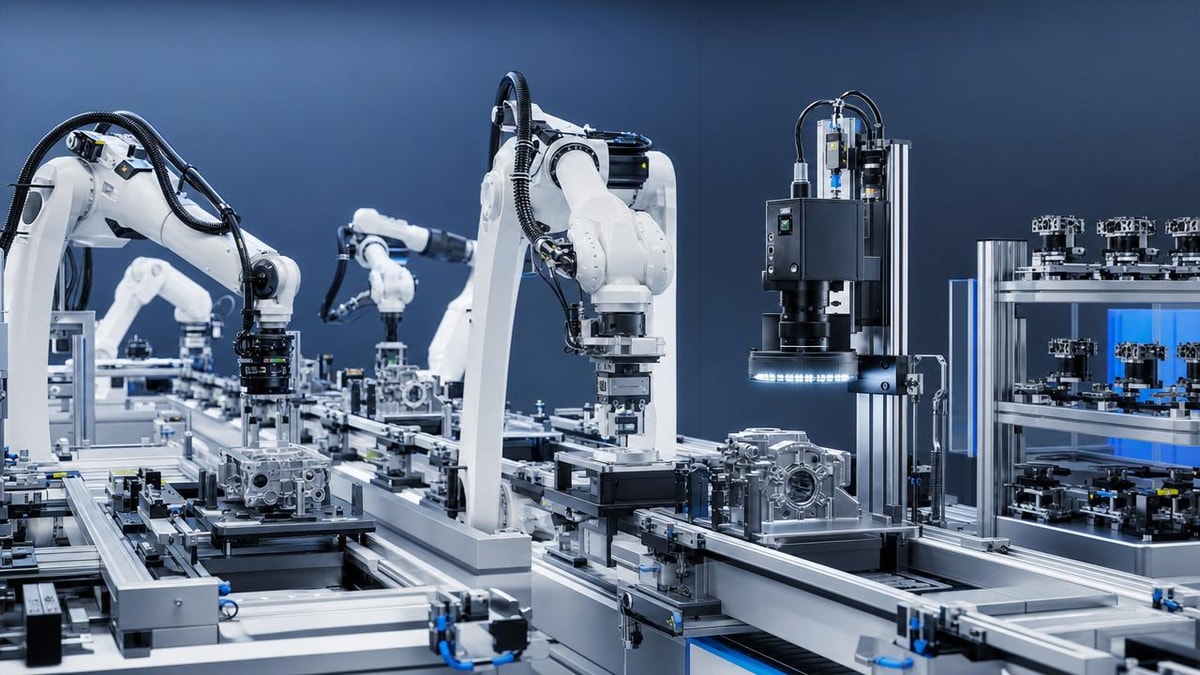
- The plant wants automation, but process steps are not standardized across shifts.
- Forecast volatility is high, yet equipment flexibility has not been evaluated.
- Consulting is viewed as cost reduction only, instead of a method for de-risking larger investments.
- No one has mapped the full order-to-cash timeline, so the real bottleneck may sit outside production.
For strategic leaders, these warning signs matter because they affect far more than one department. A poor decision can lock the company into underutilized assets, extended payback, and avoidable complexity for years. A disciplined lean manufacturing consulting review often reduces this risk by making trade-offs visible early.
How should enterprise decision-makers build a practical roadmap?
A practical roadmap usually starts with a short diagnostic phase rather than a full-scale transformation or immediate purchase. Over 2 to 6 weeks, leadership can review demand assumptions, map the bottleneck, quantify waste, and define whether the challenge is capability, capacity, or control. This keeps the discussion grounded in operational facts instead of internal opinion.
If the diagnostic shows that 15% to 30% capacity can be released through workflow, setup reduction, quality stabilization, or planning changes, lean manufacturing consulting should move first. If the study shows that current assets are already well run and still cannot meet future volume or technical specifications, then equipment selection can advance with stronger confidence and cleaner ROI logic.
For multi-site or globally sourced operations, the roadmap should also include supplier readiness, commissioning risk, and digital reporting requirements. A machine decision made in isolation may fail if upstream material consistency, spare parts lead time, or data integration are not aligned.
What does a balanced decision path look like?
Suggested 5-step sequence
- Define the business trigger: growth, cost pressure, quality risk, lead-time failure, or compliance need.
- Run a fast operational assessment using line data, process observation, and value-stream review.
- Estimate no-capex and low-capex improvement potential before comparing equipment options.
- Build the capex case only after process losses and integration requirements are visible.
- Set post-decision metrics for the first 30, 60, and 90 days to confirm outcomes.
This sequence protects both speed and discipline. It does not delay progress unnecessarily; it reduces the chance of solving the wrong problem with the wrong tool. For most enterprise buyers, that is the real value of lean manufacturing consulting in the decision cycle.
What should you clarify before contacting a consulting partner or equipment supplier?
Before opening a formal project, decision-makers should prepare a short fact pack. This should include current throughput, demand outlook, key pain points, bottleneck assumptions, major quality losses, and any timing constraint such as a product launch or customer contract milestone. Even 10 to 12 core data points can make early discussions far more productive.
If you are exploring lean manufacturing consulting, ask how the diagnostic will be structured, what data is required, how recommendations will be prioritized, and how results will connect to financial outcomes. If you are exploring equipment, ask about configuration options, integration support, commissioning timelines, operator training, and the conditions needed to achieve expected performance.
At TradeNexus Pro, we support enterprise decision-makers with sector-focused market intelligence, sourcing visibility, and strategic evaluation context across advanced manufacturing, green energy, smart electronics, healthcare technology, and supply chain software ecosystems. That helps organizations compare pathways more intelligently before committing budget.
Why choose us?
We understand that the question is rarely just “consulting or equipment.” It is usually about timing, risk, capital efficiency, operational readiness, and long-term competitiveness. Our platform helps business leaders examine supplier options, technology shifts, implementation considerations, and sector-specific decision signals in one place, with a focus on practical relevance for B2B growth.
If you need to clarify which route deserves priority, contact us to discuss your decision framework. We can help you refine evaluation criteria around process diagnostics, equipment selection, delivery cycle expectations, integration scope, supplier comparison, and phased improvement strategy. You can also explore questions related to customization, technical fit, digital integration, lead times, and budget planning before moving into formal procurement or transformation work.
The best next step is not always the biggest investment. It is the clearest one. If you want a more structured way to compare lean manufacturing consulting with equipment expansion, reach out with your operating goals, current constraints, and project timeline so the right path can be evaluated with less guesswork.
Get weekly intelligence in your inbox.
No noise. No sponsored content. Pure intelligence.
 May 03, 2026AI Boom Drives Data Center Power Demand, Liquid Cooling Gains UrgencyAI Boom Drives Data Center Power Demand, Liquid Cooling Gains Urgency
 May 03, 2026Low-Altitude Economy in China's 15th Five-Year Plan Boosts Warehouse Robotics ExportsLow-Altitude Economy in China's 15th Five-Year Plan Boosts Warehouse Robotics Exports
 May 03, 2026EU REACH Adds 5 Organotin Compounds to SVHC List for ElectronicsEU REACH Adds 5 Organotin Compounds to SVHC List for Electronics
 May 03, 2026Western Land-Sea Expressway Boosts Solar PV Exports to ASEANWestern Land-Sea Expressway Boosts Solar PV Exports to ASEAN
 May 03, 2026Southeast Asia Smart Home E-commerce Grows 27.4% Amid New Matter 1.3+ Certification RulesSoutheast Asia Smart Home E-commerce Grows 27.4% Amid New Matter 1.3+ Certification Rules
 May 03, 2026FDA Updates IVD Software Guidance: AI Diagnostic Tools Require Independent Algorithm ValidationFDA Updates IVD Software Guidance: AI Diagnostic Tools Require Independent Algorithm Validation
 May 03, 2026Global Methanol EV Ecosystem Alliance LaunchedGlobal Methanol EV Ecosystem Alliance Launched
 May 03, 2026Vietnam GDP Growth Forecast Raised to 7.2% for 2026Vietnam GDP Growth Forecast Raised to 7.2% for 2026
 May 03, 2026UAE Emerges as Global AI Hub, Driving Demand for AI-Quality Inspection SystemsUAE Emerges as Global AI Hub, Driving Demand for AI-Quality Inspection Systems
 May 03, 2026OFID $500M Funding for Côte d'Ivoire Energy ProjectsOFID $500M Funding for Côte d'Ivoire Energy Projects
 May 03, 20265 Axis Milling Machines for Automotive: Buy New or Retrofit?5 Axis Milling Machines for Automotive: Buy New or Retrofit?
 May 03, 2026What to Check Before Sourcing OEM Machined Parts from IndiaWhat to Check Before Sourcing OEM Machined Parts from India
 May 03, 2026Why Sheet Metal Bending Machine Price Varies So MuchWhy Sheet Metal Bending Machine Price Varies So Much
 May 03, 2026Plastic Injection Molding Process Guide for Common Defect ControlPlastic Injection Molding Process Guide for Common Defect Control
 May 03, 2026Smart Manufacturing Technology Trends Reshaping Factory UpgradesSmart Manufacturing Technology Trends Reshaping Factory Upgrades
 May 03, 2026Automotive Die Casting Parts and the Hidden Cost of PorosityAutomotive Die Casting Parts and the Hidden Cost of Porosity
 May 03, 2026Assembly Line Robots: Flexibility Can Matter More Than SpeedAssembly Line Robots: Flexibility Can Matter More Than Speed
 May 03, 2026Smart Manufacturing in Energy: Which Upgrades Pay Back FasterSmart Manufacturing in Energy: Which Upgrades Pay Back Faster
 May 03, 2026Why Robotics Integration Fails After a Successful DemoWhy Robotics Integration Fails After a Successful Demo
 May 03, 2026How to Spot a Reliable Precision Components ManufacturerHow to Spot a Reliable Precision Components Manufacturer
 May 03, 2026Sheet Metal Bending Machine Specifications That Affect AccuracySheet Metal Bending Machine Specifications That Affect Accuracy
 May 03, 2026Oil and Gas Fabrication: Where Material Mismatch Gets ExpensiveOil and Gas Fabrication: Where Material Mismatch Gets Expensive
 May 03, 2026Construction Fabrication Delays Often Start at the Drawing StageConstruction Fabrication Delays Often Start at the Drawing Stage
 May 03, 2026Industrial Robotics Maintenance Guide for Fewer Surprise StopsIndustrial Robotics Maintenance Guide for Fewer Surprise Stops
 May 03, 2026Smart Manufacturing Technology Benefits Beyond Labor SavingsSmart Manufacturing Technology Benefits Beyond Labor Savings
 May 03, 2026Defense Components Need More Than Tight TolerancesDefense Components Need More Than Tight Tolerances
 May 03, 2026How to Vet a Die Casting Parts Supplier in MexicoHow to Vet a Die Casting Parts Supplier in Mexico