Machine Vision Systems Fail More at the Lens Than the Software
When machine vision systems start missing defects or producing unstable results, the root cause is often not the algorithm but the lens. For after-sales maintenance teams, understanding how optics affect image quality, calibration, and long-term reliability is essential to faster troubleshooting and lower downtime. This article explores why lens-related failures are frequently overlooked and how to identify them before software gets blamed.
Why do machine vision systems fail at the lens more often than teams expect?
In many factories, the software gets blamed first because it is visible, configurable, and easy to question. Yet in real service calls, machine vision systems often degrade because the optical path changed long before anyone touched the code. A lens can drift out of focus by a fraction of a turn, collect oil mist over 3 to 6 months, or suffer vibration-induced loosening after thousands of production cycles. The software may still run correctly while the image entering it is no longer fit for reliable inspection.
For after-sales maintenance personnel, this matters because the lens sits at the start of the signal chain. If the contrast, sharpness, distortion, or illumination uniformity is compromised, no downstream classifier or defect detection routine can fully recover the lost information. In practical terms, a 5% to 10% reduction in image clarity at the edge of the field can be enough to turn stable pass/fail thresholds into unstable outputs, especially in high-speed inspection lines running at 60 to 300 parts per minute.
Another reason lens faults are underestimated is that they often appear intermittent. Machine vision systems may pass morning validation and then fail later when temperature rises by 8°C to 15°C inside the enclosure. Thermal expansion, weak lock screws, and focus shift can create symptoms that look like software inconsistency. The result is wasted debug time, repeated parameter edits, and unnecessary pressure on controls or AI teams.
What makes lens issues so easy to misdiagnose?
The main challenge is that optical degradation rarely announces itself with a hard fault code. Most machine vision systems will keep acquiring images, storing them, and returning numerical results. To an operator, the system appears alive. To a maintenance technician, the image may even look acceptable on a standard monitor, while the algorithm is actually losing edge contrast, grayscale separation, or geometric stability at a level the human eye does not immediately catch.
The following table summarizes common reasons why lens-related faults in machine vision systems are mistaken for software problems during field support.
For service teams, this table is a reminder that machine vision systems should be diagnosed from the front end inward. Before changing recipes, retraining models, or widening inspection tolerances, verify whether the optical image itself still matches the validated baseline. That single step can cut troubleshooting time from several hours to less than 30 minutes in many routine cases.
First quick checks before software changes
- Compare current images with golden samples captured during commissioning, not with memory alone.
- Inspect lens surface under angled light for dust, coolant film, adhesive residue, and micro-scratches.
- Check focus lock, iris lock, and mount tightness after vibration exposure or line maintenance.
- Verify working distance and camera-to-part alignment within the original setup tolerance, often within ±1 mm to ±3 mm.
Which lens-related symptoms in machine vision systems should after-sales teams watch first?
The best field strategy is to look for symptoms that repeat across products, shifts, or stations. In machine vision systems, lens faults usually affect image formation in ways that are consistent once you know where to look. Typical red flags include declining edge sharpness, inconsistent grayscale around reflective features, changing pixel scale after reassembly, and increased sensitivity to minor lighting fluctuations. These signs often appear before full process failure.
A useful rule is to separate image quality symptoms from logic symptoms. If the same tool or model gives different outcomes on visually similar parts, the lens, lighting, or mechanical setup deserves immediate attention. If the image quality is stable but the result logic is wrong in a repeatable way, software becomes a stronger suspect. This distinction helps after-sales engineers reduce unnecessary escalations.
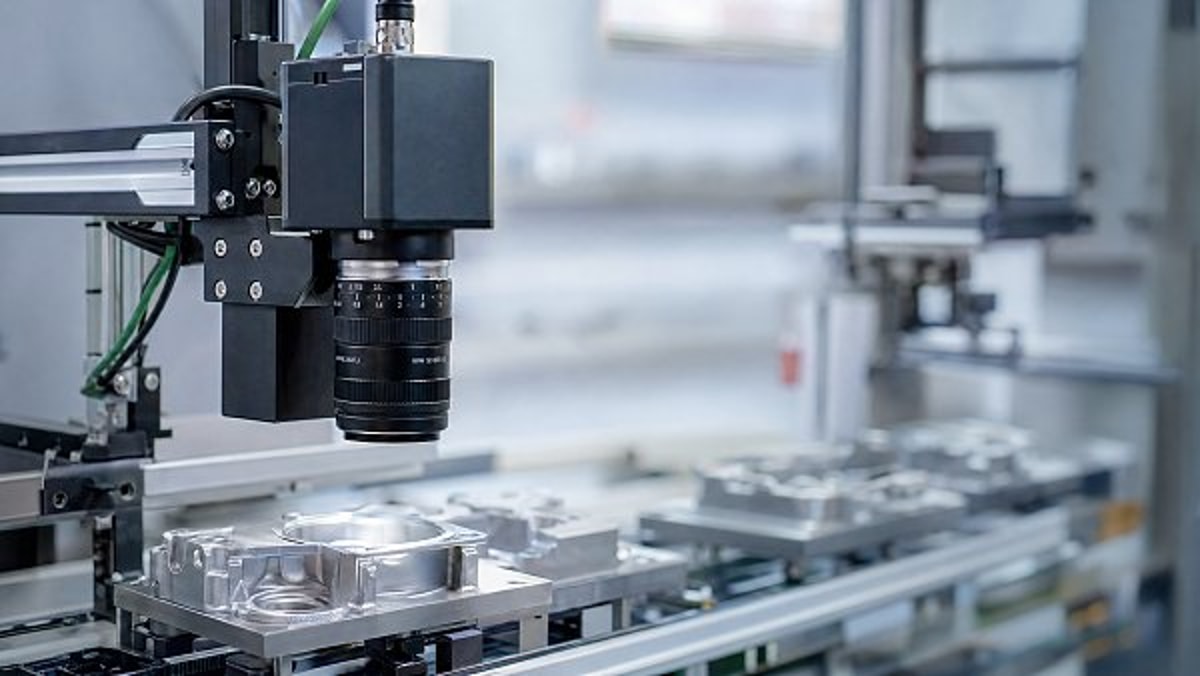
On lines using telecentric lenses, compact C-mount lenses, or liquid lenses, the symptom pattern will differ slightly. Telecentric systems often reveal problems through dimensional drift and uneven magnification tolerance, while compact lenses more often show focus instability and corner softness. In machine vision systems running 12 MP to 25 MP sensors, these weaknesses become easier to detect because pixel density exposes optical limitations that older 2 MP systems might hide.
What are the most common field symptoms?
The list below reflects what after-sales teams frequently encounter when servicing machine vision systems across manufacturing, electronics assembly, medical device packaging, and logistics automation.
- Focus drifts after machine restart, enclosure heating, or night shift cleaning.
- Defects near the image edge are missed more often than defects at the center.
- Measurement repeatability worsens from about ±0.02 mm to ±0.08 mm without any software update.
- High-gloss parts show flare, ghosting, or unstable contrast after lens contamination.
- One station in a multi-camera machine vision system behaves differently despite using the same recipe.
How can you separate lens faults from lighting faults?
Lens and lighting problems often overlap, but there are clues. If rotating or replacing the lens changes the pattern of blur or contrast loss, the lens is likely involved. If moving the light source or reducing reflections solves the issue while sharpness remains stable, lighting is more likely the primary factor. In practice, many machine vision systems fail because both degrade together: a dirty lens makes a once-adequate lighting design too fragile.
For that reason, after-sales maintenance should avoid isolated adjustments. A lens should be evaluated along with aperture setting, exposure time, standoff distance, and illumination angle. A one-step change in aperture, such as from f/4 to f/8, can improve depth of field but may also force longer exposure and increase motion blur if line speed stays unchanged.
How should maintenance teams inspect machine vision systems before blaming the algorithm?
A structured inspection routine is the fastest way to reduce downtime. In service operations, machine vision systems should be checked in a fixed order: contamination, mechanics, focus, geometry, then software. This prevents the common mistake of tuning thresholds around a bad image. It also creates repeatable records that procurement and plant engineering teams can use when deciding whether a lens replacement, mount redesign, or spare parts plan is justified.
Maintenance teams should document not only whether the system passes but also how close it is to the original baseline. A station may still be functional while image contrast has already dropped 15% or corner resolution has visibly weakened. Catching that early can prevent an unplanned stop during the next production campaign, especially in 24/7 operations where defect escapes carry higher downstream costs.
The checklist below works well for most machine vision systems used in industrial inspection, code reading, pick-and-place verification, and dimensional gauging.
What is a practical lens-first inspection workflow?
- Capture 5 to 10 current images under normal production conditions and compare them with commissioning images.
- Clean the protective window and lens surface using approved optical materials, then recapture the same images.
- Check focus at center and corners using a target or known feature, not only a product surface.
- Verify mount tightness, sensor alignment, and working distance after recent tooling changes or impact events.
- Run measurement or classification repeatability tests across at least 20 consecutive samples.
- Only after image quality is confirmed should thresholds, recipes, or models be adjusted.
This sequence is especially important in machine vision systems serving regulated or high-value production, where unauthorized software changes may trigger revalidation work. A lens-first workflow helps preserve process discipline and reduces the risk of masking a hardware issue with temporary parameter changes.
Which measurements are worth recording during service visits?
Even simple records can improve future support quality. Useful fields include working distance, aperture, exposure time, focus lock status, lens model, contamination condition, image histogram trend, and repeatability results. When machine vision systems are deployed across multiple plants, this record makes it easier to see whether failures cluster around a specific lens type, enclosure design, or cleaning practice.
The table below provides a practical service log structure for after-sales teams supporting machine vision systems in mixed industrial environments.
This kind of record turns troubleshooting into a reusable asset. It also supports better communication with procurement, because recurring optical failures may point to the need for upgraded lenses, improved sealing, or a different spare strategy rather than more software engineering time.
When should a lens be replaced, upgraded, or reselected in machine vision systems?
Not every issue requires replacement. Some machine vision systems recover fully after cleaning, refocusing, and mechanical tightening. However, there are clear situations where the existing lens no longer matches the application. If the sensor resolution has been increased from 5 MP to 12 MP, the old lens may not deliver sufficient resolving power. If product mix expanded and the required field of view changed by 20% to 30%, the lens may now be operating outside its optimal range.
Replacement is also worth considering when failure repeats under the same production conditions. For example, a standard lens installed near washdown, soldering fumes, or abrasive dust may repeatedly degrade despite cleaning. In that case, the real issue is not maintenance discipline but environmental mismatch. Machine vision systems used in harsh environments often need better sealing, more stable mounts, or optics designed for industrial temperature variation.
For after-sales teams, the goal is not just to fix the current stop but to prevent the next one. That means knowing when a quick restore is enough and when the installed optics are fundamentally under-specified.
What decision factors matter most?
- Sensor size and pixel pitch: higher-resolution sensors expose weak lens performance more clearly.
- Working distance stability: frequent changeovers increase the value of more tolerant optical designs.
- Depth of field needs: tall or uneven parts may require a different aperture strategy or lens class.
- Environment: heat, vibration, coolant, and particulate load strongly affect service life.
- Inspection task: code reading, gauging, cosmetic defect detection, and AI classification stress optics differently.
How do replacement and upgrade choices differ?
A direct replacement is appropriate when the original machine vision systems design was sound and the current lens simply aged, loosened, or was damaged. An upgrade is appropriate when application demands changed or when field history shows repeat failures. Typical upgrade paths include better resolution matching, lower distortion, stronger locking mechanisms, or optics suited for 0°C to 50°C industrial variation. The right choice depends on whether the failure is accidental, wear-related, or design-related.
Maintenance teams should also consider downtime economics. A low-cost lens that requires three emergency interventions in 12 months may be more expensive in practice than a higher-grade lens with better stability. That is particularly true in sectors where a single hour of line stoppage affects multiple downstream processes.
What are the biggest mistakes teams make when supporting machine vision systems in the field?
The most common mistake is changing software first because it feels faster. In many machine vision systems, threshold widening or model retraining can temporarily reduce false rejects while quietly increasing false accepts. That tradeoff is dangerous because it hides the optical root cause. Once the lens condition worsens further, the system fails again and the diagnostic trail becomes harder to reconstruct.
Another mistake is treating all blur as focus error. Blur can come from vibration, poor lens-sensor alignment, insufficient shutter speed, contamination, incorrect aperture, or lens quality limits. If teams refocus repeatedly without checking those factors, they may create a moving baseline and lose the validated setup. Machine vision systems work best when optical parameters are controlled, recorded, and restored deliberately.
A third mistake is underestimating preventive maintenance. In production zones with dust, oil mist, or aggressive cleaning, waiting until visible failure can be too late. A 30-day or 90-day inspection cycle may be more appropriate than annual attention. The right interval depends on environment severity, uptime targets, and defect risk, but routine optical checks are usually cheaper than emergency service.
Which field habits improve long-term reliability?
Reliable support for machine vision systems comes from disciplined habits rather than heroic troubleshooting. Capture baseline images at handover, standardize cleaning procedures, define acceptable sharpness and repeatability windows, and lock mechanical settings after commissioning. Where possible, store a reference set after every validated changeover so later troubleshooting has a known target.
It is also wise to align service practice with broader plant quality systems. For example, if a line operates under documented calibration and change control, lens replacement should trigger image verification and, where relevant, calibration checks. This keeps machine vision systems from drifting outside the wider process control framework.
A short FAQ summary for service teams
This summary reflects a simple principle: machine vision systems are only as reliable as the image entering them. When service teams respect that principle, fault isolation becomes faster, communication with plant stakeholders improves, and software teams spend less time solving the wrong problem.
How can you move from reactive fixes to better support planning?
If your role includes after-sales support, spare planning, or technical coordination, a lens-first maintenance strategy creates measurable operational value. Instead of waiting for machine vision systems to fail in production, you can define preventive checkpoints, identify vulnerable stations, and standardize replacement criteria. In many cases, that means linking optical inspection frequency to environment severity, such as every 30 days in contamination-heavy zones and every 90 to 180 days in cleaner enclosures.
This planning approach also supports better B2B sourcing decisions. Procurement directors and supply chain managers need more than a unit price; they need guidance on parameter confirmation, interchangeability, delivery timing, and total support burden. A lens that ships quickly but requires repeated field intervention is rarely the best lifecycle choice for machine vision systems supporting critical operations.
TradeNexus Pro helps industrial buyers and technical teams evaluate suppliers, component fit, and support implications across advanced manufacturing, smart electronics, healthcare technology, green energy, and supply chain automation. For companies running or servicing machine vision systems, that means a clearer path to comparing optical options, discussing maintenance risks, and aligning sourcing with operational reliability.
Why choose us?
We focus on the decision points that matter in real industrial environments: application matching, component reliability, serviceability, sourcing clarity, and supply continuity. If you are assessing machine vision systems or related optical components, we can help frame the right technical and commercial questions before you commit time or budget to the wrong fix.
You can contact us to discuss practical issues such as lens and camera parameter confirmation, replacement versus upgrade decisions, expected delivery cycles, spare strategy, environmental suitability, custom sourcing paths, and quotation coordination. If your team needs support comparing suppliers or narrowing options for a specific inspection task, it is best to start with the operating distance, sensor type, field of view, defect size, and service history.
The sooner those inputs are clarified, the faster you can determine whether your machine vision systems need cleaning, recalibration, mechanical correction, or a more suitable optical solution. Contact us with your application details, and we can help you move from repeated troubleshooting toward a more stable and supportable setup.
Get weekly intelligence in your inbox.
No noise. No sponsored content. Pure intelligence.
 May 03, 2026AI Boom Drives Data Center Power Demand, Liquid Cooling Gains UrgencyAI Boom Drives Data Center Power Demand, Liquid Cooling Gains Urgency
 May 03, 2026Low-Altitude Economy in China's 15th Five-Year Plan Boosts Warehouse Robotics ExportsLow-Altitude Economy in China's 15th Five-Year Plan Boosts Warehouse Robotics Exports
 May 03, 2026EU REACH Adds 5 Organotin Compounds to SVHC List for ElectronicsEU REACH Adds 5 Organotin Compounds to SVHC List for Electronics
 May 03, 2026Western Land-Sea Expressway Boosts Solar PV Exports to ASEANWestern Land-Sea Expressway Boosts Solar PV Exports to ASEAN
 May 03, 2026Southeast Asia Smart Home E-commerce Grows 27.4% Amid New Matter 1.3+ Certification RulesSoutheast Asia Smart Home E-commerce Grows 27.4% Amid New Matter 1.3+ Certification Rules
 May 03, 2026FDA Updates IVD Software Guidance: AI Diagnostic Tools Require Independent Algorithm ValidationFDA Updates IVD Software Guidance: AI Diagnostic Tools Require Independent Algorithm Validation
 May 03, 2026Global Methanol EV Ecosystem Alliance LaunchedGlobal Methanol EV Ecosystem Alliance Launched
 May 03, 2026Vietnam GDP Growth Forecast Raised to 7.2% for 2026Vietnam GDP Growth Forecast Raised to 7.2% for 2026
 May 03, 2026UAE Emerges as Global AI Hub, Driving Demand for AI-Quality Inspection SystemsUAE Emerges as Global AI Hub, Driving Demand for AI-Quality Inspection Systems
 May 03, 2026OFID $500M Funding for Côte d'Ivoire Energy ProjectsOFID $500M Funding for Côte d'Ivoire Energy Projects
 May 03, 20265 Axis Milling Machines for Automotive: Buy New or Retrofit?5 Axis Milling Machines for Automotive: Buy New or Retrofit?
 May 03, 2026What to Check Before Sourcing OEM Machined Parts from IndiaWhat to Check Before Sourcing OEM Machined Parts from India
 May 03, 2026Why Sheet Metal Bending Machine Price Varies So MuchWhy Sheet Metal Bending Machine Price Varies So Much
 May 03, 2026Plastic Injection Molding Process Guide for Common Defect ControlPlastic Injection Molding Process Guide for Common Defect Control
 May 03, 2026Smart Manufacturing Technology Trends Reshaping Factory UpgradesSmart Manufacturing Technology Trends Reshaping Factory Upgrades
 May 03, 2026Automotive Die Casting Parts and the Hidden Cost of PorosityAutomotive Die Casting Parts and the Hidden Cost of Porosity
 May 03, 2026Assembly Line Robots: Flexibility Can Matter More Than SpeedAssembly Line Robots: Flexibility Can Matter More Than Speed
 May 03, 2026Smart Manufacturing in Energy: Which Upgrades Pay Back FasterSmart Manufacturing in Energy: Which Upgrades Pay Back Faster
 May 03, 2026Why Robotics Integration Fails After a Successful DemoWhy Robotics Integration Fails After a Successful Demo
 May 03, 2026How to Spot a Reliable Precision Components ManufacturerHow to Spot a Reliable Precision Components Manufacturer
 May 03, 2026Sheet Metal Bending Machine Specifications That Affect AccuracySheet Metal Bending Machine Specifications That Affect Accuracy
 May 03, 2026Oil and Gas Fabrication: Where Material Mismatch Gets ExpensiveOil and Gas Fabrication: Where Material Mismatch Gets Expensive
 May 03, 2026Construction Fabrication Delays Often Start at the Drawing StageConstruction Fabrication Delays Often Start at the Drawing Stage
 May 03, 2026Industrial Robotics Maintenance Guide for Fewer Surprise StopsIndustrial Robotics Maintenance Guide for Fewer Surprise Stops
 May 03, 2026Smart Manufacturing Technology Benefits Beyond Labor SavingsSmart Manufacturing Technology Benefits Beyond Labor Savings
 May 03, 2026Defense Components Need More Than Tight TolerancesDefense Components Need More Than Tight Tolerances
 May 03, 2026How to Vet a Die Casting Parts Supplier in MexicoHow to Vet a Die Casting Parts Supplier in Mexico