Power Transmission Components That Create Noise Before They Fail
Unusual noise is often the first warning that power transmission components are moving toward failure. For aftermarket maintenance teams, identifying sounds like grinding, whining, or rattling early can reduce downtime, prevent secondary damage, and improve service planning. This article explains which components commonly create noise before failure and how to turn those signals into faster, more accurate maintenance decisions.
For most aftermarket maintenance teams, the real search intent behind this topic is practical: which power transmission components are most likely to make noise before failure, what those noises usually mean, and how quickly technicians should act. Readers are not looking for a broad theory lesson. They want a field-usable way to connect sound patterns with likely failure points, inspection priorities, and maintenance timing.
That also means the most valuable content is diagnostic rather than descriptive. Maintenance personnel care about identifying likely culprits, distinguishing urgent issues from manageable wear, avoiding unnecessary part replacement, and preventing one failing component from damaging shafts, couplings, reducers, belts, chains, bearings, or connected equipment. The useful question is not simply “what is noise,” but “what should I inspect first when I hear this sound?”
This article focuses on the power transmission components that most often create recognizable warning noise before breakdown. It also explains how sound changes under load, speed, alignment condition, and lubrication state, so technicians can make better maintenance decisions without overreacting to every abnormal sound.
Why noise matters more than many maintenance teams think
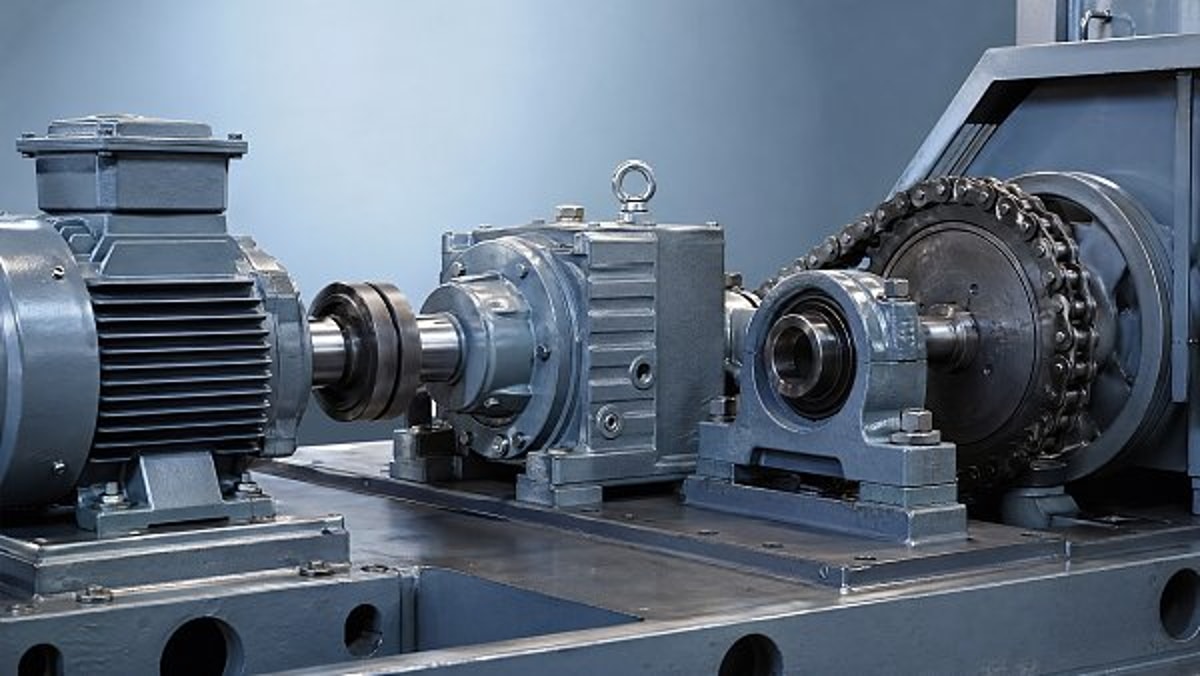
Noise is one of the earliest visible-or rather audible-signals of developing mechanical distress in power transmission components. In many systems, temperature rise, vibration increase, efficiency loss, and eventual seizure all come later. By the time heat or obvious performance loss appears, internal damage may already be advanced.
For aftermarket service teams, that timing matters. Catching a noisy bearing, coupling, gearbox, sprocket, or pulley assembly early can turn an emergency outage into a planned intervention. It can also prevent secondary failures such as shaft scoring, belt shredding, chain derailment, gear tooth damage, or motor overloading.
Noise also provides context that other indicators sometimes miss. A component may still be operating within acceptable temperature limits while producing a distinct whining, clicking, or rumbling sound under certain loads. That pattern often points to lubrication breakdown, misalignment, looseness, tooth wear, or contamination before conventional alarms trigger.
In short, unusual sound is not just a symptom. It is a maintenance signal that can improve troubleshooting speed, spare parts planning, and inspection accuracy when teams know how to interpret it.
Which power transmission components commonly create noise before failure
Not every noisy machine has a failing transmission element, but several categories of power transmission components are especially known for producing warning sounds in advance of failure. These include rolling bearings, gearboxes, belt drives, chain drives, couplings, pulleys and sheaves, sprockets, clutches and brakes, and mounted assemblies with worn bushings or loose hardware.
Among these, bearings and gears are often the earliest and most consistent noise sources. They operate under continuous rotation and load, so even small surface defects, lubrication issues, or alignment problems can create repeatable sound changes. Chains, belts, couplings, and pulleys also generate useful warning sounds, but those sounds may vary more depending on tension, speed, and operating conditions.
For aftermarket personnel, the key is to think system-wide rather than part-by-part. A noisy gearbox may actually be reacting to a misaligned coupling. A squealing belt may be caused by pulley wear or driven-load binding. A rattling chain may reflect sprocket wear, poor tension, or shaft movement. Good diagnosis starts with the noise source, but it ends with the whole transmission path.
Bearings: the most common source of early warning noise
Rolling bearings are among the most failure-prone and noise-sensitive power transmission components in industrial equipment. Long before complete failure, they often generate rumbling, grinding, humming, clicking, or high-frequency roughness. These sounds usually appear when raceways, rolling elements, or cages begin to wear, pit, contaminate, or lose proper lubrication film.
A dry or under-lubricated bearing often starts with a light whine or hiss that gradually becomes a harsher growl. Contaminated bearings may sound gritty or irregular, especially as particles circulate through the contact surfaces. Brinelling, spalling, or race damage can create rhythmic clicking or repeating roughness that changes with rotational speed.
Load dependency is an important clue. If the noise increases noticeably when the machine is loaded, side-loaded, or accelerated, the bearing should move high on the inspection list. Technicians should check lubrication condition, contamination ingress, mounting fit, shaft alignment, housing condition, and any signs of overheating or vibration growth.
Bearings also deserve priority because their failure can quickly damage adjacent power transmission components. A collapsing bearing can shift shaft position, overload couplings, alter gear mesh, mis-track belts, and increase chain wear. When in doubt, verify the bearing first rather than assuming the louder downstream component is the primary fault.
Gearboxes and gear sets: whining, grinding, and tooth-mesh warnings
Gear-driven systems often produce some normal operating noise, so the challenge is identifying when ordinary tonal sound becomes a warning sign. A rising whine, deeper howl, grinding tone, or cyclic knock can indicate gear tooth wear, pitting, poor lubrication, backlash issues, misalignment, or bearing degradation inside the reducer.
A high-pitched whine often points to gear mesh problems, especially if it changes with speed. This may be linked to tooth wear, contact pattern shift, inadequate lubrication viscosity, or alignment problems that change how the teeth engage. A grinding or rough metallic sound is more serious and may indicate advanced surface damage, debris circulation, or internal bearing failure affecting mesh geometry.
Technicians should avoid focusing only on the gearbox housing. Noise can originate from input or output conditions as well. Misaligned couplings, bent shafts, overhung loads, loose mounts, or driven-equipment resistance can all create abnormal internal gear loading and turn a healthy gearbox into a noisy one.
Useful checks include oil level, oil condition, metallic debris, mounting security, coupling alignment, shaft runout, and any change in noise during startup, coast-down, or peak torque. If the noise is getting sharper or more rhythmic over time, the window for planned repair may be narrowing fast.
Belt drives: squealing, slapping, and chirping that signal trouble
Belt systems are common, exposed, and often easier to inspect than enclosed drives, but that does not make them less important. Belt-related noise frequently appears as squealing during startup, chirping at steady speed, slapping under variable load, or a droning vibration-like sound from tracking problems. These are among the easiest warning signs for maintenance teams to detect early.
Squealing usually suggests slippage, which may result from inadequate tension, worn belt surfaces, contaminated grooves, pulley wear, or overload conditions. Chirping often points to misalignment, where the belt repeatedly enters and exits the pulley groove at a slight angle. Slapping can indicate low tension, long-span vibration, or belt instability caused by uneven load or pulley damage.
The important diagnostic principle is that replacing the belt alone may not solve the problem. Aftermarket teams should inspect pulley groove wear, parallel and angular alignment, shaft bearing play, driven resistance, and contamination from oil or dust. A new belt installed on worn sheaves may temporarily reduce the sound but leave the root cause untouched.
Because belt drives are visible, they offer a good opportunity for rapid screening. If the sound changes after tension adjustment or alignment correction, technicians have a strong clue. If noise returns quickly, underlying pulley, bearing, or load issues are likely driving the failure pattern.
Chain drives and sprockets: rattling and clanking are rarely harmless
Chain drive noise is often dismissed as normal, but excessive rattling, clanking, grinding, or snapping sounds usually indicate wear or setup problems. Compared with belts, chains naturally produce more mechanical sound, yet a noticeable increase should trigger inspection rather than acceptance.
Common causes include elongation from wear, poor lubrication, sprocket tooth wear, incorrect tension, shaft misalignment, and loose guarding or mounting hardware. A worn chain may ride poorly on the sprocket and create a repeating clatter. Hooked or damaged sprocket teeth can produce impact noise as the chain engages and disengages under load.
Lubrication is especially important. Dry chain joints generate noise early because articulation becomes less smooth and friction rises rapidly. If the sound is worst at one speed or one load zone, look for uneven tension, shaft eccentricity, or a localized damaged link set passing through engagement points.
Aftermarket technicians should measure chain elongation, inspect sprocket profiles, verify lubrication delivery, and check alignment across the drive path. Chains and sprockets should often be evaluated together, since replacing one without the other can shorten service life and bring the noise back quickly.
Couplings, clutches, and mounted assemblies: small parts, big warning signals
Couplings do not always get attention early because they are compact and often partly guarded, but they can produce distinct warning sounds before failure. Flexible element wear, backlash growth, insert deterioration, looseness, or misalignment may create knocking, rattling, or cyclic clicking that becomes more obvious during startup, reversing, or load transitions.
A metallic knock in a coupling area may indicate excessive play, loose fasteners, worn hubs, or mounting movement. Elastomeric coupling failure may begin with subtle irregular noise and rising vibration before visible cracking becomes obvious. Grid and gear couplings can become noisy when lubrication degrades or alignment drifts outside tolerance.
Clutches and brakes in power transmission systems also create useful sound clues. Chatter, scraping, or delayed engagement noise may indicate lining wear, surface damage, contamination, heat distortion, or actuator issues. Mounted assemblies with bushings, keys, taper-lock elements, or set screws can produce intermittent noise when fit integrity declines.
These components matter because they can transmit impact loads into the rest of the drive system. A noisy coupling can accelerate bearing wear, damage shaft interfaces, and create false suspicion around the gearbox or motor unless the full connection path is inspected carefully.
How to use noise as a maintenance decision tool, not just a symptom
The most effective maintenance teams do not treat noise as a vague complaint. They turn it into a repeatable decision process. Start by classifying the sound: grinding, whining, squealing, knocking, chirping, humming, rattling, or clicking. Then note when it occurs: startup, steady state, load increase, speed change, coast-down, reversing, or only at operating temperature.
Next, localize the source as closely as possible and compare it with known failure patterns in common power transmission components. A high-speed whine under load suggests a different issue than a low-speed knock during startup. A sound that disappears after lubrication also means something different from a sound that persists regardless of lubrication condition.
Teams should combine sound observations with vibration checks, thermal inspection, lubrication review, alignment verification, and visual wear assessment. Noise alone should not drive every replacement decision, but it is an efficient trigger for targeted inspection. This is especially useful in aftermarket environments where uptime pressure can tempt teams to either ignore early warnings or replace too many parts too soon.
A practical field rule is simple: if a component is getting louder, rougher, more rhythmic, or more load-sensitive over time, the probability of mechanical deterioration is rising. When that change is documented consistently, maintenance planning becomes more defensible and more efficient.
What aftermarket maintenance teams should inspect first when unusual noise appears
When noise is reported, speed matters, but sequence matters too. Start with safety and operating condition: confirm load state, guarding, recent maintenance history, and whether the sound is new, worsening, or intermittent. Then inspect the easiest high-probability items first-lubrication condition, loose hardware, visible alignment issues, abnormal wear debris, and obvious belt or chain tension problems.
After that, move through the transmission path from driver to driven equipment. Check motor bearings, coupling condition, gearbox or reducer sound, output bearings, pulleys or sprockets, and the final driven load. This prevents technicians from stopping at the first noisy component and missing the upstream cause that is overloading the system.
It also helps to ask two decision questions. First, is the sound indicating immediate failure risk, such as grinding with heat rise or heavy knocking under load? Second, is the issue isolated to one replaceable component, or is it a system condition like misalignment, contamination, or poor lubrication practice? These questions help teams choose between emergency shutdown, short-term monitoring, or scheduled repair.
For organizations managing spare parts and service calls, consistent sound-based inspection notes also improve planning. Over time, maintenance records that link sound type to actual root cause can shorten diagnosis, improve parts stocking, and reduce repeat failures across similar assets.
Conclusion
Many failing power transmission components announce themselves before they stop working. Bearings may growl, gearboxes may whine, belts may squeal, chains may rattle, and couplings may knock. For aftermarket maintenance teams, these are not minor annoyances. They are early failure signals that can prevent larger breakdowns when interpreted correctly.
The most useful approach is practical and systematic: identify the sound, note when it appears, inspect the full transmission path, and connect the noise to likely failure mechanisms such as lubrication loss, wear, misalignment, looseness, or overload. That process turns noise from a vague symptom into a reliable maintenance input.
In high-demand industrial environments, early recognition of noisy power transmission components helps reduce unplanned downtime, avoid secondary damage, and support better service decisions. The teams that listen carefully-and investigate methodically-usually fix problems earlier, faster, and at lower total cost.
Get weekly intelligence in your inbox.
No noise. No sponsored content. Pure intelligence.
 May 03, 2026AI Boom Drives Data Center Power Demand, Liquid Cooling Gains UrgencyAI Boom Drives Data Center Power Demand, Liquid Cooling Gains Urgency
 May 03, 2026Low-Altitude Economy in China's 15th Five-Year Plan Boosts Warehouse Robotics ExportsLow-Altitude Economy in China's 15th Five-Year Plan Boosts Warehouse Robotics Exports
 May 03, 2026EU REACH Adds 5 Organotin Compounds to SVHC List for ElectronicsEU REACH Adds 5 Organotin Compounds to SVHC List for Electronics
 May 03, 2026Western Land-Sea Expressway Boosts Solar PV Exports to ASEANWestern Land-Sea Expressway Boosts Solar PV Exports to ASEAN
 May 03, 2026Southeast Asia Smart Home E-commerce Grows 27.4% Amid New Matter 1.3+ Certification RulesSoutheast Asia Smart Home E-commerce Grows 27.4% Amid New Matter 1.3+ Certification Rules
 May 03, 2026FDA Updates IVD Software Guidance: AI Diagnostic Tools Require Independent Algorithm ValidationFDA Updates IVD Software Guidance: AI Diagnostic Tools Require Independent Algorithm Validation
 May 03, 2026Global Methanol EV Ecosystem Alliance LaunchedGlobal Methanol EV Ecosystem Alliance Launched
 May 03, 2026Vietnam GDP Growth Forecast Raised to 7.2% for 2026Vietnam GDP Growth Forecast Raised to 7.2% for 2026
 May 03, 2026UAE Emerges as Global AI Hub, Driving Demand for AI-Quality Inspection SystemsUAE Emerges as Global AI Hub, Driving Demand for AI-Quality Inspection Systems
 May 03, 2026OFID $500M Funding for Côte d'Ivoire Energy ProjectsOFID $500M Funding for Côte d'Ivoire Energy Projects
 May 03, 20265 Axis Milling Machines for Automotive: Buy New or Retrofit?5 Axis Milling Machines for Automotive: Buy New or Retrofit?
 May 03, 2026What to Check Before Sourcing OEM Machined Parts from IndiaWhat to Check Before Sourcing OEM Machined Parts from India
 May 03, 2026Why Sheet Metal Bending Machine Price Varies So MuchWhy Sheet Metal Bending Machine Price Varies So Much
 May 03, 2026Plastic Injection Molding Process Guide for Common Defect ControlPlastic Injection Molding Process Guide for Common Defect Control
 May 03, 2026Smart Manufacturing Technology Trends Reshaping Factory UpgradesSmart Manufacturing Technology Trends Reshaping Factory Upgrades
 May 03, 2026Automotive Die Casting Parts and the Hidden Cost of PorosityAutomotive Die Casting Parts and the Hidden Cost of Porosity
 May 03, 2026Assembly Line Robots: Flexibility Can Matter More Than SpeedAssembly Line Robots: Flexibility Can Matter More Than Speed
 May 03, 2026Smart Manufacturing in Energy: Which Upgrades Pay Back FasterSmart Manufacturing in Energy: Which Upgrades Pay Back Faster
 May 03, 2026Why Robotics Integration Fails After a Successful DemoWhy Robotics Integration Fails After a Successful Demo
 May 03, 2026How to Spot a Reliable Precision Components ManufacturerHow to Spot a Reliable Precision Components Manufacturer
 May 03, 2026Sheet Metal Bending Machine Specifications That Affect AccuracySheet Metal Bending Machine Specifications That Affect Accuracy
 May 03, 2026Oil and Gas Fabrication: Where Material Mismatch Gets ExpensiveOil and Gas Fabrication: Where Material Mismatch Gets Expensive
 May 03, 2026Construction Fabrication Delays Often Start at the Drawing StageConstruction Fabrication Delays Often Start at the Drawing Stage
 May 03, 2026Industrial Robotics Maintenance Guide for Fewer Surprise StopsIndustrial Robotics Maintenance Guide for Fewer Surprise Stops
 May 03, 2026Smart Manufacturing Technology Benefits Beyond Labor SavingsSmart Manufacturing Technology Benefits Beyond Labor Savings
 May 03, 2026Defense Components Need More Than Tight TolerancesDefense Components Need More Than Tight Tolerances
 May 03, 2026How to Vet a Die Casting Parts Supplier in MexicoHow to Vet a Die Casting Parts Supplier in Mexico