Power Transmission Components with Lower Cost but Higher Wear
For finance approvers balancing budget pressure with equipment reliability, choosing power transmission components is no longer a simple cost-cutting exercise. Lower upfront prices can lead to higher wear, more frequent replacements, and hidden downtime costs. This article examines how procurement teams can evaluate total lifecycle value, reduce risk, and make smarter sourcing decisions without sacrificing operational performance.
Understanding Lower-Cost, Higher-Wear Power Transmission Components
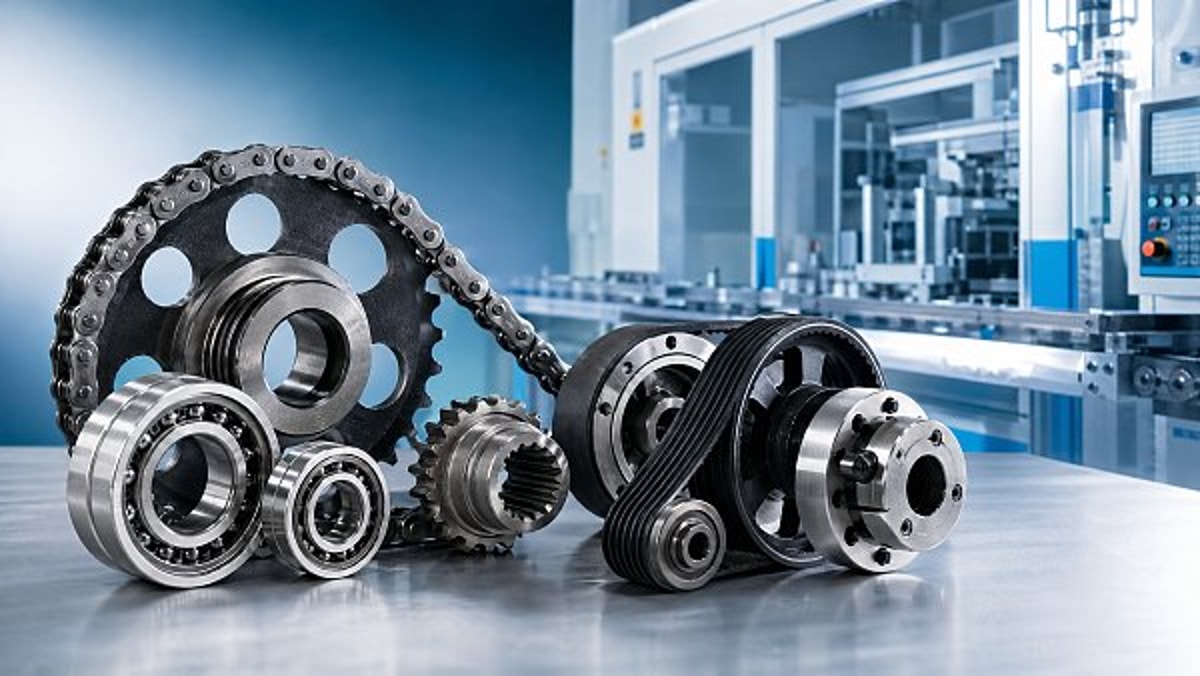
In industrial operations, power transmission components include belts, chains, couplings, sprockets, gears, bearings, pulleys, and related assemblies that transfer torque, speed, and motion from one machine element to another. When buyers focus only on invoice price, they may select lower-grade materials, looser tolerances, or simplified heat treatment processes. These choices often reduce immediate spending by 10% to 30%, but they can also shorten service life and increase maintenance frequency over a 6- to 24-month operating cycle.
For finance approvers, the issue is not whether a lower-cost part is always bad. In some light-duty applications, a budget component performs adequately and supports working capital discipline. The real challenge is matching the component to the load profile, operating environment, and replacement risk. A chain drive used in intermittent packaging machinery has a very different wear expectation from a gearbox coupling in a continuous 24/7 production line.
This is why power transmission components should be evaluated as risk-bearing assets rather than commodity line items. Wear is influenced by surface hardness, lubrication compatibility, alignment tolerance, temperature, contamination exposure, and duty cycle. A lower-cost component can be financially reasonable if these variables remain controlled. If they do not, the hidden cost often appears later through scrap, stoppages, emergency freight, and labor overtime.
Why wear behavior matters more than unit price
Wear is cumulative and rarely isolated. A low-quality pulley may accelerate belt edge fraying. A poorly machined coupling may increase vibration, which then affects motor bearings and seals. In many facilities, the purchase order value of the failed part represents less than 5% of the total event cost once downtime and labor are included. That is the core financial logic behind lifecycle-based approval.
A practical way to frame the issue is to compare three cost layers: acquisition cost, maintenance cost, and interruption cost. Finance teams often see the first layer clearly and the third layer only after a breakdown. Better sourcing discipline turns those delayed losses into visible decision criteria before approval is granted.
In sectors tracked closely by TradeNexus Pro, especially advanced manufacturing and supply chain-intensive operations, the financial impact of wear is amplified by lean inventory models and compressed lead times. If a replacement component has a 2-week to 8-week delivery window, premature wear becomes both a technical and cash-flow concern.
Typical signs that a “cheap” component is becoming expensive
- Replacement intervals fall below the expected service window, such as every 3 months instead of every 12 months.
- Maintenance teams report repeated alignment corrections, tension resets, or lubrication adjustments.
- Machine vibration, slippage, noise, or thermal rise increases after installation.
- Emergency sourcing and air freight begin to appear in monthly procurement records.
These warning signs often emerge gradually, which is why finance approvers benefit from a structured review model rather than relying on unit-price comparison alone.
Why the Market Keeps Turning to Lower-Cost Options
The demand for lower-cost power transmission components is shaped by real business pressure. Industrial operators are managing inflation in raw materials, freight volatility, labor constraints, and tighter capital allocation. Across many procurement categories, teams are asked to identify 5% to 12% annual savings without interrupting production. Power transmission parts, because they are repetitive and widely sourced, are often targeted first.
At the same time, global sourcing has expanded the available supplier base. Buyers now see wider price bands for apparently similar chains, couplings, or bearings. However, component similarity at the catalog level does not guarantee equal metallurgy, process control, tolerance stability, or traceability. This is where decision-makers can confuse market abundance with interchangeability.
In practical terms, many lower-cost options enter the approved supply chain because the initial specification was incomplete. If a drawing lists dimensions but not hardness range, surface finish expectation, concentricity tolerance, or lubrication condition, the quotation process naturally rewards the lowest-cost build interpretation. Finance approvers should understand that specification clarity directly affects long-term cost behavior.
Market factors behind aggressive pricing
- Short-term bid competition encourages vendors to optimize for visible price instead of service life.
- Inventory-heavy distributors may discount older stock that is technically usable but not ideal for demanding duty cycles.
- Some applications tolerate broad quality variation, making blanket price assumptions seem reasonable.
- Procurement systems often score quoted cost more heavily than maintenance exposure unless cross-functional review is built in.
For strategic sourcing teams, the answer is not to reject low-cost suppliers automatically. It is to segment applications by consequence of failure. In a non-critical conveyor with planned weekly checks, low-cost power transmission components may be acceptable. In sterile, automated, or high-throughput lines, the tolerance for premature wear is much lower because the interruption cost can exceed the annual savings target in a single event.
This distinction is increasingly relevant across advanced manufacturing, healthcare technology equipment support, and smart electronics production, where uptime, precision, and traceability often matter more than raw part count.
How Finance Approvers Should Evaluate Total Value
The most effective approval framework for power transmission components combines cost, operating risk, and replacement predictability. A part that is 18% cheaper but wears out 40% faster is rarely a true savings decision. A part that costs 12% more but doubles maintenance interval may create measurable value through lower labor usage, fewer shutdowns, and better spare planning.
A useful finance-oriented approach is to calculate annualized component cost per operating hour. This helps normalize suppliers that quote different purchase prices but deliver different wear performance. Even a simple model using runtime, replacement interval, labor time, and average downtime value can turn a subjective debate into an approval-ready comparison.
Below is a practical comparison table that illustrates how lower acquisition cost can become less attractive once wear and interruption are considered.
The table shows why finance leaders should ask for expected replacement frequency, not just quote value. Once labor and interruption are included, the lowest bid may no longer be the lowest annual cost. This is especially true when plants run 2 shifts to 3 shifts per day, or when maintenance windows are limited to weekends.
A practical approval checklist
- Confirm whether the component is used in critical, semi-critical, or non-critical equipment.
- Request expected service interval under the actual duty cycle, not catalog ideal conditions.
- Estimate replacement labor hours and line stoppage cost for one failure event.
- Check lead time range, such as 7 days, 21 days, or 45 days, for standard replenishment.
- Review whether alternative suppliers can maintain dimensional and material consistency.
This checklist helps finance approvers make faster decisions while reducing the chance that a low-cost component creates recurring operating losses later in the budget cycle.
Typical Application Categories and Wear Sensitivity
Not all power transmission components carry the same economic risk. Wear sensitivity changes with speed, torque, load variation, environmental contamination, and maintenance access. That is why application classification is more useful than broad price comparison. A sensible sourcing strategy often separates low-risk consumable positions from high-risk performance positions.
For example, a belt used in a low-load ventilation mechanism may tolerate lower-cost materials if inspection is monthly and replacement is simple. By contrast, a coupling in automated robotics or a chain in a synchronized production sequence may justify higher-grade construction because precision loss affects more than just the part itself. In these cases, wear influences throughput stability and product quality.
The following table provides a practical classification framework that finance and procurement teams can use during sourcing review.
This type of classification supports better budget discipline because it prevents over-engineering in low-risk areas while protecting uptime in critical ones. It also helps standardize approvals across departments that may otherwise use different technical language to describe similar wear risks.
Where hidden cost usually appears
Hidden cost tends to accumulate in four places: maintenance labor, emergency logistics, unplanned downtime, and collateral machine wear. In many plants, replacing a low-cost component takes only 20 to 40 minutes in theory, but lockout procedures, access constraints, line restart checks, and quality verification can stretch the real intervention to 2 to 4 hours.
Another issue is spare inventory. If lower-cost power transmission components have unpredictable life, buyers may compensate by carrying more stock. That ties up cash and warehouse space. In contrast, a more stable component may support leaner replenishment planning and clearer reorder points, especially if the supplier can commit to repeatable 14-day or 30-day delivery schedules.
For finance teams, this means the right sourcing question is not only “How much does the part cost?” but also “How much variability does this part introduce into our operating model?” Variability is expensive even when line-item pricing looks attractive.
Practical Sourcing and Risk-Control Recommendations
A disciplined sourcing strategy for power transmission components starts with specification quality. Drawings and RFQs should define not only dimensions, but also operating load, speed range, environmental exposure, expected duty cycle, and replacement constraints. When these details are missing, suppliers quote to the lowest acceptable assumption, and wear-related disputes become more likely after installation.
Finance approvers should also encourage trial-based validation where practical. A controlled pilot over one maintenance cycle, such as 90 days or 180 days, can reveal whether a lower-cost part performs adequately in the real operating environment. This is more reliable than relying on generic catalog claims, especially when dust, heat, washdown, or vibration are known factors.
Cross-functional review is another safeguard. Procurement may optimize price, maintenance may prioritize service life, and operations may prioritize uptime. The best decisions occur when these three views are reconciled before supplier approval. In strategic B2B environments, this alignment often delivers stronger savings than pure price negotiation because it reduces repeated replacement events.
Recommended controls before approval
- Ask for material and processing consistency on wear-sensitive items such as chains, gears, and couplings.
- Verify dimensional tolerance requirements for interfaces that affect alignment, backlash, or vibration.
- Separate critical equipment from non-critical equipment in the approved vendor matrix.
- Track replacement interval history by supplier lot or sourcing channel over at least 2 to 3 maintenance cycles.
- Request realistic lead time and sample support before switching high-risk components.
What better supplier communication should include
A productive supplier discussion should cover application load, shaft speed, start-stop frequency, lubrication method, ambient temperature range, and maintenance access limitations. Even 5 to 7 extra technical details can significantly improve the relevance of the quote. This matters because many wear failures are not due to catastrophic defects; they result from a mismatch between actual duty conditions and the assumptions behind the low-cost offer.
For globally sourced B2B enterprises, the most resilient approach is often a tiered supply base: one cost-focused channel for non-critical use, one stable mid-range channel for standard production equipment, and one technically reliable channel for critical lines. This structure supports both savings and operational continuity without forcing a single sourcing logic onto every machine category.
That balanced approach aligns well with how enterprise decision-makers increasingly manage industrial procurement: not by chasing the lowest quote everywhere, but by assigning spend according to business consequence and lifecycle behavior.
Why Work With a Specialized B2B Intelligence Partner
For finance approvers and sourcing leaders, reliable component decisions depend on more than product data. They require market visibility, supplier context, and a clear view of how technical choices affect procurement risk. That is where a specialized platform focused on industrial and strategic sectors adds value. Better intelligence helps buyers distinguish between acceptable cost optimization and false economy.
TradeNexus Pro supports this decision environment by focusing on the sectors where supply reliability, technical fit, and long-term sourcing discipline matter most. Instead of treating power transmission components as generic industrial items, decision-makers can evaluate them within broader manufacturing, electronics, healthcare technology, green energy, and supply chain performance realities.
If your team is reviewing lower-cost power transmission components, we can help you structure the conversation around commercial and operational impact rather than quote price alone. That includes support for parameter confirmation, application-based product selection, supplier comparison logic, lead time review, sample coordination, and practical discussion of certification or documentation expectations where relevant.
Why choose us
We work at the intersection of procurement intelligence and industrial decision-making, which is exactly where finance approvers need clarity. Our value is not in generic listings, but in helping B2B teams interpret technical sourcing decisions through a commercial lens. When wear, uptime, and replacement intervals influence total cost, that perspective becomes especially useful.
Contact us if you need support with power transmission components in any of the following areas: confirming operating parameters, narrowing component options for specific duty cycles, reviewing realistic delivery windows, comparing sourcing strategies for critical versus non-critical applications, arranging sample evaluation, or preparing a more decision-ready RFQ package for quotation and budget approval.
A lower purchase price can be beneficial, but only when it fits the real wear profile of the job. With better information and structured evaluation, procurement and finance teams can reduce avoidable risk while still meeting cost objectives.
Get weekly intelligence in your inbox.
No noise. No sponsored content. Pure intelligence.
 May 03, 2026AI Boom Drives Data Center Power Demand, Liquid Cooling Gains UrgencyAI Boom Drives Data Center Power Demand, Liquid Cooling Gains Urgency
 May 03, 2026Low-Altitude Economy in China's 15th Five-Year Plan Boosts Warehouse Robotics ExportsLow-Altitude Economy in China's 15th Five-Year Plan Boosts Warehouse Robotics Exports
 May 03, 2026EU REACH Adds 5 Organotin Compounds to SVHC List for ElectronicsEU REACH Adds 5 Organotin Compounds to SVHC List for Electronics
 May 03, 2026Western Land-Sea Expressway Boosts Solar PV Exports to ASEANWestern Land-Sea Expressway Boosts Solar PV Exports to ASEAN
 May 03, 2026Southeast Asia Smart Home E-commerce Grows 27.4% Amid New Matter 1.3+ Certification RulesSoutheast Asia Smart Home E-commerce Grows 27.4% Amid New Matter 1.3+ Certification Rules
 May 03, 2026FDA Updates IVD Software Guidance: AI Diagnostic Tools Require Independent Algorithm ValidationFDA Updates IVD Software Guidance: AI Diagnostic Tools Require Independent Algorithm Validation
 May 03, 2026Global Methanol EV Ecosystem Alliance LaunchedGlobal Methanol EV Ecosystem Alliance Launched
 May 03, 2026Vietnam GDP Growth Forecast Raised to 7.2% for 2026Vietnam GDP Growth Forecast Raised to 7.2% for 2026
 May 03, 2026UAE Emerges as Global AI Hub, Driving Demand for AI-Quality Inspection SystemsUAE Emerges as Global AI Hub, Driving Demand for AI-Quality Inspection Systems
 May 03, 2026OFID $500M Funding for Côte d'Ivoire Energy ProjectsOFID $500M Funding for Côte d'Ivoire Energy Projects
 May 03, 20265 Axis Milling Machines for Automotive: Buy New or Retrofit?5 Axis Milling Machines for Automotive: Buy New or Retrofit?
 May 03, 2026What to Check Before Sourcing OEM Machined Parts from IndiaWhat to Check Before Sourcing OEM Machined Parts from India
 May 03, 2026Why Sheet Metal Bending Machine Price Varies So MuchWhy Sheet Metal Bending Machine Price Varies So Much
 May 03, 2026Plastic Injection Molding Process Guide for Common Defect ControlPlastic Injection Molding Process Guide for Common Defect Control
 May 03, 2026Smart Manufacturing Technology Trends Reshaping Factory UpgradesSmart Manufacturing Technology Trends Reshaping Factory Upgrades
 May 03, 2026Automotive Die Casting Parts and the Hidden Cost of PorosityAutomotive Die Casting Parts and the Hidden Cost of Porosity
 May 03, 2026Assembly Line Robots: Flexibility Can Matter More Than SpeedAssembly Line Robots: Flexibility Can Matter More Than Speed
 May 03, 2026Smart Manufacturing in Energy: Which Upgrades Pay Back FasterSmart Manufacturing in Energy: Which Upgrades Pay Back Faster
 May 03, 2026Why Robotics Integration Fails After a Successful DemoWhy Robotics Integration Fails After a Successful Demo
 May 03, 2026How to Spot a Reliable Precision Components ManufacturerHow to Spot a Reliable Precision Components Manufacturer
 May 03, 2026Sheet Metal Bending Machine Specifications That Affect AccuracySheet Metal Bending Machine Specifications That Affect Accuracy
 May 03, 2026Oil and Gas Fabrication: Where Material Mismatch Gets ExpensiveOil and Gas Fabrication: Where Material Mismatch Gets Expensive
 May 03, 2026Construction Fabrication Delays Often Start at the Drawing StageConstruction Fabrication Delays Often Start at the Drawing Stage
 May 03, 2026Industrial Robotics Maintenance Guide for Fewer Surprise StopsIndustrial Robotics Maintenance Guide for Fewer Surprise Stops
 May 03, 2026Smart Manufacturing Technology Benefits Beyond Labor SavingsSmart Manufacturing Technology Benefits Beyond Labor Savings
 May 03, 2026Defense Components Need More Than Tight TolerancesDefense Components Need More Than Tight Tolerances
 May 03, 2026How to Vet a Die Casting Parts Supplier in MexicoHow to Vet a Die Casting Parts Supplier in Mexico