Programmable Logic Controllers and Legacy Equipment Compatibility
For business evaluators assessing modernization risk, programmable logic controllers are often the critical link between digital transformation goals and the realities of legacy equipment. Understanding how PLCs support compatibility, integration costs, and long-term operational reliability is essential for making informed investment decisions. This article explores the key factors that influence successful upgrades without disrupting existing industrial systems.
Why compatibility has become a board-level modernization issue
Across manufacturing, energy systems, smart electronics assembly, healthcare production environments, and logistics facilities, the modernization conversation has changed. Five years ago, many investment reviews treated controls replacement as a technical matter delegated to plant engineers. Today, programmable logic controllers are increasingly evaluated as a strategic bridge between aging assets and new digital operating models. The shift is being driven by three practical realities: longer equipment service lives, tighter cybersecurity expectations, and pressure to extract more production data without replacing every machine.
In many facilities, legacy equipment still performs its core mechanical function well after 15 to 25 years of service. What often ages faster is the control layer, including unsupported communication protocols, obsolete I/O modules, or hard-to-source spare parts. For business evaluators, this creates a familiar dilemma: capital budgets may not support full line replacement, but delaying upgrades can increase downtime exposure and reduce integration options. Programmable logic controllers sit at the center of this decision because they determine whether legacy assets can join newer supervisory, analytics, and traceability systems.
Another important change is that modernization projects are no longer judged only by immediate productivity gains. Evaluation teams now examine 3 to 7 year maintainability, supplier support continuity, protocol openness, and cybersecurity patchability. A PLC upgrade that appears inexpensive in year 1 can become costly if it forces custom middleware, repeated engineering work, or dependence on a shrinking pool of technicians. In this environment, compatibility is not only an engineering concern; it is a total lifecycle cost issue.
Trend signals business evaluators should not ignore
The strongest market signal is not that companies are abandoning legacy equipment. It is that they are trying to preserve mechanical value while modernizing controls, connectivity, and visibility in phases. In practical terms, many projects now begin with a PLC migration, a gateway layer, or staged I/O replacement before any major mechanical rebuild takes place. That trend matters because it reduces capital shock while improving readiness for MES, SCADA, ERP integration, or cloud reporting.
- Control retrofits are increasingly planned in phased windows of 6 to 18 months rather than single shutdown events.
- Procurement reviews now compare not only controller price, but also protocol support, engineering software access, and spare-part availability over 5+ years.
- Cross-functional signoff is becoming standard, with operations, IT, maintenance, and finance all involved in PLC-related decisions.
For organizations using TradeNexus Pro as a strategic intelligence reference, this trend means vendor evaluation must move beyond unit cost and focus on interoperability, migration path clarity, and long-term serviceability across multiple industrial sectors.
The following table summarizes how the modernization view around programmable logic controllers is changing in business practice.
The key takeaway is that programmable logic controllers are now judged as enablers of future optionality. A well-chosen PLC architecture can extend the useful life of legacy equipment while also reducing the friction of later upgrades.
What is driving the shift toward PLC-centered legacy integration
Several forces are converging at once. First, replacement economics have changed. In many industrial settings, a full machine or line replacement can require 2 to 4 times the budget of a controls-led retrofit when civil work, commissioning, operator retraining, and lost production time are included. This does not mean retrofits are always superior, but it explains why programmable logic controllers are receiving more attention in modernization roadmaps.
Second, operational data has become commercially valuable. Businesses now need machine-level visibility for traceability, predictive maintenance, energy optimization, quality records, and customer audit support. Legacy equipment often lacks native support for contemporary industrial Ethernet, secure remote diagnostics, or structured data exchange. Upgrading the PLC layer can often unlock 60% to 80% of the desired visibility benefit without immediate replacement of every actuator, drive, or machine frame.
Third, support risk has become more visible. A controller family that still runs may rely on discontinued programming tools, memory cards, communication modules, or specialist technicians nearing retirement. For business evaluators, this creates a concentration risk that does not always appear in standard depreciation schedules. The real issue is not only whether the equipment still runs today, but whether it can be supported reliably over the next 36 to 60 months.
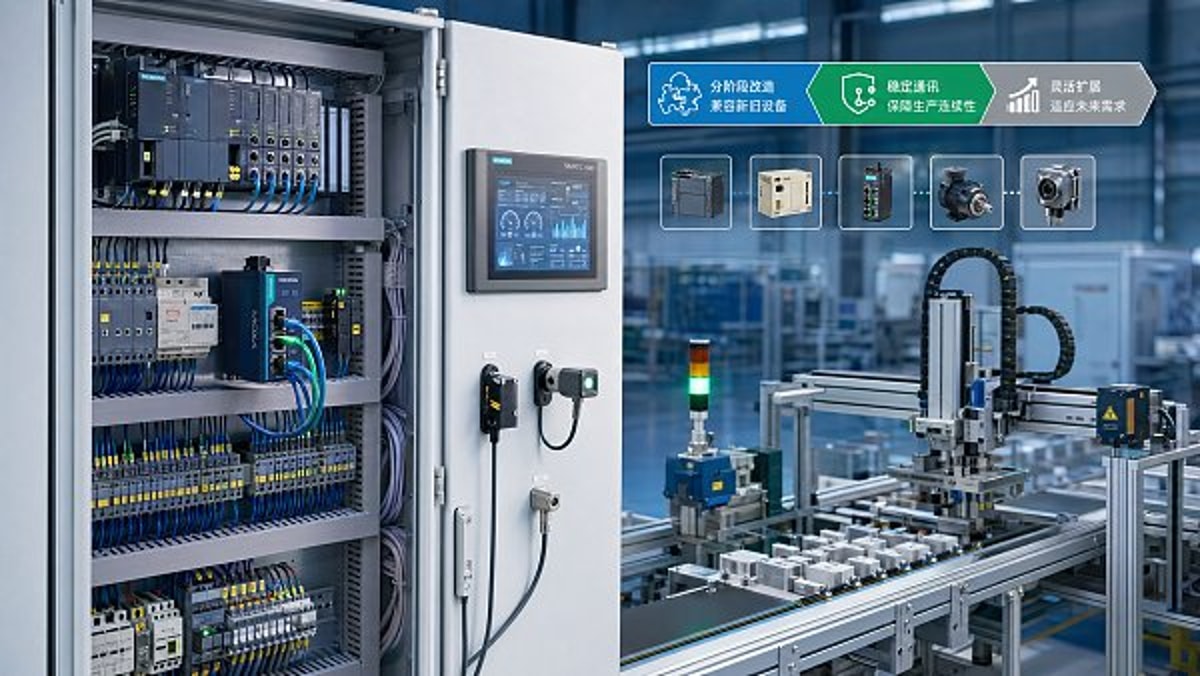
The main drivers behind current PLC upgrade demand
The decision environment around programmable logic controllers is being shaped by both technical and business considerations. Evaluators should look at the combined effect rather than treating each factor in isolation.
These drivers help explain why programmable logic controllers are no longer viewed simply as control boxes. They are increasingly treated as migration infrastructure that determines whether older assets remain productive, connected, and supportable.
A practical point on standards and integration
When teams compare options, they should examine support for common industrial communication environments, documentation quality, and integration friendliness with supervisory systems. Depending on the site, this may include Modbus, PROFINET, EtherNet/IP, OPC UA, or serial-to-Ethernet bridging. The right choice is rarely the one with the longest feature list; it is the one that aligns with current installed assets and a realistic 3 to 5 year expansion plan.
How compatibility trends affect cost, risk, and investment timing
For business evaluators, the most important question is not whether programmable logic controllers can connect to legacy equipment in theory. It is whether the compatibility path creates a predictable cost curve and acceptable operational risk. In many projects, initial controller hardware is only one part of the budget. Engineering hours, panel modifications, field rewiring, software validation, and production interruption can represent 40% to 65% of the total retrofit cost.
This is why investment timing matters. If a site waits until failures become frequent, decision quality often declines because the project moves into emergency mode. Under urgent conditions, teams may accept proprietary shortcuts, incomplete documentation transfer, or rushed testing windows of only 24 to 72 hours. A planned migration, by contrast, usually allows better compatibility verification, staged FAT or SAT activities, and clearer fallback procedures.
Another growing issue is hidden integration debt. Some legacy machines can be connected through protocol converters or custom interfaces, but that does not always create a sustainable architecture. If every machine requires a unique workaround, maintenance complexity rises quickly. Over a fleet of 20 to 50 assets, these exceptions can undermine the expected savings of keeping older equipment in service.
A risk-based view of PLC compatibility decisions
The table below helps evaluators compare common modernization paths for legacy equipment using programmable logic controllers.
This comparison shows why programmable logic controllers often become the preferred first step. They offer a middle path between preserving aging assets indefinitely and committing immediately to total replacement. Still, that middle path only works if compatibility assessment includes I/O counts, scan-time requirements, environmental conditions, safety circuits, software portability, and network design.
Questions that often change the investment decision
- Can the new PLC handle current machine logic without introducing unacceptable cycle-time delay?
- Will the retrofit preserve or improve access to spare parts for at least the next 5 years?
- How many custom interfaces are required, and can in-house teams maintain them?
- What shutdown window is realistic: a weekend, 1 week, or a staged monthly sequence?
When these questions are answered early, modernization choices become more comparable and less reactive. That is especially important for procurement and evaluation teams managing multiple sites or regional operations.
What different sectors and decision-makers should watch next
Although the compatibility challenge is widely shared, the impact of programmable logic controllers varies by sector. In advanced manufacturing, the priority is often uptime and line synchronization. In green energy facilities, remote monitoring and distributed asset visibility can be more important. In smart electronics production, tight process sequencing and traceability may dominate. In healthcare technology environments, validation discipline and change control can carry added weight. In supply chain SaaS-connected operations, data consistency across warehouse and production systems becomes a critical concern.
This means evaluators should avoid generic assumptions. A PLC solution that works well for a stand-alone packaging line may not be suitable for a regulated production cell or a multi-site energy asset network. The future trend is toward compatibility planning by operating context, not by controller brand preference alone.
Decision-making roles are also changing. Maintenance managers typically focus on fault recovery and spare parts. Operations leaders focus on downtime and throughput. IT teams examine segmentation, remote access, and patch pathways. Finance reviews total cost, shutdown risk, and payback intervals. The strongest PLC modernization plans now align all four perspectives before approval.
Priority watchpoints by stakeholder group
- For procurement teams: confirm lead times, software licensing implications, and long-term part availability across at least 2 sourcing cycles.
- For engineering teams: validate protocol mapping, I/O expansion margins, and documentation transfer before panel work begins.
- For plant leadership: measure compatibility success by production stability over the first 90 days, not only by installation completion.
- For digital transformation sponsors: prioritize PLC architectures that support future analytics and system interoperability without excessive custom coding.
Signals worth monitoring over the next planning cycle
Over the next 12 to 24 months, several signals are likely to influence buying decisions. One is the growing preference for open, well-documented interfaces that simplify data extraction from mixed-age assets. Another is a stronger emphasis on cyber-resilient segmentation of industrial networks. A third is the move toward phased retrofits that bundle PLC updates with selective sensor, HMI, and drive modernization. Together, these trends suggest that compatibility is becoming a design discipline rather than a temporary workaround.
For business evaluators, the strategic implication is clear: programmable logic controllers should be assessed as part of a broader asset transition model. The question is not only what fits today, but what reduces decision friction in the next upgrade cycle.
How to evaluate programmable logic controllers before committing budget
A disciplined evaluation process can prevent compatibility surprises and support better capital allocation. The most effective reviews begin with a legacy asset map that identifies controller age, communication type, I/O profile, software status, panel condition, and operational criticality. Even a basic categorization into high, medium, and low modernization priority can improve planning quality across 10, 25, or 100 machine environments.
From there, teams should build a migration matrix rather than choosing a PLC in isolation. The matrix should compare native protocol support, engineering tool accessibility, expansion options, training requirements, and likely shutdown duration. For older installations, wire labeling quality and available logic backups can materially affect cost and schedule. These are not secondary details; they often determine whether the projected ROI remains realistic.
It is also wise to define success metrics before project approval. Examples include planned downtime staying under a 48-hour weekend window, no critical fault increase during the first 30 days, or measurable improvement in data visibility within the first quarter after commissioning. Without these thresholds, organizations may struggle to judge whether the programmable logic controllers chosen actually delivered modernization value.
A practical decision checklist
- Confirm the exact legacy interfaces in use, including serial links, remote I/O, fieldbus networks, and safety-related circuits.
- Estimate the full retrofit scope, including documentation updates, panel redesign, testing time, and operator retraining.
- Check whether the selected PLC platform supports phased expansion without forcing a second migration in 2 to 3 years.
- Review cybersecurity expectations, network segmentation needs, and remote support policies at the site level.
- Align the project with a future integration roadmap for SCADA, MES, ERP, or condition monitoring systems.
These steps help separate low-cost retrofits from high-value retrofits. A controller that is merely compatible is not always the best business choice. The stronger choice is a programmable logic controller strategy that improves reliability, data usefulness, and upgrade flexibility at the same time.
Why work with a specialized B2B intelligence and sourcing partner
When modernization decisions involve legacy equipment, the hardest part is often not identifying a PLC platform. It is verifying how compatibility, lead time, technical fit, and future expansion will interact across real operating conditions. That is where a sector-focused intelligence partner adds value. TradeNexus Pro supports business evaluators with structured market insight across advanced manufacturing, green energy, smart electronics, healthcare technology, and supply chain software-linked industrial operations.
Because programmable logic controllers influence procurement, engineering, maintenance, and digital integration at once, decisions benefit from a broader view of supplier positioning, migration pathways, and cross-sector adoption patterns. TNP helps decision-makers compare options in context, not just by catalog specification. That includes reviewing compatibility direction, identifying common integration risks, and clarifying what questions should be asked before funds are committed.
If your team is assessing PLC upgrades for legacy equipment, contact us to discuss parameter confirmation, product selection logic, delivery lead time expectations, custom integration scenarios, documentation requirements, sample support pathways, and quotation planning. Whether you are screening retrofit feasibility for one production line or building a multi-site modernization roadmap, we can help you judge which programmable logic controllers fit your operational goals and where the hidden decision risks are likely to emerge.
Get weekly intelligence in your inbox.
No noise. No sponsored content. Pure intelligence.
 May 03, 2026AI Boom Drives Data Center Power Demand, Liquid Cooling Gains UrgencyAI Boom Drives Data Center Power Demand, Liquid Cooling Gains Urgency
 May 03, 2026Low-Altitude Economy in China's 15th Five-Year Plan Boosts Warehouse Robotics ExportsLow-Altitude Economy in China's 15th Five-Year Plan Boosts Warehouse Robotics Exports
 May 03, 2026EU REACH Adds 5 Organotin Compounds to SVHC List for ElectronicsEU REACH Adds 5 Organotin Compounds to SVHC List for Electronics
 May 03, 2026Western Land-Sea Expressway Boosts Solar PV Exports to ASEANWestern Land-Sea Expressway Boosts Solar PV Exports to ASEAN
 May 03, 2026Southeast Asia Smart Home E-commerce Grows 27.4% Amid New Matter 1.3+ Certification RulesSoutheast Asia Smart Home E-commerce Grows 27.4% Amid New Matter 1.3+ Certification Rules
 May 03, 2026FDA Updates IVD Software Guidance: AI Diagnostic Tools Require Independent Algorithm ValidationFDA Updates IVD Software Guidance: AI Diagnostic Tools Require Independent Algorithm Validation
 May 03, 2026Global Methanol EV Ecosystem Alliance LaunchedGlobal Methanol EV Ecosystem Alliance Launched
 May 03, 2026Vietnam GDP Growth Forecast Raised to 7.2% for 2026Vietnam GDP Growth Forecast Raised to 7.2% for 2026
 May 03, 2026UAE Emerges as Global AI Hub, Driving Demand for AI-Quality Inspection SystemsUAE Emerges as Global AI Hub, Driving Demand for AI-Quality Inspection Systems
 May 03, 2026OFID $500M Funding for Côte d'Ivoire Energy ProjectsOFID $500M Funding for Côte d'Ivoire Energy Projects
 May 03, 20265 Axis Milling Machines for Automotive: Buy New or Retrofit?5 Axis Milling Machines for Automotive: Buy New or Retrofit?
 May 03, 2026What to Check Before Sourcing OEM Machined Parts from IndiaWhat to Check Before Sourcing OEM Machined Parts from India
 May 03, 2026Why Sheet Metal Bending Machine Price Varies So MuchWhy Sheet Metal Bending Machine Price Varies So Much
 May 03, 2026Plastic Injection Molding Process Guide for Common Defect ControlPlastic Injection Molding Process Guide for Common Defect Control
 May 03, 2026Smart Manufacturing Technology Trends Reshaping Factory UpgradesSmart Manufacturing Technology Trends Reshaping Factory Upgrades
 May 03, 2026Automotive Die Casting Parts and the Hidden Cost of PorosityAutomotive Die Casting Parts and the Hidden Cost of Porosity
 May 03, 2026Assembly Line Robots: Flexibility Can Matter More Than SpeedAssembly Line Robots: Flexibility Can Matter More Than Speed
 May 03, 2026Smart Manufacturing in Energy: Which Upgrades Pay Back FasterSmart Manufacturing in Energy: Which Upgrades Pay Back Faster
 May 03, 2026Why Robotics Integration Fails After a Successful DemoWhy Robotics Integration Fails After a Successful Demo
 May 03, 2026How to Spot a Reliable Precision Components ManufacturerHow to Spot a Reliable Precision Components Manufacturer
 May 03, 2026Sheet Metal Bending Machine Specifications That Affect AccuracySheet Metal Bending Machine Specifications That Affect Accuracy
 May 03, 2026Oil and Gas Fabrication: Where Material Mismatch Gets ExpensiveOil and Gas Fabrication: Where Material Mismatch Gets Expensive
 May 03, 2026Construction Fabrication Delays Often Start at the Drawing StageConstruction Fabrication Delays Often Start at the Drawing Stage
 May 03, 2026Industrial Robotics Maintenance Guide for Fewer Surprise StopsIndustrial Robotics Maintenance Guide for Fewer Surprise Stops
 May 03, 2026Smart Manufacturing Technology Benefits Beyond Labor SavingsSmart Manufacturing Technology Benefits Beyond Labor Savings
 May 03, 2026Defense Components Need More Than Tight TolerancesDefense Components Need More Than Tight Tolerances
 May 03, 2026How to Vet a Die Casting Parts Supplier in MexicoHow to Vet a Die Casting Parts Supplier in Mexico