Why Mismatch Happens in Power Transmission Components Selection
Selecting power transmission components rarely fails because teams ignore the catalog. It usually fails because the application assumptions behind the catalog selection do not match what the machine, line, or project will actually experience in operation. For project managers and engineering leads, that mismatch can show up as excess vibration, overheating, noise, short service life, poor energy efficiency, unexpected downtime, or difficult commissioning.
In most cases, the root cause is not a single bad part. It is a decision chain problem: the design load was simplified, speed variation was underestimated, environmental conditions were treated as secondary, or compatibility between motors, gearboxes, couplings, bearings, belts, chains, and controls was never validated as a complete system. What looks acceptable on paper may become unreliable on site.
This article explains why mismatch happens in power transmission components selection, where project teams most often make avoidable errors, and how to build a more practical evaluation process. The goal is not just better component sizing. It is lower project risk, smoother installation, stronger lifecycle value, and more predictable performance after handover.
Why mismatch is so common in real projects
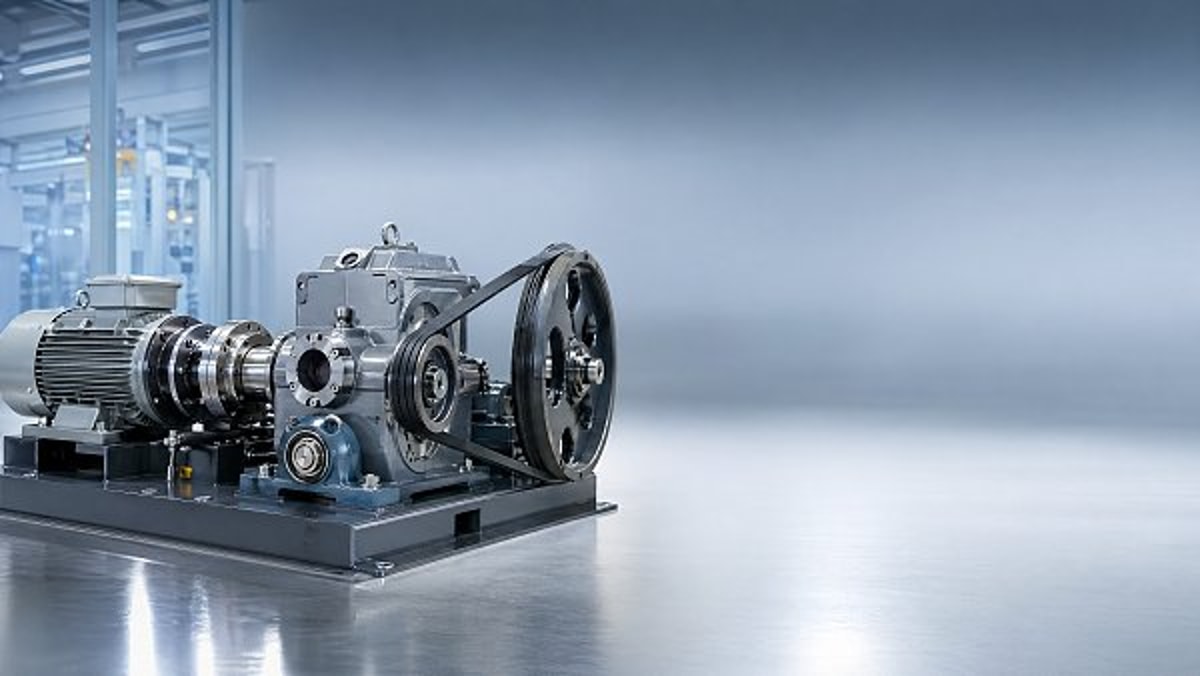
On many projects, component selection begins late in the delivery cycle. By that point, the machine layout, motor choice, available space, cost target, and delivery schedule are already fixed. That creates pressure to choose from what is available rather than what is truly suitable. In that environment, power transmission components are often treated as standard items, even when the duty profile is far from standard.
Another reason mismatch happens is that transmission systems sit between disciplines. Mechanical engineers focus on torque and alignment. Electrical teams focus on motor control and speed behavior. Procurement teams compare lead time and price. Operations teams care about maintainability and uptime. When these priorities are not integrated early, the selected components may satisfy one function while creating downstream issues elsewhere.
There is also a common overreliance on nominal ratings. A gearbox rated for a certain torque or a belt rated for a certain load may seem acceptable, but nameplate values do not always reflect shock loads, start-stop cycles, reversing motion, contamination, thermal buildup, or misalignment. The result is a technical selection that is formally defensible but operationally weak.
What project managers should look at before approving a selection
For project leaders, the first question is not whether a component can work in theory. It is whether the selection reflects actual operating conditions across the full project lifecycle. That means checking start-up loads, peak loads, duty cycles, acceleration patterns, maintenance access, environmental exposure, and expected changes in use after commissioning. If these factors are not documented, the risk of mismatch is already high.
The second priority is system-level compatibility. A high-quality coupling will not compensate for an incorrectly selected motor-gearbox ratio. A premium chain drive may still underperform if lubrication conditions are unrealistic for the site. A well-sized bearing can still fail early if shaft alignment tolerance is not achievable during installation. Project managers do not need to recalculate every engineering parameter, but they do need to verify that the interfaces have been considered.
The third issue is commercial realism. Sometimes the selected component is technically ideal but vulnerable to replacement delays, sole-source dependency, or high maintenance cost in the target market. In project execution, a good selection balances performance, availability, serviceability, and lifecycle economics. If any one of those is ignored, the project may carry hidden operational risk long after mechanical completion.
The biggest technical causes of mismatch in power transmission components
The most common technical mistake is misunderstanding the load profile. Many teams size components using average load, even though failure is more often driven by peaks, shocks, or repeated transient events. Crushers, conveyors, mixers, packaging lines, lifting systems, and automated handling equipment all impose different dynamic behaviors. If the application includes frequent starts, jams, reversals, or variable material density, average load is not enough.
Speed and torque relationships are another frequent source of error. A component may be selected for output torque but not for the actual speed range where heat, wear, and efficiency become critical. In variable frequency drive applications, for example, low-speed high-torque operation can produce thermal and lubrication challenges that are easy to overlook. In high-speed systems, balance, vibration, and coupling behavior become far more important than simple static sizing.
Service factor misuse also contributes to mismatch. Service factors are useful, but they are not a substitute for understanding the application. Some teams apply a generic safety margin and assume that solves uncertainty. In reality, an arbitrary margin can still be too low for shock loading or too high for compact design constraints, causing unnecessary cost and size. Correct selection depends on matching the factor to actual duty rather than applying a blanket multiplier.
Environmental and installation conditions are often underestimated
Transmission components that perform well in controlled factory conditions may fail much faster in field environments. Dust, moisture, washdown procedures, chemical exposure, temperature swings, and poor ventilation all affect seals, lubrication, corrosion resistance, and material stability. Yet environmental factors are often documented in broad terms rather than translated into specific design requirements.
Temperature is especially important. High ambient heat can reduce lubricant effectiveness, accelerate wear, and alter component clearances. Very low temperatures can affect flexibility, startup torque, and material response. If a project includes outdoor installation, enclosed spaces, or heat-generating adjacent equipment, ambient assumptions should be reviewed carefully. Many mismatches begin with a “normal conditions” assumption that never truly existed on site.
Installation reality matters just as much as operating reality. Shaft alignment, mounting rigidity, foundation quality, belt tensioning, chain tracking, and lubrication access all influence actual performance. If the selection assumes ideal alignment but the machine frame or site conditions make that hard to maintain, premature failure becomes likely. A robust selection process should ask not only “Can this be installed?” but also “Can this be installed correctly and maintained consistently?”
Why system compatibility matters more than individual component quality
One of the most expensive misconceptions in industrial projects is believing that a premium component automatically creates a reliable system. In practice, mismatch often occurs at the interface points. Motor speed characteristics may not align with gearbox efficiency ranges. Coupling stiffness may amplify vibration instead of damping it. Bearing arrangements may conflict with thermal expansion behavior. Belt geometry may not suit pulley spacing or enclosure constraints.
Control strategy can also affect mechanical selection. Soft starts, variable speed operation, emergency stops, indexing motion, and automated feedback loops all change the stress pattern seen by transmission components. If the controls team and mechanical team evaluate the system separately, the final assembly may perform differently than either side expected. This is particularly relevant in advanced manufacturing environments where dynamic responsiveness is part of the process requirement.
Compatibility should therefore be reviewed as a chain, not a list. The selected power transmission components should be evaluated together for efficiency, tolerance stack-up, thermal behavior, service access, replacement logic, and fault response. The best outcome is not achieved by optimizing each part independently. It is achieved by reducing system-level conflict.
Where procurement and schedule pressure create hidden selection risk
Project schedules often compress the technical review stage. When long-lead items threaten delivery milestones, teams may approve alternative brands or substitute component types with limited revalidation. Sometimes that works. Sometimes it introduces subtle differences in backlash, mounting dimensions, efficiency, lubrication requirements, or control response that are only discovered during commissioning.
Cost pressure can create similar problems. Buyers may compare products by unit price while missing the total cost effect of maintenance intervals, spare parts complexity, energy loss, installation labor, or expected service life. A lower-cost chain drive, gearbox, or coupling may increase line stoppages or require more frequent intervention. For project managers responsible for output and delivery reliability, the cheapest option can become the most expensive one over time.
Supplier communication is another variable. If vendors receive incomplete application data, they will often recommend based on limited assumptions. That is not necessarily poor support; it is an information quality problem. Teams reduce mismatch risk when RFQs include duty cycle details, load variation, environment, operating hours, start-stop frequency, mounting orientation, and maintenance expectations. Better input usually leads to better selection guidance.
How to evaluate power transmission components more effectively
A better process begins with an application profile, not a product shortlist. Before comparing models, document the actual load case, operating window, speed range, shock conditions, environmental exposure, installation constraints, maintenance strategy, and expected uptime target. This step sounds basic, but it is often the missing link between theoretical suitability and real-world reliability.
Next, validate the complete drive path. Review motor behavior, reducer ratio, shaft design, coupling choice, bearing loads, lubrication method, and guarding or enclosure effects together. If the project uses automation or variable control logic, include those operating modes in the review. Teams should test assumptions against startup, normal operation, upset conditions, and emergency stop scenarios rather than only steady-state output.
It is also useful to conduct a structured challenge review before procurement release. Ask what would cause early wear, what would be difficult to align or maintain, which parts depend on ideal conditions, and what substitutions could occur under schedule pressure. This kind of pre-mortem review is especially valuable for project managers because it converts technical uncertainty into visible execution risk before the cost of change rises.
A practical checklist for reducing mismatch risk on projects
First, confirm whether sizing is based on actual duty cycle instead of nominal or average load alone. If your application includes shocks, frequent starts, reversing, variable speed, or overloaded peaks, ask to see how those conditions were reflected in selection. This single question can uncover many hidden weaknesses.
Second, verify environmental and installation assumptions. Check temperature range, contamination level, washdown exposure, space restrictions, mounting orientation, alignment tolerance, and lubrication access. Components fail in context, not in catalogs. A technically correct part can still be wrong for the site.
Third, review lifecycle considerations before approval. Assess spare part availability, regional service support, maintenance interval, energy efficiency, replacement complexity, and the commercial consequences of downtime. For project leaders, the best selection is the one that protects output, maintainability, and long-term cost performance, not just initial compliance.
Conclusion: better selection comes from better questions
Mismatch in power transmission components selection usually does not come from a lack of product options. It comes from incomplete application understanding, fragmented decision-making, and assumptions that are never tested against real operating conditions. For project managers and engineering leads, that means the solution is not only better component data. It is a better selection process.
When teams evaluate load behavior, speed profile, environment, installation reality, system compatibility, and lifecycle economics together, they reduce the chance of costly surprises after commissioning. That leads to more reliable performance, fewer corrective interventions, and stronger project outcomes.
In short, selecting transmission components should be treated as a risk-management task as much as an engineering one. The more accurately the project team translates real operating demands into selection criteria, the less likely mismatch becomes—and the more dependable the final system will be.
Get weekly intelligence in your inbox.
No noise. No sponsored content. Pure intelligence.
 May 03, 2026AI Boom Drives Data Center Power Demand, Liquid Cooling Gains UrgencyAI Boom Drives Data Center Power Demand, Liquid Cooling Gains Urgency
 May 03, 2026Low-Altitude Economy in China's 15th Five-Year Plan Boosts Warehouse Robotics ExportsLow-Altitude Economy in China's 15th Five-Year Plan Boosts Warehouse Robotics Exports
 May 03, 2026EU REACH Adds 5 Organotin Compounds to SVHC List for ElectronicsEU REACH Adds 5 Organotin Compounds to SVHC List for Electronics
 May 03, 2026Western Land-Sea Expressway Boosts Solar PV Exports to ASEANWestern Land-Sea Expressway Boosts Solar PV Exports to ASEAN
 May 03, 2026Southeast Asia Smart Home E-commerce Grows 27.4% Amid New Matter 1.3+ Certification RulesSoutheast Asia Smart Home E-commerce Grows 27.4% Amid New Matter 1.3+ Certification Rules
 May 03, 2026FDA Updates IVD Software Guidance: AI Diagnostic Tools Require Independent Algorithm ValidationFDA Updates IVD Software Guidance: AI Diagnostic Tools Require Independent Algorithm Validation
 May 03, 2026Global Methanol EV Ecosystem Alliance LaunchedGlobal Methanol EV Ecosystem Alliance Launched
 May 03, 2026Vietnam GDP Growth Forecast Raised to 7.2% for 2026Vietnam GDP Growth Forecast Raised to 7.2% for 2026
 May 03, 2026UAE Emerges as Global AI Hub, Driving Demand for AI-Quality Inspection SystemsUAE Emerges as Global AI Hub, Driving Demand for AI-Quality Inspection Systems
 May 03, 2026OFID $500M Funding for Côte d'Ivoire Energy ProjectsOFID $500M Funding for Côte d'Ivoire Energy Projects
 May 03, 20265 Axis Milling Machines for Automotive: Buy New or Retrofit?5 Axis Milling Machines for Automotive: Buy New or Retrofit?
 May 03, 2026What to Check Before Sourcing OEM Machined Parts from IndiaWhat to Check Before Sourcing OEM Machined Parts from India
 May 03, 2026Why Sheet Metal Bending Machine Price Varies So MuchWhy Sheet Metal Bending Machine Price Varies So Much
 May 03, 2026Plastic Injection Molding Process Guide for Common Defect ControlPlastic Injection Molding Process Guide for Common Defect Control
 May 03, 2026Smart Manufacturing Technology Trends Reshaping Factory UpgradesSmart Manufacturing Technology Trends Reshaping Factory Upgrades
 May 03, 2026Automotive Die Casting Parts and the Hidden Cost of PorosityAutomotive Die Casting Parts and the Hidden Cost of Porosity
 May 03, 2026Assembly Line Robots: Flexibility Can Matter More Than SpeedAssembly Line Robots: Flexibility Can Matter More Than Speed
 May 03, 2026Smart Manufacturing in Energy: Which Upgrades Pay Back FasterSmart Manufacturing in Energy: Which Upgrades Pay Back Faster
 May 03, 2026Why Robotics Integration Fails After a Successful DemoWhy Robotics Integration Fails After a Successful Demo
 May 03, 2026How to Spot a Reliable Precision Components ManufacturerHow to Spot a Reliable Precision Components Manufacturer
 May 03, 2026Sheet Metal Bending Machine Specifications That Affect AccuracySheet Metal Bending Machine Specifications That Affect Accuracy
 May 03, 2026Oil and Gas Fabrication: Where Material Mismatch Gets ExpensiveOil and Gas Fabrication: Where Material Mismatch Gets Expensive
 May 03, 2026Construction Fabrication Delays Often Start at the Drawing StageConstruction Fabrication Delays Often Start at the Drawing Stage
 May 03, 2026Industrial Robotics Maintenance Guide for Fewer Surprise StopsIndustrial Robotics Maintenance Guide for Fewer Surprise Stops
 May 03, 2026Smart Manufacturing Technology Benefits Beyond Labor SavingsSmart Manufacturing Technology Benefits Beyond Labor Savings
 May 03, 2026Defense Components Need More Than Tight TolerancesDefense Components Need More Than Tight Tolerances
 May 03, 2026How to Vet a Die Casting Parts Supplier in MexicoHow to Vet a Die Casting Parts Supplier in Mexico