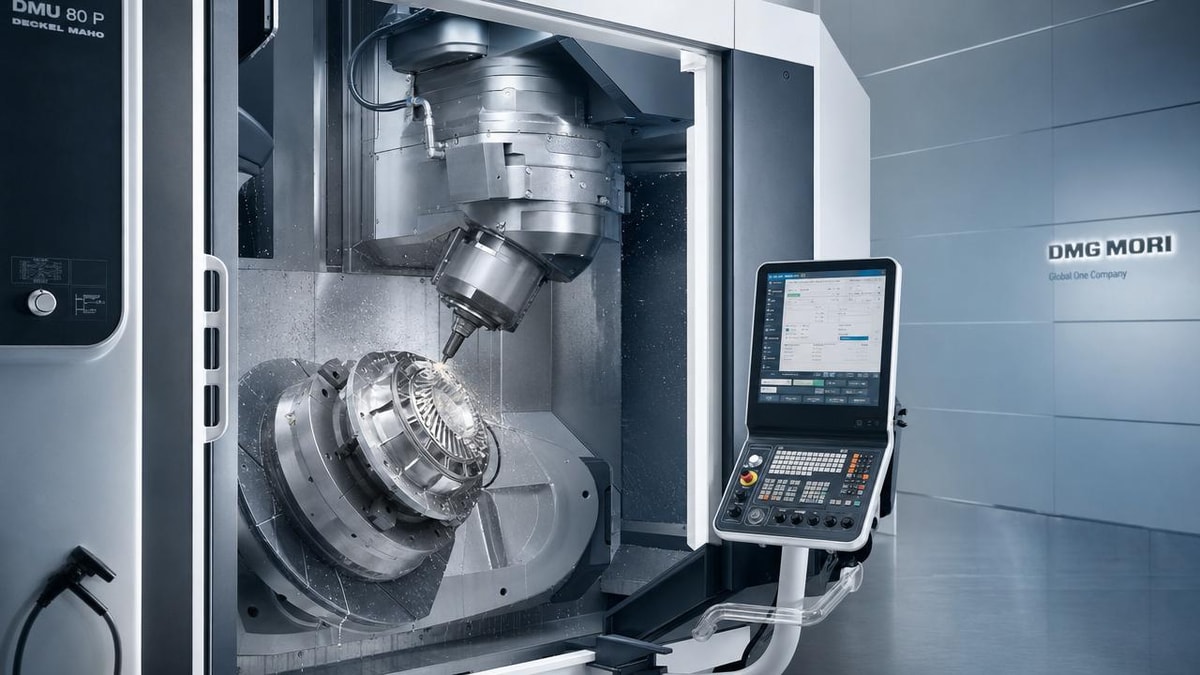
5 axis milling services for medical: where accuracy breaks down
In medical manufacturing, even micron-level deviation can compromise fit, function, and compliance. That’s why 5 axis milling services for medical are judged not only by speed, but by how accuracy holds up across complex geometries, tight tolerances, and validated production workflows. This article examines where precision begins to fail, what causes the breakdown, and how technical evaluators can identify suppliers capable of consistent, audit-ready performance.
Why are 5 axis milling services for medical under such intense accuracy scrutiny?
Medical components rarely fail in simple ways. A bone plate may appear dimensionally correct yet distort screw alignment under load. A surgical guide may pass a visual check while drifting outside fit tolerance on the patient-matched surface. An implant trial may look acceptable at first article inspection but show unstable repeatability once production scales. For technical evaluators, this is why 5 axis milling services for medical must be assessed as a process capability issue, not just a machine capability claim.
The reason 5-axis machining matters is straightforward: it allows the cutting tool to approach difficult features from multiple orientations in a single setup, reducing repositioning error and improving access to undercuts, compound angles, contoured surfaces, and critical transitions. In healthcare technology manufacturing, those geometries are common in orthopedic implants, spinal devices, dental frameworks, endoscopic parts, instrument handles, and custom fixation hardware.
However, the same complexity that makes 5 axis milling services for medical valuable also creates more ways for precision to degrade. Tool deflection, thermal drift, poor fixture design, unstable CAM strategies, post-processor mismatch, and inconsistent verification can each introduce deviation. The problem is not that 5-axis machining is inherently inaccurate. The problem is that its accuracy envelope narrows quickly when process discipline is weak.
Where does accuracy usually break down first in medical 5-axis machining?
In most supplier evaluations, breakdown does not begin with catastrophic machine error. It begins in smaller, cumulative losses that are easy to overlook until they affect fit, traceability, or validation. Technical teams reviewing 5 axis milling services for medical should focus on the following early failure points.
- Datum instability: If the part is re-referenced inconsistently between roughing, finishing, and inspection, geometric relationships can drift even when individual dimensions look acceptable.
- Fixture-induced distortion: Thin-wall titanium and cobalt-chrome parts can deform under clamping pressure, creating false confidence during machining and nonconformance after release.
- Tool reach and chatter: Long-reach tools used for deep cavities or angled access often deflect, affecting surface integrity and local feature accuracy.
- Thermal variation: Heat from spindle load, ambient change, or extended cycle time can shift dimensions at a level that matters in medical tolerances.
- CAM path transitions: Poor smoothing, abrupt axis motion, or incorrect lead-in/lead-out strategies may leave marks or form error on critical surfaces.
- Inspection mismatch: If the CMM program, probing strategy, or measurement datum does not mirror functional requirements, reported compliance may not reflect actual clinical fit.
These are not minor details. In 5 axis milling services for medical, one weak link can affect not only dimensional conformance but also downstream cleaning, passivation, coating adhesion, assembly performance, and regulatory documentation. For procurement directors and engineering reviewers, that means supplier selection should include a process-level audit mindset from the start.
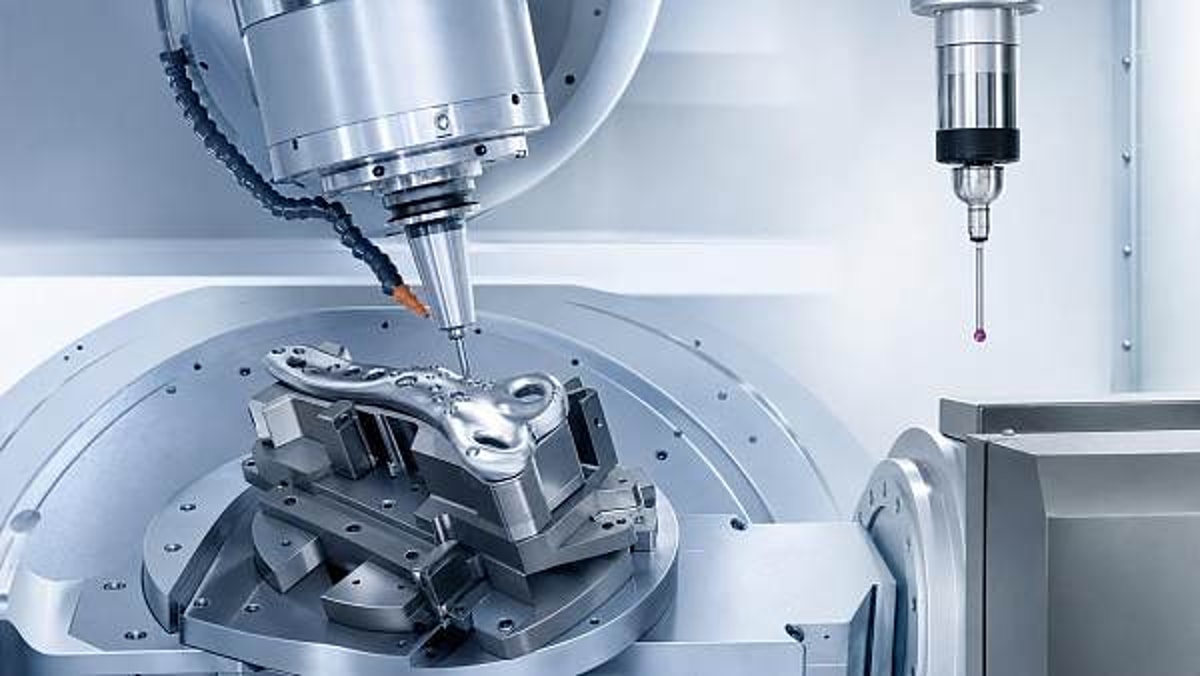
Which medical parts are most vulnerable to precision loss?
Not all parts stress the process equally. Some geometries tolerate minor variation; others expose every weakness in setup, toolpath control, and verification. When assessing 5 axis milling services for medical, evaluators should pay special attention to applications where tolerance stack-up or surface mismatch has direct functional consequences.
Patient-specific implants and guides are among the most sensitive because they depend on anatomical conformity, often with freeform surfaces that cannot be meaningfully judged by a few linear dimensions. Orthopedic fixation devices also demand high consistency where hole position, angular relationships, and profile transitions influence procedural success. Dental bars and abutments require exact seating and margin accuracy, while minimally invasive surgical instrument parts often involve long, slender forms that are difficult to fixture without movement.
Another high-risk category includes small components with multiple critical features in a single setup. Here, the appeal of 5 axis milling services for medical is efficiency and reduced handling, but the evaluation challenge becomes more complex: the supplier must prove positional accuracy across the entire part, not just on isolated features. This is where statistical repeatability, not one-off sample quality, becomes the deciding factor.
How can technical evaluators tell whether a supplier’s claimed precision is truly reliable?
Many suppliers market tight tolerances, but technical evaluators should separate stated capability from sustained, validated capability. In 5 axis milling services for medical, reliable precision is demonstrated through evidence, controls, and repeatability under realistic production conditions.
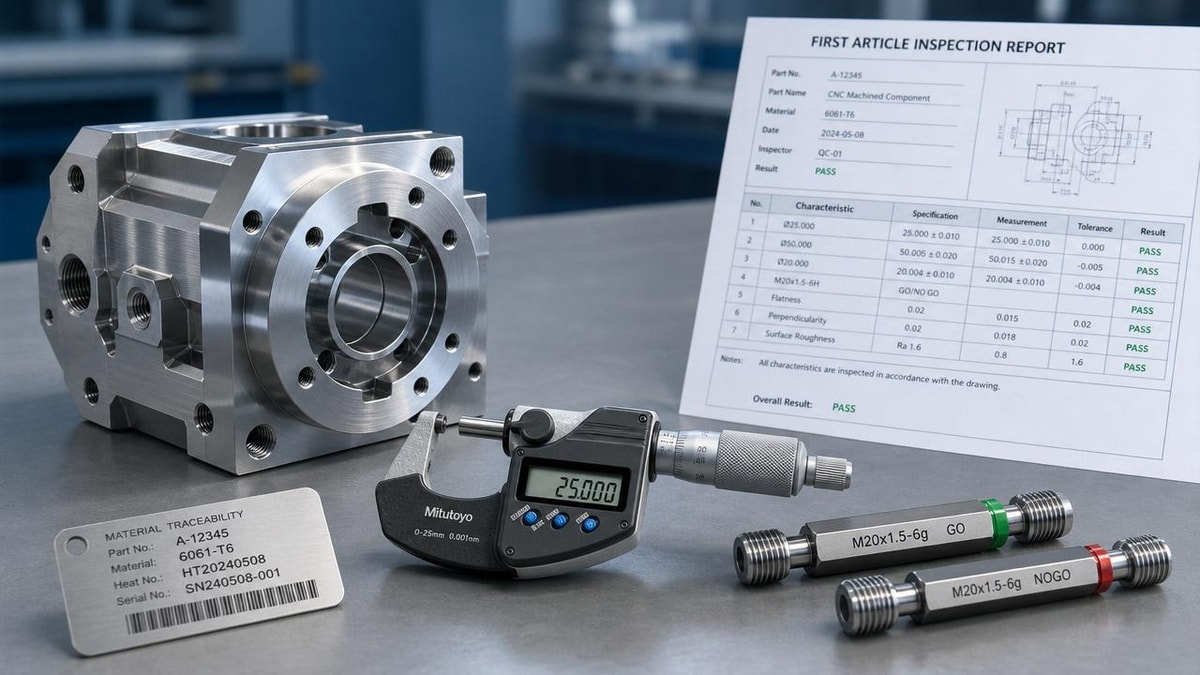
Start by asking how the supplier controls the full chain: material certification, machine calibration, tool management, fixturing method, CAM verification, in-process inspection, final metrology, and document retention. A credible medical machining partner should be able to explain not just what tolerance they can hit, but how they prevent drift lot after lot.
It is also important to review whether they understand medical-specific quality expectations. That includes controlled revision handling, traceability, process validation support, nonconformance response, and familiarity with standards such as ISO 13485 workflows when applicable. Even if a part is not implantable, the discipline around documentation and change control often predicts whether 5 axis milling services for medical will remain stable as the project matures.
What are the most common misconceptions when buying 5 axis milling services for medical?
One common misconception is that more axes automatically mean higher precision. In reality, 5-axis capability increases access and setup efficiency, but precision still depends on machine condition, kinematic calibration, post-processing accuracy, cutting strategy, and inspection discipline. A mediocre process on a sophisticated platform still produces mediocre outcomes.
A second misconception is that a very low quoted tolerance proves supplier strength. Technical evaluators should ask which features can consistently hold that range, on what material, at what part size, and under what measurement method. In 5 axis milling services for medical, a tolerance claim without context can be more marketing than engineering.
A third mistake is over-prioritizing cycle time during early sourcing. Fast delivery matters, especially in healthcare product development, but compressed programming, rushed tooling decisions, or incomplete process review often create hidden cost later in rework, delayed validation, or failed transfer to scaled production. The more complex the part, the more expensive this shortcut becomes.
Finally, buyers sometimes assume that a clean first article guarantees production readiness. It does not. A hand-tuned setup can produce one excellent sample and still fail under normal operator variation, longer run time, tool wear, or alternate material lots. This is why 5 axis milling services for medical should always be evaluated for repeatability, not just initial appearance.
How do cost, lead time, and compliance pressures affect accuracy decisions?
In sourcing discussions, accuracy is often treated as a fixed technical target, while cost and lead time are negotiated around it. In practice, the three are linked. Tight tolerances on freeform medical parts may require slower finishing passes, specialized cutters, in-process probing, dedicated fixtures, and more extensive inspection. When a supplier quotes aggressively low pricing or unusually short delivery for 5 axis milling services for medical, evaluators should ask what process steps have been reduced or assumed away.
This does not mean the highest quote is always the best choice. It means value must be judged on process robustness. A capable supplier may reduce total cost by preventing engineering loops, shortening approval cycles, and avoiding repeated deviations. In the B2B procurement context, especially for regulated or high-liability products, these hidden savings are often more important than nominal piece price.
Compliance expectations raise the bar further. If documentation, traceability, and inspection records are incomplete, even a dimensionally acceptable batch may create downstream risk. Technical evaluation should therefore consider whether the provider of 5 axis milling services for medical can support audits, PPAP-like submissions where needed, and structured communication between engineering, quality, and procurement teams.
What should a technical evaluator confirm before moving forward with a supplier?
Before approving a supplier, technical evaluators should confirm a focused set of operational facts. First, identify which features are function-critical and how they will be measured. Second, ask whether the supplier has prior experience with the same material family, geometry type, and tolerance class. Third, review fixture strategy and how part distortion is controlled through machining and release. Fourth, verify whether in-process checks align with final acceptance criteria rather than generic shop-floor measurements.
It is also wise to ask for examples of deviation handling. Strong suppliers of 5 axis milling services for medical do not claim perfection; they demonstrate disciplined response when variation appears. That includes root-cause analysis, containment, corrective action, and documented closure. In medical manufacturing, this maturity is often a stronger indicator than polished sales language.
For organizations using intelligence platforms such as TradeNexus Pro to compare global supply options, the practical goal is not simply finding a shop with a 5-axis machine. It is identifying a partner that combines advanced manufacturing capability, healthcare technology awareness, and supply chain reliability in a form that stands up to technical review and long-term procurement pressure.
What are the most useful questions to ask in a final RFQ or qualification call?
If you need to move from research to action, the best next step is a sharper conversation. Ask what tolerance risk areas the supplier sees in your design. Ask which operations are most sensitive to tool wear or thermal drift. Ask how they validate the relationship between CAD model, CAM strategy, machine output, and inspection results. Ask whether they can provide repeatability evidence across multiple runs, not just one setup. Ask how revision changes are controlled once the part enters approved production.
These questions help expose whether 5 axis milling services for medical are being offered as a commodity or as a controlled engineering process. For technical evaluators, that distinction is where confident sourcing decisions begin. If you need to confirm a specific machining approach, tolerance strategy, lead time, quotation basis, validation support, or cooperation model, prioritize discussion around critical features, inspection method, lot traceability, fixture design, change control, and documented repeatability before comparing price alone.
Get weekly intelligence in your inbox.
No noise. No sponsored content. Pure intelligence.
 May 04, 2026FDA AI Diagnostic Software Guidance: Continuous Validation for Overseas FirmsFDA AI Diagnostic Software Guidance: Continuous Validation for Overseas Firms
 May 04, 2026MIIT Launches Export Compliance Support for Warehouse RoboticsMIIT Launches Export Compliance Support for Warehouse Robotics
 May 04, 2026India BIS Mandates ISI Certification for Smart Home Devices from July 2026India BIS Mandates ISI Certification for Smart Home Devices from July 2026
 May 04, 2026Global Shipping Alliance Raises Heavy-Lift Surcharges from May 2026Global Shipping Alliance Raises Heavy-Lift Surcharges from May 2026
 May 04, 2026GCC EV Charging Certification Unified: 35% Cost Cut for Chinese ExportersGCC EV Charging Certification Unified: 35% Cost Cut for Chinese Exporters
 May 04, 2026TÜV Rheinland Updates IoT Security Standard with AI Voice Data AnonymizationTÜV Rheinland Updates IoT Security Standard with AI Voice Data Anonymization
 May 04, 2026Yangshan Port Launches Green Energy Equipment Express LaneYangshan Port Launches Green Energy Equipment Express Lane
 May 04, 2026Vietnam Enforces Local IoT Certification for Smart Home Devices from May 2026Vietnam Enforces Local IoT Certification for Smart Home Devices from May 2026
 May 04, 2026US CBP Launches Battery Cargo Inspection: ESS Export Delays to 7–12 DaysUS CBP Launches Battery Cargo Inspection: ESS Export Delays to 7–12 Days
 May 04, 2026EU SVHC Update Effective May 1, 2026: Impact on Electronic Components ExportsEU SVHC Update Effective May 1, 2026: Impact on Electronic Components Exports
 May 04, 2026Portable power stations: what matters more than wattage on paperPortable power stations: what matters more than wattage on paper
 May 04, 2026Automotive injection molding machines and the scrap rate problemAutomotive injection molding machines and the scrap rate problem
 May 04, 2026Smart thermostats save energy only when setup is done rightSmart thermostats save energy only when setup is done right
 May 04, 2026Why TWS earbuds sound great in ads but not on callsWhy TWS earbuds sound great in ads but not on calls
 May 04, 2026Industrial robotics for material handling: where downtime startsIndustrial robotics for material handling: where downtime starts
 May 04, 2026LiFePO4 battery lifespan drops faster under these conditionsLiFePO4 battery lifespan drops faster under these conditions
 May 04, 2026Solar grid systems: when storage changes the project mathSolar grid systems: when storage changes the project math
 May 04, 2026Smart manufacturing for pharma fails when data stays isolatedSmart manufacturing for pharma fails when data stays isolated
 May 04, 2026Wearable technology trends that are finally useful in 2026Wearable technology trends that are finally useful in 2026
 May 04, 2026Bluetooth speakers: why battery life claims often miss real useBluetooth speakers: why battery life claims often miss real use
 May 04, 2026Home automation systems that solve everyday annoyances firstHome automation systems that solve everyday annoyances first
 May 04, 2026Solar street lights that underperform after the first rainy seasonSolar street lights that underperform after the first rainy season
 May 04, 2026Why sheet metal bending services in Canada cost more than expectedWhy sheet metal bending services in Canada cost more than expected
 May 04, 2026Factory automation systems for electronics and the ROI gapFactory automation systems for electronics and the ROI gap
 May 04, 2026OEM machined parts supplier Vietnam: quality checks that matterOEM machined parts supplier Vietnam: quality checks that matter
 May 04, 2026What to check before choosing a 5 axis machine for defenseWhat to check before choosing a 5 axis machine for defense
 May 04, 2026Smart grid solutions that fix peak load without major rebuildsSmart grid solutions that fix peak load without major rebuilds