Coordinate Measuring Machines or Hand Tools for Tight Tolerances?
When tight tolerances determine product quality and compliance, choosing between coordinate measuring machines and hand tools becomes a critical decision for quality control and safety teams. This article examines where each method delivers the accuracy, speed, traceability, and cost efficiency manufacturers need to reduce risk, improve inspection confidence, and maintain consistent standards in demanding production environments.
For tight tolerances, the best choice is usually not either-or
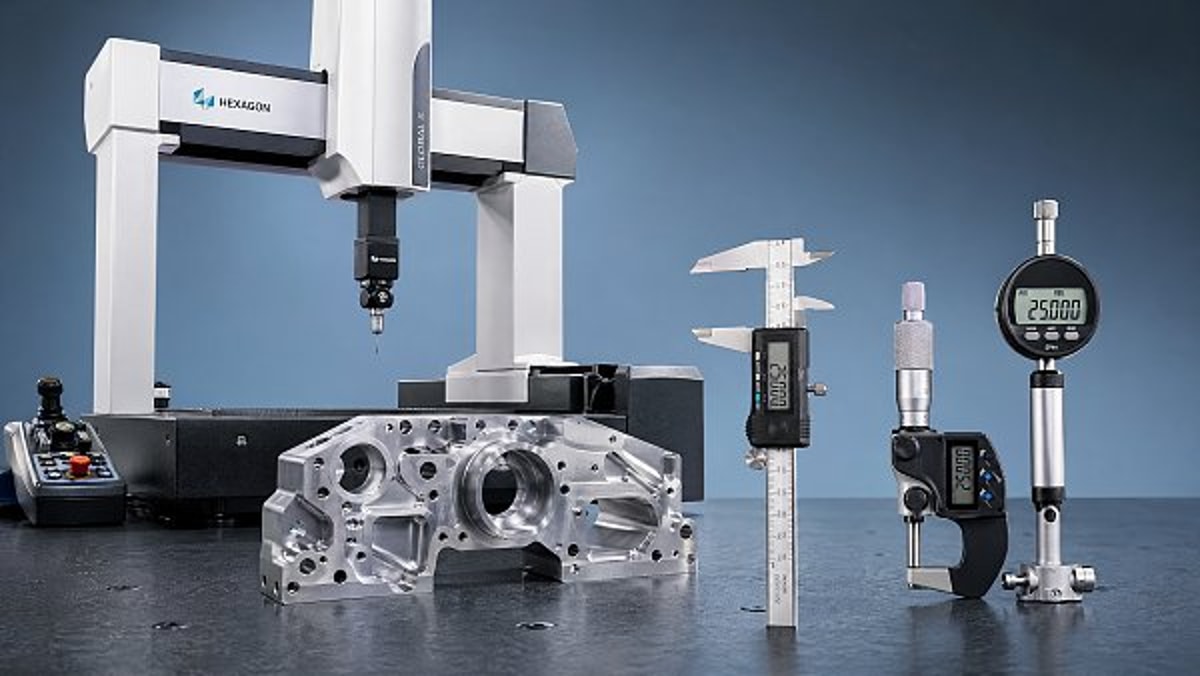
Quality and safety teams searching for “coordinate measuring machines” versus hand tools are usually not looking for a textbook definition. They want a practical answer to a pressure-filled question: which inspection method will reliably verify tight tolerances without creating bottlenecks, scrap, audit risk, or unnecessary capital expense. In most real production environments, the answer is not that one method replaces the other. It is that each tool belongs in a different part of the control plan.
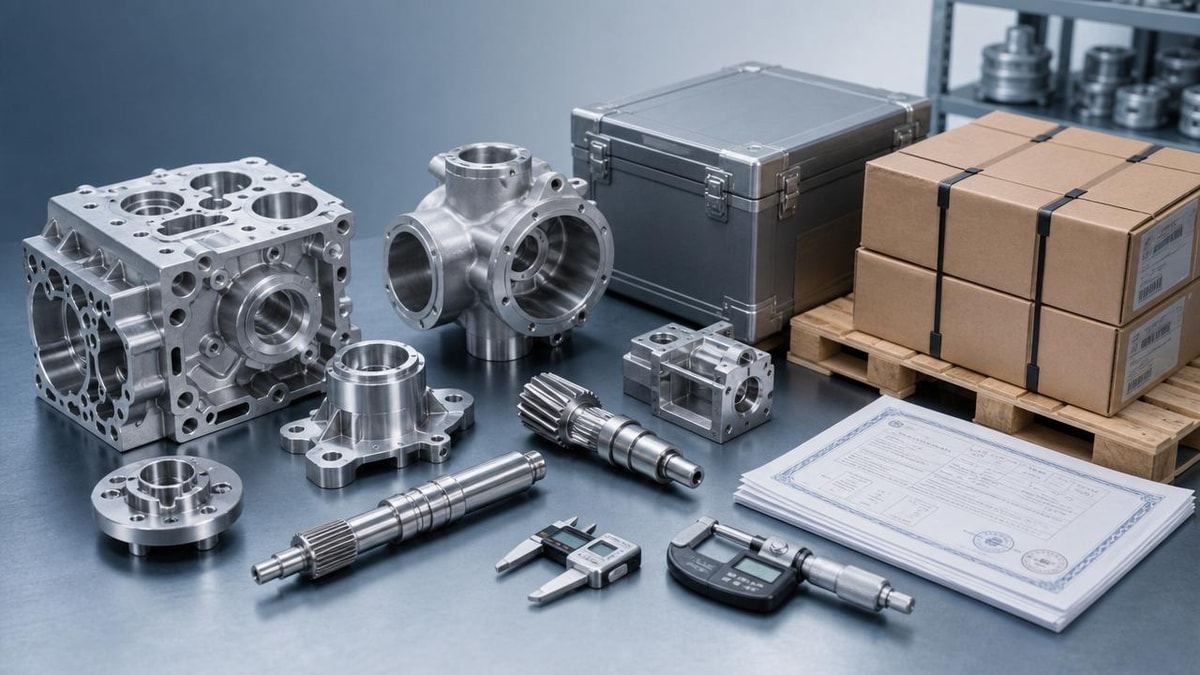
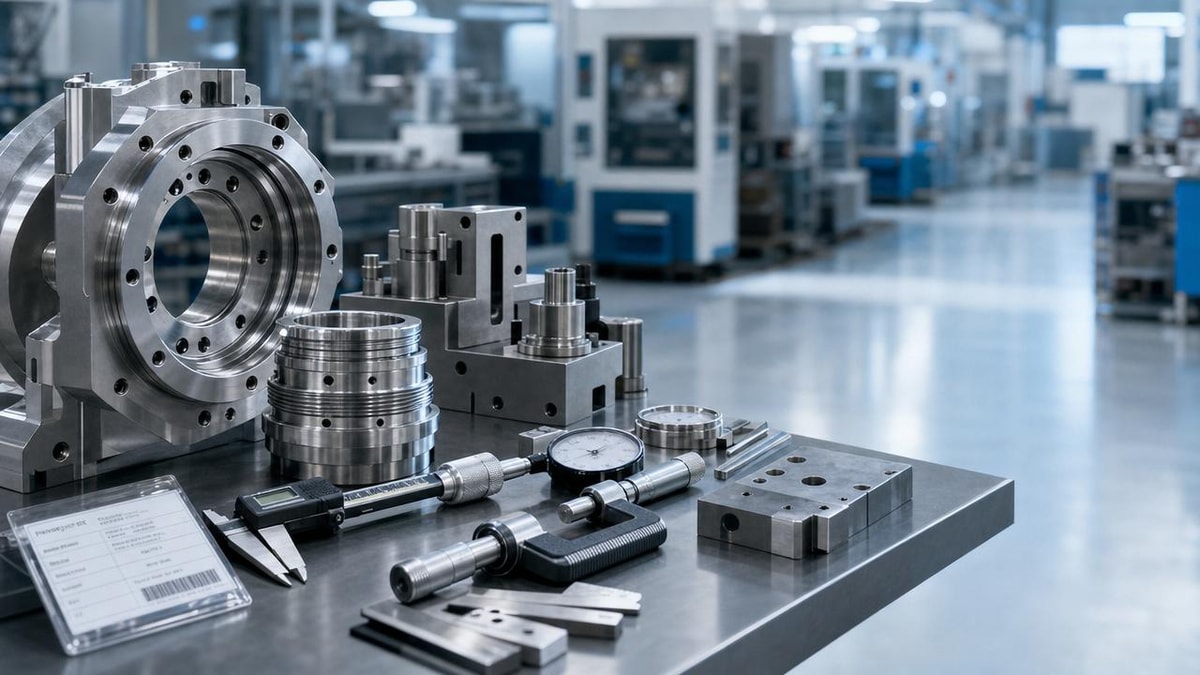
As a general rule, hand tools such as calipers, micrometers, bore gauges, height gauges, and indicator setups work well for routine dimensional checks, in-process verification, and features with accessible geometry and moderate tolerance demands. Coordinate measuring machines, by contrast, are typically the better option when tolerances become very tight, part geometry is complex, traceability requirements are strict, or measurement consistency between operators is essential for customer, regulatory, or internal quality assurance.
For quality control personnel, the real decision is not simply about accuracy on paper. It is about measurement capability in the context of actual production risk. A hand tool may appear cheaper and faster, but if it cannot produce repeatable results at the needed tolerance level, the hidden cost shows up later in escapes, disputes, rework, delays, and uncertainty. A coordinate measuring machine often requires a higher upfront investment, but it can sharply reduce ambiguity and strengthen confidence in inspection results when the margin for error is small.
What quality and safety teams are really trying to decide
Most target readers in quality control or safety oversight care about four things first: can the measurement method detect nonconformance reliably, can it stand up during audits or customer reviews, how much production time will it consume, and what level of operator skill is needed to keep results consistent. Those concerns matter more than broad claims about “high precision” or “advanced metrology.”
In practical terms, the search intent behind this topic is decision support. Readers want to know when hand tools are enough, when they become risky, and how coordinate measuring machines change the equation. They are often evaluating inspection methods for new parts, tighter customer specifications, first article inspection, PPAP documentation, complaint investigation, incoming quality control, or recurring dimensional failures that manual methods have not resolved cleanly.
Safety-minded readers may also have another layer of concern: if a critical dimension affects fit, sealing, load-bearing performance, electrical safety, or sterile assembly, then measurement error is not just a quality issue. It can become a field failure issue. That is why the right comparison is not convenience versus sophistication. It is process capability versus product risk.
Where hand tools still make the most sense
Hand tools remain indispensable in manufacturing because they are fast, flexible, relatively low cost, and highly effective when used in the right situations. On the shop floor, operators and inspectors can quickly verify outside diameters, thicknesses, depths, step heights, and other straightforward features without waiting for programming, fixture setup, or metrology lab scheduling. For high-volume production, that immediacy is valuable.
They are especially useful for in-process control, where the goal is to catch drift early and support operator adjustments in real time. If a machinist needs to confirm that a turned diameter is holding within a practical process window, a calibrated micrometer may be the most efficient tool available. The same is true when the tolerance is not extremely tight and the feature is physically easy to access and measure with a stable, well-understood method.
Hand tools also make financial sense for many inspection tasks because they require less initial investment and less specialized programming knowledge. In facilities with mixed product lines or smaller batch sizes, basic metrology tools can deliver strong value, provided the measurement uncertainty remains comfortably smaller than the tolerance band and the organization has a disciplined calibration and training program.
Where hand tools start to create risk
The weakness of hand tools appears when tolerance requirements tighten to the point that human technique, contact force, part positioning, temperature variation, or feature accessibility begin to influence the result too much. In those situations, it is possible to have a calibrated tool and still get unreliable inspection outcomes. The issue is no longer whether the tool is “good,” but whether the full measurement system is capable enough for the decision being made.
This is especially common with complex geometries, internal features, compound angles, true position requirements, profile tolerances, and parts that require relationship-based measurements rather than simple single-feature checks. A caliper may provide a quick dimension, but that does not mean it can verify geometric compliance in a way that satisfies customer engineering intent. Many quality problems begin when a convenient measurement is mistaken for a valid one.
Operator dependence is another major limitation. Even experienced inspectors can produce variation in alignment, reading, pressure, and setup, particularly over repeated checks or across shifts. If two trained people can measure the same part and disagree near the acceptance limit, the inspection method itself may be adding uncertainty. For tight tolerances, that uncertainty can lead to false rejects, false accepts, or ongoing disputes between production, quality, and customers.
Why coordinate measuring machines are often the safer choice for tight tolerances
Coordinate measuring machines are built to reduce uncertainty in situations where dimensional decisions must be more defensible. Their biggest advantage is not just nominal precision. It is their ability to measure complex features and spatial relationships in a controlled, repeatable, documented way. For parts with critical fits, assemblies, datum structures, and geometric dimensioning and tolerancing requirements, that capability is often decisive.
Unlike many manual methods, coordinate measuring machines can capture multiple points on surfaces, evaluate form and location against datums, and generate reports that show exactly how a part performs against specification. That creates a stronger foundation for first article inspections, customer submissions, root cause investigations, supplier qualification, and high-risk production launches. In regulated or highly competitive sectors, this level of traceable evidence can be a strategic quality asset.
They also reduce dependence on individual operator feel. While programming quality, fixturing, and measurement strategy still matter, a well-managed CMM process generally provides better repeatability and reproducibility than hand measurement for demanding applications. That consistency supports better containment decisions, more credible trend analysis, and fewer arguments over borderline results.
Accuracy alone is not the whole story: think in terms of measurement capability
A common mistake is to compare coordinate measuring machines and hand tools only by advertised resolution or nominal accuracy. That is too narrow. Quality teams should instead evaluate the total capability of the measurement process: repeatability, reproducibility, environmental sensitivity, fixturing stability, feature accessibility, reporting needs, and the ratio between measurement uncertainty and tolerance width.
For example, a hand micrometer may have excellent resolution, but if the part is thin-walled, warm from machining, difficult to hold consistently, or prone to elastic deformation under contact pressure, the real measurement capability can degrade. Conversely, a coordinate measuring machine with a controlled routine, appropriate probing strategy, and stable environment may deliver far more trustworthy results even if the cycle takes longer.
This is where measurement system analysis becomes essential. If a gage R&R study shows that manual measurement consumes too much of the tolerance or produces too much appraiser variation, that is a strong signal that the inspection method is misaligned with the tolerance demand. In such cases, moving critical features to a coordinate measuring machine is less a luxury than a corrective action.
Speed, throughput, and the hidden cost of the wrong inspection method
At first glance, hand tools seem faster. For a single simple feature, they usually are. But overall inspection efficiency depends on what must be measured, how often, by whom, and what happens when results are uncertain. If inspectors spend time repeating measurements, escalating disagreements, sorting suspect parts, or creating manual reports, the apparent speed advantage can disappear quickly.
Coordinate measuring machines can be slower at the point of first setup, especially when programming new parts. However, once routines are validated, they can support highly repeatable inspections with less interpretation and more complete data capture. For recurring products, this can shorten the total quality cycle by reducing reinspection, manual transcription, and non-value-added troubleshooting.
The hidden cost of choosing the wrong method often exceeds the visible cost of equipment. A supplier chargeback, delayed PPAP approval, assembly issue, customer complaint, or field return tied to dimensional uncertainty can easily outweigh the savings from avoiding automated metrology. Quality leaders should therefore assess not only inspection labor, but also the cost of poor measurement decisions.
Traceability and compliance: where CMMs gain a clear advantage
For companies facing customer audits, industry certification requirements, or strict internal quality systems, traceability matters almost as much as the measurement itself. Hand tools can support compliant inspection when calibration records, procedures, and documentation are controlled. But the reporting is often fragmented and more dependent on manual recordkeeping, which raises the risk of omission or inconsistency.
Coordinate measuring machines generally provide a stronger compliance framework because they can generate standardized digital reports, retain measurement programs, document feature-level results, and support revision-controlled inspection methods. This becomes particularly valuable when proving conformance on safety-related dimensions, comparing suspect lots, or responding to customer requests for objective dimensional evidence.
For quality and safety management, better traceability means faster investigations and stronger defensibility. If a nonconformance is found later, it is easier to determine whether the issue reflects process drift, setup error, supplier variation, or a flawed inspection approach. That level of visibility helps organizations move from reactive sorting to preventive quality control.
How to decide feature by feature, not tool by tool
The most effective inspection strategies rarely assign an entire part exclusively to hand tools or exclusively to a coordinate measuring machine. Instead, they classify features by criticality, geometry, tolerance tightness, inspection frequency, and risk. This allows organizations to reserve high-investment metrology resources for the dimensions that truly demand them while still using manual tools where they remain fully capable.
A practical framework is to ask five questions for each feature. First, how tight is the tolerance relative to expected measurement uncertainty? Second, is the feature accessible and stable enough for reliable manual measurement? Third, does the feature involve geometric relationships that require datum-based analysis? Fourth, is the result likely to be challenged by a customer or auditor? Fifth, what is the consequence if a bad part passes inspection?
If the answers point to high consequence, high complexity, or low manual repeatability, a coordinate measuring machine is usually the better choice. If the feature is simple, accessible, non-critical, and repeatedly measurable with low variation, hand tools remain appropriate. This hybrid approach often delivers the best combination of cost control, responsiveness, and confidence.
Implementation tips for quality teams making the transition
If your facility is considering greater use of coordinate measuring machines, start with the pain points, not the equipment brochure. Review scrap drivers, repeated dimensional disputes, customer complaints, and features that fail gage R&R with manual methods. Those areas usually provide the clearest business case for CMM adoption. Trying to justify the technology only on prestige or broad precision claims is less effective than tying it to measurable quality risk reduction.
It is also important to plan beyond acquisition. A coordinate measuring machine delivers value only when supported by qualified programmers, stable fixturing, controlled environmental conditions, validated routines, and a clear integration path into the quality workflow. Without those elements, even advanced equipment can underperform. Likewise, hand tools continue to require disciplined calibration, operator training, standardized technique, and regular review of measurement capability.
For many organizations, the smartest path is staged deployment. Use coordinate measuring machines for first article inspection, PPAPs, critical-to-quality features, supplier disputes, and root cause analysis first. Keep hand tools in place for routine in-process checks and simple characteristics. Over time, use data to refine which features should remain manual and which should shift to automated metrology.
Final judgment: choose the method that reduces uncertainty at the point of decision
When tolerances are tight, the right inspection method is the one that gives quality and safety teams enough confidence to make reliable release decisions. Hand tools remain highly valuable for fast, simple, and well-controlled measurements. But when complexity rises, tolerance bands shrink, or traceability becomes critical, coordinate measuring machines usually provide the stronger foundation for consistent, defensible inspection.
The key is to avoid treating this as a basic cost comparison. The better question is which method best protects product quality, compliance, and process stability for the features that matter most. In many operations, that means using hand tools for speed where risk is low and using coordinate measuring machines where uncertainty would otherwise become expensive.
For quality control professionals and safety managers, the most effective strategy is a risk-based, feature-level approach. If a measurement can influence compliance, assembly performance, customer acceptance, or safety outcomes, inspection confidence is not optional. In those cases, investing in the right metrology capability is not overengineering. It is sound quality management.
Get weekly intelligence in your inbox.
No noise. No sponsored content. Pure intelligence.
 May 03, 2026AI Boom Drives Data Center Power Demand, Liquid Cooling Gains UrgencyAI Boom Drives Data Center Power Demand, Liquid Cooling Gains Urgency
 May 03, 2026Low-Altitude Economy in China's 15th Five-Year Plan Boosts Warehouse Robotics ExportsLow-Altitude Economy in China's 15th Five-Year Plan Boosts Warehouse Robotics Exports
 May 03, 2026EU REACH Adds 5 Organotin Compounds to SVHC List for ElectronicsEU REACH Adds 5 Organotin Compounds to SVHC List for Electronics
 May 03, 2026Western Land-Sea Expressway Boosts Solar PV Exports to ASEANWestern Land-Sea Expressway Boosts Solar PV Exports to ASEAN
 May 03, 2026Southeast Asia Smart Home E-commerce Grows 27.4% Amid New Matter 1.3+ Certification RulesSoutheast Asia Smart Home E-commerce Grows 27.4% Amid New Matter 1.3+ Certification Rules
 May 03, 2026FDA Updates IVD Software Guidance: AI Diagnostic Tools Require Independent Algorithm ValidationFDA Updates IVD Software Guidance: AI Diagnostic Tools Require Independent Algorithm Validation
 May 03, 2026Global Methanol EV Ecosystem Alliance LaunchedGlobal Methanol EV Ecosystem Alliance Launched
 May 03, 2026Vietnam GDP Growth Forecast Raised to 7.2% for 2026Vietnam GDP Growth Forecast Raised to 7.2% for 2026
 May 03, 2026UAE Emerges as Global AI Hub, Driving Demand for AI-Quality Inspection SystemsUAE Emerges as Global AI Hub, Driving Demand for AI-Quality Inspection Systems
 May 03, 2026OFID $500M Funding for Côte d'Ivoire Energy ProjectsOFID $500M Funding for Côte d'Ivoire Energy Projects
 May 03, 20265 Axis Milling Machines for Automotive: Buy New or Retrofit?5 Axis Milling Machines for Automotive: Buy New or Retrofit?
 May 03, 2026What to Check Before Sourcing OEM Machined Parts from IndiaWhat to Check Before Sourcing OEM Machined Parts from India
 May 03, 2026Why Sheet Metal Bending Machine Price Varies So MuchWhy Sheet Metal Bending Machine Price Varies So Much
 May 03, 2026Plastic Injection Molding Process Guide for Common Defect ControlPlastic Injection Molding Process Guide for Common Defect Control
 May 03, 2026Smart Manufacturing Technology Trends Reshaping Factory UpgradesSmart Manufacturing Technology Trends Reshaping Factory Upgrades
 May 03, 2026Automotive Die Casting Parts and the Hidden Cost of PorosityAutomotive Die Casting Parts and the Hidden Cost of Porosity
 May 03, 2026Assembly Line Robots: Flexibility Can Matter More Than SpeedAssembly Line Robots: Flexibility Can Matter More Than Speed
 May 03, 2026Smart Manufacturing in Energy: Which Upgrades Pay Back FasterSmart Manufacturing in Energy: Which Upgrades Pay Back Faster
 May 03, 2026Why Robotics Integration Fails After a Successful DemoWhy Robotics Integration Fails After a Successful Demo
 May 03, 2026How to Spot a Reliable Precision Components ManufacturerHow to Spot a Reliable Precision Components Manufacturer
 May 03, 2026Sheet Metal Bending Machine Specifications That Affect AccuracySheet Metal Bending Machine Specifications That Affect Accuracy
 May 03, 2026Oil and Gas Fabrication: Where Material Mismatch Gets ExpensiveOil and Gas Fabrication: Where Material Mismatch Gets Expensive
 May 03, 2026Construction Fabrication Delays Often Start at the Drawing StageConstruction Fabrication Delays Often Start at the Drawing Stage
 May 03, 2026Industrial Robotics Maintenance Guide for Fewer Surprise StopsIndustrial Robotics Maintenance Guide for Fewer Surprise Stops
 May 03, 2026Smart Manufacturing Technology Benefits Beyond Labor SavingsSmart Manufacturing Technology Benefits Beyond Labor Savings
 May 03, 2026Defense Components Need More Than Tight TolerancesDefense Components Need More Than Tight Tolerances
 May 03, 2026How to Vet a Die Casting Parts Supplier in MexicoHow to Vet a Die Casting Parts Supplier in Mexico