The Accuracy Tradeoff Behind Portable Coordinate Measuring Machines
Portable coordinate measuring machines promise flexibility, speed, and lower inspection costs, but every mobility gain introduces an accuracy tradeoff that business evaluators cannot ignore. For procurement and operational decision-makers, understanding how coordinate measuring machines balance precision, usability, and deployment value is essential to selecting systems that truly support quality control, supplier performance, and long-term ROI.
Why Scenario Differences Matter More Than the Spec Sheet
For business evaluators, the most costly mistake is treating all coordinate measuring machines as interchangeable inspection tools. A portable arm, handheld optical system, or mobile probing setup may look attractive because it reduces fixture movement and brings measurement closer to production. Yet the acceptable error window in a supplier audit, a first-article inspection, and an aerospace maintenance task can differ by a factor of 5 to 20. The same portable system that performs well on a weldment or large casting may be a poor fit for tight-tolerance machined features.
The decision is rarely just “portable versus fixed.” It is really a question of where measurement happens, who performs it, how often it must be repeated, and what level of uncertainty the business can tolerate. In many factories, portable coordinate measuring machines are introduced to cut transport time by 30 to 60 minutes per part batch, speed nonconformance response, or support inspection of oversized assemblies that simply cannot be moved to a metrology room. Those advantages are real, but they only create value when matched to the right scenario.
A procurement director evaluating coordinate measuring machines should therefore compare not only nominal accuracy, but also environmental robustness, operator dependency, software workflow, traceability, and deployment cost over a 3- to 5-year period. In practical terms, a system that is slightly less accurate on paper may create more business value if it prevents production stoppages, shortens supplier qualification cycles, or enables in-process validation within a 15-minute response window.
The Main Business Variables Behind the Accuracy Tradeoff
Portable coordinate measuring machines gain speed and accessibility by reducing dependence on dedicated rooms, granite tables, and fixed structures. However, mobility introduces more variables: vibration, thermal drift, inconsistent part positioning, line-of-sight issues, and operator technique. These factors affect repeatability as much as the instrument’s published specification. For evaluators, the central question is not whether the machine is accurate in ideal conditions, but whether it remains reliable under actual operating conditions across 2 shifts, multiple users, and different part families.
- Tolerance range: parts with tolerances above ±0.10 mm usually allow more portability benefits than parts requiring ±0.01 mm class control.
- Part size: components above 1 meter often benefit more from portable inspection because relocation and fixturing costs rise sharply.
- Inspection frequency: high-mix, low-volume environments often value fast redeployment more than top-tier metrology-room precision.
- User profile: systems used by trained metrologists can tolerate more complexity than those assigned to production technicians.
In broad industrial operations, scenario fit often outweighs a narrow specification advantage. That is why buyers of coordinate measuring machines should map use cases before comparing vendors. A strong purchase decision starts with application ranking: which jobs require sub-0.03 mm confidence, which jobs prioritize portability, and which jobs need a hybrid workflow that combines shop-floor speed with lab-based verification.
Three High-Value Scenarios Where Portable Coordinate Measuring Machines Are Considered
Across advanced manufacturing, healthcare device production, smart electronics enclosures, green energy hardware, and logistics equipment, portable coordinate measuring machines usually appear in a limited set of recurring scenarios. The priority for business evaluators is to distinguish where mobility solves a real operational problem and where it simply adds convenience without delivering enough quality assurance value.
The table below compares three common scenarios in which coordinate measuring machines are evaluated. It helps procurement teams connect accuracy expectations to operational purpose instead of buying on headline claims alone.
This comparison shows that the role of coordinate measuring machines changes by scenario. In large-assembly inspection, portability is often a practical necessity. In production checks, it is a speed tool. In field service, it may be the only viable measurement method. The accuracy tradeoff should therefore be judged relative to the consequence of a wrong measurement: scrap, rework, supplier claims, delayed startup, or compliance risk.
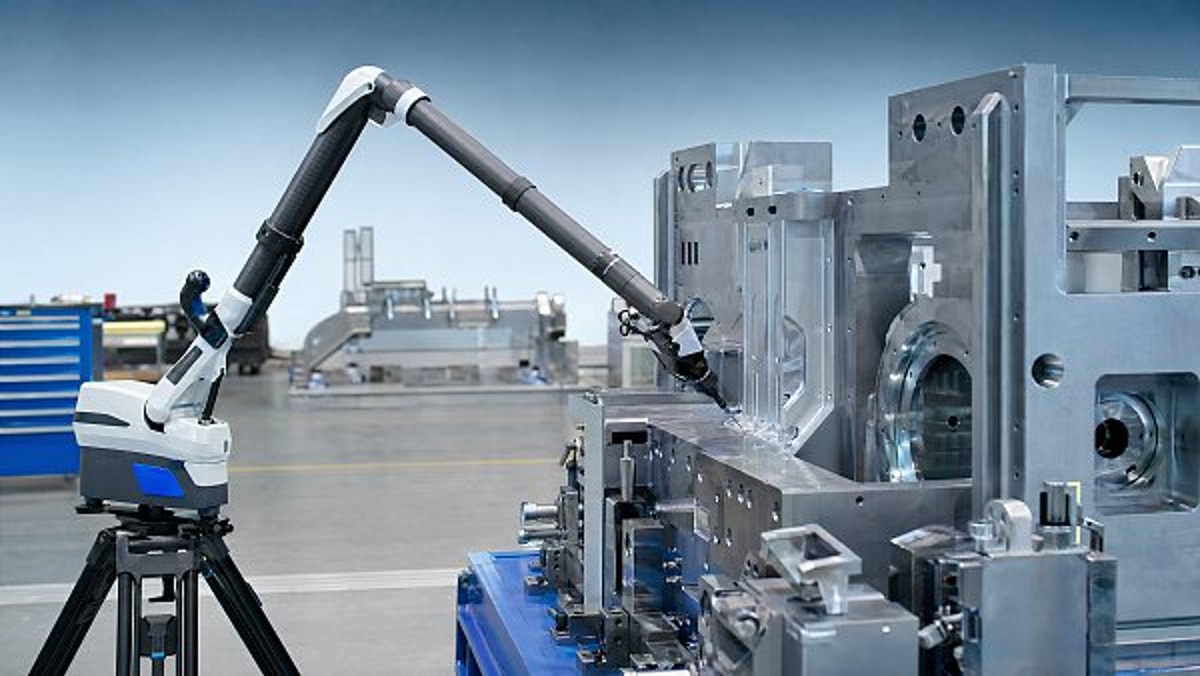
Scenario 1: Large Assemblies and Hard-to-Move Components
This is one of the strongest use cases for portable coordinate measuring machines. Manufacturers of frames, molded structures, tooling, battery housings, fabricated skids, and machine bases often deal with parts that are too large, too heavy, or too awkward to move into a traditional inspection room. In these environments, transporting a single assembly can require forklifts, lifting plans, and 20 to 45 minutes of non-value-added handling.
For business evaluators, the tradeoff is often favorable because the part itself introduces more variability than the machine. If the tolerance band on a large weldment is ±0.25 mm to ±1.00 mm across multiple features, the benefits of measuring in place may outweigh the precision advantage of a fixed CMM. Portable coordinate measuring machines also support quicker root-cause checks after welding, machining, or assembly corrections.
The caution point is volumetric performance. Accuracy on a short probe path is not the same as accuracy across a 2-meter envelope. Evaluators should ask how the system behaves near full reach, what artifacts or verification routines are recommended, and how often recalibration or compensation is needed in normal use.
What to verify before approval
- Whether measurement uncertainty remains acceptable at 70% to 100% of working volume.
- Whether the software can align irregular fabricated parts without extensive manual rework.
- Whether the machine can be validated on the shop floor at the start of each shift in under 10 minutes.
Scenario 2: Fast In-Process Inspection in High-Mix Manufacturing
In high-mix manufacturing, cycle speed often matters more than laboratory-grade accuracy on every feature. Shops producing diverse machined parts, custom enclosures, medical fixtures, electronics housings, or low-volume energy components may need to inspect several part variants per day. Waiting for metrology-room availability can delay setup approval, first-off checks, and deviation response by 1 to 2 hours.
Portable coordinate measuring machines are attractive here because they shorten decision loops. A technician can verify critical dimensions beside the machine tool, compare actual features against CAD data, and make offset corrections before a full batch drifts out of tolerance. In business terms, that can reduce scrap exposure and shorten the time between setup and stable production. For supply chain managers, it also improves supplier responsiveness when incoming parts require immediate go/no-go decisions.
However, this scenario is highly sensitive to operator dependence. If five technicians use the same system with inconsistent probing force, alignment strategy, or surface selection, repeatability can collapse even when the equipment itself is capable. Buyers of coordinate measuring machines should therefore treat training, guided workflows, and user permissions as core performance factors, not secondary software details.
How Requirements Change by User Type and Risk Level
Portable coordinate measuring machines are not evaluated the same way by a procurement team, a quality manager, and a production supervisor. The business case changes depending on whether the primary goal is supplier qualification, line-side control, reverse engineering support, or service inspection. A system that satisfies one stakeholder may disappoint another if requirements are not translated into measurable decision criteria at the start of the sourcing process.
A useful way to structure the evaluation is to classify needs by risk level. If a measurement result directly triggers product release, compliance documentation, or customer claims, the tolerance for uncertainty should be much lower. If the measurement serves as a screening step before final inspection, greater portability may be acceptable. This distinction helps organizations avoid overbuying for convenience-driven tasks and underbuying for quality-critical ones.
The table below translates common user profiles into practical selection priorities for coordinate measuring machines.
The interpretation is straightforward: coordinate measuring machines should be matched to the decision they support. If the machine is expected to replace final release metrology for tight-tolerance parts, the evaluation threshold should be high. If it is meant to accelerate triage, setup confirmation, or large-structure verification, portability can unlock significant operational value.
Scenario 3: Field Installation, Maintenance, and Supplier-Site Verification
A third scenario appears outside the factory or across distributed supply chains. Companies managing wind components, industrial systems, robotics installations, healthcare equipment frames, or outsourced production often need dimensional verification at supplier sites or customer facilities. Here, portable coordinate measuring machines become a strategic mobility tool rather than a pure production instrument.
The value proposition is strongest when the alternative is expensive travel back-and-forth, shipment of disputed parts, or delayed commissioning. A field-capable system can reduce issue-resolution cycles from several days to a same-day or next-day verification process. For procurement and supply chain teams, that means faster acceptance decisions, more credible supplier discussions, and better evidence when nonconformance costs must be assigned.
Still, this is where environmental limitations are most visible. Temperature swings, unstable floors, limited datum access, and reduced fixture options all affect performance. Portable coordinate measuring machines used in the field should be evaluated for setup speed, transport resilience, battery or power requirements, and verification routines that can be completed without specialized lab equipment.
Where Buyers Commonly Misjudge the Tradeoff
The most common purchasing error is comparing specification sheets without mapping measurement tasks. Many buyers focus on the smallest published accuracy number and ignore whether that figure applies under their actual workflow. Portable coordinate measuring machines can underperform if used on glossy surfaces, unstable fixtures, deep internal geometries, or thermally active parts that have not stabilized for even 15 to 30 minutes after machining.
A second error is underestimating workflow and training costs. The price of coordinate measuring machines is only part of the investment. Buyers should also consider software learning curves, fixture strategy, verification artifacts, operator certification, data export compatibility, and the time required to create repeatable inspection plans. In many cases, a cheaper portable unit becomes more expensive over 12 to 24 months if measurement results are inconsistent or accepted by only one expert user.
A third error is assuming one device can cover every scenario equally well. For mixed operations, the better answer may be a tiered inspection strategy: portable coordinate measuring machines for line-side screening and large-part checks, combined with fixed-room verification for high-risk dimensions or final release records. That hybrid approach often produces better ROI than forcing a single system to do everything.
A practical screening checklist for evaluators
- Define the narrowest tolerance you expect the portable system to control in routine use.
- Identify whether the machine will be used in a lab, on the shop floor, or at external sites.
- Estimate the number of operators, shifts, and part families involved within the first 6 to 12 months.
- Separate screening, process control, and final-release measurement requirements.
- Request a real-part demonstration using your own geometry, material finish, and inspection sequence.
This checklist keeps the decision grounded in application reality. It also helps align internal stakeholders before budget approval, reducing the risk of buying coordinate measuring machines that satisfy one department but fail broader operational needs.
How to Decide If Portable Coordinate Measuring Machines Fit Your Operation
For most business evaluators, the decision should come down to one principle: buy mobility when mobility solves a measurable business constraint. That constraint may be oversized parts, excessive transport time, supplier-site verification, or the need for faster in-process correction. If no such constraint exists, a portable solution may deliver convenience without enough return.
Portable coordinate measuring machines are typically a strong fit when your operation handles large structures, high-mix short runs, geographically distributed suppliers, or service-based measurement work. They require more caution when product tolerances are consistently tight, release documentation is highly regulated, or environmental control is poor and operator variation is high. In those cases, a hybrid measurement strategy often provides the best balance between speed and certainty.
For organizations evaluating investment across advanced manufacturing, green energy systems, smart electronics assemblies, healthcare technology hardware, or supply chain quality programs, the best next step is to validate fit through scenario-based review rather than generic product comparison. That means testing the machine against your own tolerance bands, throughput targets, training capacity, and supplier coordination needs.
Why work with TradeNexus Pro
TradeNexus Pro supports procurement leaders, supply chain managers, and enterprise decision-makers who need more than surface-level equipment summaries. We help businesses evaluate coordinate measuring machines in the context of real sourcing risk, inspection workflow, supplier performance, and long-term deployment value across globally connected industrial sectors.
If you are comparing coordinate measuring machines for a plant upgrade, supplier quality program, or cross-border sourcing strategy, contact us to discuss the points that matter most: parameter confirmation, scenario-based product selection, expected delivery timelines, workflow customization, inspection software compatibility, certification-related documentation expectations, sample evaluation planning, and quotation alignment.
A better measurement decision starts with a clearer business scenario. Share your application, tolerance range, part size, operator profile, and deployment goals, and we can help structure the next conversation around fit, risk, and practical ROI.
Get weekly intelligence in your inbox.
No noise. No sponsored content. Pure intelligence.
 May 03, 2026AI Boom Drives Data Center Power Demand, Liquid Cooling Gains UrgencyAI Boom Drives Data Center Power Demand, Liquid Cooling Gains Urgency
 May 03, 2026Low-Altitude Economy in China's 15th Five-Year Plan Boosts Warehouse Robotics ExportsLow-Altitude Economy in China's 15th Five-Year Plan Boosts Warehouse Robotics Exports
 May 03, 2026EU REACH Adds 5 Organotin Compounds to SVHC List for ElectronicsEU REACH Adds 5 Organotin Compounds to SVHC List for Electronics
 May 03, 2026Western Land-Sea Expressway Boosts Solar PV Exports to ASEANWestern Land-Sea Expressway Boosts Solar PV Exports to ASEAN
 May 03, 2026Southeast Asia Smart Home E-commerce Grows 27.4% Amid New Matter 1.3+ Certification RulesSoutheast Asia Smart Home E-commerce Grows 27.4% Amid New Matter 1.3+ Certification Rules
 May 03, 2026FDA Updates IVD Software Guidance: AI Diagnostic Tools Require Independent Algorithm ValidationFDA Updates IVD Software Guidance: AI Diagnostic Tools Require Independent Algorithm Validation
 May 03, 2026Global Methanol EV Ecosystem Alliance LaunchedGlobal Methanol EV Ecosystem Alliance Launched
 May 03, 2026Vietnam GDP Growth Forecast Raised to 7.2% for 2026Vietnam GDP Growth Forecast Raised to 7.2% for 2026
 May 03, 2026UAE Emerges as Global AI Hub, Driving Demand for AI-Quality Inspection SystemsUAE Emerges as Global AI Hub, Driving Demand for AI-Quality Inspection Systems
 May 03, 2026OFID $500M Funding for Côte d'Ivoire Energy ProjectsOFID $500M Funding for Côte d'Ivoire Energy Projects
 May 03, 20265 Axis Milling Machines for Automotive: Buy New or Retrofit?5 Axis Milling Machines for Automotive: Buy New or Retrofit?
 May 03, 2026What to Check Before Sourcing OEM Machined Parts from IndiaWhat to Check Before Sourcing OEM Machined Parts from India
 May 03, 2026Why Sheet Metal Bending Machine Price Varies So MuchWhy Sheet Metal Bending Machine Price Varies So Much
 May 03, 2026Plastic Injection Molding Process Guide for Common Defect ControlPlastic Injection Molding Process Guide for Common Defect Control
 May 03, 2026Smart Manufacturing Technology Trends Reshaping Factory UpgradesSmart Manufacturing Technology Trends Reshaping Factory Upgrades
 May 03, 2026Automotive Die Casting Parts and the Hidden Cost of PorosityAutomotive Die Casting Parts and the Hidden Cost of Porosity
 May 03, 2026Assembly Line Robots: Flexibility Can Matter More Than SpeedAssembly Line Robots: Flexibility Can Matter More Than Speed
 May 03, 2026Smart Manufacturing in Energy: Which Upgrades Pay Back FasterSmart Manufacturing in Energy: Which Upgrades Pay Back Faster
 May 03, 2026Why Robotics Integration Fails After a Successful DemoWhy Robotics Integration Fails After a Successful Demo
 May 03, 2026How to Spot a Reliable Precision Components ManufacturerHow to Spot a Reliable Precision Components Manufacturer
 May 03, 2026Sheet Metal Bending Machine Specifications That Affect AccuracySheet Metal Bending Machine Specifications That Affect Accuracy
 May 03, 2026Oil and Gas Fabrication: Where Material Mismatch Gets ExpensiveOil and Gas Fabrication: Where Material Mismatch Gets Expensive
 May 03, 2026Construction Fabrication Delays Often Start at the Drawing StageConstruction Fabrication Delays Often Start at the Drawing Stage
 May 03, 2026Industrial Robotics Maintenance Guide for Fewer Surprise StopsIndustrial Robotics Maintenance Guide for Fewer Surprise Stops
 May 03, 2026Smart Manufacturing Technology Benefits Beyond Labor SavingsSmart Manufacturing Technology Benefits Beyond Labor Savings
 May 03, 2026Defense Components Need More Than Tight TolerancesDefense Components Need More Than Tight Tolerances
 May 03, 2026How to Vet a Die Casting Parts Supplier in MexicoHow to Vet a Die Casting Parts Supplier in Mexico