What makes aerospace precision components hard to source well
Sourcing precision engineering components for aerospace is rarely straightforward. Buyers must balance ultra-tight tolerances, strict certification requirements, long qualification cycles, and volatile global supply risks—all while protecting cost, quality, and delivery performance. For procurement teams, understanding why these components are so difficult to source well is the first step toward building a more resilient and competitive supply strategy.
Why are precision engineering components for aerospace so difficult to source?
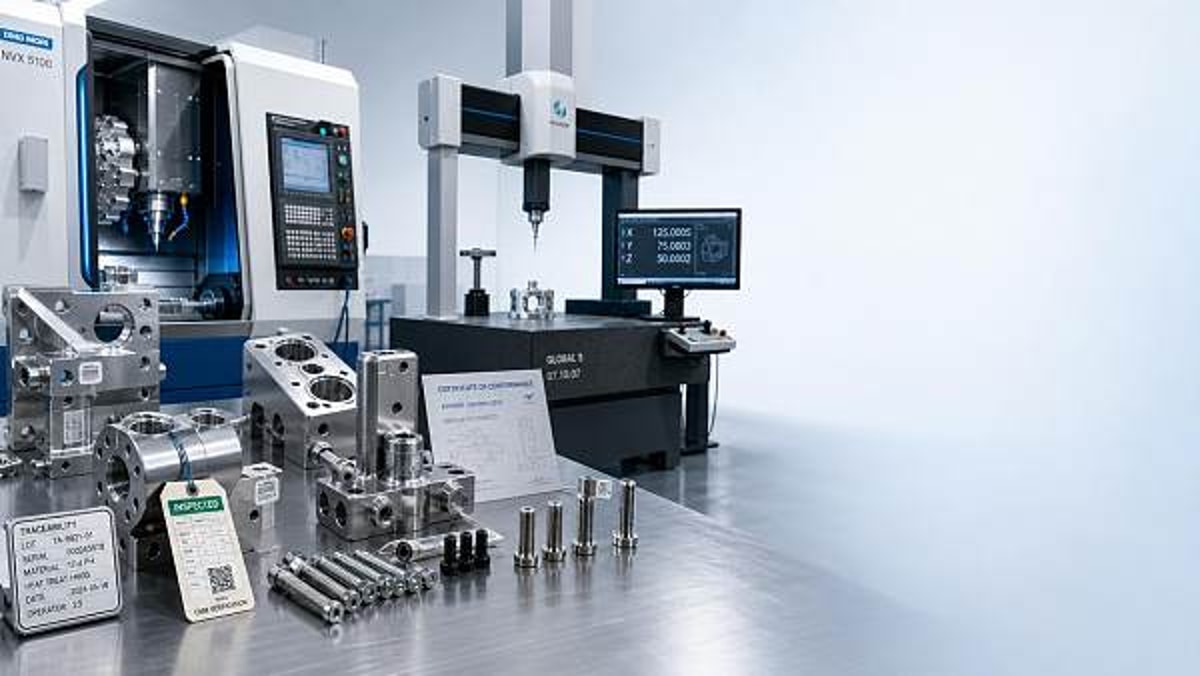
At first glance, aerospace sourcing looks similar to other industrial procurement categories: drawings are issued, suppliers quote, samples are approved, and production begins. In practice, precision engineering components for aerospace sit in one of the most demanding sourcing environments in modern manufacturing. The challenge is not just technical complexity. It is the interaction between engineering risk, regulatory oversight, production traceability, and global capacity constraints.
A single machined bracket, fastener, housing, valve part, or structural insert may appear small in value, yet it often carries outsized program risk. If a component fails dimensional inspection, material verification, surface treatment validation, or documentation review, the downstream impact can include production delays, requalification work, inventory holds, and even contractual penalties.
For procurement professionals, the sourcing problem is therefore multidimensional. It includes supplier capability, process maturity, special process control, export restrictions, raw material availability, and the supplier’s ability to maintain repeatable quality over long production horizons.
- Tolerance expectations are often measured in microns, leaving little room for machine variation, tool wear, or fixture inconsistency.
- Material requirements may involve aerospace-grade alloys, heat treatment routes, and lot traceability that common industrial suppliers cannot support.
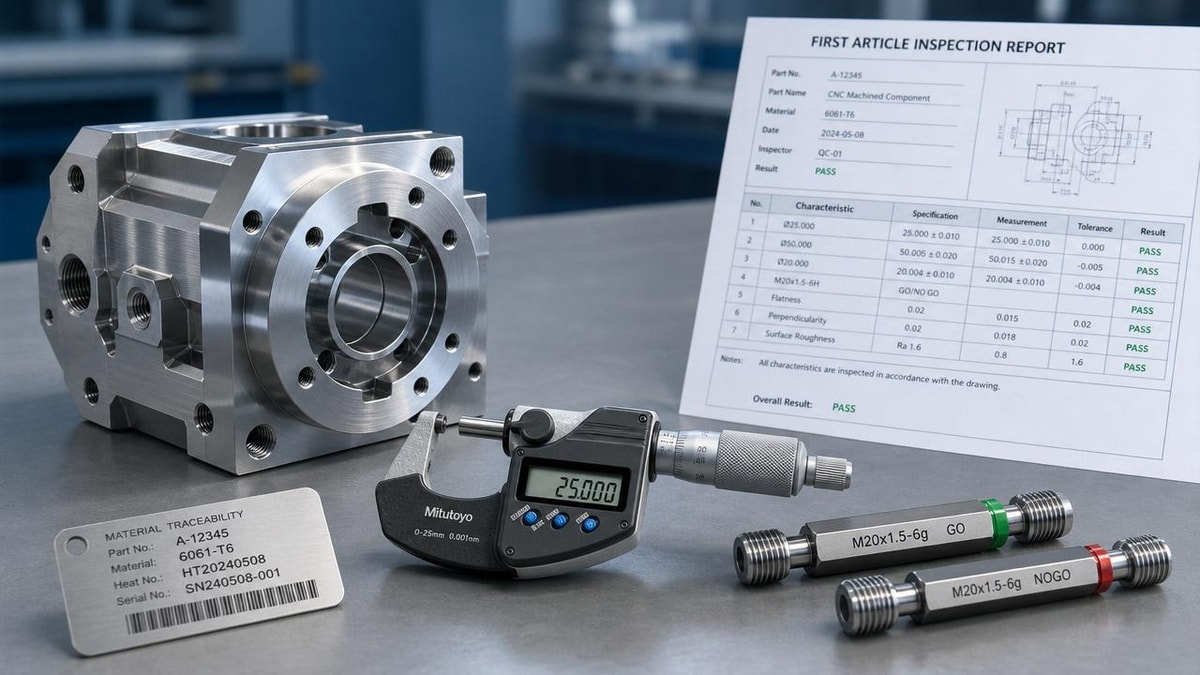
- Documentation is part of the product itself. Missing certifications, incomplete inspection reports, or unclear process records can invalidate an otherwise acceptable part.
- Qualification lead times are long, which makes switching suppliers expensive and operationally disruptive.
What makes aerospace requirements different from standard industrial sourcing?
Many buyers entering this category underestimate how different aerospace is from general machining procurement. In other sectors, a supplier may win business by offering an acceptable sample and a competitive unit price. In aerospace, repeatability, control plans, inspection discipline, and process evidence matter just as much as machining skill.
The table below highlights why precision engineering components for aerospace require a more rigorous sourcing approach than standard industrial precision parts.
The key takeaway is simple: aerospace procurement is not only about buying a part. It is about buying a controlled manufacturing system behind that part. Buyers who focus too heavily on piece price often discover hidden risk later in inspection failures, document gaps, or unstable supply continuity.
Which technical and compliance factors create the most sourcing risk?
When sourcing precision engineering components for aerospace, procurement teams need to assess more than machining capacity. The highest-risk issues usually emerge where technical performance and compliance obligations overlap.
Material integrity and lot traceability
Aerospace parts commonly rely on aluminum, titanium, stainless steel, nickel alloys, or specialty materials with strict composition and performance expectations. A supplier may machine accurately and still fail approval if material origin, heat lot records, or test certificates do not match the specification stack.
Process capability and special processing control
The machining step is only part of the value chain. Heat treatment, anodizing, passivation, plating, shot peening, grinding, and non-destructive testing can all affect final conformance. Weak control at any one stage can compromise the component, even if dimensions were initially correct.
Inspection methodology
Precision aerospace components may require CMM reports, surface roughness checks, hardness verification, concentricity analysis, and first article inspection packages. A capable supplier must not only inspect parts, but also prove that measurement systems are calibrated, repeatable, and appropriate for the drawing requirements.
Certification and quality system discipline
Depending on program requirements, buyers may look for quality management systems aligned with aerospace expectations, such as AS9100-related practices, as well as documented handling of nonconformance, corrective actions, and change control. Even when a specific certificate is not mandatory, the operational discipline behind it still matters.
- Check whether raw material certificates can be linked directly to each shipment and part batch.
- Confirm whether special processes are performed in-house or outsourced, and how subcontractor approvals are managed.
- Ask for sample first article documentation before placing a high-value production order.
- Review engineering change communication procedures to avoid silent process drift during long contracts.
How should procurement teams evaluate suppliers beyond price?
Price pressure is real, especially for procurement teams balancing annual savings targets with supply assurance. Yet the lowest quote for precision engineering components for aerospace can become the most expensive option when hidden risk is considered. A practical supplier evaluation model should combine commercial, technical, quality, and resilience criteria.
The evaluation table below can help buyers compare suppliers using decision factors that better reflect total procurement risk.
A strong supplier scorecard should assign meaningful weight to documentation discipline and repeatability, not just quote competitiveness. That is especially important in aerospace programs where part failure costs far exceed the value of the component itself.
What procurement mistakes commonly delay aerospace component programs?
Even experienced sourcing teams can run into avoidable delays when buying aerospace parts. The most common problems usually begin early, at RFQ or supplier onboarding stage, when assumptions are left untested.
Mistake 1: Treating the drawing as the full requirement
A drawing alone may not capture packaging rules, documentation deliverables, source inspection needs, approved process routes, or customer-specific clauses. Procurement should always confirm the full technical data package before quote comparison.
Mistake 2: Approving a supplier on prototype performance only
A supplier that can produce ten acceptable prototype pieces may not be ready for repeatable monthly production. Buyers should assess capacity planning, tool management, operator skill, and process stability before scaling.
Mistake 3: Ignoring subcontractor dependency
Many delays occur outside the machining cell, especially in finishing and testing stages. If the primary supplier relies on external providers for key processes, procurement needs visibility into those lead times and controls.
Mistake 4: Chasing short-term savings without lifecycle logic
Switching to a lower-cost supplier can make sense, but not when requalification cost, longer transport routes, and document risk erase the savings. In aerospace, total landed risk often matters more than nominal unit price.
- Build RFQs that include documentation, inspection, special process, and packaging expectations.
- Separate prototype approval from production readiness review.
- Map every outsourced process that can extend lead time or create compliance exposure.
- Use total cost of ownership models for sourcing decisions involving critical flight-related components.
How can buyers build a stronger sourcing strategy for precision engineering components for aerospace?
A better sourcing strategy starts with recognizing that aerospace procurement is a long-game category. The goal is not simply to find a supplier that can make the part once. It is to build a supply base that can support engineering change, sustained quality, forecast shifts, and compliance continuity over time.
Use a phased qualification model
Rather than moving directly from RFQ to full award, buyers should structure qualification in phases: technical screening, pilot build, process verification, documentation review, and controlled volume ramp-up. This reduces the chance of discovering major weaknesses after contract placement.
Maintain dual-source visibility where practical
Not every part can support immediate dual sourcing, but procurement should still maintain market intelligence on backup capacity, alternate regions, and second-source feasibility. This is particularly important during material shortages or trade disruptions.
Align engineering and procurement earlier
Many sourcing problems come from late communication between engineering, quality, and purchasing teams. Early alignment on tolerances, inspection methods, acceptable substitutes, and certification expectations can shorten sourcing cycles and prevent rework.
For enterprise buyers, intelligence platforms such as TradeNexus Pro help strengthen this process by connecting procurement decisions with broader supply chain visibility. That includes tracking sector capacity trends, identifying supplier risk patterns across advanced manufacturing networks, and comparing sourcing options with more context than a standalone quote sheet can provide.
What should buyers ask before placing an order?
The right pre-award questions can dramatically improve outcomes when purchasing precision engineering components for aerospace. Buyers do not need hundreds of questions, but they do need the right ones.
- Can the supplier provide recent examples of parts with similar material, complexity, and tolerance profile?
- Which processes are performed internally, and which are outsourced to approved partners?
- What inspection plan will be used for first article and repeat production lots?
- How are raw material certificates, process records, and shipment traceability linked?
- What are the real lead-time drivers: machining time, material procurement, finishing, testing, or queue congestion?
- How are engineering revisions controlled, and what happens to WIP if a drawing update is released mid-cycle?
These questions help procurement move from reactive buying to controlled sourcing. They also create better internal alignment when stakeholders ask why one supplier should be preferred over another.
FAQ: what do procurement teams most often ask?
How long do precision engineering components for aerospace usually take to source?
Lead time varies by material, geometry, qualification status, and special processing needs. Simple repeat parts may move faster, while new components requiring first article approval, complex finishing, or hard-to-source alloys can take significantly longer. Buyers should separate quoted machining time from total order cycle time.
Is certification always more important than machining price?
Not always in isolation, but certification discipline and traceability often determine whether parts can be accepted, audited, and used without delay. A lower-priced supplier with weak documentation can create a higher total cost than a slightly more expensive supplier with reliable release packages.
Can buyers reduce cost without increasing supply risk?
Yes, but savings usually come from better demand planning, design-for-manufacturability review, packaging optimization, lot-sizing strategy, and early supplier collaboration—not from price pressure alone. Cost reduction in aerospace works best when engineering and procurement act together.
What is the biggest hidden risk in sourcing aerospace precision parts?
One of the biggest hidden risks is assuming that a capable machine shop is automatically a capable aerospace supplier. Without strong traceability, process control, and documentation discipline, technical capability alone is not enough for consistent aerospace release.
Why choose us for market insight and sourcing support?
TradeNexus Pro supports procurement teams that need more than a supplier list. In categories such as precision engineering components for aerospace, buyers need decision-grade intelligence: where supply is tightening, which capability clusters are expanding, how lead-time risk is shifting, and what supplier signals deserve closer scrutiny.
Our focus on advanced manufacturing and strategic B2B networks helps enterprise buyers evaluate sourcing choices with a broader lens. That includes supplier positioning, supply chain exposure, capability benchmarking, and market context that can improve RFQ quality and supplier selection discipline.
- Need help confirming technical sourcing criteria before sending an RFQ? We can help structure evaluation dimensions.
- Comparing suppliers for delivery reliability, documentation capability, or special-process exposure? We can support a more informed shortlist.
- Planning around lead-time volatility, alternate sourcing regions, or qualification risk? We can help frame the market picture.
- Need guidance on parameter confirmation, component selection, certification expectations, sample support, custom supply strategies, or quotation discussions? Those are exactly the conversations procurement teams should have early.
If your team is reviewing aerospace sourcing options, preparing a new supplier qualification path, or trying to reduce risk in a critical component category, contact TradeNexus Pro to discuss sourcing benchmarks, supplier screening logic, delivery cycle concerns, documentation requirements, and fit-for-purpose procurement strategy.
Get weekly intelligence in your inbox.
No noise. No sponsored content. Pure intelligence.
 May 04, 2026FDA AI Diagnostic Software Guidance: Continuous Validation for Overseas FirmsFDA AI Diagnostic Software Guidance: Continuous Validation for Overseas Firms
 May 04, 2026MIIT Launches Export Compliance Support for Warehouse RoboticsMIIT Launches Export Compliance Support for Warehouse Robotics
 May 04, 2026India BIS Mandates ISI Certification for Smart Home Devices from July 2026India BIS Mandates ISI Certification for Smart Home Devices from July 2026
 May 04, 2026Global Shipping Alliance Raises Heavy-Lift Surcharges from May 2026Global Shipping Alliance Raises Heavy-Lift Surcharges from May 2026
 May 04, 2026GCC EV Charging Certification Unified: 35% Cost Cut for Chinese ExportersGCC EV Charging Certification Unified: 35% Cost Cut for Chinese Exporters
 May 04, 2026TÜV Rheinland Updates IoT Security Standard with AI Voice Data AnonymizationTÜV Rheinland Updates IoT Security Standard with AI Voice Data Anonymization
 May 04, 2026Yangshan Port Launches Green Energy Equipment Express LaneYangshan Port Launches Green Energy Equipment Express Lane
 May 04, 2026Vietnam Enforces Local IoT Certification for Smart Home Devices from May 2026Vietnam Enforces Local IoT Certification for Smart Home Devices from May 2026
 May 04, 2026US CBP Launches Battery Cargo Inspection: ESS Export Delays to 7–12 DaysUS CBP Launches Battery Cargo Inspection: ESS Export Delays to 7–12 Days
 May 04, 2026EU SVHC Update Effective May 1, 2026: Impact on Electronic Components ExportsEU SVHC Update Effective May 1, 2026: Impact on Electronic Components Exports
 May 04, 2026Portable power stations: what matters more than wattage on paperPortable power stations: what matters more than wattage on paper
 May 04, 2026Automotive injection molding machines and the scrap rate problemAutomotive injection molding machines and the scrap rate problem
 May 04, 2026Smart thermostats save energy only when setup is done rightSmart thermostats save energy only when setup is done right
 May 04, 2026Why TWS earbuds sound great in ads but not on callsWhy TWS earbuds sound great in ads but not on calls
 May 04, 2026Industrial robotics for material handling: where downtime startsIndustrial robotics for material handling: where downtime starts
 May 04, 2026LiFePO4 battery lifespan drops faster under these conditionsLiFePO4 battery lifespan drops faster under these conditions
 May 04, 2026Solar grid systems: when storage changes the project mathSolar grid systems: when storage changes the project math
 May 04, 2026Smart manufacturing for pharma fails when data stays isolatedSmart manufacturing for pharma fails when data stays isolated
 May 04, 2026Wearable technology trends that are finally useful in 2026Wearable technology trends that are finally useful in 2026
 May 04, 2026Bluetooth speakers: why battery life claims often miss real useBluetooth speakers: why battery life claims often miss real use
 May 04, 2026Home automation systems that solve everyday annoyances firstHome automation systems that solve everyday annoyances first
 May 04, 2026Solar street lights that underperform after the first rainy seasonSolar street lights that underperform after the first rainy season
 May 04, 2026Why sheet metal bending services in Canada cost more than expectedWhy sheet metal bending services in Canada cost more than expected
 May 04, 2026Factory automation systems for electronics and the ROI gapFactory automation systems for electronics and the ROI gap
 May 04, 2026OEM machined parts supplier Vietnam: quality checks that matterOEM machined parts supplier Vietnam: quality checks that matter
 May 04, 2026What to check before choosing a 5 axis machine for defenseWhat to check before choosing a 5 axis machine for defense
 May 04, 2026Smart grid solutions that fix peak load without major rebuildsSmart grid solutions that fix peak load without major rebuilds