What to Check Before Switching to an ISO 9001 Machining Shop
Before moving critical parts to an iso 9001 certified machining partner, buyers should look beyond the certificate itself. Audit process controls, material traceability, inspection capability, lead-time stability, and communication discipline to avoid costly disruptions. A smart switch starts with verifying whether the shop can consistently meet your quality, compliance, and supply chain expectations.
Why the Certificate Alone Is Not Enough for Procurement Teams

For procurement professionals, switching suppliers is rarely a paperwork exercise. An iso 9001 certified machining shop may have a documented quality management system, but that does not automatically confirm fit for your tolerances, batch sizes, inspection needs, or risk profile. The real question is whether the supplier can repeat the same result across 10 parts, 1,000 parts, and multiple delivery windows without hidden variation.
In cross-sector sourcing, especially across advanced manufacturing, green energy, smart electronics, healthcare technology, and supply chain-driven OEM networks, supplier failure often shows up in delays, non-conforming parts, weak corrective action, or poor change control. Buyers usually discover the issue after the transition, when a missed shipment or rejected lot starts affecting production, field service, or customer commitments.
That is why the evaluation of an iso 9001 certified machining supplier should include at least 5 core dimensions: process discipline, metrology capability, traceability, delivery reliability, and communication responsiveness. A strong procurement review also checks whether the certification scope actually covers the machining processes you intend to outsource, such as CNC milling, turning, secondary finishing, or assembly support.
At TradeNexus Pro, supply-side intelligence is treated as a decision support function, not a directory listing. Buyers comparing a current source and a proposed iso 9001 certified machining partner need structured evaluation criteria, not sales language. That approach reduces switching risk and helps teams align sourcing decisions with quality, continuity, and total cost expectations.
What ISO 9001 usually indicates, and what it does not
- It usually indicates documented procedures, internal audits, nonconformance handling, and management review processes.
- It does not by itself guarantee aerospace-grade validation, medical device compliance, or ultra-tight process capability.
- It does not confirm that the supplier has the right machines, gauges, or staff for your material family, tolerance stack, or annual volume.
- It should be treated as a baseline signal, then verified through operational evidence gathered over 3 stages: pre-qualification, audit, and pilot production.
What to Audit Before Switching to an iso 9001 certified machining Supplier
A practical supplier audit should focus on execution, not only documents. Buyers often need to confirm whether the shop can hold tolerance, preserve material identity, and respond quickly when specifications change. In many industrial sourcing programs, the most useful audit happens in 4 layers: quotation review, process audit, sample validation, and live order monitoring during the first 30–90 days.
Start with process control. Ask how routers, setup sheets, work instructions, and revision control are managed at the machine level. If an iso 9001 certified machining supplier cannot clearly explain how operators receive current drawings and how out-of-date documents are blocked, the certification may be formal but not operationally strong.
Then review traceability. This matters when you source stainless steel, aluminum grades, engineering plastics, or specialty alloys used in regulated or performance-sensitive assemblies. Material heat numbers, mill test reports, and lot segregation should remain visible from receiving through machining, inspection, packing, and shipment. In mixed-part environments, weak traceability can create quality disputes that are difficult to resolve later.
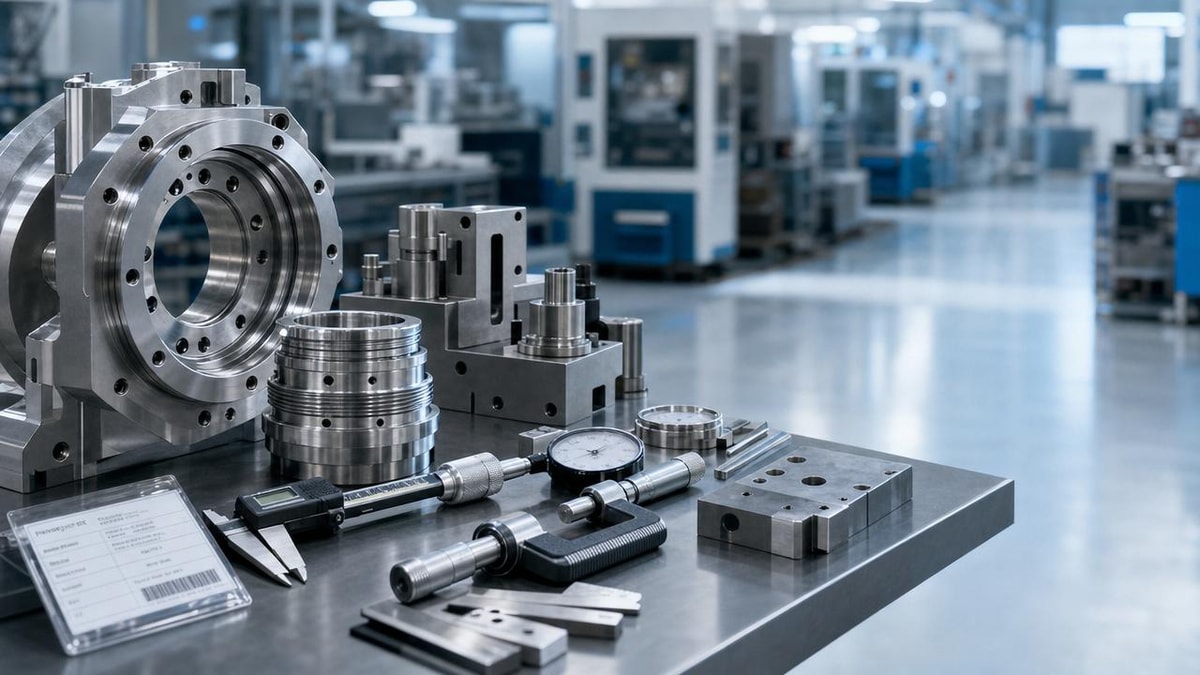
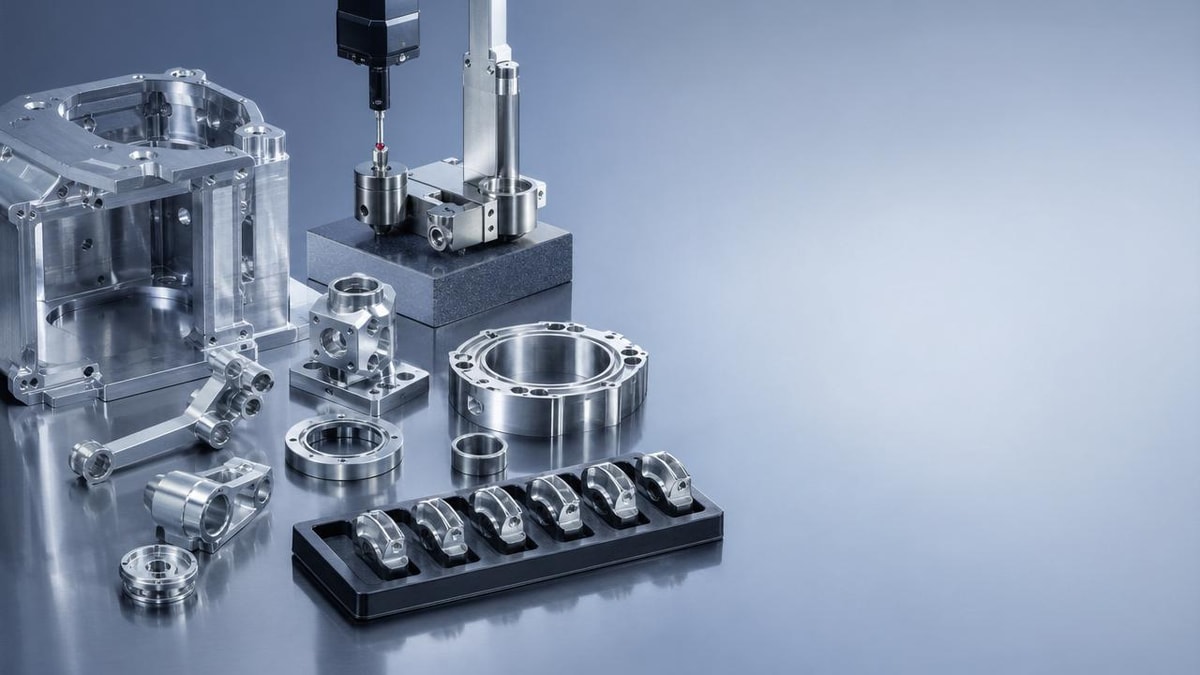
Inspection capability is another decisive factor. A supplier may be certified, yet still depend on basic handheld tools for features that require CMM verification, surface measurement, thread checking, or first article discipline. For buyers, the question is simple: does the metrology setup match the drawing complexity and the acceptance risk of the part family?
5 high-priority checks for procurement approval
The table below helps procurement teams compare an iso 9001 certified machining candidate against common sourcing requirements. It is especially useful when your current supplier already performs adequately and the switch must be justified by risk reduction, resilience, cost, or lead-time improvement.
A qualified iso 9001 certified machining source should show evidence in each area, not just verbal assurance. During review, ask for recent examples from the last 6–12 months, such as a controlled revision change, a lot-trace investigation, or a corrective action closed after a customer complaint. Real records usually reveal maturity faster than presentations do.
Questions buyers should ask during the audit
- How are first article inspections handled for new parts, revised drawings, or tooling changes?
- Which dimensions are measured 100%, which are sampled, and how is the sampling plan defined?
- What is the typical lead time for prototype orders versus repeat production orders, such as 7–15 days for simple parts and 2–4 weeks for complex multi-operation work?
- Which outside processes are subcontracted, such as plating, anodizing, heat treatment, or passivation, and how are they controlled?
How to Compare Your Current Shop with a New iso 9001 certified machining Option
Switching suppliers only makes sense when the business case is clear. Many buyers focus first on quoted price, but in machining procurement, total landed risk often matters more than a small unit-price difference. If a new iso 9001 certified machining supplier offers a 3% lower piece price but introduces longer qualification time, unstable packaging, or inconsistent communication, the transition cost can erase the expected savings.
A structured comparison should include commercial, technical, and operational criteria. That means evaluating not just machine capability but also order accuracy, revision responsiveness, PPAP or first article readiness where applicable, and whether the supplier can support low-volume launches before ramping to higher repeat demand. In diversified industrial sectors, this flexibility often matters more than brochure capacity.
Procurement teams should also compare the burden transferred to internal staff. Some suppliers require frequent follow-up on expediting, quality clarification, and documentation recovery. Others maintain cleaner quote packages, faster engineering feedback, and more consistent status updates every 48–72 hours during critical orders. The second supplier may not be cheapest on paper, but is often cheaper to manage.
The decision framework below can help cross-functional teams align sourcing, quality, and operations before switching to a new iso 9001 certified machining source.
Side-by-side decision table for supplier switching
Use this comparison format when evaluating a current shop against a prospective iso 9001 certified machining supplier. It creates a common scorecard for procurement, supplier quality, and engineering review.
The key takeaway is not that a new iso 9001 certified machining supplier is better or worse by default. It is that the switch should be justified by measurable improvements in at least 3 areas, such as lead-time consistency, inspection confidence, and communication discipline. Without that, the change may introduce operational noise rather than value.
A practical 4-step transition path
- Pre-qualification: review scope, processes, quality documents, and reference part families.
- Pilot order: place a small batch or first article run to verify machining, inspection, and packaging output.
- Controlled ramp: move 10%–30% of volume first, monitor OTD, NCRs, and responsiveness.
- Full approval: expand only after 2–3 stable delivery cycles and documented corrective closure where needed.
Which Capabilities Matter Most by Industry and Part Type?
Not every buyer needs the same depth of control from an iso 9001 certified machining supplier. The right evaluation depends on part criticality, application environment, and downstream risk. A bracket for green energy equipment, a heat sink for smart electronics, and a housing used near healthcare technology assemblies may all be machined parts, yet their acceptance criteria and documentation expectations differ significantly.
For advanced manufacturing programs, tolerance stability, fixture repeatability, and revision responsiveness are often top priorities. For green energy projects, buyers may place greater emphasis on corrosion-resistant finishes, material certification, and outdoor-service durability. In smart electronics, cosmetic control, burr management, and thermal interface flatness may become more important, especially in compact assemblies.
Where products touch regulated supply chains, even indirectly, traceability discipline and document retention become more valuable. Procurement teams should therefore map supplier capability to the real failure mode of the part, not just to the drawing title. An iso 9001 certified machining provider that excels in general industrial components may still be a weak fit for precision enclosures, fluid-contact parts, or assemblies requiring tighter inspection records.
A useful way to screen fit is to classify sourced parts into 3 groups: standard non-critical components, function-critical precision components, and compliance-sensitive components. Each group justifies a different audit depth and onboarding pace.
Capability focus by sourcing scenario
- Low-risk standard parts: Prioritize cost control, repeat lead time, packaging accuracy, and basic incoming inspection alignment.
- Precision functional parts: Prioritize machine capability, setup consistency, CMM use, surface finish control, and first article reporting.
- Compliance-sensitive parts: Prioritize traceability retention, subcontractor control, certificate management, and deviation approval discipline.
Typical signs of a better operational fit
A stronger iso 9001 certified machining supplier usually asks better questions early. They will clarify tolerances, datum intent, finish expectations, and packaging constraints before production begins. They may also flag dimensions that are hard to hold economically, suggest alternate stock sizes, or propose process sequencing improvements. That behavior often indicates a healthier partnership than a fast quote with no technical feedback.
Buyers should also watch for process transparency. Can the supplier explain cycle bottlenecks, fixture dependencies, or outside processing windows? Can they distinguish prototype timing from stable production timing? In many programs, suppliers that communicate constraints clearly are more reliable than those promising compressed schedules without explaining how they will achieve them.
Common Mistakes, FAQs, and the Next Step for Buyers
The most common sourcing mistake is assuming that an iso 9001 certified machining shop is automatically interchangeable with another certified shop. In practice, differences in equipment, staff experience, gauge discipline, subcontractor management, and production planning can create very different results. Another frequent mistake is switching too much volume too early, before quality data and delivery behavior are stable.
A second issue is incomplete quote comparison. Buyers sometimes compare only unit price while overlooking tooling charges, inspection reporting, packaging method, finish routing, and freight exposure. A third issue is weak launch governance. If there is no defined owner for drawing release, sample approval, and first 3 shipments, even a capable iso 9001 certified machining supplier can struggle during onboarding.
Below are practical FAQ-style answers that procurement teams often need before they move work to a new source. These questions also help improve internal alignment between sourcing, engineering, quality, and operations.
How long should supplier qualification take?
For straightforward machined parts with standard materials and limited secondary processing, qualification may take 2–4 weeks if documents are complete and first samples pass quickly. For complex parts with finishing, assemblies, or tighter verification requirements, 4–8 weeks is more realistic. The timing depends less on certification status and more on drawing clarity, sample success, and approval workflow.
What documents should buyers request from an iso 9001 certified machining supplier?
At minimum, request the certificate and scope, sample inspection records, calibration control evidence, material certification handling method, and nonconformance or corrective action format. Depending on part criticality, you may also ask for first article reports, process flow summaries, subcontractor control methods, and packaging standards. The key is relevance to your part family rather than document volume.
When is dual sourcing smarter than a full switch?
Dual sourcing is often smarter when annual demand is volatile, lead-time risk is high, or your current supplier holds essential tribal knowledge. It is also useful when the new iso 9001 certified machining source has strong technical promise but limited history with your part type. Running parallel supply for 1–2 quarters can reduce disruption while giving procurement time to compare actual delivery and defect performance.
What should trigger a no-go decision?
Pause the switch if the supplier cannot show revision control discipline, material traceability, suitable inspection capability, or realistic lead-time planning. A no-go is also justified when quote assumptions remain unclear after technical review, or when pilot samples expose repeatability concerns that the supplier cannot explain with a credible corrective plan.
Why work with TradeNexus Pro before making the switch?
TradeNexus Pro supports procurement teams that need deeper market visibility than supplier listings can provide. Across advanced manufacturing, green energy, smart electronics, healthcare technology, and supply chain SaaS-driven sourcing environments, TNP helps decision-makers evaluate supplier readiness, compare risk signals, and frame sourcing choices in a broader market context. That is especially useful when you are validating a new iso 9001 certified machining source for parts that affect continuity, compliance, or multi-region supply planning.
If your team is assessing a supplier switch, contact TradeNexus Pro for support on supplier comparison criteria, machining capability screening, typical qualification timelines, documentation expectations, and onboarding checkpoints. We can help you structure discussions around sample validation, lead-time commitments, traceability requirements, quality records, and quote alignment so your next sourcing decision is faster, clearer, and easier to defend internally.
Get weekly intelligence in your inbox.
No noise. No sponsored content. Pure intelligence.
 May 03, 2026AI Boom Drives Data Center Power Demand, Liquid Cooling Gains UrgencyAI Boom Drives Data Center Power Demand, Liquid Cooling Gains Urgency
 May 03, 2026Low-Altitude Economy in China's 15th Five-Year Plan Boosts Warehouse Robotics ExportsLow-Altitude Economy in China's 15th Five-Year Plan Boosts Warehouse Robotics Exports
 May 03, 2026EU REACH Adds 5 Organotin Compounds to SVHC List for ElectronicsEU REACH Adds 5 Organotin Compounds to SVHC List for Electronics
 May 03, 2026Western Land-Sea Expressway Boosts Solar PV Exports to ASEANWestern Land-Sea Expressway Boosts Solar PV Exports to ASEAN
 May 03, 2026Southeast Asia Smart Home E-commerce Grows 27.4% Amid New Matter 1.3+ Certification RulesSoutheast Asia Smart Home E-commerce Grows 27.4% Amid New Matter 1.3+ Certification Rules
 May 03, 2026FDA Updates IVD Software Guidance: AI Diagnostic Tools Require Independent Algorithm ValidationFDA Updates IVD Software Guidance: AI Diagnostic Tools Require Independent Algorithm Validation
 May 03, 2026Global Methanol EV Ecosystem Alliance LaunchedGlobal Methanol EV Ecosystem Alliance Launched
 May 03, 2026Vietnam GDP Growth Forecast Raised to 7.2% for 2026Vietnam GDP Growth Forecast Raised to 7.2% for 2026
 May 03, 2026UAE Emerges as Global AI Hub, Driving Demand for AI-Quality Inspection SystemsUAE Emerges as Global AI Hub, Driving Demand for AI-Quality Inspection Systems
 May 03, 2026OFID $500M Funding for Côte d'Ivoire Energy ProjectsOFID $500M Funding for Côte d'Ivoire Energy Projects
 May 03, 20265 Axis Milling Machines for Automotive: Buy New or Retrofit?5 Axis Milling Machines for Automotive: Buy New or Retrofit?
 May 03, 2026What to Check Before Sourcing OEM Machined Parts from IndiaWhat to Check Before Sourcing OEM Machined Parts from India
 May 03, 2026Why Sheet Metal Bending Machine Price Varies So MuchWhy Sheet Metal Bending Machine Price Varies So Much
 May 03, 2026Plastic Injection Molding Process Guide for Common Defect ControlPlastic Injection Molding Process Guide for Common Defect Control
 May 03, 2026Smart Manufacturing Technology Trends Reshaping Factory UpgradesSmart Manufacturing Technology Trends Reshaping Factory Upgrades
 May 03, 2026Automotive Die Casting Parts and the Hidden Cost of PorosityAutomotive Die Casting Parts and the Hidden Cost of Porosity
 May 03, 2026Assembly Line Robots: Flexibility Can Matter More Than SpeedAssembly Line Robots: Flexibility Can Matter More Than Speed
 May 03, 2026Smart Manufacturing in Energy: Which Upgrades Pay Back FasterSmart Manufacturing in Energy: Which Upgrades Pay Back Faster
 May 03, 2026Why Robotics Integration Fails After a Successful DemoWhy Robotics Integration Fails After a Successful Demo
 May 03, 2026How to Spot a Reliable Precision Components ManufacturerHow to Spot a Reliable Precision Components Manufacturer
 May 03, 2026Sheet Metal Bending Machine Specifications That Affect AccuracySheet Metal Bending Machine Specifications That Affect Accuracy
 May 03, 2026Oil and Gas Fabrication: Where Material Mismatch Gets ExpensiveOil and Gas Fabrication: Where Material Mismatch Gets Expensive
 May 03, 2026Construction Fabrication Delays Often Start at the Drawing StageConstruction Fabrication Delays Often Start at the Drawing Stage
 May 03, 2026Industrial Robotics Maintenance Guide for Fewer Surprise StopsIndustrial Robotics Maintenance Guide for Fewer Surprise Stops
 May 03, 2026Smart Manufacturing Technology Benefits Beyond Labor SavingsSmart Manufacturing Technology Benefits Beyond Labor Savings
 May 03, 2026Defense Components Need More Than Tight TolerancesDefense Components Need More Than Tight Tolerances
 May 03, 2026How to Vet a Die Casting Parts Supplier in MexicoHow to Vet a Die Casting Parts Supplier in Mexico