Where Coordinate Measuring Machines Save Time in First Article Inspection
In first article inspection, speed matters as much as accuracy. Coordinate measuring machines help manufacturers verify dimensions faster, reduce manual errors, and keep production launches on schedule. For procurement teams and technical decision-makers, understanding where these systems save time reveals not only quality advantages, but also clear opportunities to improve workflow efficiency and supplier performance.
Why a checklist approach works best for evaluating time savings
For information researchers comparing inspection methods, the biggest mistake is looking at coordinate measuring machines only as precision tools. In first article inspection, the real business question is broader: where exactly do they compress approval time, reduce bottlenecks, and improve launch readiness across production, sourcing, and supplier communication?
A checklist approach is useful because first article inspection usually happens under tight deadlines, often within the first 24 to 72 hours of sample receipt or pilot production. Teams rarely have time to debate every technical detail from scratch. They need clear evaluation points such as setup speed, measurement repeatability, reporting workflow, and reinspection efficiency.
This matters across advanced manufacturing, electronics, healthcare technology components, green energy assemblies, and supply chain-driven contract production. In each case, the same basic procurement question appears: can coordinate measuring machines shorten the path from sample verification to approved production release without creating a new cost or training burden?
The first items to confirm before comparing systems
- Part complexity: A simple bracket with 8 to 12 dimensions creates a different inspection timeline than a machined housing with 60 or more features.
- Tolerance level: If common tolerances fall in the ±0.05 mm to ±0.005 mm range, manual gauges may become slower and less consistent.
- Volume of first article submissions: One-off projects and recurring supplier PPAP-style submissions require different reporting efficiency.
- Data output needs: Buyers and quality managers often need traceable digital records within the same shift, not handwritten inspection sheets delivered later.
When these points are reviewed in order, the time-saving role of coordinate measuring machines becomes easier to judge. Instead of asking whether a CMM is “better,” decision-makers can ask where it cuts hours, prevents repeat inspections, and supports faster supplier decisions.
Core checklist: where coordinate measuring machines save the most time in first article inspection
The clearest way to assess value is to map time savings to actual first article steps. In many operations, total inspection time includes part preparation, measurement execution, result documentation, deviation review, and follow-up verification. Coordinate measuring machines do not reduce every step equally, so teams should focus on the highest-impact stages first.
The table below highlights common first article stages and the practical reasons coordinate measuring machines often outperform manual methods, especially when feature counts rise above 20 to 30 dimensions per part.
The largest time gains usually appear when one part has many related dimensions that must be checked against a drawing revision. A manual process may be workable for 5 dimensions, but once a first article requires 30, 50, or 80 measured points, coordinate measuring machines begin to shift inspection from a labor-heavy task to a repeatable digital workflow.
Checklist of the highest-value time-saving points
- Prioritize high-feature-count parts. If a component includes numerous hole locations, surface relationships, or geometric tolerances, CMM routines reduce repeated setup and manual recording.
- Look for recurring part families. If the same product family is inspected over 3 to 12 launch cycles or supplier revisions, saved programming time compounds.
- Check how often reinspection happens. When process corrections are common in pilot runs, stored measurement programs can save a meaningful portion of second-pass effort.
- Evaluate reporting urgency. If customers or internal quality teams need digital first article packages within one shift or one business day, automation becomes a major advantage.
A practical rule for researchers
If inspection time is being consumed more by feature count, drawing complexity, and report preparation than by actual part loading, coordinate measuring machines are often the right place to investigate. If time loss is mainly due to poor fixture design, incomplete drawings, or supplier communication delays, then the machine alone will not fix the problem.
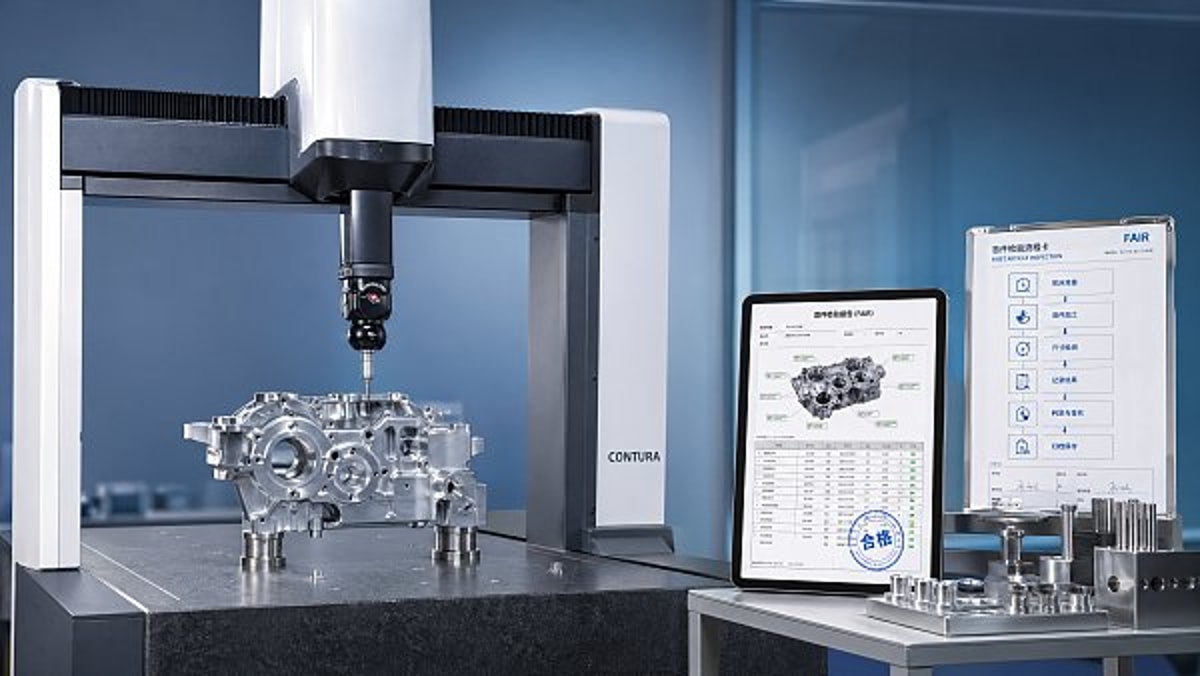
Use this decision table to compare manual inspection and CMM-based first article workflows
Procurement and sourcing teams often need a simple comparison framework before discussing equipment, outsourcing, or supplier capability. The next table summarizes where manual methods remain practical and where coordinate measuring machines create faster and more scalable first article inspection results.
This comparison shows that the advantage of coordinate measuring machines is not universal. For a low-complexity stamped washer or simple cut part, manual inspection may still be faster. However, for machined parts, molded housings, battery tray features, medical component interfaces, or electronic enclosures with geometric constraints, CMM-based inspection typically becomes more time-efficient as documentation demands increase.
Questions buyers should ask suppliers
- How many dimensions from the first article drawing are measured on a coordinate measuring machine versus manual tools?
- Can the supplier deliver a digital report within 8 to 24 hours after inspection for urgent launches?
- Are repeat programs saved for revision-controlled reinspection and engineering changes?
- What is the escalation path if a dimensional issue is found on datum structure, true position, or profile features?
These questions help sourcing teams move beyond generic claims about measurement capability and focus on turnaround, traceability, and execution discipline. In fast-moving B2B supply chains, that is where time savings become commercially meaningful.
Scenario checklist: where time savings differ by industry and part type
Not every sector uses coordinate measuring machines in the same way. The timing benefit depends on part geometry, tolerance stack-up, compliance needs, and supplier maturity. For researchers in cross-industry sourcing, it helps to sort applications by scenario instead of assuming one standard inspection model.
Advanced manufacturing and machined components
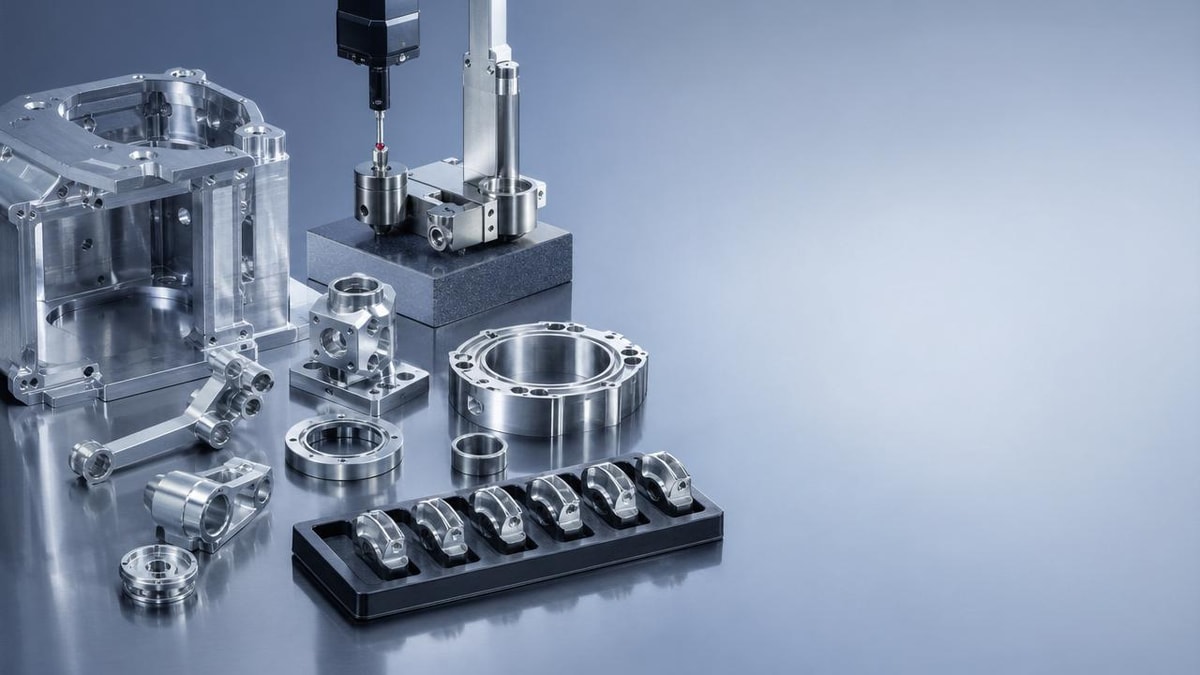
In advanced manufacturing, first article inspection often involves machined aluminum, steel, or engineered plastic parts with 20 to 100 dimensions. Coordinate measuring machines save time here by checking datum relationships, hole patterns, and geometric tolerances in one repeatable sequence. This is especially useful when pilot production schedules allow only 1 to 3 days for approval before downstream assembly starts.
A second benefit is revision control. When engineering changes alter one feature set, a stored inspection routine can be updated faster than rewriting a manual inspection plan from the beginning. That shortens the loop between design change, corrected sample, and production release.
Smart electronics and enclosure-based assemblies
For smart electronics, tolerance issues often affect fit, alignment, connector location, and thermal interface spacing. Here, coordinate measuring machines save time by reducing dispute over whether a housing, frame, or bracket actually matches the drawing. Faster dimensional confirmation means less waiting between the quality team, design engineer, and contract manufacturer.
In products with frequent engineering revisions, even a savings of 2 to 4 hours per first article cycle can matter when launches are synchronized with PCB validation, software milestones, or customer demonstration schedules.
Green energy and structural subassemblies
Green energy components such as mounting structures, battery-related enclosures, and precision support interfaces may involve larger parts or assemblies. The biggest time benefit comes when coordinate measuring machines help verify critical interfaces rather than every noncritical feature manually. This supports faster go/no-go decisions during early production and supplier qualification.
Quick scenario checklist
- If fit and alignment drive product function, prioritize coordinate measuring machines for interface geometry first.
- If drawing complexity is high but launch windows are short, prioritize automated reporting capability.
- If supplier revisions are frequent, confirm program reuse and reinspection speed before approving the source.
Across these scenarios, the key lesson is simple: coordinate measuring machines save the most time when dimensional risk is concentrated in many interrelated features, not just a few isolated measurements.
Common oversights that reduce the time-saving value of coordinate measuring machines
Even when a supplier owns capable equipment, first article inspection can still move slowly if execution details are weak. This is important for procurement teams because machine ownership alone does not guarantee faster throughput. Time savings depend on preparation, programming discipline, and communication structure.
Oversight checklist for supplier assessment
- Incomplete drawing packages: If 2D drawings, CAD data, datum references, or revision notes are inconsistent, the CMM program may be delayed before measurement even starts.
- Weak fixturing strategy: Poor part holding can create extra setup time, especially for thin-wall parts, molded components, or irregular surfaces.
- No inspection prioritization: Measuring every feature at the same depth can slow urgent first article review when only critical-to-function dimensions need immediate confirmation.
- Report mismatch: A supplier may generate raw output quickly, but if the customer requires ballooned drawings, FAIR forms, or specific templates, reformatting adds delay.
- Limited staffing coverage: If one trained operator handles all dimensional work, turnaround may stretch from one shift to several days during production peaks.
These oversights often explain why two suppliers with similar coordinate measuring machines produce very different first article timelines. One may release a complete dimensional report in less than 24 hours, while another takes 3 to 5 business days because upstream preparation is weak.
For technical decision-makers, this means supplier evaluation should include process readiness, not just equipment availability. In many cases, faster results come from better inspection planning, feature prioritization, and digital reporting alignment rather than from a more advanced machine alone.
Execution guide: what to prepare before requesting or qualifying first article inspection support
If your team is planning to rely on coordinate measuring machines for first article inspection, preparation quality directly affects cycle time. A well-prepared request can reduce avoidable back-and-forth during the first 1 or 2 approval loops, especially in global B2B sourcing where time zones and revision control already create friction.
Priority preparation table
Use the following checklist to prepare internal teams or suppliers before launch samples arrive. It helps align quality, procurement, engineering, and supplier communication around the same timing expectations.
This preparation table is especially useful when suppliers serve multiple sectors and may not know which dimensions your team treats as critical. Early clarification often saves more time than the measurement step itself.
Action checklist for buyers and quality teams
- Send the latest drawing revision and, where available, matching CAD files before the sample arrives.
- Identify whether the inspection goal is full dimensional approval, critical-feature release, or process troubleshooting.
- Clarify the required report format and approval deadline, such as same-shift review or next-business-day submission.
- Ask whether the coordinate measuring machines are used with saved routines for future reinspection and supplier corrective actions.
- Confirm who reviews out-of-tolerance findings and how quickly engineering feedback can be returned.
When these actions are handled upfront, coordinate measuring machines become more than a precision resource. They become a scheduling tool that helps convert first article inspection into faster, cleaner production decisions.
Why choose us for deeper supplier and inspection intelligence
TradeNexus Pro supports procurement directors, supply chain managers, and enterprise decision-makers who need more than surface-level sourcing content. We focus on the operational questions behind supplier performance, technical readiness, and inspection efficiency across advanced manufacturing, green energy, smart electronics, healthcare technology, and supply chain SaaS-linked ecosystems.
If you are evaluating suppliers that use coordinate measuring machines, or comparing first article inspection readiness across regions and product categories, we can help you frame the right questions before you commit time or budget. That includes parameter confirmation, inspection scope definition, reporting expectations, supplier workflow review, and timing risk assessment for launch-stage parts.
Contact us if you want support with product selection logic, supplier capability comparison, expected delivery and inspection cycle planning, documentation requirements, custom sourcing scenarios, sample-related evaluation questions, or quote-stage communication strategy. The faster you align technical inspection expectations, the faster your supply chain can move from first article uncertainty to controlled production release.
Get weekly intelligence in your inbox.
No noise. No sponsored content. Pure intelligence.
 May 03, 2026AI Boom Drives Data Center Power Demand, Liquid Cooling Gains UrgencyAI Boom Drives Data Center Power Demand, Liquid Cooling Gains Urgency
 May 03, 2026Low-Altitude Economy in China's 15th Five-Year Plan Boosts Warehouse Robotics ExportsLow-Altitude Economy in China's 15th Five-Year Plan Boosts Warehouse Robotics Exports
 May 03, 2026EU REACH Adds 5 Organotin Compounds to SVHC List for ElectronicsEU REACH Adds 5 Organotin Compounds to SVHC List for Electronics
 May 03, 2026Western Land-Sea Expressway Boosts Solar PV Exports to ASEANWestern Land-Sea Expressway Boosts Solar PV Exports to ASEAN
 May 03, 2026Southeast Asia Smart Home E-commerce Grows 27.4% Amid New Matter 1.3+ Certification RulesSoutheast Asia Smart Home E-commerce Grows 27.4% Amid New Matter 1.3+ Certification Rules
 May 03, 2026FDA Updates IVD Software Guidance: AI Diagnostic Tools Require Independent Algorithm ValidationFDA Updates IVD Software Guidance: AI Diagnostic Tools Require Independent Algorithm Validation
 May 03, 2026Global Methanol EV Ecosystem Alliance LaunchedGlobal Methanol EV Ecosystem Alliance Launched
 May 03, 2026Vietnam GDP Growth Forecast Raised to 7.2% for 2026Vietnam GDP Growth Forecast Raised to 7.2% for 2026
 May 03, 2026UAE Emerges as Global AI Hub, Driving Demand for AI-Quality Inspection SystemsUAE Emerges as Global AI Hub, Driving Demand for AI-Quality Inspection Systems
 May 03, 2026OFID $500M Funding for Côte d'Ivoire Energy ProjectsOFID $500M Funding for Côte d'Ivoire Energy Projects
 May 03, 20265 Axis Milling Machines for Automotive: Buy New or Retrofit?5 Axis Milling Machines for Automotive: Buy New or Retrofit?
 May 03, 2026What to Check Before Sourcing OEM Machined Parts from IndiaWhat to Check Before Sourcing OEM Machined Parts from India
 May 03, 2026Why Sheet Metal Bending Machine Price Varies So MuchWhy Sheet Metal Bending Machine Price Varies So Much
 May 03, 2026Plastic Injection Molding Process Guide for Common Defect ControlPlastic Injection Molding Process Guide for Common Defect Control
 May 03, 2026Smart Manufacturing Technology Trends Reshaping Factory UpgradesSmart Manufacturing Technology Trends Reshaping Factory Upgrades
 May 03, 2026Automotive Die Casting Parts and the Hidden Cost of PorosityAutomotive Die Casting Parts and the Hidden Cost of Porosity
 May 03, 2026Assembly Line Robots: Flexibility Can Matter More Than SpeedAssembly Line Robots: Flexibility Can Matter More Than Speed
 May 03, 2026Smart Manufacturing in Energy: Which Upgrades Pay Back FasterSmart Manufacturing in Energy: Which Upgrades Pay Back Faster
 May 03, 2026Why Robotics Integration Fails After a Successful DemoWhy Robotics Integration Fails After a Successful Demo
 May 03, 2026How to Spot a Reliable Precision Components ManufacturerHow to Spot a Reliable Precision Components Manufacturer
 May 03, 2026Sheet Metal Bending Machine Specifications That Affect AccuracySheet Metal Bending Machine Specifications That Affect Accuracy
 May 03, 2026Oil and Gas Fabrication: Where Material Mismatch Gets ExpensiveOil and Gas Fabrication: Where Material Mismatch Gets Expensive
 May 03, 2026Construction Fabrication Delays Often Start at the Drawing StageConstruction Fabrication Delays Often Start at the Drawing Stage
 May 03, 2026Industrial Robotics Maintenance Guide for Fewer Surprise StopsIndustrial Robotics Maintenance Guide for Fewer Surprise Stops
 May 03, 2026Smart Manufacturing Technology Benefits Beyond Labor SavingsSmart Manufacturing Technology Benefits Beyond Labor Savings
 May 03, 2026Defense Components Need More Than Tight TolerancesDefense Components Need More Than Tight Tolerances
 May 03, 2026How to Vet a Die Casting Parts Supplier in MexicoHow to Vet a Die Casting Parts Supplier in Mexico