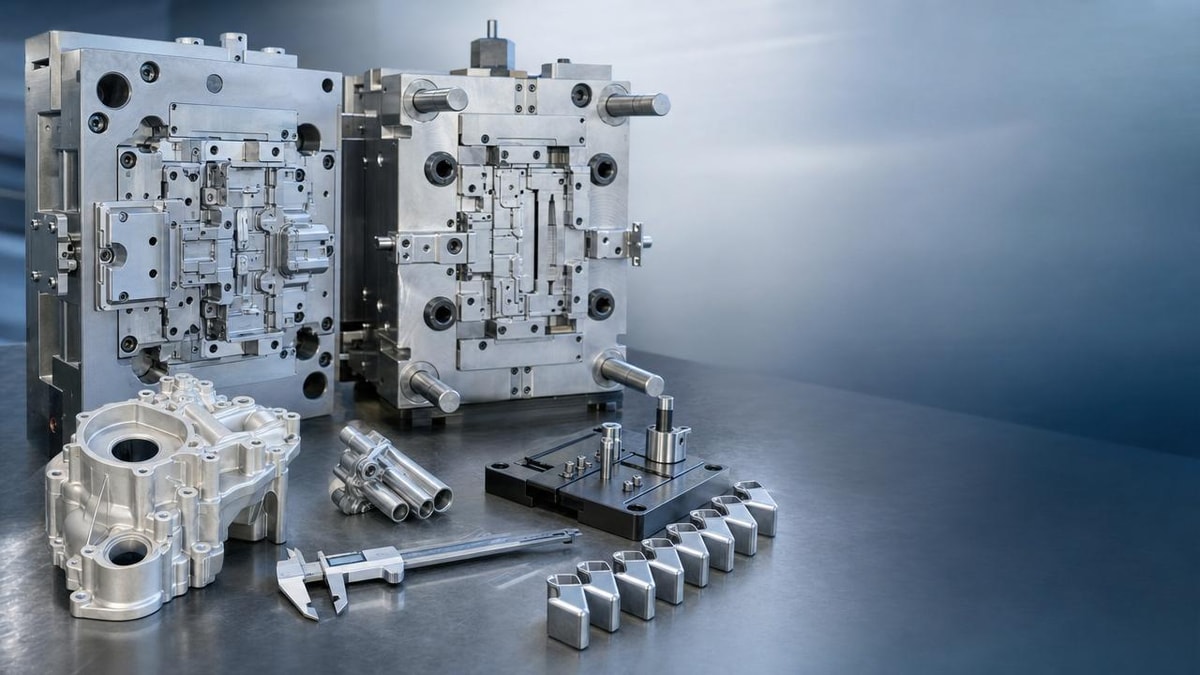
Why ISO 9001 Certified Machining Still Varies in Part Quality
Many buyers assume iso 9001 certified machining should produce the same part quality regardless of supplier, but that is not how quality systems work in practice. ISO 9001 confirms that a company has a documented management system and follows controlled processes. It does not certify the precision of a machine tool, the maturity of a machining strategy, the skill of an operator, or the rigor of in-process control on a difficult part.
For quality and safety professionals, that distinction matters. A supplier may be fully certified yet still deliver variable dimensional results, unstable surface finish, inconsistent traceability, or weak reaction plans when process drift appears. The real question is not whether a machine shop has certification, but whether its manufacturing system can repeatedly control the specific risks your parts present.
This article explains why certified shops can still perform very differently, where variation usually comes from, and how procurement, quality, and EHS-related stakeholders can evaluate actual supplier capability before nonconformities become cost, downtime, or compliance problems.
Why ISO 9001 certification does not guarantee identical machining quality
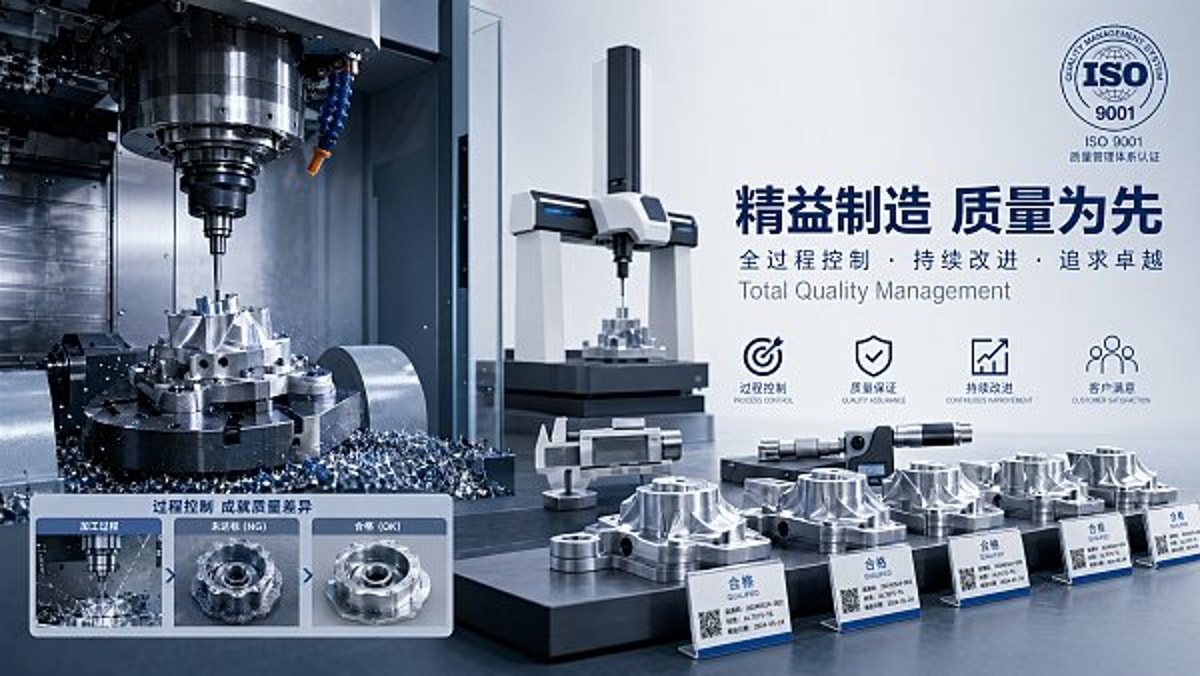
ISO 9001 is a quality management system standard, not a product-performance guarantee. It focuses on process control, documentation, corrective action, leadership responsibility, risk-based thinking, and continual improvement. That framework is valuable, but it leaves wide room for differences in technical depth, inspection culture, shop-floor discipline, and manufacturing competence.
Two suppliers can both pass an ISO 9001 audit while operating at very different levels. One may have strong process capability studies, stable fixturing methods, calibrated probing systems, robust revision control, and disciplined first-article approval. Another may meet minimum audit expectations yet rely heavily on final inspection to catch issues after variation has already occurred. Both are certified, but they do not present the same risk profile.
This is where many sourcing decisions go wrong. Buyers often treat certification as a proxy for machining excellence, when in reality it is only one baseline indicator. For precision parts, safety-critical applications, or regulated supply chains, certification should be the starting point for evaluation, not the conclusion.
Where part-quality variation still comes from in certified machining environments
The largest differences usually come from process execution, not from the certificate on the wall. In machining, small changes in tool wear, spindle condition, fixture rigidity, coolant management, program optimization, and material consistency can create measurable variation. If those factors are not actively monitored, quality can drift even inside a formally documented system.
Human factors also matter more than many buyers expect. ISO 9001 requires competence management, but operator experience with difficult geometries, thin-wall parts, tight concentricity, or high-mix low-volume production can vary dramatically. A shop may have procedures, yet the practical judgment needed to prevent chatter, distortion, burr formation, or thermal movement often depends on engineering depth and floor-level discipline.
Inspection strategy is another frequent source of uneven outcomes. Some certified suppliers build quality into the process using setup verification, in-cycle checks, statistical monitoring, and clear hold points. Others depend too heavily on end-of-line inspection. That approach may catch defects, but it does not control variation early enough to protect consistency, lead time, or cost.
What quality professionals should look beyond when assessing an ISO 9001 certified supplier
If you are evaluating iso 9001 certified machining suppliers, ask what the certification is actually supported by. The most useful evidence is not broad marketing language but operational proof. Look for process flow documentation tied to specific part families, control plans, defined critical characteristics, gauge traceability, and records showing that corrective actions are sustained over time.
Pay close attention to how the supplier handles special process risks. For example, if a part has tight positional tolerance, difficult alloys, cosmetic surface requirements, or downstream assembly impact, the supplier should be able to explain how those risks are controlled at setup, during production, and at final verification. Strong suppliers discuss process windows and failure modes clearly. Weak ones default to generic statements about experience and commitment.
It is also important to evaluate whether the shop understands the functional importance of the part, not just the print. Quality teams often see recurring nonconformities because a supplier machines “to drawing” without fully appreciating sealing surfaces, fatigue-sensitive edges, torque interfaces, or cleanability requirements. When part function is misunderstood, conforming dimensions can still produce real-world quality or safety problems.
Why machining capability varies even when paperwork looks similar
On paper, many suppliers appear nearly identical. They may list CNC milling and turning, CMM inspection, material traceability, and ISO 9001 registration. But actual capability is revealed in how they control repeatability under production pressure. Capacity constraints, machine loading, maintenance intervals, setup turnover, subcontract management, and engineering response speed all affect the consistency of delivered parts.
Machine condition is one example that buyers often underestimate. A certified shop may own modern equipment, but if preventive maintenance is inconsistent, spindle performance degrades, backlash develops, or probing accuracy slips, process outputs can become unstable. Certification does not verify the condition of every machine or the effectiveness of every maintenance decision in daily operation.
Programming and industrialization maturity matter as well. Shops that invest in manufacturability review, simulation, standardized tooling strategies, and revision-controlled workholding often produce more repeatable parts. Shops that depend on tribal knowledge or rush jobs to the floor without robust process development can still remain certified, but their output is more likely to vary when complexity or volume changes.
How inconsistent inspection discipline creates hidden risk
For quality and safety stakeholders, one of the biggest concerns is not visible scrap but hidden variation that passes through because inspection discipline is weak or uneven. Some suppliers inspect the right features but at the wrong frequency. Others collect data without trending it. In such cases, a process can be drifting long before a nonconformance report is triggered.
This becomes especially risky when critical dimensions affect fit, pressure retention, electrical contact, cleanliness, or operator safety. A part may still look acceptable at receiving inspection while carrying variation that causes field failures, assembly disruption, or accelerated wear later. That is why a certificate alone should never replace a review of measurement strategy and reaction plans.
Ask suppliers how they handle out-of-trend conditions, not just out-of-spec conditions. The best shops define escalation rules for tool offsets, wear limits, sample intervals, and containment actions. They know when to stop production before bad parts multiply. This discipline is often what separates a dependable supplier from one that is merely compliant on paper.
Questions that reveal real supplier capability before you approve production
Quality professionals can learn a great deal by asking focused, technical questions during supplier qualification. Instead of asking only whether a shop is ISO 9001 certified, ask how it validates first runs, how it identifies critical-to-quality features, what process capability thresholds it uses, and how it manages setup-to-setup repeatability across shifts and machines.
Ask for examples of recent corrective actions involving dimensional instability, burr issues, or cosmetic defects. The substance of the answer matters. A mature supplier will explain root-cause logic, containment, validation, and preventive action. A weaker one may describe only sorting activity or operator reminders, which often indicates shallow problem-solving discipline.
You should also ask how subcontracted operations are controlled if plating, heat treatment, grinding, or special cleaning are involved. Even when the machining itself is stable, external processors can introduce distortion, surface changes, or traceability gaps. A high-performing supplier treats the full route as a controlled system, not a series of disconnected steps.
Practical signals that a certified machine shop is likely to deliver stable quality
Several indicators usually correlate with stronger performance. One is a clear bridge between quotation review and production control. Reliable suppliers do not simply accept prints; they identify ambiguous tolerances, inspectability concerns, material risk, and process-sensitive features before release. That early technical review reduces surprises later.
Another strong signal is the use of layered verification. This includes setup approval, first-piece inspection, in-process checks, final validation, and documented reaction plans. When combined with gauge control and traceable records, layered verification reduces the chance that a single missed issue will flow through an entire batch.
Look for evidence of measurement-system thinking as well. A shop may own advanced inspection equipment, but capability depends on how gauges are selected, how fixturing for measurement is controlled, and whether repeatability and reproducibility have been considered for critical features. Good inspection hardware alone does not guarantee reliable inspection decisions.
How to interpret ISO 9001 the right way in supplier risk management
The right way to use ISO 9001 in supplier qualification is as a confidence factor, not as a standalone quality verdict. It tells you the supplier has committed to a structured management system and external audit cycle. That matters, especially when compared with unstructured shops. But it should sit alongside technical capability review, process-risk analysis, inspection assessment, and performance history.
For quality managers, this means building a more layered approval model. Certification can satisfy one gate, but not the full decision. Additional gates may include first-article validation, trial-order performance, process audit findings, critical-feature capability evidence, and responsiveness to deviation management. This approach is especially important for parts tied to safety, regulatory obligations, or high downtime cost.
For safety and compliance stakeholders, the key question is whether supplier controls reduce the likelihood of escapes that could affect product integrity, worker safety, maintenance exposure, or environmental risk. In other words, the practical value of iso 9001 certified machining depends on how effectively the management system is translated into controlled machining outcomes.
A more reliable evaluation framework for buyers, quality teams, and EHS-linked functions
If part quality matters materially to business risk, evaluate suppliers across five dimensions: system maturity, machining competence, inspection discipline, change control, and recovery capability. System maturity covers certification, documentation, and audit evidence. Machining competence includes equipment fit, engineering strength, fixture strategy, and process knowledge for your part family.
Inspection discipline covers feature selection, measurement methods, frequency, data use, and reaction plans. Change control includes revision management, tooling substitutions, machine reassignment, and subcontract oversight. Recovery capability measures how well the supplier detects problems early, contains suspect product, communicates clearly, and prevents recurrence without creating repeat disruption.
This framework helps teams avoid the common mistake of treating all certified suppliers as equivalent. It also creates a stronger basis for cross-functional alignment between procurement, supplier quality, manufacturing, and safety-related stakeholders. When evaluation is tied to actual process risk, supplier approval becomes more predictive and less dependent on assumptions.
Conclusion: certification matters, but controlled execution matters more
ISO 9001 remains a meaningful signal in the market, and many excellent machine shops rely on it as part of a disciplined operating model. But the presence of certification does not mean every supplier will deliver the same dimensional consistency, surface quality, traceability strength, or problem-solving performance. That is why part quality can still vary significantly across certified sources.
For quality and safety professionals, the practical takeaway is simple: do not reject certification, but do not overinterpret it. Use it as one input in a broader capability assessment that examines process control, inspection rigor, technical understanding, and response discipline. Those are the factors that ultimately determine whether a supplier can protect product integrity in real production conditions.
When buyers evaluate iso 9001 certified machining with that mindset, they move from assumption-based sourcing to evidence-based risk control. And that shift is often what prevents small process differences from becoming major quality, compliance, or operational failures later.
Get weekly intelligence in your inbox.
No noise. No sponsored content. Pure intelligence.
 May 03, 2026AI Boom Drives Data Center Power Demand, Liquid Cooling Gains UrgencyAI Boom Drives Data Center Power Demand, Liquid Cooling Gains Urgency
 May 03, 2026Low-Altitude Economy in China's 15th Five-Year Plan Boosts Warehouse Robotics ExportsLow-Altitude Economy in China's 15th Five-Year Plan Boosts Warehouse Robotics Exports
 May 03, 2026EU REACH Adds 5 Organotin Compounds to SVHC List for ElectronicsEU REACH Adds 5 Organotin Compounds to SVHC List for Electronics
 May 03, 2026Western Land-Sea Expressway Boosts Solar PV Exports to ASEANWestern Land-Sea Expressway Boosts Solar PV Exports to ASEAN
 May 03, 2026Southeast Asia Smart Home E-commerce Grows 27.4% Amid New Matter 1.3+ Certification RulesSoutheast Asia Smart Home E-commerce Grows 27.4% Amid New Matter 1.3+ Certification Rules
 May 03, 2026FDA Updates IVD Software Guidance: AI Diagnostic Tools Require Independent Algorithm ValidationFDA Updates IVD Software Guidance: AI Diagnostic Tools Require Independent Algorithm Validation
 May 03, 2026Global Methanol EV Ecosystem Alliance LaunchedGlobal Methanol EV Ecosystem Alliance Launched
 May 03, 2026Vietnam GDP Growth Forecast Raised to 7.2% for 2026Vietnam GDP Growth Forecast Raised to 7.2% for 2026
 May 03, 2026UAE Emerges as Global AI Hub, Driving Demand for AI-Quality Inspection SystemsUAE Emerges as Global AI Hub, Driving Demand for AI-Quality Inspection Systems
 May 03, 2026OFID $500M Funding for Côte d'Ivoire Energy ProjectsOFID $500M Funding for Côte d'Ivoire Energy Projects
 May 03, 20265 Axis Milling Machines for Automotive: Buy New or Retrofit?5 Axis Milling Machines for Automotive: Buy New or Retrofit?
 May 03, 2026What to Check Before Sourcing OEM Machined Parts from IndiaWhat to Check Before Sourcing OEM Machined Parts from India
 May 03, 2026Why Sheet Metal Bending Machine Price Varies So MuchWhy Sheet Metal Bending Machine Price Varies So Much
 May 03, 2026Plastic Injection Molding Process Guide for Common Defect ControlPlastic Injection Molding Process Guide for Common Defect Control
 May 03, 2026Smart Manufacturing Technology Trends Reshaping Factory UpgradesSmart Manufacturing Technology Trends Reshaping Factory Upgrades
 May 03, 2026Automotive Die Casting Parts and the Hidden Cost of PorosityAutomotive Die Casting Parts and the Hidden Cost of Porosity
 May 03, 2026Assembly Line Robots: Flexibility Can Matter More Than SpeedAssembly Line Robots: Flexibility Can Matter More Than Speed
 May 03, 2026Smart Manufacturing in Energy: Which Upgrades Pay Back FasterSmart Manufacturing in Energy: Which Upgrades Pay Back Faster
 May 03, 2026Why Robotics Integration Fails After a Successful DemoWhy Robotics Integration Fails After a Successful Demo
 May 03, 2026How to Spot a Reliable Precision Components ManufacturerHow to Spot a Reliable Precision Components Manufacturer
 May 03, 2026Sheet Metal Bending Machine Specifications That Affect AccuracySheet Metal Bending Machine Specifications That Affect Accuracy
 May 03, 2026Oil and Gas Fabrication: Where Material Mismatch Gets ExpensiveOil and Gas Fabrication: Where Material Mismatch Gets Expensive
 May 03, 2026Construction Fabrication Delays Often Start at the Drawing StageConstruction Fabrication Delays Often Start at the Drawing Stage
 May 03, 2026Industrial Robotics Maintenance Guide for Fewer Surprise StopsIndustrial Robotics Maintenance Guide for Fewer Surprise Stops
 May 03, 2026Smart Manufacturing Technology Benefits Beyond Labor SavingsSmart Manufacturing Technology Benefits Beyond Labor Savings
 May 03, 2026Defense Components Need More Than Tight TolerancesDefense Components Need More Than Tight Tolerances
 May 03, 2026How to Vet a Die Casting Parts Supplier in MexicoHow to Vet a Die Casting Parts Supplier in Mexico