How to compare a die casting parts supplier in Thailand
Choosing the right die casting parts supplier Thailand offers can directly affect product quality, cost control, and delivery reliability. For procurement professionals, a smart comparison goes beyond unit price to include manufacturing capability, quality systems, tooling support, export experience, and communication efficiency. This guide outlines the key factors to evaluate so you can shortlist suppliers with greater confidence and lower sourcing risk.
Why do buyers compare a die casting parts supplier in Thailand so carefully?
A die casting parts supplier Thailand market presents may look competitive on paper, but supplier differences often become visible only after sampling, tooling, and production launch. Procurement teams are usually balancing three pressures at the same time: consistent part quality, target cost, and reliable lead time. In die casting, these factors are tightly connected. A low quoted price may hide weak mold engineering, unstable alloy control, high porosity rates, or poor finishing consistency. That can turn a “cheap” source into an expensive supply chain problem.
Thailand attracts sourcing attention because of its industrial base, export orientation, and regional manufacturing ecosystem. For buyers in automotive, electronics, industrial equipment, appliances, and general engineered products, the country can offer a strong mix of production capability and logistics access. Still, not every die casting parts supplier Thailand offers serves the same buyer profile. Some are optimized for high-volume automotive programs, while others are better suited to medium-batch customized components, post-machining, or multi-process assemblies.
That is why comparison matters. You are not simply choosing a factory; you are choosing a partner that will influence defect rates, engineering change speed, PPAP readiness, packaging standards, and on-time shipment performance. A structured evaluation helps reduce sourcing risk before a purchase order becomes a production dependency.
What should procurement teams check first before requesting quotations?
Before asking any die casting parts supplier Thailand candidates for pricing, confirm whether they actually fit your project. Many RFQs fail because buyers compare quotes from suppliers with very different technical scope. Start with process fit: are you buying aluminum die cast parts, zinc die cast parts, or a component that also requires CNC machining, trimming, tapping, deburring, surface treatment, leak testing, or sub-assembly?
Then review production fit. A supplier that performs well on simple housings may not be the right choice for thin-wall, tight-tolerance, cosmetic, or pressure-tight components. Ask for evidence of similar parts already produced, not generic capability slides. Relevant experience often predicts execution quality better than a broad factory profile.
Commercial fit is equally important. Procurement professionals should confirm minimum order expectations, tooling ownership terms, sampling charges, Incoterms flexibility, and standard payment terms. Export buyers should also verify packaging methods, labeling capability, and documentation quality. A technically capable source can still be a poor fit if communication is slow, engineering feedback is vague, or commercial conditions are misaligned.
A practical first-screen checklist includes supplier type, alloy specialization, machine tonnage range, machining capacity, finishing partners, export history, quality certification, and lead time assumptions. This initial filter saves time and makes quote comparisons more meaningful.
How can you compare manufacturing capability, not just marketing claims?
This is where many sourcing decisions go right or wrong. Every die casting parts supplier Thailand buyers contact can claim “high quality” and “advanced equipment,” but procurement teams need proof tied to actual production control. Ask questions that reveal how the factory runs, not how it presents itself.
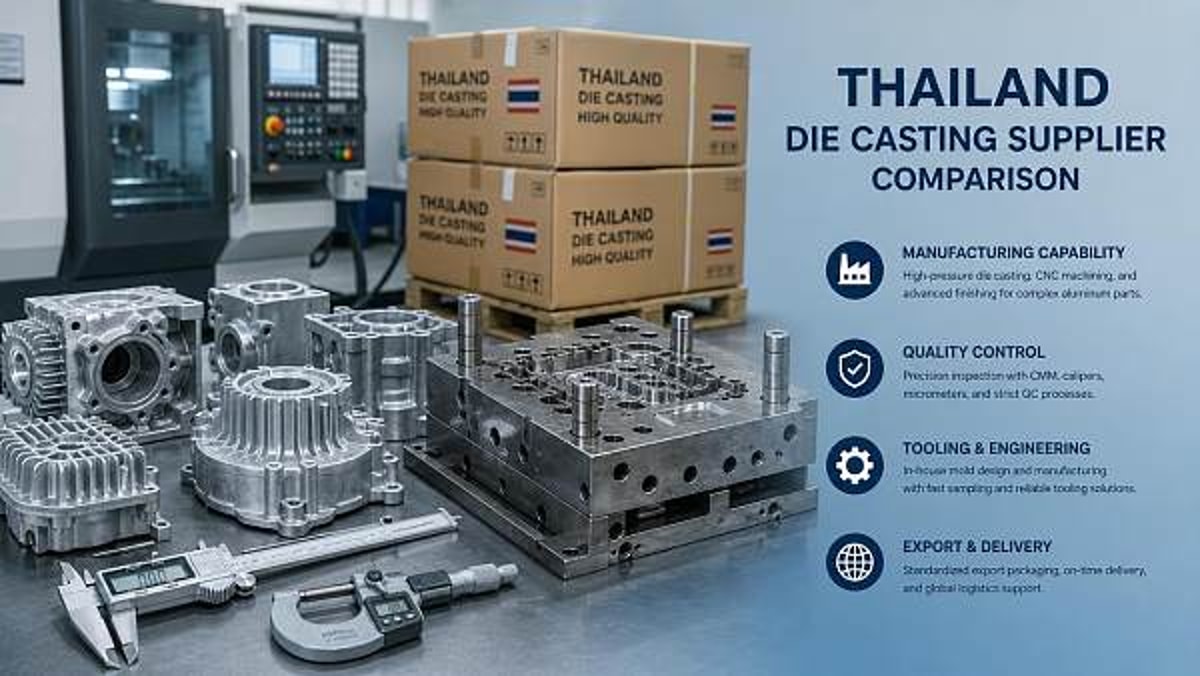
First, examine process depth. Does the supplier only cast parts, or can it manage tool design, mold flow analysis, trimming, machining, finishing, inspection, and final packing under controlled workflows? Greater vertical integration can reduce handoff risk, especially for parts with dimensional, cosmetic, and assembly requirements. However, outsourced finishing is not always a weakness if the supplier has mature control over approved subcontractors.
Second, assess engineering strength. A reliable die casting parts supplier Thailand procurement teams can trust should be able to comment on draft angles, wall thickness balance, gate design, venting, shrinkage behavior, and post-machining risk. If a supplier only says “we can make it” without design feedback, that is a warning sign. Strong suppliers actively improve manufacturability before tooling begins.
Third, review equipment in context. Machine count alone means little. What matters is whether the available tonnage matches your part size, projected cycle time, and cavity strategy. You should also ask about die maintenance routines, mold life expectations, preventive maintenance schedules, and spare insert planning. Tooling reliability directly affects long-term supply continuity.
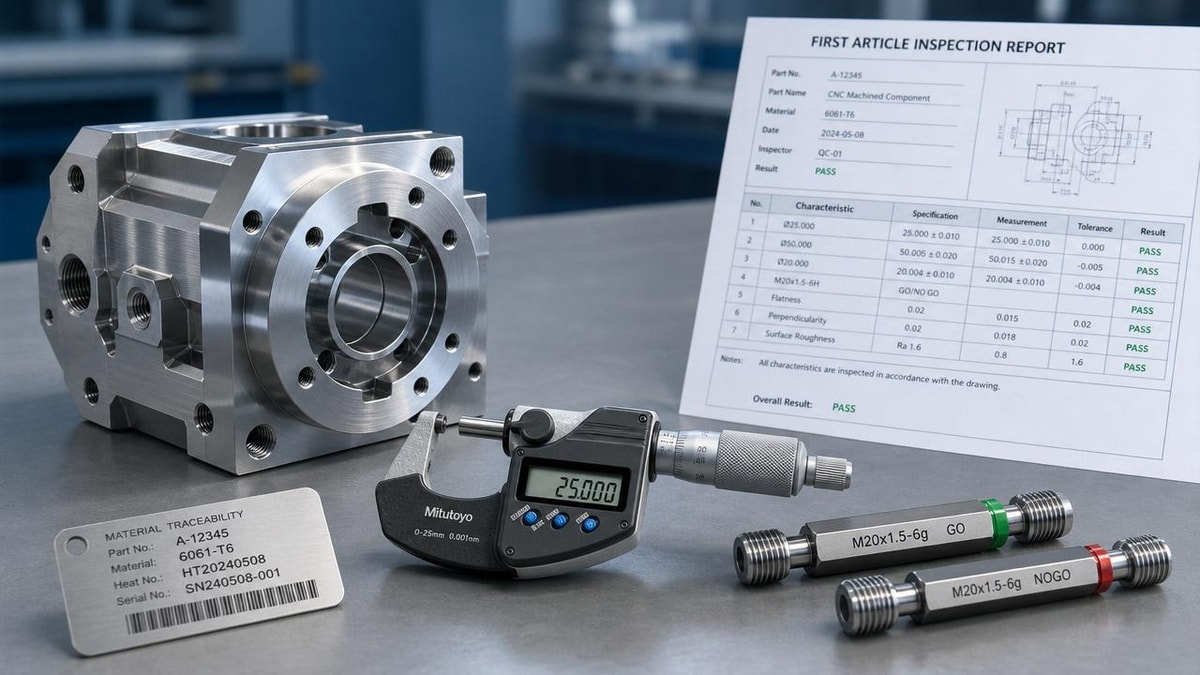
Finally, inspect evidence. Request part photos, dimensional reports, process flow charts, control plans, and examples of first article or PPAP documentation where applicable. A credible supplier can show structured records, not just sales promises.
Which quality and compliance questions matter most when comparing suppliers?
Quality comparison should move beyond “Do you have ISO?” Certification matters, but execution matters more. When reviewing a die casting parts supplier Thailand options list, ask how they control incoming alloy, casting parameters, dimensional inspection, and defect response. The real issue is whether the supplier can prevent recurring problems, not simply sort defects after they happen.
For critical parts, ask about porosity control, X-ray inspection availability, leak testing capability, CMM measurement, gauge management, and traceability by lot or shift. If your end market is automotive or medical-adjacent equipment, the discipline required may be much higher than for general industrial hardware. Match the supplier’s quality system to your product risk level.
It also helps to understand how nonconformance is handled. A strong supplier should be able to explain root cause analysis methods, corrective action timing, containment steps, and communication routines. Procurement teams often underestimate response speed until a shipment issue occurs. Fast, transparent containment can protect your production schedule even when defects happen.
If your program involves export markets, confirm compliance support for material declarations, RoHS, REACH where relevant, and customer-specific documentation. For many buyers, the best die casting parts supplier Thailand can offer is not the cheapest factory but the one that reduces audit, compliance, and line-stop risk over the full supplier lifecycle.
Quick comparison table for procurement review
How do cost, tooling, and lead time affect the comparison?
Unit price is important, but die casting sourcing should be evaluated as total project cost. When comparing a die casting parts supplier Thailand shortlist, separate one-time tooling cost from recurring piece price, and then examine what is included. Some quotations include trimming dies, machining fixtures, and inspection gauges, while others exclude them. If the quote structure is inconsistent, the price comparison is misleading.
Lead time also deserves deeper review. Ask for tooling lead time, T1 sample timing, correction loop timing, mass production ramp-up, and replenishment cycle assumptions. A supplier with a slightly higher price but stronger launch discipline may reduce time-to-market and expensive engineering delays. For procurement, schedule reliability often has more business value than a small piece-price advantage.
Do not ignore yield and scrap assumptions. In die casting, unstable production can create hidden cost through rework, sorting, machining loss, and late deliveries. Ask how the supplier estimates process yield and whether the quoted price assumes stable production after approval. This can reveal whether the supplier truly understands your part or is pricing aggressively to win business.
Another key point is tooling ownership and exit terms. Procurement teams should clarify who owns the mold, how maintenance is charged, what happens if production moves, and whether design files and spare components are documented. A professional die casting parts supplier Thailand buyers can rely on should be comfortable discussing these topics early, not only after commercial disputes arise.
What are the most common mistakes when choosing a die casting parts supplier in Thailand?
One common mistake is selecting based on quotation speed alone. Fast quoting can be helpful, but if the supplier has not reviewed drawings carefully, the price may later change or quality issues may appear after tooling starts. Another mistake is assuming all factories with export experience are equally strong in engineering communication. Some suppliers ship globally but still provide limited DFM feedback or unclear problem-solving support.
A third mistake is failing to align supplier capability with product complexity. Buyers sometimes compare a specialized die casting parts supplier Thailand source against a general metal parts vendor and treat them as equal options. They are not. If your component requires pressure tightness, cosmetic finishing, secondary machining, or assembly fit consistency, specialization matters.
Another risk is overlooking communication structure. Procurement teams may focus on technical capability but fail to ask who manages projects after the order is placed. If communication passes through too many layers, response time on engineering changes or corrective actions can slow down significantly. In international sourcing, communication efficiency is a quality variable.
Finally, buyers sometimes skip supplier validation after successful samples. Good samples do not guarantee stable mass production. Confirm process controls, maintenance planning, packaging validation, and capacity reservation before approval. A comparison process should test long-term reliability, not just first impressions.
How should procurement teams shortlist the best supplier for actual business needs?
The best approach is to use a weighted comparison model. Start by defining what matters most for your project: technical complexity, annual volume, cosmetic standard, tolerance risk, launch deadline, and end-market compliance. Then score each die casting parts supplier Thailand candidate against those priorities instead of using a generic sourcing template.
For example, if you are launching an industrial enclosure with moderate volume and precision machining, you may weight engineering support, machining consistency, and export packaging more heavily than the absolute lowest casting price. If you are sourcing a mature high-volume component, yield stability, tool maintenance, and replenishment lead time may matter more. The right supplier depends on the business case, not just factory size.
A useful shortlist usually contains two to three suppliers that can all technically make the part. From there, compare sample quality, responsiveness, documentation discipline, and total landed value. Supplier visits, video audits, or structured remote capability reviews can add confidence, especially for new programs. Procurement should work closely with quality and engineering during this stage so the final decision reflects cross-functional risk, not only price negotiation results.
In practical terms, if you need to confirm a specific sourcing plan with a die casting parts supplier Thailand market offers, prioritize these questions first: Can you show similar part experience? What design risks do you see in our drawing? What is included in tooling and sample cost? How do you control porosity and dimensional variation? What is your realistic timeline from tool kickoff to mass production? Who will handle technical communication and issue escalation? Those answers usually reveal more than a polished capability brochure.
What should you ask before moving toward quotation, sampling, or cooperation?
Before moving forward, procurement professionals should gather a focused set of decision-ready details. Ask for the recommended die casting process and alloy, projected tooling concept, expected tolerances by feature, post-processing route, quality checkpoints, annual capacity fit, export shipment method, and estimated development schedule. If the part is still being optimized, request DFM comments before asking for a final price.
It is also wise to confirm commercial and operational details early: sample approval stages, change control procedure, packaging specification ownership, payment milestones, and how long the quote remains valid against material fluctuations. For many procurement teams, the strongest die casting parts supplier Thailand option is the one that combines transparent communication with realistic technical judgment. That combination lowers sourcing uncertainty and supports better long-term supplier performance.
If you need to move toward a concrete sourcing decision, begin the conversation with part drawings, annual volume estimates, target applications, quality expectations, and required export destination. From there, you can quickly confirm whether a supplier is suitable for your parameters, pricing goals, lead time window, and cooperation model.
Get weekly intelligence in your inbox.
No noise. No sponsored content. Pure intelligence.
 May 04, 2026FDA AI Diagnostic Software Guidance: Continuous Validation for Overseas FirmsFDA AI Diagnostic Software Guidance: Continuous Validation for Overseas Firms
 May 04, 2026MIIT Launches Export Compliance Support for Warehouse RoboticsMIIT Launches Export Compliance Support for Warehouse Robotics
 May 04, 2026India BIS Mandates ISI Certification for Smart Home Devices from July 2026India BIS Mandates ISI Certification for Smart Home Devices from July 2026
 May 04, 2026Global Shipping Alliance Raises Heavy-Lift Surcharges from May 2026Global Shipping Alliance Raises Heavy-Lift Surcharges from May 2026
 May 04, 2026GCC EV Charging Certification Unified: 35% Cost Cut for Chinese ExportersGCC EV Charging Certification Unified: 35% Cost Cut for Chinese Exporters
 May 04, 2026TÜV Rheinland Updates IoT Security Standard with AI Voice Data AnonymizationTÜV Rheinland Updates IoT Security Standard with AI Voice Data Anonymization
 May 04, 2026Yangshan Port Launches Green Energy Equipment Express LaneYangshan Port Launches Green Energy Equipment Express Lane
 May 04, 2026Vietnam Enforces Local IoT Certification for Smart Home Devices from May 2026Vietnam Enforces Local IoT Certification for Smart Home Devices from May 2026
 May 04, 2026US CBP Launches Battery Cargo Inspection: ESS Export Delays to 7–12 DaysUS CBP Launches Battery Cargo Inspection: ESS Export Delays to 7–12 Days
 May 04, 2026EU SVHC Update Effective May 1, 2026: Impact on Electronic Components ExportsEU SVHC Update Effective May 1, 2026: Impact on Electronic Components Exports
 May 04, 2026Portable power stations: what matters more than wattage on paperPortable power stations: what matters more than wattage on paper
 May 04, 2026Automotive injection molding machines and the scrap rate problemAutomotive injection molding machines and the scrap rate problem
 May 04, 2026Smart thermostats save energy only when setup is done rightSmart thermostats save energy only when setup is done right
 May 04, 2026Why TWS earbuds sound great in ads but not on callsWhy TWS earbuds sound great in ads but not on calls
 May 04, 2026Industrial robotics for material handling: where downtime startsIndustrial robotics for material handling: where downtime starts
 May 04, 2026LiFePO4 battery lifespan drops faster under these conditionsLiFePO4 battery lifespan drops faster under these conditions
 May 04, 2026Solar grid systems: when storage changes the project mathSolar grid systems: when storage changes the project math
 May 04, 2026Smart manufacturing for pharma fails when data stays isolatedSmart manufacturing for pharma fails when data stays isolated
 May 04, 2026Wearable technology trends that are finally useful in 2026Wearable technology trends that are finally useful in 2026
 May 04, 2026Bluetooth speakers: why battery life claims often miss real useBluetooth speakers: why battery life claims often miss real use
 May 04, 2026Home automation systems that solve everyday annoyances firstHome automation systems that solve everyday annoyances first
 May 04, 2026Solar street lights that underperform after the first rainy seasonSolar street lights that underperform after the first rainy season
 May 04, 2026Why sheet metal bending services in Canada cost more than expectedWhy sheet metal bending services in Canada cost more than expected
 May 04, 2026Factory automation systems for electronics and the ROI gapFactory automation systems for electronics and the ROI gap
 May 04, 2026OEM machined parts supplier Vietnam: quality checks that matterOEM machined parts supplier Vietnam: quality checks that matter
 May 04, 2026What to check before choosing a 5 axis machine for defenseWhat to check before choosing a 5 axis machine for defense
 May 04, 2026Smart grid solutions that fix peak load without major rebuildsSmart grid solutions that fix peak load without major rebuilds