Where Plastic Injection Molding Process Optimization Pays Off
For enterprise leaders balancing cost, quality, and speed, plastic injection molding process optimization is where measurable gains begin. From reducing cycle times and material waste to improving part consistency and supply reliability, optimization directly impacts margins and competitiveness. This article explores where the process delivers the highest return and how manufacturers can turn technical refinements into strategic business value.
Why scenario differences matter before investing in plastic injection molding process optimization
Not every molding operation benefits in the same way from process refinement. A medical device supplier running traceable, validation-heavy programs will evaluate plastic injection molding process optimization differently from an automotive tier supplier focused on takt time, or a consumer electronics brand launching high-volume products with tight cosmetic standards. For decision-makers, the key question is not whether optimization matters, but where it pays off fastest, where it reduces risk most effectively, and where the business case is strong enough to justify engineering effort, tooling changes, software upgrades, or supplier collaboration.
This is especially relevant in global sourcing and contract manufacturing environments. Margins can be eroded by hidden scrap, unstable cycle times, unplanned downtime, excessive resin usage, or customer returns caused by dimensional drift. In such cases, plastic injection molding process optimization becomes more than a shop-floor initiative. It becomes a lever for procurement resilience, quality assurance, launch reliability, and supplier performance management.
For enterprise buyers, supply chain managers, and operations leaders, the right approach is to evaluate optimization through real business scenarios: high-volume production, precision parts, multi-cavity tools, volatile demand, regulatory requirements, and sustainability targets. Each scenario changes the optimization priority.
Typical business scenarios where plastic injection molding process optimization creates the highest return
The return on plastic injection molding process optimization usually concentrates in a few repeatable operating environments. Understanding these use cases helps enterprises allocate engineering attention where it can materially improve cost, output, and customer satisfaction.
High-volume consumer products
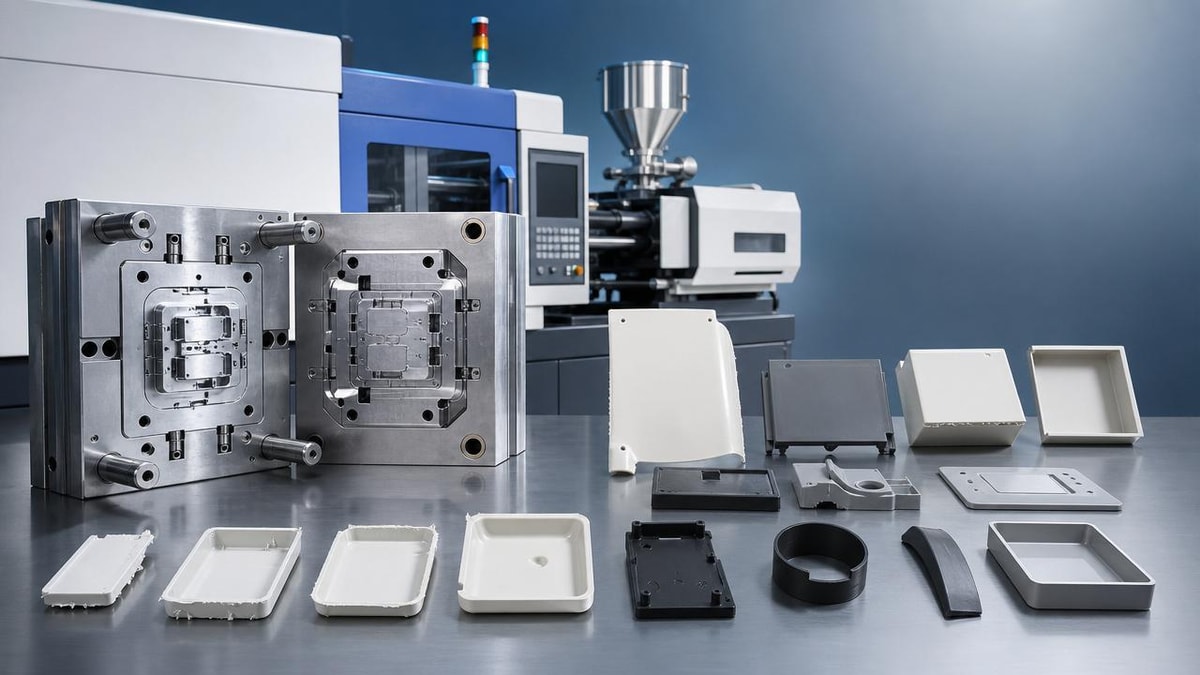
In high-volume packaging, appliance components, and consumer goods, even small cycle time reductions create large annual savings. A one-second improvement across millions of shots may unlock capacity without buying additional presses. Here, optimization often focuses on fill balance, cooling efficiency, gate design, runner performance, and machine parameter stability. The business payoff is immediate because volume amplifies every incremental gain.
Tight-tolerance industrial and automotive parts
For technical parts used in connectors, housings, clips, and under-hood assemblies, dimensional consistency matters more than headline speed. In these programs, plastic injection molding process optimization pays off by reducing variation between cavities, minimizing warpage, controlling shrinkage, and improving Cp/Cpk performance. The value comes through lower rejection rates, smoother assembly, and fewer field failures or warranty claims.
Medical and healthcare components
Healthcare technology applications require repeatability, documentation, and validated control windows. Optimization in this scenario is less about aggressive throughput and more about robust process capability. Stable melt temperature, consistent hold pressure, traceable lot performance, and documented machine settings become critical. The financial benefit appears through lower compliance risk, fewer deviations, and stronger customer trust.
Smart electronics and cosmetic parts
Visible surfaces, thin walls, and miniaturized geometries make electronics parts sensitive to sink marks, flow lines, flash, and short shots. In this scenario, plastic injection molding process optimization supports first-pass quality and launch readiness. Enterprises gain by reducing sorting, rework, cosmetic defects, and schedule slippage during ramp-up.

A scenario comparison table for enterprise evaluation
The table below shows how optimization priorities shift depending on application. This helps enterprise decision-makers align improvement efforts with real commercial outcomes rather than generic technical goals.
Where different business functions see value from process optimization
One reason plastic injection molding process optimization often stalls is that companies discuss it only as a technical matter. In practice, different stakeholders evaluate success differently, and the most effective projects connect machine-level changes to cross-functional outcomes.
For procurement leaders
Procurement teams should look at optimization as a way to reduce total landed cost and supplier volatility. A supplier with a highly controlled molding process is more likely to meet schedules, hold quality targets, and absorb demand changes without disproportionate price increases. In sourcing discussions, questions about scrap rate, cavity utilization, process monitoring, and engineering change discipline can reveal whether a supplier is truly optimized or simply price-competitive on paper.
For operations and plant management
Plant leaders benefit when optimization increases OEE, reduces unplanned stoppages, and stabilizes labor requirements. If a molding cell depends on frequent operator intervention, the operation is vulnerable. Better process windows, more consistent material handling, and improved cooling strategies create predictable output and reduce firefighting.
For quality and compliance teams
Quality teams value plastic injection molding process optimization when it narrows variation and improves traceability. This is critical in regulated or specification-driven programs where a stable process is easier to audit, validate, and defend to customers. A part that passes inspection today but drifts next month is not a reliable business asset.
For executive decision-makers
Executives should judge optimization by strategic leverage. Does it delay capital expenditure by unlocking hidden capacity? Does it improve launch confidence for a key customer? Does it support ESG goals through less resin waste and lower energy consumption? In many cases, the strongest value lies in combined operational and commercial impact rather than a single KPI.
How scenario-specific needs change the optimization approach
Plastic injection molding process optimization is not a one-size-fits-all toolkit. Enterprises should avoid copying settings, KPIs, or priorities across unrelated programs. Instead, they should tailor the approach to production realities.
When cycle time matters most
For high-volume commodity or near-commodity parts, leaders should prioritize cooling channel performance, mold temperature uniformity, scientific molding practices, and machine repeatability. In this setting, optimization should be measured in seconds saved, output gained, and labor efficiency improved.
When part integrity matters most
For engineered parts with functional performance requirements, the focus shifts toward pressure profiles, fill consistency, resin drying control, and cavity-to-cavity variation. Here, rushing to reduce cycle time can be a false economy if it increases downstream assembly issues or customer complaints.
When supply assurance matters most
If the enterprise depends on a limited supplier base or a single critical tool, optimization should include preventive maintenance discipline, parameter documentation, backup material planning, and digital monitoring. The payoff is resilience. In volatile markets, this may be more valuable than a narrow cost saving.
Practical adaptation guidance by enterprise maturity and production model
Different organizations should pursue plastic injection molding process optimization differently depending on their scale, internal expertise, and supply structure.
For outsourced programs, the buyer’s leverage lies in better technical questioning and clearer performance expectations. For in-house operations, the biggest gains often come from standardization, process documentation, and identifying why similar tools perform differently across shifts or sites. For smaller suppliers, disciplined fundamentals may produce better ROI than expensive software deployed too early.
Common scenario misjudgments that weaken optimization ROI
Several recurring mistakes reduce the value of plastic injection molding process optimization.
- Treating all parts as cycle-time projects, even when dimensional stability is the real business risk.
- Assuming a new machine or tool will solve instability caused by poor resin handling or weak process discipline.
- Measuring success only at the molding press instead of including assembly yield, customer returns, and schedule adherence.
- Applying aggressive optimization during product launch before design, mold, and material variables are sufficiently understood.
- Ignoring operator training and changeover consistency, which can erase gains from otherwise solid engineering work.
These errors usually come from misreading the scenario. The right improvement path begins with identifying whether the main problem is cost, quality, throughput, compliance, or resilience. Once that is clear, technical changes can be prioritized correctly.
FAQ: how to judge whether plastic injection molding process optimization fits your current priorities
When does optimization usually pay back fastest?
The fastest payback usually appears in high-volume programs with measurable scrap, unstable cycle times, or chronic capacity pressure. In such cases, small process improvements scale quickly into meaningful annual savings.
What if my operation is outsourced?
Plastic injection molding process optimization still matters. The enterprise should evaluate suppliers based on documented process control, capability data, resin management, tool maintenance, and response discipline during deviations. Better supplier transparency often creates as much value as in-house process changes.
Is optimization mainly about technology investment?
No. Advanced sensors, simulation, and monitoring platforms help, but many gains come from scientific setup methods, stable operating windows, disciplined maintenance, and stronger process documentation. Technology works best after fundamentals are under control.
Which KPI should executives watch first?
There is no universal answer. In volume-driven scenarios, watch cycle time and scrap. In critical-part scenarios, watch process capability and customer PPM. In constrained supply scenarios, monitor uptime, schedule attainment, and recovery speed after disruptions.
Turning process refinement into strategic business value
The strongest case for plastic injection molding process optimization emerges when companies match the method to the scenario. High-volume programs need throughput and cost discipline. Precision components need tighter variation control. Healthcare and other regulated applications need traceability and repeatability. Supply-constrained programs need resilience and predictability. The same phrase can describe all of these, but the value driver changes each time.
For enterprise decision-makers, the next step is practical: identify the molding programs where defects, delays, or cost leakage are already visible; define the dominant business risk in each case; and align suppliers, engineers, and plant teams around the right optimization target. When approached this way, plastic injection molding process optimization stops being a technical improvement project and becomes a durable advantage in cost control, customer confidence, and supply performance.
Get weekly intelligence in your inbox.
No noise. No sponsored content. Pure intelligence.
 May 03, 2026AI Boom Drives Data Center Power Demand, Liquid Cooling Gains UrgencyAI Boom Drives Data Center Power Demand, Liquid Cooling Gains Urgency
 May 03, 2026Low-Altitude Economy in China's 15th Five-Year Plan Boosts Warehouse Robotics ExportsLow-Altitude Economy in China's 15th Five-Year Plan Boosts Warehouse Robotics Exports
 May 03, 2026EU REACH Adds 5 Organotin Compounds to SVHC List for ElectronicsEU REACH Adds 5 Organotin Compounds to SVHC List for Electronics
 May 03, 2026Western Land-Sea Expressway Boosts Solar PV Exports to ASEANWestern Land-Sea Expressway Boosts Solar PV Exports to ASEAN
 May 03, 2026Southeast Asia Smart Home E-commerce Grows 27.4% Amid New Matter 1.3+ Certification RulesSoutheast Asia Smart Home E-commerce Grows 27.4% Amid New Matter 1.3+ Certification Rules
 May 03, 2026FDA Updates IVD Software Guidance: AI Diagnostic Tools Require Independent Algorithm ValidationFDA Updates IVD Software Guidance: AI Diagnostic Tools Require Independent Algorithm Validation
 May 03, 2026Global Methanol EV Ecosystem Alliance LaunchedGlobal Methanol EV Ecosystem Alliance Launched
 May 03, 2026Vietnam GDP Growth Forecast Raised to 7.2% for 2026Vietnam GDP Growth Forecast Raised to 7.2% for 2026
 May 03, 2026UAE Emerges as Global AI Hub, Driving Demand for AI-Quality Inspection SystemsUAE Emerges as Global AI Hub, Driving Demand for AI-Quality Inspection Systems
 May 03, 2026OFID $500M Funding for Côte d'Ivoire Energy ProjectsOFID $500M Funding for Côte d'Ivoire Energy Projects
 May 03, 20265 Axis Milling Machines for Automotive: Buy New or Retrofit?5 Axis Milling Machines for Automotive: Buy New or Retrofit?
 May 03, 2026What to Check Before Sourcing OEM Machined Parts from IndiaWhat to Check Before Sourcing OEM Machined Parts from India
 May 03, 2026Why Sheet Metal Bending Machine Price Varies So MuchWhy Sheet Metal Bending Machine Price Varies So Much
 May 03, 2026Plastic Injection Molding Process Guide for Common Defect ControlPlastic Injection Molding Process Guide for Common Defect Control
 May 03, 2026Smart Manufacturing Technology Trends Reshaping Factory UpgradesSmart Manufacturing Technology Trends Reshaping Factory Upgrades
 May 03, 2026Automotive Die Casting Parts and the Hidden Cost of PorosityAutomotive Die Casting Parts and the Hidden Cost of Porosity
 May 03, 2026Assembly Line Robots: Flexibility Can Matter More Than SpeedAssembly Line Robots: Flexibility Can Matter More Than Speed
 May 03, 2026Smart Manufacturing in Energy: Which Upgrades Pay Back FasterSmart Manufacturing in Energy: Which Upgrades Pay Back Faster
 May 03, 2026Why Robotics Integration Fails After a Successful DemoWhy Robotics Integration Fails After a Successful Demo
 May 03, 2026How to Spot a Reliable Precision Components ManufacturerHow to Spot a Reliable Precision Components Manufacturer
 May 03, 2026Sheet Metal Bending Machine Specifications That Affect AccuracySheet Metal Bending Machine Specifications That Affect Accuracy
 May 03, 2026Oil and Gas Fabrication: Where Material Mismatch Gets ExpensiveOil and Gas Fabrication: Where Material Mismatch Gets Expensive
 May 03, 2026Construction Fabrication Delays Often Start at the Drawing StageConstruction Fabrication Delays Often Start at the Drawing Stage
 May 03, 2026Industrial Robotics Maintenance Guide for Fewer Surprise StopsIndustrial Robotics Maintenance Guide for Fewer Surprise Stops
 May 03, 2026Smart Manufacturing Technology Benefits Beyond Labor SavingsSmart Manufacturing Technology Benefits Beyond Labor Savings
 May 03, 2026Defense Components Need More Than Tight TolerancesDefense Components Need More Than Tight Tolerances
 May 03, 2026How to Vet a Die Casting Parts Supplier in MexicoHow to Vet a Die Casting Parts Supplier in Mexico