Wind turbine components that fail early and what causes it
When wind turbine components fail earlier than expected, maintenance teams face costly downtime, safety risks, and repeated service calls. From gearboxes and bearings to blades and converters, understanding the root causes behind premature failure is essential for faster troubleshooting and smarter preventive planning. This article explores which wind turbine components are most vulnerable, why they break down, and how after-sales maintenance personnel can reduce long-term operational losses.
Which wind turbine components fail early most often in field service?
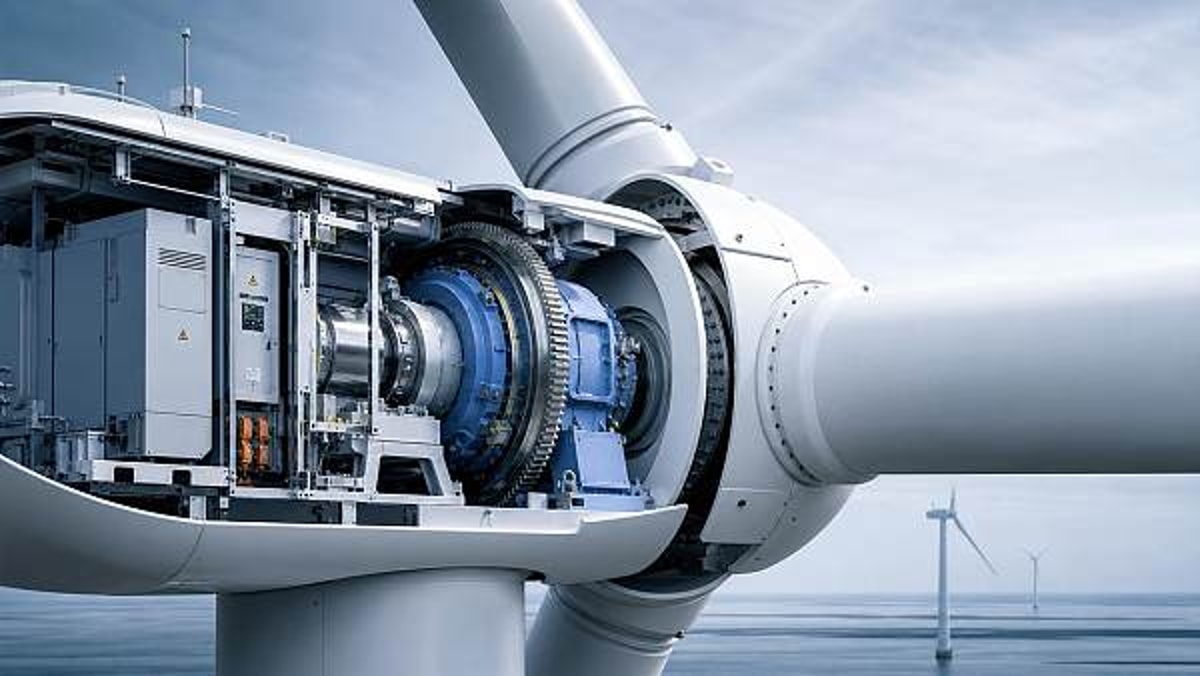
For after-sales teams, not every fault carries the same operational impact. Some wind turbine components show repeat failure patterns across fleets because they sit at the intersection of high cyclic loads, variable weather, lubrication sensitivity, and electrical stress. The practical goal is not only to replace failed parts quickly, but to identify whether the failure came from design limits, operating conditions, installation quality, or maintenance gaps.
In most service environments, the components that attract the highest unplanned intervention rates include main bearings, gearbox bearings and gears, pitch systems, yaw drives, power converters, generators, blade surfaces, and control-related sensors. These failures are rarely isolated. A converter trip may trace back to cooling contamination. A bearing failure may begin with shaft misalignment. Blade damage may start as a drainage, lightning, or coating issue rather than a structural defect alone.
The table below helps maintenance personnel prioritize wind turbine components by failure tendency, operational consequence, and typical root cause pattern.
This comparison shows why service teams should rank wind turbine components not only by replacement cost, but by accessibility, secondary damage risk, and how quickly early symptoms can be detected through oil analysis, SCADA alarms, borescope inspection, vibration trending, and thermography.
A practical field checklist for first-response technicians
- Check whether the reported failure is primary or secondary. A burnt converter module may follow a cooling fan issue, blocked filter, or cabinet sealing problem.
- Review service history before replacement. Repeated faults in the same wind turbine components usually indicate unresolved root causes rather than defective spare parts alone.
- Compare alarm timing with weather, production load, and curtailment events. Many drivetrain and pitch failures emerge after transient operating conditions.
- Document contamination, wear debris, connector condition, and torque values. These details support better procurement feedback and vendor escalation.
Why do bearings and gearboxes fail earlier than expected?
Among all wind turbine components, bearings and gearboxes remain the most scrutinized because they combine high replacement cost with difficult access. Premature failure often results from a chain of small deviations rather than one catastrophic event. In the field, the most common triggers are inadequate lubrication film, moisture ingress, transient torque spikes, alignment drift, white etching cracks in certain bearing conditions, and particle contamination introduced during service or through worn seals.
Maintenance teams often focus on the failed bearing raceway or damaged gear tooth, but the earlier signal may have been oil viscosity drift, rising ferrous density, changing vibration signatures, or recurring cold-start stress. This is why after-sales personnel need a root-cause workflow rather than a replace-and-restart mindset.
Failure drivers that are often underestimated
- Lubrication mismatch. The wrong grease type, incorrect replenishment interval, or incompatible oil additive package can accelerate micropitting and surface distress.
- Hidden contamination. Water, dust, metallic debris, and fiber contamination reduce film strength and create abrasion long before alarms appear.
- Stop-start operational cycles. Partial-load operation and grid-related events can push bearings into low-load skidding or mixed lubrication conditions.
- Installation error. Improper fits, torque practices, seal handling, or shaft alignment during replacement create repeat failures that look like product weakness.
What maintenance teams should verify before ordering replacement drivetrain parts
Ordering a like-for-like spare is not always the safest decision. The same part number may still fail early if the turbine operates in a different wind class, ambient temperature range, or curtailment profile than the original design assumption. After-sales buyers should confirm lubricant specification, seal material compatibility, bearing internal clearance, coating or surface treatment options, contamination control measures, and whether updated service bulletins affect fitment or installation method.
How blades, pitch systems, and yaw systems develop repeat faults
Not all early failure in wind turbine components comes from the drivetrain. Blade and control-side failures create a different service burden: more inspections, weather-dependent access, and a higher chance of hidden damage. Leading-edge erosion often begins as a surface issue but can grow into aerodynamic loss, noise increase, and moisture pathways. Pitch systems fail early when battery backup is weak, encoder feedback drifts, hydraulic seals age, or motor-brake interactions are not recalibrated after service.
Yaw systems usually show wear through uneven gear contact, brake drag, lubrication neglect, or repeated operation under high turbulence. These systems matter because they influence load distribution across other wind turbine components. A yaw error does not stay a yaw issue for long; it can raise blade loads, reduce output, and increase drivetrain fatigue.
The table below compares common non-drivetrain wind turbine components from a maintenance planning perspective.
For many service organizations, these faults are less expensive per event than gearbox replacements, but they can consume more technician hours over a year because they recur in dispersed and weather-sensitive windows. That makes inspection planning, access coordination, and spare staging just as important as component quality.
How should after-sales teams troubleshoot wind turbine components more effectively?
A strong troubleshooting process reduces repeat site visits. The best field teams move from symptom to evidence to root cause. They do not replace wind turbine components based only on alarm code history, especially in fleets with mixed turbine age, varying software revisions, and different service histories.
Recommended diagnostic sequence
- Confirm the fault context: wind speed, power level, ambient temperature, recent storms, grid events, and prior interventions.
- Separate electrical, mechanical, and control symptoms. A single fault can span all three domains.
- Use condition data before opening housings. Review vibration trends, oil lab reports, SCADA deviations, thermal images, and event logs.
- Inspect interfaces, not only the failed part. Connectors, seals, shafts, cooling paths, mountings, and software parameters often explain why wind turbine components fail early.
- Capture evidence for procurement and engineering teams. Root-cause photos, contamination findings, and measurement records improve future sourcing decisions.
Common troubleshooting mistakes
- Treating all overheating as a cooling-system problem without checking load profile and sensor calibration.
- Replacing bearings or motors without inspecting lubrication contamination pathways.
- Ignoring software or control updates that change actuation behavior in pitch or converter systems.
- Using emergency stock parts without verifying revision compatibility, storage condition, or seal shelf life.
What should buyers and maintenance planners check before sourcing replacement parts?
Sourcing wind turbine components under outage pressure often leads to narrow decisions based on price and availability alone. For after-sales personnel, that is risky. The better procurement question is whether a replacement part can restore reliability in the actual operating environment. That means checking traceability, packaging condition, storage requirements, revision compatibility, lead time stability, documentation support, and the supplier’s ability to clarify application limits.
TradeNexus Pro supports this decision process by connecting maintenance, procurement, and market intelligence perspectives. In practice, teams need more than a parts list. They need visibility into supply chain disruption, substitute risk, lead-time pressure, and technical context across green energy and advanced manufacturing ecosystems.
The table below can be used as a sourcing checklist for critical wind turbine components where downtime cost is high and replacement errors are expensive.
This checklist is especially valuable when evaluating alternative suppliers or substitute parts during shortages. In many cases, the lowest quoted cost on wind turbine components becomes the highest lifecycle cost once compatibility issues, shipping delay, and repeated labor are included.
What standards, service practices, and preventive actions reduce early failure?
No single standard eliminates premature failure, but disciplined use of common industry practices helps. Maintenance teams should align inspection and replacement work with turbine maker instructions, relevant IEC-based practices where applicable, electrical safety procedures, lubrication control plans, and documented torque and calibration routines. The principle is simple: wind turbine components last longer when operating loads, contamination control, and maintenance execution stay within known limits.
Preventive action is most effective when it is targeted. Over-maintenance can be as inefficient as under-maintenance. Instead of broad interval-based replacement, many operators now favor condition-informed planning for high-value wind turbine components. That includes oil sampling frequency tied to fleet age, thermographic checks around converter cabinets, seasonal blade inspections, and bearing monitoring tuned to failure mode history.
High-value preventive actions
- Tighten contamination control during service, including clean transfer tools, protected connectors, and sealed storage of replacement items.
- Use trend-based alarms instead of single-point thresholds for temperature, vibration, and lubrication indicators.
- Review repeat failures by component family across the fleet, not turbine by turbine. Patterns often emerge only at portfolio level.
- Coordinate maintenance with procurement so recurring failure data influences future stocking, supplier review, and substitute approval.
FAQ: What do maintenance teams ask most about early failure in wind turbine components?
How do I know whether a failed component is the root cause or just a symptom?
Start with sequence of events. If alarms, heat rise, or vibration changes appeared before the final shutdown, review those trends against environmental and operating conditions. A failed bearing, converter, or pitch motor is often a symptom of contamination, cooling degradation, misalignment, or unstable control logic. Root-cause confirmation usually requires data review plus physical inspection.
Which wind turbine components should be kept as strategic spares?
That depends on fleet size, site accessibility, and lead-time volatility. For many operators, strategic spares include sensors with high failure frequency, pitch batteries or seal kits, selected power electronics, lubrication-related consumables, and critical drivetrain parts with long logistics windows. The right mix should reflect downtime exposure, not only part price.
Are alternative parts acceptable when original supply is delayed?
Sometimes, but only after fitment, material compatibility, operating limits, and documentation are checked carefully. Equivalent dimensions do not guarantee equivalent field performance. For wind turbine components exposed to thermal cycling, moisture, or dynamic loads, small differences in seal design, coating, grease, or electronics revision can change service life significantly.
What is the fastest way to reduce repeat service calls?
Improve failure classification and evidence capture. Standardize what technicians record at every intervention: lubricant condition, connector photos, torque confirmation, contamination findings, environmental conditions, and replaced revision number. Repeat service calls drop when field observations become structured input for engineering and sourcing decisions.
Why choose us when evaluating failure risk and sourcing strategy?
TradeNexus Pro helps after-sales maintenance personnel and procurement teams make better decisions around wind turbine components by combining technical content, market visibility, and cross-sector supply chain intelligence. Instead of treating each failure as an isolated repair event, TNP supports a broader view: which component families are becoming supply constrained, where substitute risk is rising, how technical updates affect service planning, and what sourcing questions should be clarified before an outage becomes prolonged.
If your team is assessing recurring failures, planning strategic spares, or comparing replacement routes, you can use TNP to support parameter confirmation, component selection logic, delivery lead-time review, documentation checks, alternative sourcing evaluation, and quote discussions with stronger technical context. This is especially useful for global service organizations working across mixed fleets, urgent outage windows, and variable supplier response quality.
Contact us if you need support around replacement part evaluation, fitment questions, supply risk mapping, service-driven sourcing priorities, certification-related documentation checkpoints, or a clearer shortlist for wind turbine components that are repeatedly driving downtime in your maintenance portfolio.
Get weekly intelligence in your inbox.
No noise. No sponsored content. Pure intelligence.
 May 04, 2026FDA AI Diagnostic Software Guidance: Continuous Validation for Overseas FirmsFDA AI Diagnostic Software Guidance: Continuous Validation for Overseas Firms
 May 04, 2026MIIT Launches Export Compliance Support for Warehouse RoboticsMIIT Launches Export Compliance Support for Warehouse Robotics
 May 04, 2026India BIS Mandates ISI Certification for Smart Home Devices from July 2026India BIS Mandates ISI Certification for Smart Home Devices from July 2026
 May 04, 2026Global Shipping Alliance Raises Heavy-Lift Surcharges from May 2026Global Shipping Alliance Raises Heavy-Lift Surcharges from May 2026
 May 04, 2026GCC EV Charging Certification Unified: 35% Cost Cut for Chinese ExportersGCC EV Charging Certification Unified: 35% Cost Cut for Chinese Exporters
 May 04, 2026TÜV Rheinland Updates IoT Security Standard with AI Voice Data AnonymizationTÜV Rheinland Updates IoT Security Standard with AI Voice Data Anonymization
 May 04, 2026Yangshan Port Launches Green Energy Equipment Express LaneYangshan Port Launches Green Energy Equipment Express Lane
 May 04, 2026Vietnam Enforces Local IoT Certification for Smart Home Devices from May 2026Vietnam Enforces Local IoT Certification for Smart Home Devices from May 2026
 May 04, 2026US CBP Launches Battery Cargo Inspection: ESS Export Delays to 7–12 DaysUS CBP Launches Battery Cargo Inspection: ESS Export Delays to 7–12 Days
 May 04, 2026EU SVHC Update Effective May 1, 2026: Impact on Electronic Components ExportsEU SVHC Update Effective May 1, 2026: Impact on Electronic Components Exports
 May 04, 2026Portable power stations: what matters more than wattage on paperPortable power stations: what matters more than wattage on paper
 May 04, 2026Automotive injection molding machines and the scrap rate problemAutomotive injection molding machines and the scrap rate problem
 May 04, 2026Smart thermostats save energy only when setup is done rightSmart thermostats save energy only when setup is done right
 May 04, 2026Why TWS earbuds sound great in ads but not on callsWhy TWS earbuds sound great in ads but not on calls
 May 04, 2026Industrial robotics for material handling: where downtime startsIndustrial robotics for material handling: where downtime starts
 May 04, 2026LiFePO4 battery lifespan drops faster under these conditionsLiFePO4 battery lifespan drops faster under these conditions
 May 04, 2026Solar grid systems: when storage changes the project mathSolar grid systems: when storage changes the project math
 May 04, 2026Smart manufacturing for pharma fails when data stays isolatedSmart manufacturing for pharma fails when data stays isolated
 May 04, 2026Wearable technology trends that are finally useful in 2026Wearable technology trends that are finally useful in 2026
 May 04, 2026Bluetooth speakers: why battery life claims often miss real useBluetooth speakers: why battery life claims often miss real use
 May 04, 2026Home automation systems that solve everyday annoyances firstHome automation systems that solve everyday annoyances first
 May 04, 2026Solar street lights that underperform after the first rainy seasonSolar street lights that underperform after the first rainy season
 May 04, 2026Why sheet metal bending services in Canada cost more than expectedWhy sheet metal bending services in Canada cost more than expected
 May 04, 2026Factory automation systems for electronics and the ROI gapFactory automation systems for electronics and the ROI gap
 May 04, 2026OEM machined parts supplier Vietnam: quality checks that matterOEM machined parts supplier Vietnam: quality checks that matter
 May 04, 2026What to check before choosing a 5 axis machine for defenseWhat to check before choosing a 5 axis machine for defense
 May 04, 2026Smart grid solutions that fix peak load without major rebuildsSmart grid solutions that fix peak load without major rebuilds