Which wireless chargers are safest for overnight use?
Choosing the safest wireless chargers for overnight use means looking beyond convenience and charging speed.
Since a phone may stay on the pad for six to eight hours, thermal control, certification, and stable power regulation matter.
This guide explains how safer wireless chargers work, what standards to check, and which warning signs should be avoided near the bed.
Which Wireless Chargers Are Safest for Overnight Use?
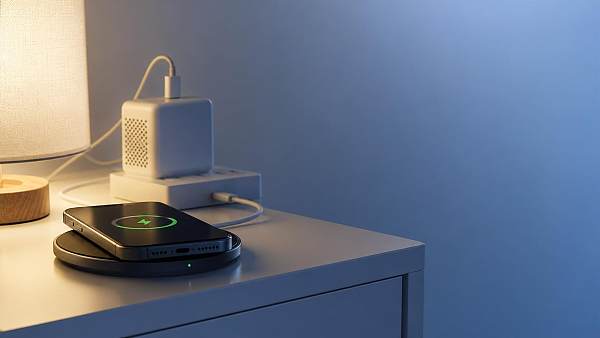
The safest wireless chargers for overnight use are certified, temperature-aware, and designed to reduce power once the battery is full.
They should support Qi or Qi2 standards, include foreign object detection, and use a reputable power adapter.
Good wireless chargers also keep the phone aligned, ventilated, and away from coins, keys, or magnetic metal accessories.
Overnight charging is not automatically unsafe, but risk increases when low-quality electronics handle heat poorly.
Basic Safety Principles Behind Wireless Charging
Wireless charging uses electromagnetic induction between a transmitter coil and a receiver coil inside the phone.
Energy transfer creates some heat, especially when alignment is poor or a thick case blocks efficient charging.
Reliable wireless chargers manage this heat with sensors, firmware limits, and power negotiation protocols.
When the phone reaches full capacity, safe wireless chargers shift to maintenance charging instead of continuous high output.
This matters overnight because unattended charging leaves less opportunity to notice unusual heat, odor, or shutdown behavior.
Core Features That Matter
- Qi or Qi2 certification for verified compatibility and power behavior.
- Foreign object detection to stop heating metal items.
- Temperature monitoring to reduce output during thermal buildup.
- Overvoltage and overcurrent protection for adapter-related faults.
- Stable magnetic alignment, especially for newer magnetic phone systems.
Current Industry Signals Around Safer Wireless Chargers
Safety expectations have changed as wireless chargers moved from desks to bedrooms, vehicles, hotels, and shared workspaces.
The market now treats charging reliability as part of product quality, not merely an accessory feature.
Smart electronics brands increasingly emphasize certified chipsets, better coil design, and improved heat dissipation materials.
Green energy discussions also influence product design, with more focus on idle efficiency and reduced standby waste.
TradeNexus Pro tracks these shifts across smart electronics, supply chain SaaS, and advanced manufacturing ecosystems.
The strongest products usually combine verified components, transparent documentation, and consistent post-sale quality control.
Business and Practical Value of Safer Charging Choices
Safer wireless chargers reduce device stress, lower replacement risk, and support more predictable daily routines.
For homes, safe overnight charging helps keep bedside areas free from excessive cable clutter and worn connectors.
For offices, hotels, clinics, and vehicles, certified wireless chargers support consistent user experience across many devices.
For product teams, safety features strengthen brand trust when accessories are bundled with electronics or furniture.
The value is not only faster charging. It is controlled charging under real living conditions.
A charger beside a bed must tolerate dust, cases, notifications, battery optimization cycles, and extended standby time.
Why Certification Should Come First
Certification does not guarantee perfection, but it reduces uncertainty around interoperability and electrical behavior.
Qi-certified wireless chargers are tested against defined requirements for communication, power delivery, and object detection.
Qi2 wireless chargers add magnetic alignment, which can improve efficiency and reduce unwanted heat.
Uncertified products may still work, but their safety claims are harder to verify.
Common Types of Wireless Chargers for Overnight Use
Different charger formats suit different bedside habits, device combinations, and safety priorities.
The safest choice is often the design that keeps alignment consistent and heat visible.
For most bedrooms, magnetic stands and certified pads are the safest wireless chargers when used correctly.
Multi-device stations can be safe, but only when the brand clearly states total output and safety certifications.
Warning Signs to Avoid Before Overnight Charging
Some wireless chargers should not be trusted for unattended overnight use, even if they appear to function normally.
The most obvious warning sign is excessive heat during a normal charging session.
Warmth is expected, but discomfort to touch suggests poor efficiency or weak thermal management.
- No visible certification information on packaging or product pages.
- Unbranded adapters bundled with high-output wireless chargers.
- Buzzing, flickering lights, burnt odor, or random disconnects.
- Charging surfaces that become hot without a phone attached.
- Very low prices paired with unrealistic wattage claims.
Metal plates used for car mounts can interfere with wireless chargers and create localized heating.
Credit cards, hotel key cards, and magnetic accessories should also stay away from the charging zone.
Thick rugged cases can reduce efficiency, especially when they push the phone away from the coil.
Practical Setup Guidelines for Safer Overnight Use
Safe wireless chargers still need safe placement. A certified product can perform poorly in the wrong environment.
Place the charger on a hard, flat, ventilated surface, not under pillows, blankets, papers, or clothing.
Use the adapter recommended by the charger brand, especially for 15W or multi-device wireless chargers.
Avoid damaged cables, loose wall outlets, and overloaded extension strips near the bed.
- Check certification details before purchase.
- Test heat during a daytime charging session.
- Remove metal accessories from the phone case.
- Keep the charging surface clean and uncovered.
- Replace chargers that show electrical or thermal faults.
Phone software also matters. Battery optimization settings can reduce overnight stress by delaying final charging stages.
When available, optimized charging pairs well with safe wireless chargers and helps limit long periods at full battery.
Comparison Criteria for Selecting Safer Wireless Chargers
A structured comparison helps separate well-engineered wireless chargers from basic accessories with broad claims.
The purchase decision should balance certification, heat control, device compatibility, and long-term reliability.
- Safety standard: Prefer Qi or Qi2 listed products from traceable brands.
- Thermal design: Look for ventilation, quality materials, and clear temperature protection claims.
- Power behavior: Choose sensible wattage over exaggerated fast-charging labels.
- Adapter quality: Use certified USB-C Power Delivery adapters where required.
- Form factor: Select stands or magnetic pads when alignment is a recurring issue.
The safest wireless chargers are rarely defined by maximum wattage alone.
A moderate, stable charger with verified protections is better for overnight use than a powerful uncertified pad.
For shared environments, documentation and supplier consistency become even more important than styling.
Actionable Next Steps for Safer Charging Decisions
Start by reviewing the current charger already in use. Check its certification, adapter rating, cable condition, and heat behavior.
If any information is missing, consider replacing it with certified wireless chargers from brands with transparent specifications.
Before relying on a new charger overnight, test it while awake for one full charging cycle.
Observe phone temperature, charging interruptions, case compatibility, and whether the pad stays cool after completion.
For ongoing reference, follow trusted technical analysis covering smart electronics, component sourcing, and safety-related market standards.
TradeNexus Pro supports evidence-based evaluation across connected devices, energy systems, and global supply chain quality signals.
The safest overnight routine is simple: certified wireless chargers, clean placement, proper adapters, and regular inspection.
With those controls in place, wireless charging can remain convenient without adding unnecessary bedside risk.
Get weekly intelligence in your inbox.
No noise. No sponsored content. Pure intelligence.
 Oct 12, 2026How Predictive Maintenance AI Detects Machine Failures Before Unplanned DowntimeHow Predictive Maintenance AI Detects Machine Failures Before Unplanned Downtime
 Oct 10, 2026How to Scope Packaging Automation for High-Mix Lines Without Creating BottlenecksHow to Scope Packaging Automation for High-Mix Lines Without Creating Bottlenecks
 Oct 08, 2026How Digital Health Improves Diagnostic Accuracy and Workflow in Clinical LabsHow Digital Health Improves Diagnostic Accuracy and Workflow in Clinical Labs
 Oct 07, 2026Selecting Voice Picking Systems for German Warehouses: Integration, Languages and ROISelecting Voice Picking Systems for German Warehouses: Integration, Languages and ROI
 Oct 06, 2026How to Choose Last Mile Dispatch Software for On-Time Delivery at ScaleHow to Choose Last Mile Dispatch Software for On-Time Delivery at Scale
 Oct 05, 2026Vietnam’s Consumer Electronics Market: Demand Shifts and Sourcing OpportunitiesVietnam’s Consumer Electronics Market: Demand Shifts and Sourcing Opportunities
 Oct 04, 2026Digital Health Investment Priorities for Providers: Improving Access, Outcomes, and EfficiencyDigital Health Investment Priorities for Providers: Improving Access, Outcomes, and Efficiency
 Oct 03, 2026How to Specify an FR4 Custom PCB Board for High-Voltage and High-Heat DesignsHow to Specify an FR4 Custom PCB Board for High-Voltage and High-Heat Designs
 Oct 02, 2026ERP Software Market Intelligence: Adoption, Pricing, and Vendor Signals to WatchERP Software Market Intelligence: Adoption, Pricing, and Vendor Signals to Watch
 Oct 01, 2026How to Select Calibrated Temperature Data Loggers for GMP Cold Storage MonitoringHow to Select Calibrated Temperature Data Loggers for GMP Cold Storage Monitoring
 Sep 30, 2026Custom Molded Rubber Pricing: What Drives Unit Cost and Tooling Fees?Custom Molded Rubber Pricing: What Drives Unit Cost and Tooling Fees?
 Sep 29, 2026How to Evaluate Energy Management Software Vendors for Multi-Site OperationsHow to Evaluate Energy Management Software Vendors for Multi-Site Operations
 Sep 28, 2026How to Select a DIN Rail Smart Meter for Multi-Circuit Energy MonitoringHow to Select a DIN Rail Smart Meter for Multi-Circuit Energy Monitoring
 Sep 27, 2026TWS Earbuds in Vietnam: Demand Drivers, Price Tiers, and Retail Channel OpportunitiesTWS Earbuds in Vietnam: Demand Drivers, Price Tiers, and Retail Channel Opportunities
 Sep 26, 2026How UAE Clinics Can Qualify a Smart Glucometer Supplier for Accuracy and ComplianceHow UAE Clinics Can Qualify a Smart Glucometer Supplier for Accuracy and Compliance
 Sep 25, 2026Buying Aesthetic Lasers in the USA: FDA Status, Wavelengths, and Service SupportBuying Aesthetic Lasers in the USA: FDA Status, Wavelengths, and Service Support
 Sep 24, 2026Laser Cutting Brass Sheet: How to Prevent Burrs and Heat Marks on Thin PartsLaser Cutting Brass Sheet: How to Prevent Burrs and Heat Marks on Thin Parts
 Sep 23, 2026How to Choose Lightweight ANC Headphones for Comfortable All-Day TravelHow to Choose Lightweight ANC Headphones for Comfortable All-Day Travel
 Sep 22, 2026IPX5 TWS Bluetooth Earbuds: What Protection Do They Offer for Workouts?IPX5 TWS Bluetooth Earbuds: What Protection Do They Offer for Workouts?
 Sep 21, 2026What to Look for in a Grid Integration Company for Utility-Scale Solar ProjectsWhat to Look for in a Grid Integration Company for Utility-Scale Solar Projects
 Sep 20, 2026Microgrid Controller Pricing: What Drives Cost in Commercial Energy Projects?Microgrid Controller Pricing: What Drives Cost in Commercial Energy Projects?
 Sep 19, 2026How to Choose a GaN Charger for Laptops Without Compromising Power or PortabilityHow to Choose a GaN Charger for Laptops Without Compromising Power or Portability
 Sep 18, 2026Floating Solar Farm Costs: CAPEX, OPEX, and the Site Factors That Shape ROIFloating Solar Farm Costs: CAPEX, OPEX, and the Site Factors That Shape ROI
 Sep 17, 2026Drone Delivery Solutions for Last-Mile Routes: Site, Payload, and Range PlanningDrone Delivery Solutions for Last-Mile Routes: Site, Payload, and Range Planning
 Sep 16, 2026When Low-Volume Electronics Manufacturing Makes More Sense Than Mass ProductionWhen Low-Volume Electronics Manufacturing Makes More Sense Than Mass Production
 Sep 15, 2026Wholesale WiFi Smart Switches: What Buyers Should Verify Before OrderingWholesale WiFi Smart Switches: What Buyers Should Verify Before Ordering
 Sep 14, 2026How to Select IoT Sensors for Reliable Monitoring in Harsh Industrial EnvironmentsHow to Select IoT Sensors for Reliable Monitoring in Harsh Industrial Environments