Manufacturing Trends in the Middle East: Where New Investment Is Moving
Manufacturing trends Middle East are no longer defined only by low-cost industrial expansion or oil-linked downstream projects. The region is moving into a more selective phase of industrialization, where governments want manufacturing to deliver economic diversification, supply chain resilience, export growth, skilled employment, and technology transfer at the same time. For business leaders evaluating where capital is actually flowing, the more useful question is not whether the Middle East is “growing” in manufacturing, but which subsectors are attracting serious investment, under what policy logic, and with what execution risk.
The shift matters beyond the region itself. As global companies rethink sourcing concentration, geopolitical exposure, freight corridors, energy costs, and market proximity, the Middle East is positioning itself as a manufacturing platform that connects Europe, Asia, and Africa. That position does not make every market equally attractive, and it does not eliminate familiar risks around localization, project delivery, regulation, or talent availability. But it does change how executives should read investment signals coming from the Gulf and wider Middle East.
What is emerging is not a single manufacturing story. It is a portfolio of national strategies, each trying to attract different layers of industrial value.
Investment is moving toward strategic, policy-backed manufacturing rather than broad industrial volume
One of the clearest changes across the region is that capital is increasingly targeted. New investment is concentrating in sectors that align with national industrial policy, energy transition agendas, food and healthcare security, and import substitution. In practical terms, this means advanced materials, metals processing, renewable energy components, electric mobility-related supply chains, pharmaceuticals, medical products, industrial machinery, electronics assembly, and logistics-linked light manufacturing are drawing more attention than undifferentiated low-value production.
This policy-backed selectivity is especially visible in Gulf economies. Saudi Arabia, the UAE, and to a different extent Oman and Qatar are not simply expanding industrial zones; they are building ecosystems around priority sectors. Incentives increasingly favor projects that bring technology, localize critical inputs, create export capacity, or anchor supply chains that can support broader industrial clusters.
For investors and manufacturers, this changes the entry logic. The strongest opportunities are less likely to come from offering generic capacity and more likely to come from fitting into a national industrial roadmap.
Saudi Arabia is attracting the largest strategic manufacturing push
If the question is where the biggest industrial ambition sits, Saudi Arabia remains central. Under Vision 2030 and related industrial development programs, the kingdom has been directing major resources toward manufacturing expansion, industrial localization, mining-to-manufacturing integration, and logistics infrastructure. The logic is straightforward: Saudi Arabia wants more domestic production in sectors that reduce import dependence and increase non-oil exports.
That creates opportunity in several layers. Heavy industry and metals remain important, especially where upstream feedstock advantages can support downstream value-added production. Industrial equipment, construction materials, chemicals, automotive-related manufacturing, food processing, pharmaceuticals, and renewable energy equipment are all areas where investors continue to watch project pipelines closely.
Yet executives should be careful not to read scale as simplicity. Saudi Arabia offers large demand, policy support, and ambitious industrial planning, but execution depends heavily on local partnerships, regulatory navigation, workforce planning, and alignment with localization expectations. For foreign firms, the market is often most attractive when they can contribute technical capability, process know-how, or supply chain depth rather than only capital.
The common mistake is assuming that industrial demand alone guarantees smooth market entry. In reality, Saudi manufacturing opportunities often reward firms that can operate within long investment cycles and complex stakeholder environments.
The UAE is consolidating its role as a flexible manufacturing and re-export platform
While Saudi Arabia is often associated with scale, the UAE’s manufacturing appeal lies in flexibility, infrastructure quality, trade connectivity, and speed of execution. The country has strengthened its position in advanced manufacturing, industrial technology, metals transformation, food processing, packaging, pharmaceuticals, specialty chemicals, and selected electronics-related assembly.
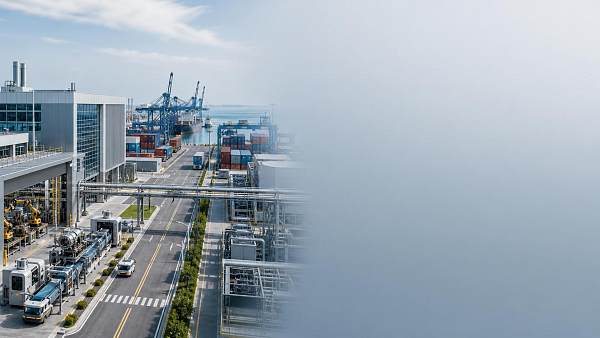
Its advantage is not low-cost production. It is the combination of free zones, logistics performance, port access, financial services, and a regulatory environment that many international firms find easier to navigate than larger regional markets. For companies serving multiple geographies, the UAE is often evaluated less as a pure domestic market and more as a hub for regional production, final-stage assembly, distribution, and aftermarket support.
This distinction is important. A plant in the UAE may be justified not because local demand alone is overwhelming, but because it improves service levels into GCC, East Africa, South Asia, or broader MENA markets. In sectors where time-to-market, quality assurance, and cross-border distribution matter more than lowest labor cost, that model remains competitive.
Still, decision-makers should test cost assumptions carefully. Landed cost, utility pricing, labor structure, localization requirements, and export market access need to be assessed together. The UAE can be highly efficient, but it is not automatically the cheapest production base in every category.
Renewable energy and industrial decarbonization are redirecting capital into new manufacturing segments
One of the most important manufacturing trends Middle East observers should track is the interaction between energy transition policy and industrial investment. The region’s renewable energy expansion, hydrogen ambitions, and broader decarbonization plans are influencing where manufacturing capital goes.
This does not mean the Middle East is instantly becoming a global leader in every clean-tech component category. It means that energy availability, industrial land, capital access, and policy support are making the region increasingly relevant for selected parts of the green manufacturing chain. Solar-related equipment, battery ecosystem components, cable and electrical infrastructure, energy storage integration, water treatment systems, and low-carbon industrial materials are all receiving growing strategic attention.
There is also a less discussed angle: decarbonization is not only creating new industries, it is reshaping incumbent ones. Steel, aluminum, cement, chemicals, and industrial processing businesses in the region face growing pressure to improve energy efficiency, emissions performance, and export competitiveness as global buyers put more weight on carbon profiles and supply chain transparency.
For enterprise decision-makers, that means the opportunity set is dual. Some firms can participate in new clean manufacturing capacity. Others may find the stronger commercial case in technologies, services, or inputs that help existing regional manufacturers decarbonize.
Food, healthcare, and essential goods manufacturing are gaining importance for resilience reasons
Another durable shift is the regional push to localize production of goods considered strategically important. Supply disruptions during recent global crises reinforced how vulnerable import-dependent markets can be in food systems, pharmaceuticals, medical consumables, packaging, and basic industrial inputs.
As a result, governments across the Middle East have shown stronger interest in domestic or regional manufacturing capacity that supports continuity and security. This has helped drive investment into food processing, agricultural technology-linked manufacturing, cold chain support industries, pharmaceutical production, and medical device assembly or packaging.
Not every project in these sectors will succeed. Some will struggle with scale economics, input costs, or overestimation of local demand. But the direction is clear: resilience has become a legitimate investment rationale alongside profitability.
That creates a different risk-reward profile. In strategic sectors, firms may benefit from policy support and procurement alignment, but they should also expect closer scrutiny on compliance, quality systems, and long-term supply reliability.
Logistics-led manufacturing is becoming more attractive than stand-alone production
In much of the region, the strongest manufacturing business cases are tied to logistics performance. Investment is moving toward industrial locations that combine production with warehousing, multimodal transport, port access, customs efficiency, and regional distribution capability. This is particularly relevant for manufacturers serving fragmented demand across the Gulf, North Africa, and East Africa.
That trend favors industrial zones and national strategies that reduce friction between importing components, processing or assembling them, and exporting finished goods. It also benefits industries where postponement manufacturing, final configuration, packaging, or regional customization can create commercial value without requiring a fully localized upstream supply chain.
Executives assessing a Middle East manufacturing footprint should therefore avoid treating factory economics in isolation. In many cases, the decisive variable is not labor cost or tax incentive alone, but the total operating model: how quickly materials can move in, how reliably goods can move out, and how well the site supports regional demand planning.
Technology adoption is rising, but the gap between announced ambition and plant-level reality remains significant
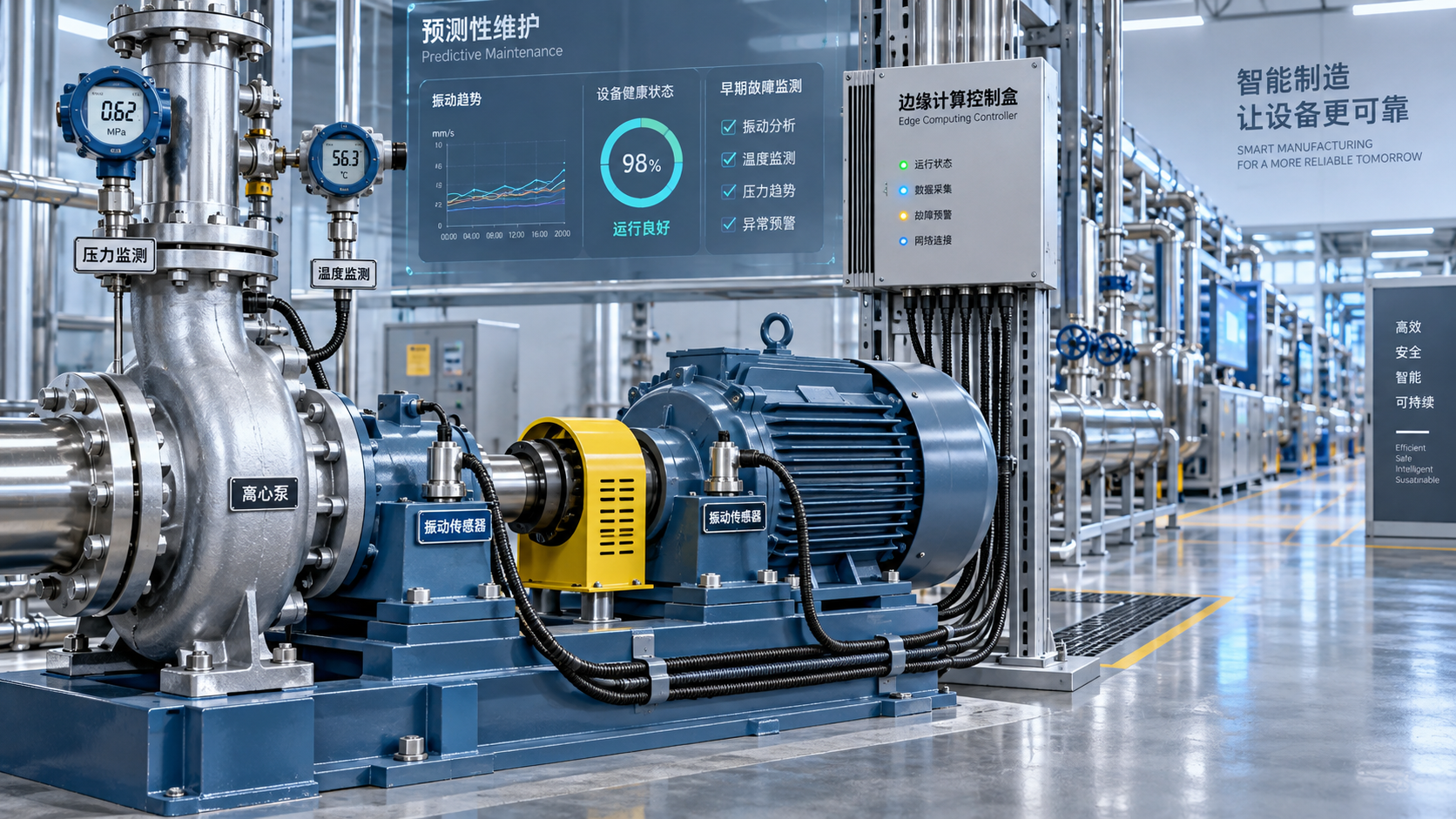
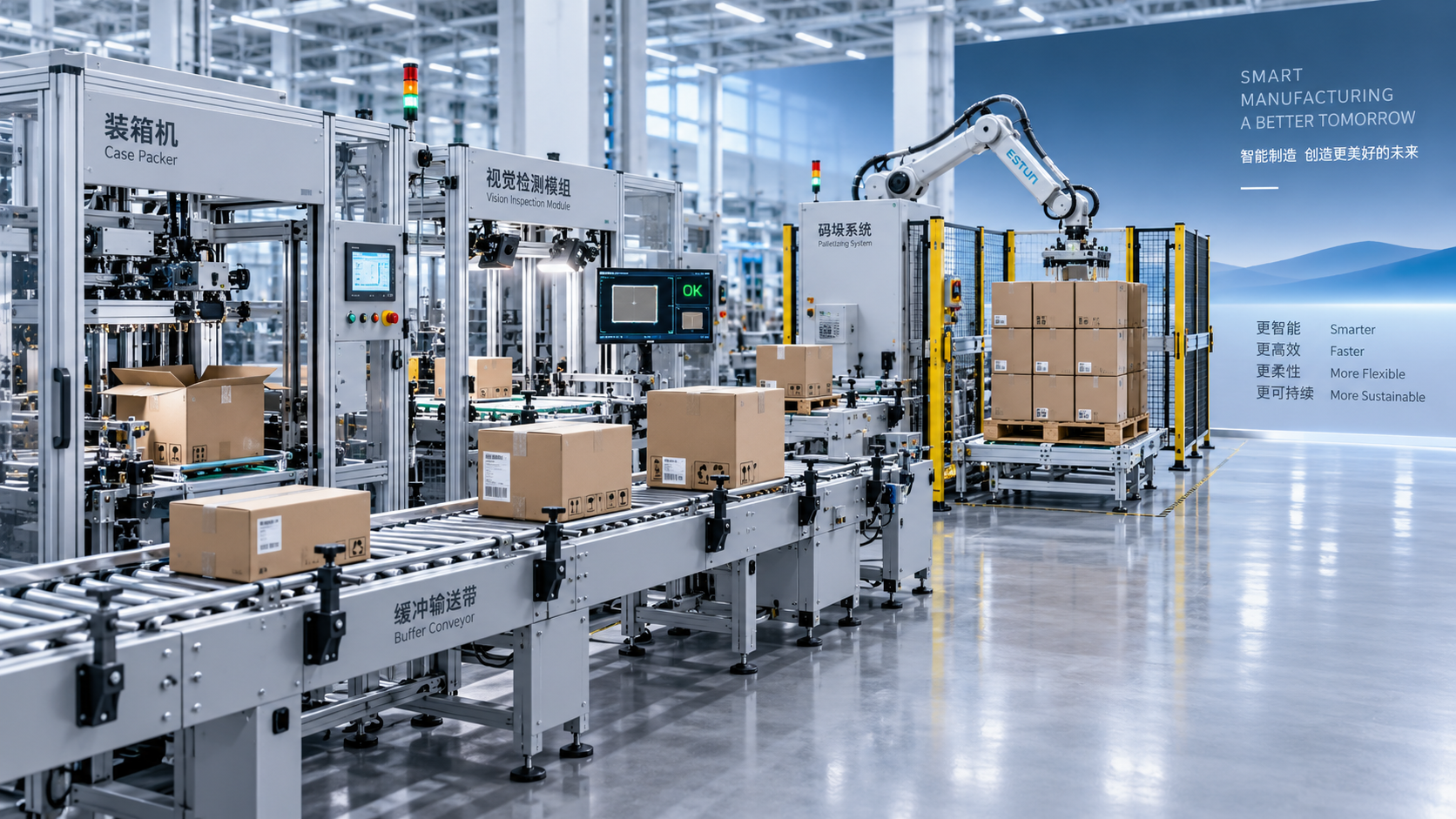
Advanced manufacturing rhetoric is widespread across the Middle East. Smart factories, industrial automation, AI-enabled operations, predictive maintenance, and digital quality systems appear in many national strategies and industrial marketing narratives. Some facilities, especially in capital-intensive sectors or greenfield projects, are implementing these capabilities at a meaningful level.
But decision-makers should separate policy language from operational maturity. The region contains world-class industrial assets as well as facilities that remain far earlier in their digital transformation journey. In practice, adoption depends on workforce capability, systems integration, supplier ecosystems, maintenance discipline, and the economics of each plant.
This matters for both investors and solution providers. If a company is entering the Middle East expecting immediate demand for high-end Industry 4.0 solutions across the board, it may be disappointed. The stronger opportunities often sit where digital systems solve a clear bottleneck: traceability in regulated sectors, energy management in power-intensive industries, predictive maintenance for critical assets, or supply planning in import-dependent operations.
The opportunity is real, but it is unevenly distributed.
Local content and industrial participation rules are becoming commercially decisive
Many executives still underestimate how important localization frameworks have become. Across parts of the Middle East, industrial policy is no longer only about attracting foreign investment; it is about shaping what that investment leaves behind. Local content, domestic value creation, workforce development, and supplier participation are increasingly tied to procurement access, public-sector relationships, and long-term competitiveness.
For foreign manufacturers, this affects more than compliance. It can determine whether a project is viewed as strategically aligned or merely opportunistic. Companies that bring training, technical localization, regional sourcing development, or R&D collaboration are often better positioned than those that rely on imported inputs with minimal domestic integration.
This is especially relevant in government-linked sectors, infrastructure-related manufacturing, defense-adjacent industries, healthcare supply, and energy-linked production. A market entry model that works in one jurisdiction may underperform in another if local participation expectations are not properly built into the business case.
Where the opportunity is strongest by sector
For enterprise leaders trying to prioritize, the regional opportunity is currently more compelling in some manufacturing categories than others.
Higher-potential areas include: metals downstream processing, industrial building materials with export potential, food processing, pharmaceutical and medical supply manufacturing, electrical equipment, energy infrastructure components, selected automotive and mobility supply chains, packaging, water-related industrial systems, and specialized contract manufacturing linked to logistics hubs.
More challenging areas include: labor-intensive commodity manufacturing with weak policy alignment, sectors dependent on large low-cost local supplier networks that are not yet mature, and industries where domestic demand is too limited to justify scale without a very clear export route.
This is why broad statements about “Middle East manufacturing growth” are less useful than sector-by-sector commercial analysis. The region can be highly attractive in one category and structurally difficult in another.
The main risks are execution, not just demand
The headline narrative around new investment can obscure practical obstacles. Industrial land allocation, utility readiness, permitting timelines, local hiring requirements, financing structure, and ecosystem depth all affect project outcomes. In some cases, announced industrial ambitions move faster than supplier development, technical labor availability, or downstream market creation.
There is also the issue of competitive crowding. As governments prioritize similar strategic sectors, investors may see multiple projects targeting overlapping demand pools. This raises familiar questions: will local markets absorb new capacity, can exports be won at competitive cost, and how durable are incentive structures over time?
For sourcing and partnership decisions, another risk is assuming that a project announcement equals operational capability. Procurement leaders should distinguish between planned capacity, installed capacity, and proven delivery performance. In the Middle East, as elsewhere, industrial credibility still depends on execution data, certifications, quality consistency, and supply chain resilience.
What decision-makers should watch over the next three to five years
The next phase of manufacturing growth in the Middle East will likely be shaped by five signals.
One is whether industrial policy continues to convert into operating factories rather than only investment memoranda. Another is how successfully the region develops mid-tier supplier ecosystems around flagship projects. A third is whether energy transition spending creates enough localized demand to sustain manufacturing of components rather than only project installation activity.
Trade corridor development will also matter. The more efficiently the region connects to Europe, Africa, and Asia through ports, rail, customs modernization, and integrated logistics, the stronger its case becomes as a manufacturing platform rather than a consumption market alone.
The final signal is talent. Advanced production requires more than infrastructure and capital. The markets that build technical management capability, maintenance depth, engineering support, and industrial software competence will capture more durable value than those relying mainly on incentives.
For companies considering market entry, supplier partnerships, or investment screening, the practical conclusion is clear: the Middle East deserves attention not because every manufacturing segment is accelerating equally, but because policy-backed industrial transformation is starting to redirect capital into sectors with regional and global relevance. The winners are likely to be firms that understand where national priorities, logistics advantages, and actual operating capability intersect.
That is where new investment is moving, and where competitive position will increasingly be decided.
Get weekly intelligence in your inbox.
No noise. No sponsored content. Pure intelligence.
 Oct 12, 2026How Predictive Maintenance AI Detects Machine Failures Before Unplanned DowntimeHow Predictive Maintenance AI Detects Machine Failures Before Unplanned Downtime
 Oct 10, 2026How to Scope Packaging Automation for High-Mix Lines Without Creating BottlenecksHow to Scope Packaging Automation for High-Mix Lines Without Creating Bottlenecks
 Oct 08, 2026How Digital Health Improves Diagnostic Accuracy and Workflow in Clinical LabsHow Digital Health Improves Diagnostic Accuracy and Workflow in Clinical Labs
 Oct 07, 2026Selecting Voice Picking Systems for German Warehouses: Integration, Languages and ROISelecting Voice Picking Systems for German Warehouses: Integration, Languages and ROI
 Oct 06, 2026How to Choose Last Mile Dispatch Software for On-Time Delivery at ScaleHow to Choose Last Mile Dispatch Software for On-Time Delivery at Scale
 Oct 05, 2026Vietnam’s Consumer Electronics Market: Demand Shifts and Sourcing OpportunitiesVietnam’s Consumer Electronics Market: Demand Shifts and Sourcing Opportunities
 Oct 04, 2026Digital Health Investment Priorities for Providers: Improving Access, Outcomes, and EfficiencyDigital Health Investment Priorities for Providers: Improving Access, Outcomes, and Efficiency
 Oct 03, 2026How to Specify an FR4 Custom PCB Board for High-Voltage and High-Heat DesignsHow to Specify an FR4 Custom PCB Board for High-Voltage and High-Heat Designs
 Oct 02, 2026ERP Software Market Intelligence: Adoption, Pricing, and Vendor Signals to WatchERP Software Market Intelligence: Adoption, Pricing, and Vendor Signals to Watch
 Oct 01, 2026How to Select Calibrated Temperature Data Loggers for GMP Cold Storage MonitoringHow to Select Calibrated Temperature Data Loggers for GMP Cold Storage Monitoring
 Sep 30, 2026Custom Molded Rubber Pricing: What Drives Unit Cost and Tooling Fees?Custom Molded Rubber Pricing: What Drives Unit Cost and Tooling Fees?
 Sep 29, 2026How to Evaluate Energy Management Software Vendors for Multi-Site OperationsHow to Evaluate Energy Management Software Vendors for Multi-Site Operations
 Sep 28, 2026How to Select a DIN Rail Smart Meter for Multi-Circuit Energy MonitoringHow to Select a DIN Rail Smart Meter for Multi-Circuit Energy Monitoring
 Sep 27, 2026TWS Earbuds in Vietnam: Demand Drivers, Price Tiers, and Retail Channel OpportunitiesTWS Earbuds in Vietnam: Demand Drivers, Price Tiers, and Retail Channel Opportunities
 Sep 26, 2026How UAE Clinics Can Qualify a Smart Glucometer Supplier for Accuracy and ComplianceHow UAE Clinics Can Qualify a Smart Glucometer Supplier for Accuracy and Compliance
 Sep 25, 2026Buying Aesthetic Lasers in the USA: FDA Status, Wavelengths, and Service SupportBuying Aesthetic Lasers in the USA: FDA Status, Wavelengths, and Service Support
 Sep 24, 2026Laser Cutting Brass Sheet: How to Prevent Burrs and Heat Marks on Thin PartsLaser Cutting Brass Sheet: How to Prevent Burrs and Heat Marks on Thin Parts
 Sep 23, 2026How to Choose Lightweight ANC Headphones for Comfortable All-Day TravelHow to Choose Lightweight ANC Headphones for Comfortable All-Day Travel
 Sep 22, 2026IPX5 TWS Bluetooth Earbuds: What Protection Do They Offer for Workouts?IPX5 TWS Bluetooth Earbuds: What Protection Do They Offer for Workouts?
 Sep 21, 2026What to Look for in a Grid Integration Company for Utility-Scale Solar ProjectsWhat to Look for in a Grid Integration Company for Utility-Scale Solar Projects
 Sep 20, 2026Microgrid Controller Pricing: What Drives Cost in Commercial Energy Projects?Microgrid Controller Pricing: What Drives Cost in Commercial Energy Projects?
 Sep 19, 2026How to Choose a GaN Charger for Laptops Without Compromising Power or PortabilityHow to Choose a GaN Charger for Laptops Without Compromising Power or Portability
 Sep 18, 2026Floating Solar Farm Costs: CAPEX, OPEX, and the Site Factors That Shape ROIFloating Solar Farm Costs: CAPEX, OPEX, and the Site Factors That Shape ROI
 Sep 17, 2026Drone Delivery Solutions for Last-Mile Routes: Site, Payload, and Range PlanningDrone Delivery Solutions for Last-Mile Routes: Site, Payload, and Range Planning
 Sep 16, 2026When Low-Volume Electronics Manufacturing Makes More Sense Than Mass ProductionWhen Low-Volume Electronics Manufacturing Makes More Sense Than Mass Production
 Sep 15, 2026Wholesale WiFi Smart Switches: What Buyers Should Verify Before OrderingWholesale WiFi Smart Switches: What Buyers Should Verify Before Ordering
 Sep 14, 2026How to Select IoT Sensors for Reliable Monitoring in Harsh Industrial EnvironmentsHow to Select IoT Sensors for Reliable Monitoring in Harsh Industrial Environments