BMS Boards Selection Problems That Show Up After Installation
Many teams choose BMS boards based on datasheets alone, only to face hidden issues after installation such as thermal imbalance, communication faults, and weak system compatibility. For technical evaluators, understanding these post-installation problems is essential to avoiding costly redesigns, downtime, and battery safety risks before a project scales.
Why do BMS boards problems often appear only after installation?
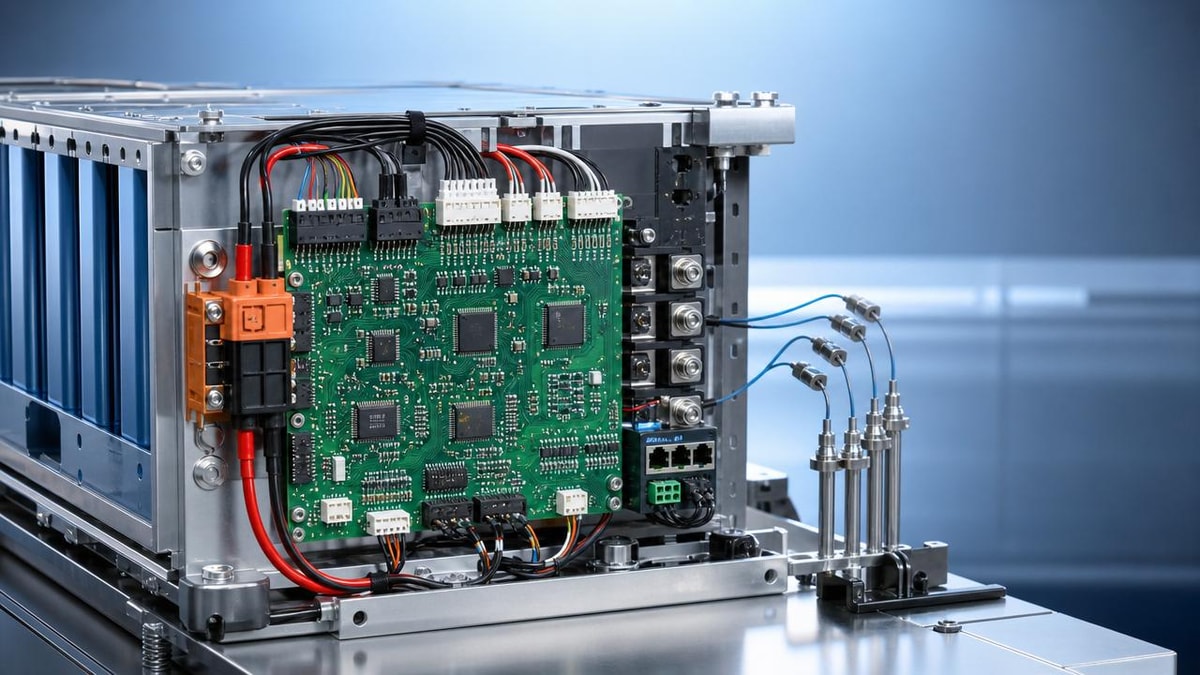
This happens because laboratory specifications rarely reproduce the exact electrical, thermal, mechanical, and software conditions of a live battery system. A BMS board may look fully compliant on paper, yet once it is integrated into an energy storage cabinet, e-mobility pack, backup power unit, medical device, or industrial electronics platform, the real environment becomes far more complex. Cable lengths change signal quality, enclosure heat changes sensor accuracy, and upstream chargers or inverters may behave differently than the reference equipment used during validation.
For technical evaluators, the main issue is not whether bms boards work in principle, but whether they remain stable under installation-specific stress. Post-installation failures usually come from interaction effects: current spikes, grounding noise, poor connector retention, unbalanced cell wiring, firmware mismatches, or CAN/RS485 protocol deviations. These issues may not trigger during bench tests but show up after several charge-discharge cycles, during peak load, or under seasonal temperature changes.
In B2B procurement and system design, this is why component selection should move beyond nominal voltage, current rating, and balancing current. A more reliable evaluation asks: how will the board behave after mounting, after transport vibration, after firmware updates, and after connection to the final host system?
Which post-installation problems are most common with bms boards?
The most common field issues are usually not dramatic single-point failures. Instead, they are creeping performance problems that reduce reliability and increase maintenance cost. Technical teams should watch for six categories.
- Thermal imbalance: the board runs hotter in the enclosure than expected, affecting measurement precision, balancing behavior, and component lifespan.
- Communication instability: intermittent CAN, UART, SMBus, or RS485 faults appear when the full system is energized.
- Inaccurate state estimation: SOC, SOH, or fault thresholds drift because the battery profile, chemistry model, or calibration does not fully match the pack.
- Cell sensing errors: harness routing, EMI, loose terminals, or reference offset create false voltage and temperature readings.
- Protection nuisance trips: overcurrent, undervoltage, or overtemperature protection activates too early in actual duty cycles.
- System compatibility gaps: chargers, inverters, gateways, or host controllers do not interpret messages or timing in the same way as the board supplier expected.
These are the kinds of problems that can delay launch schedules even when the selected bms boards seemed technically adequate during sourcing. The lesson is clear: installation context matters as much as the core specification sheet.
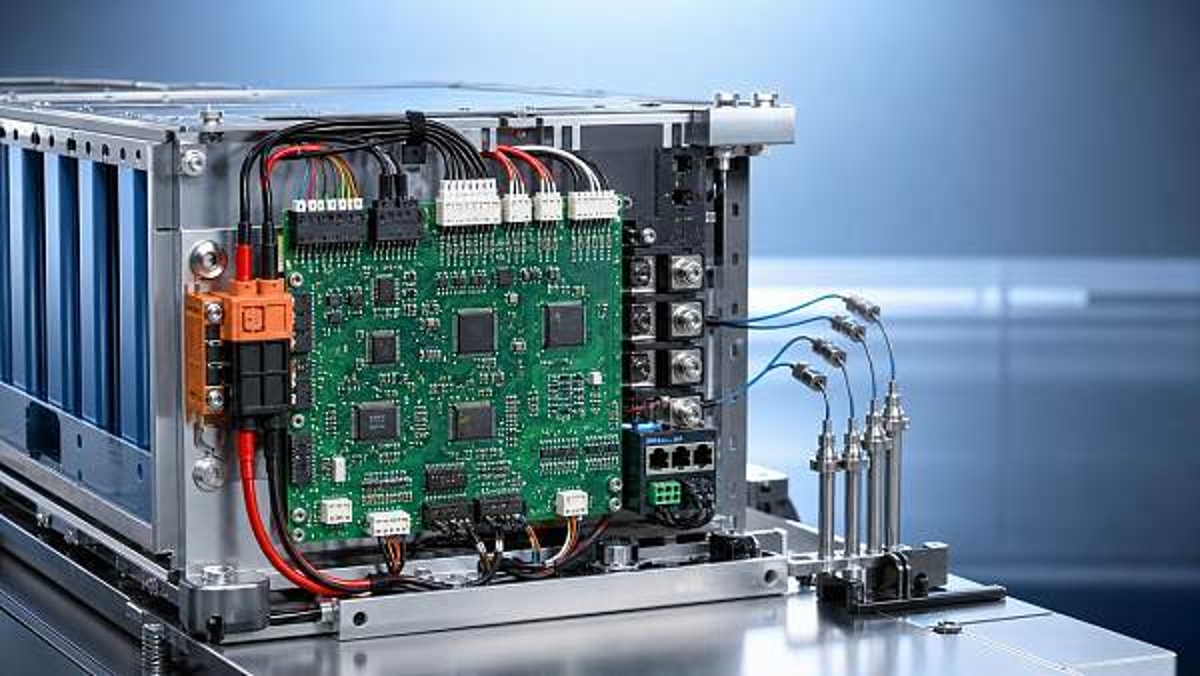
How can technical evaluators tell whether thermal issues will become a real risk?
Thermal problems are among the most underestimated risks in bms boards selection. A board may pass at room temperature on an open bench, then struggle in a sealed pack where balancing resistors, MOSFETs, shunts, and neighboring power electronics all contribute heat. Once board temperature rises, analog front-end stability, balancing efficiency, and component aging can change significantly.
The first sign of future trouble is a narrow thermal margin. If the board is validated close to its rated temperature ceiling, any enclosure hot spot, airflow restriction, or regional climate variation can push it beyond its stable zone. Evaluators should also review where temperature sensors are physically placed. A strong sensor IC is not enough if the thermistor location misses the hottest cells or reads enclosure air instead of cell surface behavior.
Another warning sign is balancing performance under heat. Some bms boards advertise balancing current that is only sustainable for short periods or under ideal cooling. In real installations, balancing may throttle or become uneven. That can create cell divergence over time, especially in large packs, fast-charging applications, or systems with long standby intervals followed by heavy discharge.
A practical evaluation method is to request thermal test data in enclosure-like conditions, not just open-air measurements. Ask for component hot-spot mapping, balancing duty limits, derating curves, and temperature drift of voltage sensing. This gives a much better picture of whether the selected board will remain dependable after deployment.
Why do communication faults show up even when the protocol is supposedly supported?
Protocol support on a datasheet does not guarantee clean communication in a full product. Many bms boards technically support CAN or RS485, but field failures still occur because system timing, message structure, termination, EMI resistance, and fault recovery logic differ between suppliers. One device may expect periodic heartbeats at a different interval, while another may tolerate only a limited delay before entering protection mode.
Installation-related signal quality is another major factor. Long harnesses, shared grounds, noisy switching devices, and weak shielding can corrupt communication frames. In multi-board battery architectures, address conflicts or bus loading issues can also appear only when the complete pack is assembled. This is especially relevant in industrial systems where batteries, motor drives, and telemetry modules operate in the same electrical space.
Technical evaluators should therefore test not only “can it communicate?” but “how does it recover from communication disturbance?” Good bms boards should define timeout behavior, fallback protection states, error logging, and restart conditions. A communication stack that fails safely is often more valuable than one that simply supports more commands.
What compatibility checks should happen before choosing bms boards for a real project?
Compatibility should be treated as a system-level verification task, not a feature checklist. Before final selection, evaluators should map the board against battery chemistry, cell count, current profile, charger behavior, inverter logic, telemetry requirements, enclosure design, and service workflow. Missing just one of these can create expensive field issues later.
A useful preselection table can help focus the review:
This type of review is especially important for organizations managing cross-border sourcing or multi-vendor integration. In those cases, bms boards may be electrically acceptable yet operationally incompatible with the broader supply chain and service ecosystem.
What are the biggest selection mistakes that lead to redesign after installation?
The most expensive mistakes usually come from overvaluing headline specs and undervaluing integration evidence. One common error is choosing bms boards by continuous current rating alone. The board may survive average current, but transient peaks, regenerative loads, or charger interactions can still trigger failures. Another frequent mistake is assuming all balancing methods are equivalent. Passive balancing may be acceptable in small or slow-cycling systems, but larger packs or tighter uptime targets may need stronger balancing strategies and better thermal handling.
A second mistake is ignoring calibration and parameter access. If the supplier does not provide enough visibility into thresholds, event logs, or firmware controls, the engineering team may have little room to correct issues after deployment. That turns a manageable tuning problem into a redesign project.
Third, some teams underestimate serviceability. Once installed, can technicians replace the board without complex reconfiguration? Can they diagnose whether the fault came from the cells, the wiring, or the controller? If not, even a modest failure rate becomes operationally expensive.
Finally, buyers sometimes separate procurement from validation too early. In strategic B2B environments, especially across advanced manufacturing, green energy, smart electronics, and healthcare-adjacent systems, bms boards should be selected through joint review by sourcing, engineering, quality, and after-sales teams. That cross-functional approach catches hidden lifecycle risks before volume rollout.
How should technical evaluators test bms boards before scale-up?
A strong test plan should simulate installation reality, not just verify basic function. Start with pack-level validation using the actual cell configuration, harness length, enclosure layout, and host devices. Then run thermal soak, communication disturbance, current pulse, charge interruption, and recovery sequence testing. The goal is to expose the interactions that often remain hidden in simplified lab setups.
It is also wise to perform edge-case testing. For example, how do the bms boards behave at low state of charge during a sudden load spike? What happens if one temperature sensor drifts? How does the board respond when the charger reconnects after a brief outage? Technical evaluators should document not only pass/fail outcomes, but also latency, data consistency, event logging quality, and reset behavior.
For larger sourcing programs, ask suppliers for field reliability evidence, validation standards used, firmware maintenance policy, and change-notification process. A board that works today but changes silently in the next production batch can become a hidden supply chain risk. On a platform like TradeNexus Pro, where decision-makers compare industrial technologies across sectors, this level of due diligence is part of building long-term procurement confidence rather than short-term price efficiency.
What should you clarify with suppliers before finalizing a BMS decision?
Before approving bms boards, technical evaluators should close the gap between specification and deployment reality. The most important questions are practical: What exact battery chemistries and cell models were validated? Under what enclosure temperatures was balancing tested? Which communication profiles are already proven with similar chargers, inverters, or gateways? What firmware parameters can the customer access? How are fault logs retrieved? What happens after a communication loss, sensor fault, or partial pack replacement?
It also helps to confirm commercial and support details tied to technical risk. Ask whether engineering support is available during integration, whether firmware revisions are traceable, whether customization affects lead time, and whether the supplier provides failure analysis for field returns. These answers often reveal more about future reliability than the datasheet itself.
If you need to further confirm a specific solution, parameter set, integration path, timeline, quotation, or cooperation model, prioritize discussion around battery chemistry fit, communication compatibility, thermal margin, firmware access, serviceability, and validation evidence. Those are the questions most likely to prevent post-installation surprises and help ensure the selected bms boards remain stable as the project moves from pilot to scale.
Get weekly intelligence in your inbox.
No noise. No sponsored content. Pure intelligence.
 May 07, 2026Sustainable Building Materials That Cut Carbon Without Cutting DurabilitySustainable Building Materials That Cut Carbon Without Cutting Durability
 May 07, 2026Green Hydrogen Production: What Decides Whether a Project ScalesGreen Hydrogen Production: What Decides Whether a Project Scales
 May 07, 2026Wind Turbine Blades: Why Repairs Cost More Than PlannedWind Turbine Blades: Why Repairs Cost More Than Planned
 May 07, 2026Folding Solar Chargers: What Real Output Looks Like OutdoorsFolding Solar Chargers: What Real Output Looks Like Outdoors
 May 07, 2026Vehicle to Grid Revenue Looks Attractive, but What Are the Limits?Vehicle to Grid Revenue Looks Attractive, but What Are the Limits?
 May 07, 2026Wireless EV Charging Sounds Easy, So Why Is Adoption Slow?Wireless EV Charging Sounds Easy, So Why Is Adoption Slow?
 May 07, 2026Floating Solar Farms: The Hidden Tradeoffs Behind Water SavingsFloating Solar Farms: The Hidden Tradeoffs Behind Water Savings
 May 07, 2026Geothermal Heat Pumps: Why Installation Quotes Differ So WidelyGeothermal Heat Pumps: Why Installation Quotes Differ So Widely
 May 07, 2026Sodium Ion Batteries: Where They Make Sense Before 2030Sodium Ion Batteries: Where They Make Sense Before 2030
 May 07, 2026EV Battery Recycling Is Growing, but the Supply Chain Isn’t ReadyEV Battery Recycling Is Growing, but the Supply Chain Isn’t Ready
 May 07, 2026BMS Boards Selection Problems That Show Up After InstallationBMS Boards Selection Problems That Show Up After Installation
 May 07, 2026Deep Cycle Batteries: Why Runtime Estimates Often Miss the MarkDeep Cycle Batteries: Why Runtime Estimates Often Miss the Mark
 May 07, 2026Carbon Capture Technology Projects Often Stall at This StageCarbon Capture Technology Projects Often Stall at This Stage
 May 07, 2026What Makes Offshore Wind Technology So Expensive to Deploy?What Makes Offshore Wind Technology So Expensive to Deploy?
 May 07, 2026EV Charging Cables: Small Spec Differences, Big Fit ProblemsEV Charging Cables: Small Spec Differences, Big Fit Problems
 May 07, 2026Solid State Batteries: Progress Is Real, Timelines Are Not SimpleSolid State Batteries: Progress Is Real, Timelines Are Not Simple
 May 07, 2026Microgrid Controllers: What Changes Once Systems Scale UpMicrogrid Controllers: What Changes Once Systems Scale Up
 May 07, 2026Energy Efficient HVAC Claims That Deserve a Closer LookEnergy Efficient HVAC Claims That Deserve a Closer Look
 May 07, 2026Biomass Energy Equipment: Why Maintenance Costs Vary So MuchBiomass Energy Equipment: Why Maintenance Costs Vary So Much
 May 07, 2026Smart Meters Wholesale: Which Specs Matter Most in Bulk OrdersSmart Meters Wholesale: Which Specs Matter Most in Bulk Orders
 May 07, 2026Commercial Energy Storage Sizing Mistakes That Raise CostsCommercial Energy Storage Sizing Mistakes That Raise Costs
 May 07, 2026Residential Solar Kits: What Gets Overlooked Before BuyingResidential Solar Kits: What Gets Overlooked Before Buying
 May 07, 2026V2G Technology Is Moving Fast, but What Still Holds It Back?V2G Technology Is Moving Fast, but What Still Holds It Back?
 May 07, 2026Smart Street Lighting Upgrades: Where Savings Often SlipSmart Street Lighting Upgrades: Where Savings Often Slip
 May 07, 2026Portable Solar Panels That Work Better in Real Travel UsePortable Solar Panels That Work Better in Real Travel Use
 May 07, 2026How to Compare AGM Batteries Wholesale Beyond Unit PriceHow to Compare AGM Batteries Wholesale Beyond Unit Price
 May 07, 2026Do Solar Water Heaters Still Pay Off in Mild Climates?Do Solar Water Heaters Still Pay Off in Mild Climates?