Vehicle to Grid Revenue Looks Attractive, but What Are the Limits?
Vehicle to grid revenue can look compelling on paper, especially to financial decision-makers seeking new returns from fleet electrification. Yet the real business case depends on limits that are often overlooked: battery degradation, grid rules, charging patterns, capital costs, and market volatility. For procurement and finance leaders, understanding where vehicle to grid creates value—and where it fails to scale—is essential before approving investment.
What vehicle to grid means in practical business terms
Vehicle to grid, often shortened to V2G, allows an electric vehicle to send stored electricity back to the grid or to a building when market or system conditions justify it. In theory, that turns an EV battery from a transport asset into a flexible energy asset. For finance teams, this creates an appealing narrative: the same fleet that consumes energy for mobility may also generate service revenue through peak shaving, demand response, frequency regulation, or energy arbitrage.
That promise explains why vehicle to grid is attracting attention across fleet operations, utilities, charging providers, and corporate sustainability programs. However, the revenue headline can be misleading if it ignores the operational boundaries of the asset. A battery is only available for export when the vehicle is parked, connected, contractually enrolled, and still able to meet transport obligations. That is why the true question is not whether vehicle to grid can earn revenue, but under what constraints it can do so consistently and profitably.
Why the market is paying closer attention now
Several trends have elevated interest in vehicle to grid. First, corporate fleets are electrifying under emissions targets and urban air-quality rules. Second, power systems are integrating more intermittent renewable generation, increasing the value of flexible distributed storage. Third, grid operators in some regions are opening access to ancillary service markets for nontraditional assets. Finally, finance leaders are under pressure to improve total cost of ownership calculations for EV adoption.
For a platform such as TradeNexus Pro, which tracks the intersection of green energy, advanced manufacturing, smart electronics, and supply chain software, vehicle to grid is more than a technology topic. It sits at the crossroads of power market design, charging hardware standards, battery economics, fleet procurement strategy, and digital orchestration. That cross-sector reality is exactly why headline revenue figures should be tested against operational and market evidence.
Where vehicle to grid can create value
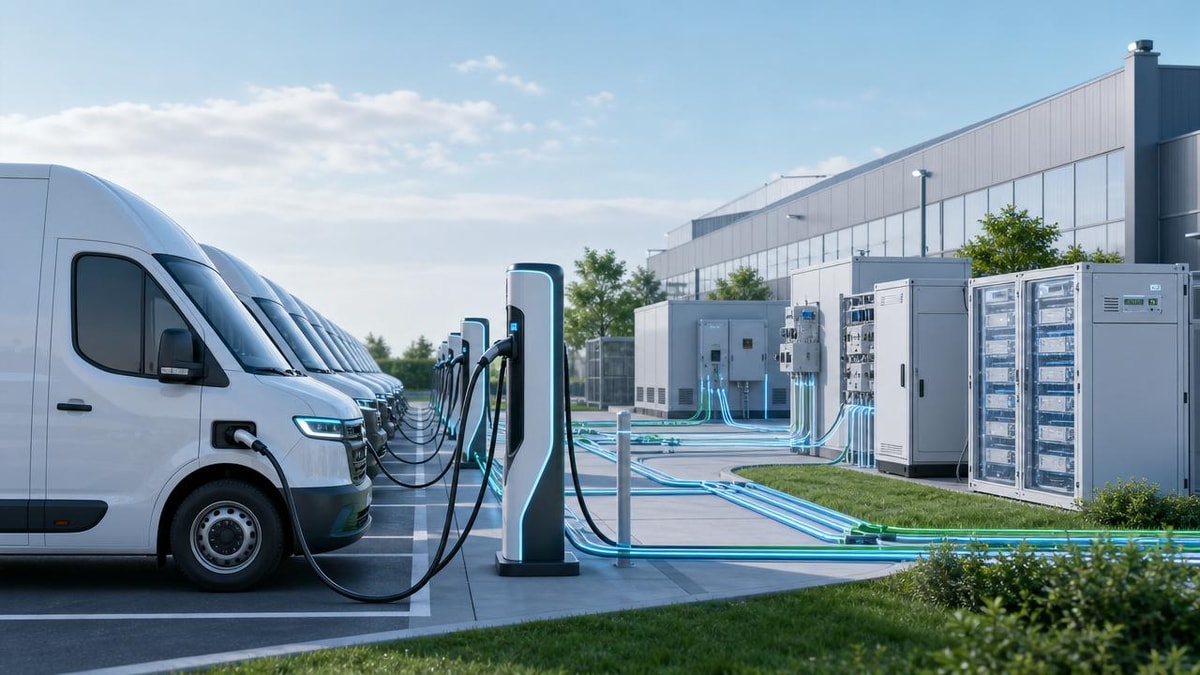
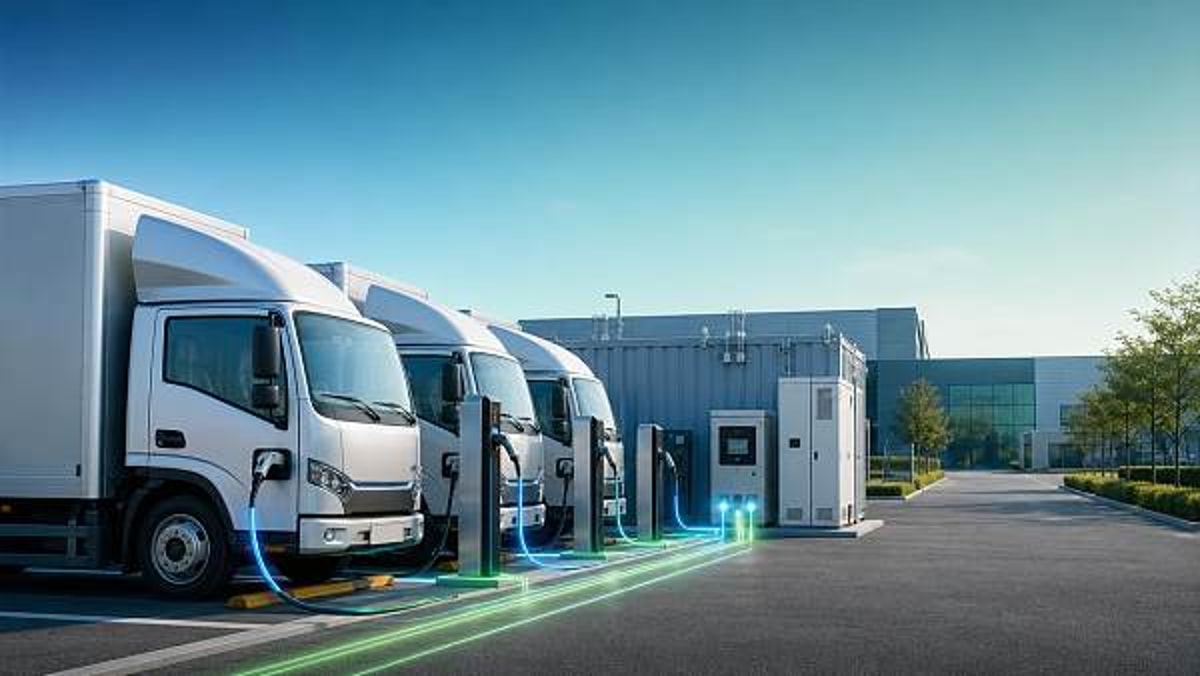
The value of vehicle to grid is strongest when a business has predictable dwell time, centralized charging, and access to compensation mechanisms that reward flexibility. School bus fleets are often cited because vehicles sit idle for long periods and can be connected during grid stress windows. Corporate depots with overnight parking may also participate when morning dispatch schedules are stable. In some cases, V2G can reduce site demand charges or support backup resilience for critical operations.
The broader business value extends beyond direct revenue. A well-structured vehicle to grid strategy may support grid interconnection planning, improve use of behind-the-meter solar, reduce exposure to peak tariffs, and strengthen ESG reporting. For finance approvers, this means the strongest cases often combine several benefits rather than relying on one volatile revenue stream.
Still, attractive use cases do not eliminate the limits. Every potential gain must be weighed against degradation, equipment cost, software integration, labor complexity, and compliance obligations.
The main limits behind vehicle to grid revenue
1. Battery degradation is not a footnote
The first financial limit is battery wear. Additional cycling for vehicle to grid can accelerate degradation, depending on chemistry, depth of discharge, thermal conditions, and charging behavior. While some operating windows may have modest impact, finance teams should not treat degradation cost as negligible. If the incremental battery wear outweighs service payments, apparent revenue becomes balance-sheet erosion. The right model should estimate degradation per discharged kilowatt-hour rather than assuming a generic annual percentage.
2. Availability is constrained by fleet reality
A parked vehicle is not automatically an available grid asset. Vehicle to grid depends on actual plug-in rates, state-of-charge requirements, route uncertainty, driver compliance, and seasonal variation. Commercial fleets with irregular dispatch patterns may struggle to guarantee availability during the exact intervals that earn the highest prices. This can materially reduce revenue compared with simulation models built on ideal utilization assumptions.
3. Charging and interconnection infrastructure adds cost
Bidirectional charging hardware is more complex and often more expensive than conventional smart charging systems. Businesses may also face switchgear upgrades, transformer capacity constraints, metering requirements, site controls, cybersecurity obligations, and utility interconnection studies. These capital costs can stretch payback periods well beyond the headline revenue case. In some markets, they are the reason projects remain pilots instead of scaled programs.
4. Regulation and market access are uneven
Vehicle to grid revenue is highly sensitive to local rules. Some grids compensate fast-response distributed assets well; others do not. Some allow aggregation of many small batteries into a market product; others impose thresholds or operational barriers. Settlement rules, telemetry standards, licensing, and utility tariffs can all affect bankability. Financial decision-makers should avoid transferring economics from one country or ISO region to another without adjusting for market design.
5. Revenue itself is volatile
Even where vehicle to grid is technically feasible, the income stream may fluctuate with wholesale prices, ancillary service saturation, policy changes, and aggregator fees. Early market entrants sometimes benefit from scarcity pricing, but returns can compress as participation grows. That means projected cash flow should be stress-tested under low-price scenarios instead of relying on peak historical events.
Which fleet types are better suited to vehicle to grid
Not all electric fleets should pursue the same strategy. The commercial fit depends less on brand enthusiasm and more on duty cycle economics. A clear segmentation framework helps procurement and finance teams separate realistic candidates from poor fits.
This classification matters because a vehicle to grid project should be approved based on operational fit first, then monetization potential. If the fleet must preserve high state of charge for mission-critical service, export flexibility may be too limited to matter.
How finance leaders should evaluate the business case
For financial approvers, the core discipline is to move from gross revenue projections to risk-adjusted contribution. A sound vehicle to grid model should include hardware depreciation, software and aggregator fees, maintenance, warranty implications, incremental battery wear, utility charges, and the value of operational reserve energy that cannot be exported. It should also distinguish contracted revenue from speculative merchant earnings.
A practical review framework includes five questions. First, how many hours per day is the fleet truly connected and dispatch-flexible? Second, what percentage of projected revenue depends on a single market mechanism? Third, what happens to returns if battery degradation is 20% worse than forecast? Fourth, which party bears performance penalties if export commitments are missed? Fifth, does the project still make sense if policy support changes?
These questions help separate strategic optionality from over-optimistic modeling. In many cases, the best near-term answer may be smart charging or vehicle-to-building optimization rather than full vehicle to grid participation.
Implementation priorities before scaling
Businesses interested in vehicle to grid should begin with measured pilots, not enterprise-wide rollouts. The pilot should test real plug-in behavior, export event performance, site energy interactions, and battery response under seasonal conditions. Data collection is essential: interval metering, charger logs, route schedules, and market settlement results should all feed a finance-grade analysis.
Cross-functional governance also matters. Energy managers may focus on grid value, fleet managers on operational reliability, procurement on vendor terms, and finance on payback and downside exposure. Without a shared decision model, vehicle to grid programs can look successful in engineering reports while failing capital approval standards.
Vendor due diligence should extend beyond charger specifications. Decision-makers should review interoperability, cybersecurity controls, warranty language, software update paths, utility engagement support, and the counterparty strength of any aggregator offering revenue guarantees. Because vehicle to grid depends on coordination across hardware, software, and market interfaces, weak integration can undermine theoretical value.
A balanced outlook for decision-makers
Vehicle to grid is neither hype nor universal solution. It is a conditional business model whose success depends on fleet behavior, market structure, battery economics, and implementation quality. For some assets, especially those with long idle windows and strong local incentives, vehicle to grid can improve the economics of electrification. For others, the limits are substantial enough that the smarter move is to prioritize managed charging, tariff optimization, and site-level energy flexibility first.
For procurement directors, supply chain managers, and enterprise finance teams, the right approach is disciplined evaluation rather than binary enthusiasm. Revenue looks attractive only when the assumptions are operationally credible and contractually defensible. As the market matures, the winners will be organizations that treat vehicle to grid not as a headline promise, but as a carefully modeled component of a broader electrification and energy strategy.
If your organization is assessing fleet electrification, charging infrastructure, or distributed energy partnerships, use vehicle to grid as one scenario within a wider decision framework. The strongest approvals will come from evidence-based pilots, transparent risk models, and a clear understanding of where flexibility creates durable value.
Get weekly intelligence in your inbox.
No noise. No sponsored content. Pure intelligence.
 May 07, 2026Sustainable Building Materials That Cut Carbon Without Cutting DurabilitySustainable Building Materials That Cut Carbon Without Cutting Durability
 May 07, 2026Green Hydrogen Production: What Decides Whether a Project ScalesGreen Hydrogen Production: What Decides Whether a Project Scales
 May 07, 2026Wind Turbine Blades: Why Repairs Cost More Than PlannedWind Turbine Blades: Why Repairs Cost More Than Planned
 May 07, 2026Folding Solar Chargers: What Real Output Looks Like OutdoorsFolding Solar Chargers: What Real Output Looks Like Outdoors
 May 07, 2026Vehicle to Grid Revenue Looks Attractive, but What Are the Limits?Vehicle to Grid Revenue Looks Attractive, but What Are the Limits?
 May 07, 2026Wireless EV Charging Sounds Easy, So Why Is Adoption Slow?Wireless EV Charging Sounds Easy, So Why Is Adoption Slow?
 May 07, 2026Floating Solar Farms: The Hidden Tradeoffs Behind Water SavingsFloating Solar Farms: The Hidden Tradeoffs Behind Water Savings
 May 07, 2026Geothermal Heat Pumps: Why Installation Quotes Differ So WidelyGeothermal Heat Pumps: Why Installation Quotes Differ So Widely
 May 07, 2026Sodium Ion Batteries: Where They Make Sense Before 2030Sodium Ion Batteries: Where They Make Sense Before 2030
 May 07, 2026EV Battery Recycling Is Growing, but the Supply Chain Isn’t ReadyEV Battery Recycling Is Growing, but the Supply Chain Isn’t Ready
 May 07, 2026BMS Boards Selection Problems That Show Up After InstallationBMS Boards Selection Problems That Show Up After Installation
 May 07, 2026Deep Cycle Batteries: Why Runtime Estimates Often Miss the MarkDeep Cycle Batteries: Why Runtime Estimates Often Miss the Mark
 May 07, 2026Carbon Capture Technology Projects Often Stall at This StageCarbon Capture Technology Projects Often Stall at This Stage
 May 07, 2026What Makes Offshore Wind Technology So Expensive to Deploy?What Makes Offshore Wind Technology So Expensive to Deploy?
 May 07, 2026EV Charging Cables: Small Spec Differences, Big Fit ProblemsEV Charging Cables: Small Spec Differences, Big Fit Problems
 May 07, 2026Solid State Batteries: Progress Is Real, Timelines Are Not SimpleSolid State Batteries: Progress Is Real, Timelines Are Not Simple
 May 07, 2026Microgrid Controllers: What Changes Once Systems Scale UpMicrogrid Controllers: What Changes Once Systems Scale Up
 May 07, 2026Energy Efficient HVAC Claims That Deserve a Closer LookEnergy Efficient HVAC Claims That Deserve a Closer Look
 May 07, 2026Biomass Energy Equipment: Why Maintenance Costs Vary So MuchBiomass Energy Equipment: Why Maintenance Costs Vary So Much
 May 07, 2026Smart Meters Wholesale: Which Specs Matter Most in Bulk OrdersSmart Meters Wholesale: Which Specs Matter Most in Bulk Orders
 May 07, 2026Commercial Energy Storage Sizing Mistakes That Raise CostsCommercial Energy Storage Sizing Mistakes That Raise Costs
 May 07, 2026Residential Solar Kits: What Gets Overlooked Before BuyingResidential Solar Kits: What Gets Overlooked Before Buying
 May 07, 2026V2G Technology Is Moving Fast, but What Still Holds It Back?V2G Technology Is Moving Fast, but What Still Holds It Back?
 May 07, 2026Smart Street Lighting Upgrades: Where Savings Often SlipSmart Street Lighting Upgrades: Where Savings Often Slip
 May 07, 2026Portable Solar Panels That Work Better in Real Travel UsePortable Solar Panels That Work Better in Real Travel Use
 May 07, 2026How to Compare AGM Batteries Wholesale Beyond Unit PriceHow to Compare AGM Batteries Wholesale Beyond Unit Price
 May 07, 2026Do Solar Water Heaters Still Pay Off in Mild Climates?Do Solar Water Heaters Still Pay Off in Mild Climates?