Sustainable Building Materials That Cut Carbon Without Cutting Durability
Choosing sustainable building materials no longer means compromising structural performance or project timelines. For project managers and engineering leads, the real challenge is finding solutions that reduce embodied carbon while meeting durability, compliance, and cost expectations. This article explores how sustainable building materials can support long-term resilience, smarter procurement, and lower environmental impact across modern construction projects.
Why are sustainable building materials getting so much attention from project leaders?
The short answer is that carbon is now a project metric, not just a corporate sustainability slogan. In construction, a large share of emissions comes from embodied carbon: the emissions created during raw material extraction, manufacturing, transport, installation, maintenance, and end-of-life processing. For project managers, that makes material choice a direct lever for ESG reporting, bid competitiveness, investor confidence, and future regulatory readiness.
At the same time, owners are not willing to trade away reliability. A low-carbon wall system that fails moisture testing, shortens service life, or increases maintenance exposure will not survive serious review. That is why sustainable building materials are being evaluated less as niche alternatives and more as performance-driven assets. The conversation has shifted from “green or conventional” to “which option delivers the best mix of durability, carbon reduction, lifecycle cost, and compliance?”
This matters across sectors. Industrial facilities want resilient envelopes and faster installation. Healthcare and electronics projects need strict indoor air quality and material consistency. Warehousing and logistics developers need robust, scalable systems with predictable supply. In all of these cases, sustainable building materials are most valuable when they reduce risk rather than add uncertainty.
What actually counts as sustainable building materials in a real project context?
In practice, sustainable building materials are not defined by a single label. They are materials that lower environmental impact while still meeting structural, operational, and regulatory requirements. For procurement and engineering teams, the strongest candidates usually combine several characteristics: reduced embodied carbon, long service life, responsible sourcing, lower toxicity, recyclability, and compatibility with local building codes.
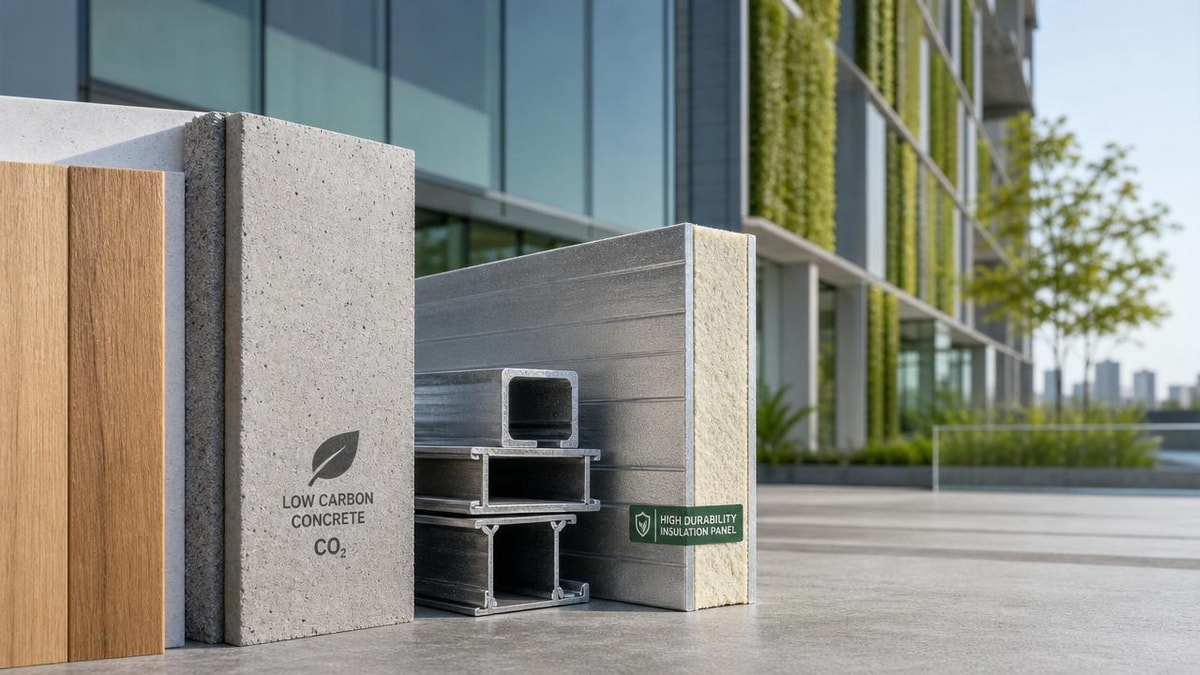
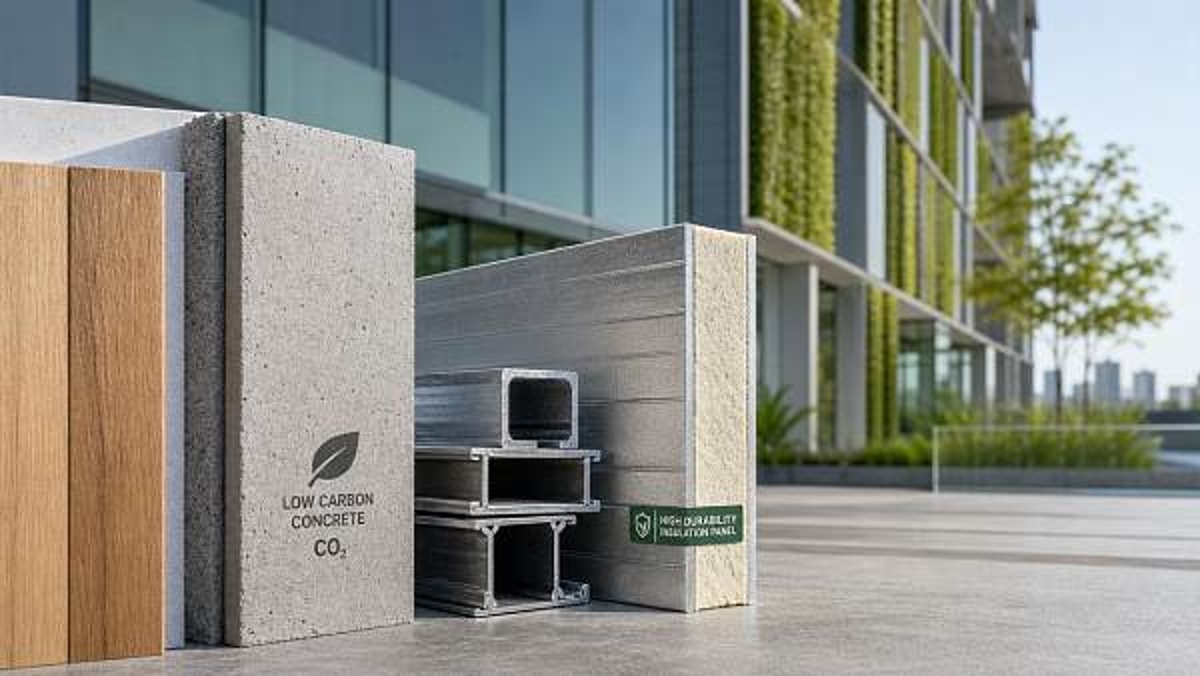
Examples often include low-carbon concrete mixes using supplementary cementitious materials, recycled steel, mass timber in suitable applications, recycled-content insulation, low-VOC finishes, high-durability cladding systems, and modular components that reduce waste on site. However, the right answer depends on use case. A hospital expansion, a battery plant, and a multi-story office retrofit will not prioritize the same material stack.
This is where many teams make a mistake: they evaluate sustainability as a product claim rather than a system decision. A material may look attractive on paper, but if it requires special storage, creates sequencing delays, or increases rework risk, its project value falls quickly. The best sustainable building materials fit the technical design, construction method, local climate, and operational demands of the building.
How can you tell whether a low-carbon material will still deliver long-term durability?
Durability should be tested through evidence, not marketing language. Project leaders need to review how a material performs under the specific stressors of the project: moisture, thermal movement, chemical exposure, freeze-thaw cycles, impact, fire performance, and maintenance frequency. A sustainable option becomes commercially credible when it shows stable performance over time, not simply lower emissions at the factory gate.
Start with third-party documentation. Environmental Product Declarations can help quantify carbon impact, but they do not replace technical submittals, warranty terms, ASTM or EN test results, or field performance data. If you are comparing sustainable building materials for mission-critical environments, ask suppliers for installation tolerances, failure modes, quality control procedures, and examples from comparable projects.
It is also important to distinguish between initial strength and lifecycle durability. Some materials perform well in early testing but lose value if they are highly repair-sensitive or difficult to replace. A practical review should consider:
- Expected service life in the intended environment
- Maintenance intervals and specialist labor requirements
- Compatibility with adjoining systems and coatings
- Resistance to water ingress, corrosion, UV, and thermal stress
- Availability of replacement parts or matching materials over time
For engineering leads, the real question is not “Is it sustainable?” but “Will it still perform after ten, twenty, or thirty years under operating conditions?” That framing prevents short-term carbon wins from creating long-term asset problems.
Which sustainable building materials make the most sense for different project scenarios?
Different project types require different material priorities. A distribution center may focus on structural efficiency, roof reflectivity, and durable slab performance. A healthcare facility may prioritize low-emission interior materials, moisture control, and hygienic surfaces. A smart manufacturing plant may need robust envelopes, acoustic control, and materials that support energy efficiency without disrupting equipment layout.
The table below can help teams align sustainable building materials with project needs.
For many teams, the winning approach is hybrid rather than absolute. Instead of trying to build everything from one “green” material family, they target the highest-impact categories first: structure, enclosure, insulation, and interior finishes. That keeps the sustainability strategy practical and easier to defend during procurement review.
How should project managers compare cost, schedule, and carbon at the same time?
This is where disciplined procurement matters most. Some sustainable building materials carry a higher unit price, but that does not automatically mean a higher project cost. Teams should compare total installed cost, waste reduction, labor productivity, maintenance requirements, and energy implications over the asset lifecycle. A material that shortens installation time or lowers future repair frequency can outperform a cheaper conventional option.
A useful method is to evaluate each option across four decision layers: upfront price, schedule impact, operational value, and carbon profile. For example, low-carbon concrete may require early mix coordination but can fit established workflows. Modular wall systems may reduce site waste and speed up enclosure. Recycled steel may offer strong circularity credentials with little design disruption if sourced early enough.
Ask suppliers direct questions that reveal project reality:
- What lead times are realistic in this region and quarter?
- What substitutions are prequalified if supply tightens?
- Does installation require retraining, new tools, or additional inspections?
- What data supports carbon claims, and is it product-specific?
- How will this material affect long-term facility operations?
For enterprise decision-makers, this balanced approach turns sustainable building materials from a branding discussion into a measurable project-control exercise.
What are the most common mistakes when selecting sustainable building materials?
One common mistake is overvaluing a single metric. Teams sometimes focus entirely on recycled content, biobased content, or a favorable EPD number while ignoring exposure conditions, detailing complexity, or serviceability. Sustainability claims do matter, but they are only one part of a buildable specification.
Another mistake is assuming all sustainable building materials are newer and therefore riskier. In reality, many low-carbon or lower-impact materials are well established, while some conventional choices now carry hidden exposure due to future carbon accounting, occupant health expectations, or tightening owner standards. The risk assessment should be evidence-based, not driven by habit.
A third mistake is bringing sustainability into the process too late. If the discussion starts after design development or during late-stage value engineering, the team has fewer options and more substitution risk. Early collaboration between design, procurement, contractors, and material suppliers is essential for getting both carbon and durability outcomes right.
Finally, teams often forget regional supply chain realities. A material may look ideal in a benchmark report but become impractical if transportation emissions are high, local installers are unfamiliar with it, or code approvals are slow. Sustainable building materials should be selected with local execution in mind.
What should you confirm before procurement, supplier engagement, or final specification?
Before moving forward, project teams should create a short pre-procurement checklist. This helps avoid last-minute changes and makes supplier conversations more productive. The checklist should confirm whether the proposed material aligns with design intent, structural requirements, installation sequencing, compliance standards, and asset-life expectations.
A practical review should include source transparency, carbon documentation, product testing, warranty language, and substitution controls. It should also assess whether the supplier can support consistent output across multiple phases or sites, which is increasingly important for regional rollouts and multinational portfolios.
For teams using B2B intelligence platforms such as TradeNexus Pro, the advantage lies in comparing supplier credibility, sector-specific application evidence, and market movement before procurement pressure peaks. In sectors where timing, resilience, and technical certainty matter, that visibility can improve both negotiation quality and project outcomes.
Quick FAQ checklist for decision-makers
- Does the material reduce embodied carbon in a documented, project-relevant way?
- Has it been proven durable in similar climates and building uses?
- Will it create schedule, labor, or inspection complications?
- Are code approvals, certifications, and test data already available?
- Can suppliers support volume, continuity, and after-installation service?
So, how should teams move forward with sustainable building materials?
The most effective strategy is not to chase the greenest headline claim. It is to select sustainable building materials that can survive technical review, procurement scrutiny, and long-term operating conditions. For project managers and engineering leaders, success comes from balancing carbon reduction with durability, constructability, compliance, and supply assurance.
If you need to move from concept to action, start by narrowing the conversation to a few critical questions: which material categories drive the highest embodied carbon on this project, where can durability not be compromised, which suppliers can provide verifiable performance data, and what schedule constraints may affect adoption? If further evaluation is needed, the next step is to clarify target specifications, expected service life, regional availability, implementation timeline, budget boundaries, and partnership or sourcing requirements before committing to a final solution.
Get weekly intelligence in your inbox.
No noise. No sponsored content. Pure intelligence.
 May 07, 2026Sustainable Building Materials That Cut Carbon Without Cutting DurabilitySustainable Building Materials That Cut Carbon Without Cutting Durability
 May 07, 2026Green Hydrogen Production: What Decides Whether a Project ScalesGreen Hydrogen Production: What Decides Whether a Project Scales
 May 07, 2026Wind Turbine Blades: Why Repairs Cost More Than PlannedWind Turbine Blades: Why Repairs Cost More Than Planned
 May 07, 2026Folding Solar Chargers: What Real Output Looks Like OutdoorsFolding Solar Chargers: What Real Output Looks Like Outdoors
 May 07, 2026Vehicle to Grid Revenue Looks Attractive, but What Are the Limits?Vehicle to Grid Revenue Looks Attractive, but What Are the Limits?
 May 07, 2026Wireless EV Charging Sounds Easy, So Why Is Adoption Slow?Wireless EV Charging Sounds Easy, So Why Is Adoption Slow?
 May 07, 2026Floating Solar Farms: The Hidden Tradeoffs Behind Water SavingsFloating Solar Farms: The Hidden Tradeoffs Behind Water Savings
 May 07, 2026Geothermal Heat Pumps: Why Installation Quotes Differ So WidelyGeothermal Heat Pumps: Why Installation Quotes Differ So Widely
 May 07, 2026Sodium Ion Batteries: Where They Make Sense Before 2030Sodium Ion Batteries: Where They Make Sense Before 2030
 May 07, 2026EV Battery Recycling Is Growing, but the Supply Chain Isn’t ReadyEV Battery Recycling Is Growing, but the Supply Chain Isn’t Ready
 May 07, 2026BMS Boards Selection Problems That Show Up After InstallationBMS Boards Selection Problems That Show Up After Installation
 May 07, 2026Deep Cycle Batteries: Why Runtime Estimates Often Miss the MarkDeep Cycle Batteries: Why Runtime Estimates Often Miss the Mark
 May 07, 2026Carbon Capture Technology Projects Often Stall at This StageCarbon Capture Technology Projects Often Stall at This Stage
 May 07, 2026What Makes Offshore Wind Technology So Expensive to Deploy?What Makes Offshore Wind Technology So Expensive to Deploy?
 May 07, 2026EV Charging Cables: Small Spec Differences, Big Fit ProblemsEV Charging Cables: Small Spec Differences, Big Fit Problems
 May 07, 2026Solid State Batteries: Progress Is Real, Timelines Are Not SimpleSolid State Batteries: Progress Is Real, Timelines Are Not Simple
 May 07, 2026Microgrid Controllers: What Changes Once Systems Scale UpMicrogrid Controllers: What Changes Once Systems Scale Up
 May 07, 2026Energy Efficient HVAC Claims That Deserve a Closer LookEnergy Efficient HVAC Claims That Deserve a Closer Look
 May 07, 2026Biomass Energy Equipment: Why Maintenance Costs Vary So MuchBiomass Energy Equipment: Why Maintenance Costs Vary So Much
 May 07, 2026Smart Meters Wholesale: Which Specs Matter Most in Bulk OrdersSmart Meters Wholesale: Which Specs Matter Most in Bulk Orders
 May 07, 2026Commercial Energy Storage Sizing Mistakes That Raise CostsCommercial Energy Storage Sizing Mistakes That Raise Costs
 May 07, 2026Residential Solar Kits: What Gets Overlooked Before BuyingResidential Solar Kits: What Gets Overlooked Before Buying
 May 07, 2026V2G Technology Is Moving Fast, but What Still Holds It Back?V2G Technology Is Moving Fast, but What Still Holds It Back?
 May 07, 2026Smart Street Lighting Upgrades: Where Savings Often SlipSmart Street Lighting Upgrades: Where Savings Often Slip
 May 07, 2026Portable Solar Panels That Work Better in Real Travel UsePortable Solar Panels That Work Better in Real Travel Use
 May 07, 2026How to Compare AGM Batteries Wholesale Beyond Unit PriceHow to Compare AGM Batteries Wholesale Beyond Unit Price
 May 07, 2026Do Solar Water Heaters Still Pay Off in Mild Climates?Do Solar Water Heaters Still Pay Off in Mild Climates?