Carbon Capture Technology Projects Often Stall at This Stage
Many carbon capture technology projects do not fail because the capture chemistry is unproven or because executive sponsors lack ambition. They stall when the project moves from concept validation into the messy delivery phase, where permitting, site integration, financing structure, transport access, storage certainty, and stakeholder alignment all have to progress at the same pace. For project managers and engineering leads, this is the stage where schedules begin to slip, interfaces multiply, and early confidence meets real-world constraints.
The practical lesson is straightforward: most delays are not caused by one fatal technical flaw. They result from unresolved dependencies across engineering, commercial, regulatory, and operational workstreams. If teams treat carbon capture technology as a standalone equipment project instead of a system-level infrastructure program, the risk of stalling rises sharply. The projects that advance are usually the ones that lock down interfaces early, phase risk transparently, and align delivery decisions with the realities of long-cycle approvals and cross-party coordination.
Why carbon capture technology projects most often stall during the integration and delivery stage
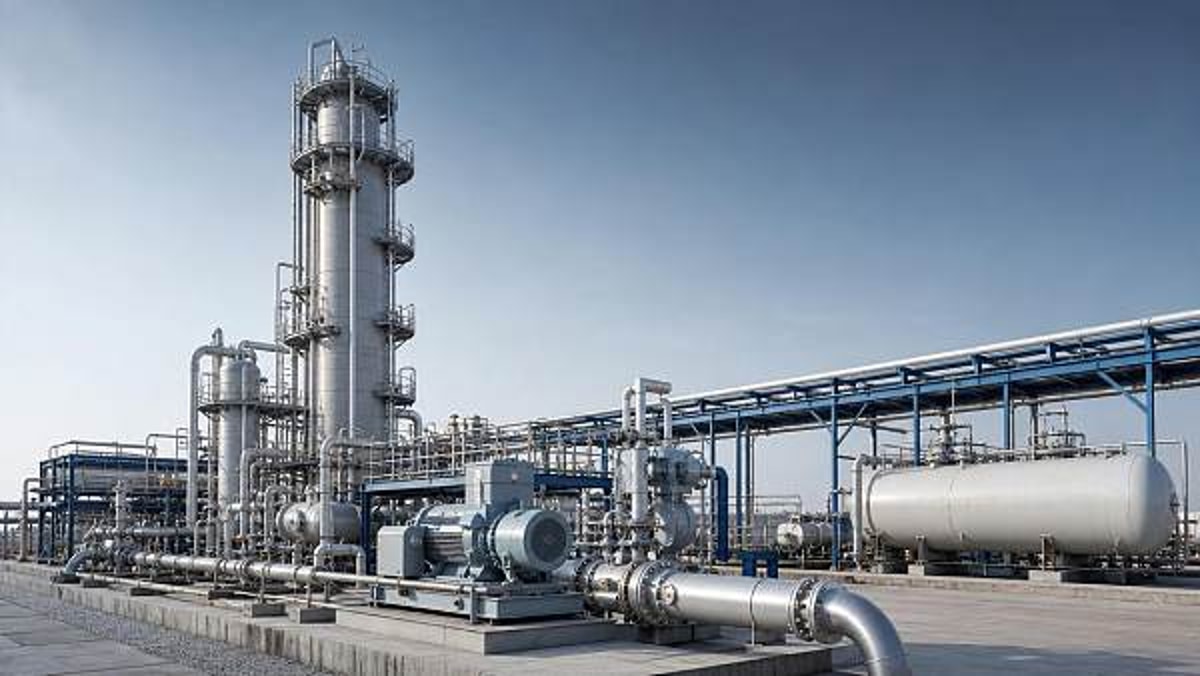
For most project leaders, the critical bottleneck is not laboratory performance. It is the transition from feasibility and pilot enthusiasm into front-end engineering, commercial structuring, and execution planning. This is the point where carbon capture technology must stop being a promising decarbonization concept and start functioning as a reliable industrial system connected to an operating plant, a transport route, and a storage destination.
That transition is difficult because several high-risk questions converge at once. Can the host facility absorb the new energy load and process changes? Is there enough plot space for capture, compression, and utilities? Who owns the interface risk between the emitter, EPC firms, transport providers, and storage operators? Will permitting timelines match the project financing window? If even one of these elements stays ambiguous for too long, the overall program slows down.
In practice, this stage is where project teams discover that carbon capture technology is less like adding a single new unit and more like orchestrating a chain of tightly linked infrastructure decisions. A delay in storage certification can pause financing. A utility upgrade can alter the process design basis. A community concern can slow permitting, which then affects procurement timing. The project stalls because every unresolved issue starts compounding the others.
What project managers and engineering leads are really trying to understand
When professionals search for why carbon capture technology projects stall, they are usually not looking for a broad explanation of climate policy or capture science. They want to know where execution risk actually concentrates, what signals indicate a likely slowdown, and what actions can still be taken before the project loses momentum or credibility.
Their key questions tend to be practical. Which stage causes the biggest schedule damage? Which unresolved assumptions become expensive later? How much of the risk is technical versus commercial or regulatory? What should be frozen early, and what should remain flexible? How do you structure governance when the project depends on multiple external parties with different incentives and readiness levels?
These readers also care about business consequences. A stalled project does not only threaten emissions goals. It ties up capital, distracts internal teams, creates procurement uncertainty, and can damage stakeholder confidence. That is why useful guidance must go beyond high-level advocacy for carbon capture technology and focus instead on delivery logic, sequencing, and decision quality.
The stage that creates the most friction: from FEED to final investment readiness
The most common trouble zone sits between late feasibility and final investment decision readiness. By this point, the project has typically shown technical promise and strategic relevance. But now it must prove that the entire value chain works under realistic assumptions. This is where early optimism often collides with the discipline required for bankable execution.
At this stage, teams need more than a capture unit design. They need validated flue gas data, heat and power integration plans, utility tie-ins, operability studies, shutdown logic, compression requirements, CO₂ specification agreements, transport commitments, storage assurance, and a delivery schedule that reflects all these dependencies. If any of these workstreams are underdeveloped, the project enters a holding pattern.
Many companies underestimate how quickly interface risk expands here. A host industrial site may be ready to support capture, but a pipeline connection may not be mature. A storage partner may be credible, but liability terms may still be unresolved. An EPC team may finish design packages, but the owner may still be revising the operating philosophy. These are not peripheral issues. They are often the exact reasons carbon capture technology projects fail to progress to full-scale delivery.
Permitting is rarely a side task—and often becomes a schedule driver
One recurring cause of delay is treating permitting as a documentation exercise rather than a strategic path item. Carbon capture technology projects typically interact with multiple regulatory domains: air emissions, water use, land use, hazardous materials, compression systems, pipelines, subsurface storage, and in some jurisdictions, cross-border carbon accounting. The permitting sequence may be more complex than the capture unit itself.
For project managers, the problem is not only the duration of permit review. It is also the uncertainty around what regulators will require once system boundaries become clearer. A design change made to improve capture efficiency may alter utility loads or noise profiles. A revised transport route may trigger additional review. A storage location adjustment may require fresh assessments. If these possibilities are not built into planning assumptions, the schedule becomes fragile.
The stronger projects address this by engaging permitting, legal, engineering, and stakeholder teams in parallel early on. They identify critical permits, likely information requests, and decision points that could force redesign. They also distinguish between permits needed to advance engineering and permits needed for full construction authorization, which helps maintain momentum even when final approvals take time.
Integration with the host facility is where “proven technology” becomes project risk
Carbon capture technology may be technically mature in many applications, but every host facility creates a unique integration challenge. Flue gas composition can vary more than expected. Space constraints can complicate absorber placement. Steam extraction or electrification can affect existing plant performance. Maintenance windows may be limited. What appears proven on paper can become difficult when inserted into a live industrial environment.
This matters because host-site integration problems are often discovered too late. Teams may focus heavily on capture rates and solvent performance while underestimating balance-of-plant impacts. Yet operational leaders care deeply about throughput loss, reliability, turnaround coordination, corrosion risk, and utility competition. If plant owners believe the capture system could disrupt core production, support weakens quickly.
Project leaders can reduce this risk by involving operations and maintenance teams much earlier than many developers do. Integration should be stress-tested through realistic scenarios, not just steady-state design assumptions. Questions about startup sequences, upset conditions, redundancy, and maintenance access should be treated as investment-grade issues. In carbon capture technology projects, operational confidence is often as important as technical feasibility.
Transport and storage dependency can freeze otherwise ready projects
A capture facility without secure downstream offtake is not a complete project. One of the clearest reasons projects stall is that capture development runs ahead of transport and storage readiness. Teams may achieve strong engineering progress at the plant level but still lack a binding path for moving and storing CO₂ at the volume, purity, pressure, and timing required.
This dependency creates several layers of uncertainty. There may be no finalized tariff structure for transport. Storage site characterization may still be evolving. Long-term monitoring and liability arrangements may be unclear. Capacity rights may not align with the emitter’s ramp-up schedule. If these issues are unresolved, investors and internal committees often hesitate to approve major capital commitments.
For project managers, this means downstream infrastructure should not be treated as an external assumption. It must be managed as part of the core delivery plan. Milestones for pipeline access, shipping logistics, injection readiness, and storage contracts should sit alongside engineering and procurement milestones. If they are tracked separately, false confidence can build inside the project team until a late-stage dependency blocks progress.
Financing slows when the value chain cannot show coordinated certainty
Even where policy support exists, financing for carbon capture technology still depends on confidence in execution and revenue durability. Lenders, boards, and investment committees want to see more than strong sustainability messaging. They want evidence that the project can operate as designed, comply as required, and monetize or justify its carbon outcomes over time.
Projects often stall because their financing case is assembled too late or rests on assumptions that are not sufficiently de-risked. Capital expenditure may rise after better site data emerges. Operating costs may shift with power prices or solvent management needs. Incentive qualification may depend on documentation not yet secured. Commercial terms between emitter, transport provider, and storage operator may remain only partially defined.
The lesson for engineering leads is that technical maturity alone will not unlock final approval. Financing readiness and engineering readiness must advance together. Cost estimates need credible contingency logic. Interface liabilities need clear allocation. Performance guarantees should match realistic operating conditions. Without that alignment, carbon capture technology can remain strategically attractive but commercially stalled.
Stakeholder alignment is not a communications issue alone—it is a delivery issue
Another underappreciated source of delay is misalignment among internal and external stakeholders. Within the organization, sustainability teams may push for speed while operations teams prioritize reliability and finance teams focus on downside exposure. Externally, regulators, local communities, infrastructure partners, insurers, and customers may each use different definitions of readiness and success.
When these perspectives are not aligned early, project decisions get revisited repeatedly. Scope freezes become temporary. Procurement decisions are postponed. Public positioning gets ahead of actual permits or contracts. The project appears active, but the underlying governance remains unsettled. This is a common pattern in stalled carbon capture technology programs.
Strong leaders reduce this risk by making decision rights explicit. They define who owns schedule risk, who signs off on interface assumptions, who approves changes to system boundaries, and what conditions trigger escalation. They also maintain a shared risk register across technical, commercial, and regulatory teams. Alignment improves not through more presentations, but through better governance architecture.
How to identify early warning signs before a project loses momentum
Experienced project teams rarely get surprised by a stall if they watch the right signals. One warning sign is repeated movement of “non-critical” external milestones, especially for permits, storage agreements, or utility upgrades. Another is when cost estimates keep changing because major interface assumptions remain open. A third is when operations teams still express basic uncertainty after engineering has supposedly matured.
Additional warning signs include parallel workstreams using different planning assumptions, long delays in commercial term sheets, overreliance on policy incentives without qualification certainty, and governance meetings that revisit principles instead of resolving actions. If the project narrative still sounds highly conceptual late in FEED, that is often a sign that the execution model is not yet solid.
For project managers, these indicators matter because they reveal whether the project is truly converging. Carbon capture technology programs should show increasing definition, tighter interfaces, and fewer foundational unknowns over time. If the opposite is happening, the issue is usually not lack of ambition. It is lack of integrated execution discipline.
A practical framework to keep carbon capture technology projects moving
To avoid the stage where many projects stall, teams need a delivery model built around dependency management. First, define the full system boundary early: capture, utilities, compression, transport, storage, monitoring, and commercial obligations. Second, map every cross-party interface with named owners and dated assumptions. Third, separate what is technically possible from what is executable within the actual regulatory and infrastructure context.
Fourth, structure stage gates around evidence, not optimism. A project should not advance merely because the capture concept is sound. It should advance because site integration is credible, permits are on a realistic path, downstream capacity is sufficiently secured, and the financing case reflects real contingencies. Fifth, keep operations engaged continuously. Their acceptance often determines whether a project is seen as strategic infrastructure or operational disruption.
Finally, maintain one integrated risk dashboard that combines engineering, commercial, schedule, and stakeholder issues. Carbon capture technology projects are especially vulnerable when each function reports progress separately, creating the illusion of momentum. A unified view makes hidden bottlenecks visible earlier, which is exactly what project leaders need.
Conclusion: the projects that scale are the ones that manage interfaces, not just technology
Carbon capture technology projects often stall at the stage where execution complexity overtakes conceptual clarity. The most difficult phase is usually not invention or intention, but integration: the moment when plant design, permits, financing, transport, storage, and stakeholder commitments must all align with real deadlines and real liabilities. That is where many promising programs slow down.
For project managers and engineering leads, the takeaway is clear. Success depends less on whether the science works and more on whether the delivery system is built to handle interdependence. The teams that progress are the ones that treat carbon capture technology as a full-chain infrastructure program, identify schedule-driving uncertainties early, and force alignment before scale-up decisions are made.
In other words, stalled projects are usually not telling you that carbon capture lacks value. They are telling you that execution discipline, interface ownership, and decision sequencing were not strong enough soon enough. For leaders responsible for timeline, capital, and delivery risk, that distinction is critical.
Get weekly intelligence in your inbox.
No noise. No sponsored content. Pure intelligence.
 May 07, 2026Sustainable Building Materials That Cut Carbon Without Cutting DurabilitySustainable Building Materials That Cut Carbon Without Cutting Durability
 May 07, 2026Green Hydrogen Production: What Decides Whether a Project ScalesGreen Hydrogen Production: What Decides Whether a Project Scales
 May 07, 2026Wind Turbine Blades: Why Repairs Cost More Than PlannedWind Turbine Blades: Why Repairs Cost More Than Planned
 May 07, 2026Folding Solar Chargers: What Real Output Looks Like OutdoorsFolding Solar Chargers: What Real Output Looks Like Outdoors
 May 07, 2026Vehicle to Grid Revenue Looks Attractive, but What Are the Limits?Vehicle to Grid Revenue Looks Attractive, but What Are the Limits?
 May 07, 2026Wireless EV Charging Sounds Easy, So Why Is Adoption Slow?Wireless EV Charging Sounds Easy, So Why Is Adoption Slow?
 May 07, 2026Floating Solar Farms: The Hidden Tradeoffs Behind Water SavingsFloating Solar Farms: The Hidden Tradeoffs Behind Water Savings
 May 07, 2026Geothermal Heat Pumps: Why Installation Quotes Differ So WidelyGeothermal Heat Pumps: Why Installation Quotes Differ So Widely
 May 07, 2026Sodium Ion Batteries: Where They Make Sense Before 2030Sodium Ion Batteries: Where They Make Sense Before 2030
 May 07, 2026EV Battery Recycling Is Growing, but the Supply Chain Isn’t ReadyEV Battery Recycling Is Growing, but the Supply Chain Isn’t Ready
 May 07, 2026BMS Boards Selection Problems That Show Up After InstallationBMS Boards Selection Problems That Show Up After Installation
 May 07, 2026Deep Cycle Batteries: Why Runtime Estimates Often Miss the MarkDeep Cycle Batteries: Why Runtime Estimates Often Miss the Mark
 May 07, 2026Carbon Capture Technology Projects Often Stall at This StageCarbon Capture Technology Projects Often Stall at This Stage
 May 07, 2026What Makes Offshore Wind Technology So Expensive to Deploy?What Makes Offshore Wind Technology So Expensive to Deploy?
 May 07, 2026EV Charging Cables: Small Spec Differences, Big Fit ProblemsEV Charging Cables: Small Spec Differences, Big Fit Problems
 May 07, 2026Solid State Batteries: Progress Is Real, Timelines Are Not SimpleSolid State Batteries: Progress Is Real, Timelines Are Not Simple
 May 07, 2026Microgrid Controllers: What Changes Once Systems Scale UpMicrogrid Controllers: What Changes Once Systems Scale Up
 May 07, 2026Energy Efficient HVAC Claims That Deserve a Closer LookEnergy Efficient HVAC Claims That Deserve a Closer Look
 May 07, 2026Biomass Energy Equipment: Why Maintenance Costs Vary So MuchBiomass Energy Equipment: Why Maintenance Costs Vary So Much
 May 07, 2026Smart Meters Wholesale: Which Specs Matter Most in Bulk OrdersSmart Meters Wholesale: Which Specs Matter Most in Bulk Orders
 May 07, 2026Commercial Energy Storage Sizing Mistakes That Raise CostsCommercial Energy Storage Sizing Mistakes That Raise Costs
 May 07, 2026Residential Solar Kits: What Gets Overlooked Before BuyingResidential Solar Kits: What Gets Overlooked Before Buying
 May 07, 2026V2G Technology Is Moving Fast, but What Still Holds It Back?V2G Technology Is Moving Fast, but What Still Holds It Back?
 May 07, 2026Smart Street Lighting Upgrades: Where Savings Often SlipSmart Street Lighting Upgrades: Where Savings Often Slip
 May 07, 2026Portable Solar Panels That Work Better in Real Travel UsePortable Solar Panels That Work Better in Real Travel Use
 May 07, 2026How to Compare AGM Batteries Wholesale Beyond Unit PriceHow to Compare AGM Batteries Wholesale Beyond Unit Price
 May 07, 2026Do Solar Water Heaters Still Pay Off in Mild Climates?Do Solar Water Heaters Still Pay Off in Mild Climates?