Smart Street Lighting Upgrades: Where Savings Often Slip
Smart street lighting upgrades promise lower energy bills, better visibility, and smarter city operations, yet savings often slip away during planning, integration, and long-term maintenance. For project managers and engineering leads, understanding where costs quietly rise is essential to protecting ROI, avoiding performance gaps, and delivering lighting systems that meet both operational and budget targets.
In practice, the financial case for smart street lighting is rarely lost because LED luminaires underperform. It is more often weakened by poor baseline audits, mismatched control architectures, underestimated commissioning work, and maintenance models that look efficient on paper but fail over a 7- to 12-year service life. For B2B buyers, municipal contractors, and engineering teams, the real challenge is not whether smart systems can save money, but whether the upgrade is structured to capture those savings consistently.
This article examines where smart street lighting projects commonly leak value, what project leaders should test before procurement, and how to build a rollout plan that aligns technical performance with cost control. The focus is on realistic delivery conditions: mixed legacy infrastructure, phased deployment, multi-vendor environments, and budget scrutiny across energy, operations, and maintenance.
Why Smart Street Lighting Business Cases Often Underperform
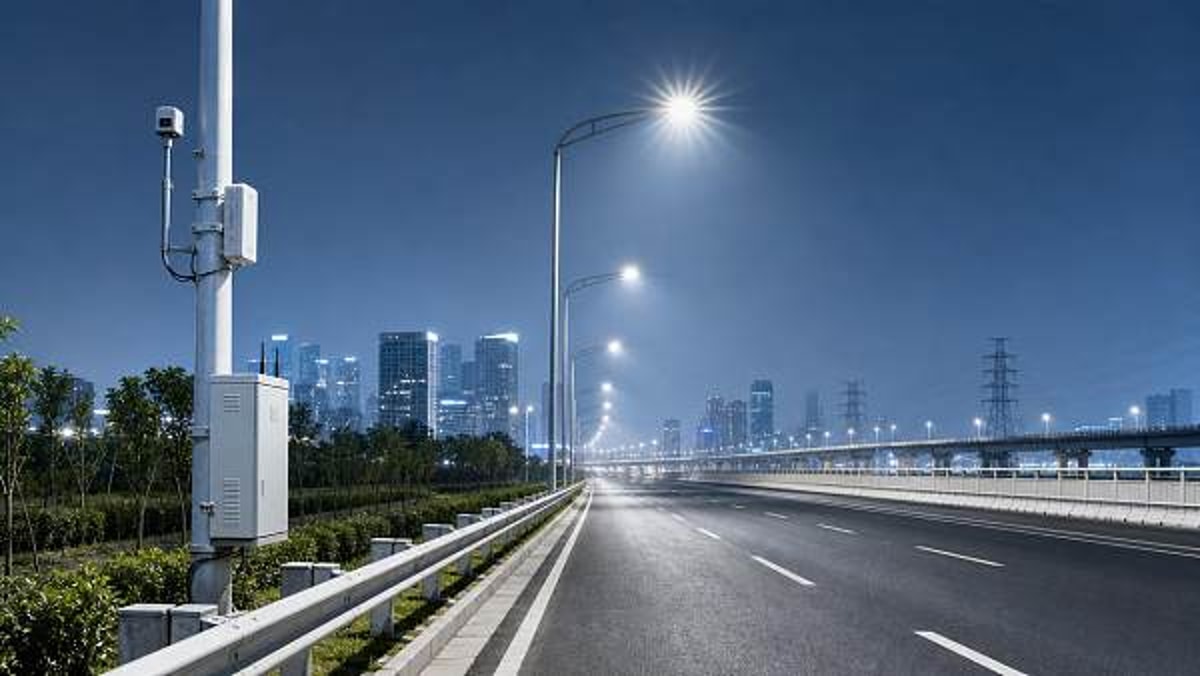
Many smart street lighting proposals begin with a headline energy-saving estimate of 40% to 70%, typically based on replacing legacy high-pressure sodium or metal halide fixtures with LEDs and adaptive dimming controls. Those projections are directionally reasonable, but actual delivered savings depend on at least 4 linked factors: asset condition, control strategy, communications reliability, and maintenance execution.
A common problem is that the pre-upgrade baseline is incomplete. If a city or industrial campus does not have accurate counts for pole type, luminaire wattage, burn hours, feeder conditions, and failure history, the savings model may be off by 10% to 25% before procurement even starts. Project managers then inherit unrealistic expectations that become difficult to correct once contracts are signed.
The gap between modeled savings and field conditions
Modeled savings usually assume stable dimming schedules, clean power quality, and full compatibility between central management software and node controllers. Field conditions are less predictable. In older road networks, cabinet upgrades, surge protection replacements, and pole rewiring can add 8% to 18% to implementation budgets. These are not exceptional costs; they are often hidden costs.
Another issue is overestimating adaptive lighting benefits. If traffic volumes are too low to justify advanced sensor networks, or if safety standards require a narrow dimming range, the difference between basic scheduled dimming and fully adaptive control may be smaller than expected. In some corridors, a well-designed 2-level or 3-level dimming schedule delivers most of the achievable savings without the extra integration burden.
Typical sources of savings erosion
- Inaccurate asset inventories before tender release
- Underpriced communications network installation and testing
- Legacy poles or cabinets requiring corrective civil or electrical work
- Software licensing fees not included in long-term operating cost models
- Higher-than-expected node failure rates in harsh weather environments
- Delayed commissioning causing partial operation for 30 to 90 days
The table below outlines where smart street lighting budgets commonly drift during project delivery and which teams are usually affected first.
For engineering leads, the key takeaway is simple: the biggest risk in smart street lighting is not always fixture performance. It is the gap between the assumed deployment environment and the actual one. That gap needs to be measured early, priced clearly, and managed as a cross-functional workstream rather than a late-stage exception.
Planning Decisions That Protect ROI From Day One
A resilient smart street lighting upgrade starts with disciplined front-end planning. Before choosing luminaires, nodes, gateways, or software, project teams should verify 5 baseline items: asset inventory, lighting class requirements, power distribution condition, communications environment, and maintenance readiness. Skipping any one of these can distort both capex and lifecycle cost.
For most projects, the first 30 to 45 days should be dedicated to data validation rather than vendor comparison alone. This includes nighttime sampling, pole-by-pole condition reviews for priority zones, cabinet inspections, and a realistic estimate of labor productivity per installation crew per shift. If one crew can retrofit 18 fixtures per night in a dense corridor but only 8 in constrained urban streets, schedule assumptions must reflect that difference.
Procurement choices that influence lifetime cost
In smart street lighting, the cheapest bill of materials rarely produces the lowest total cost of ownership. Project managers should weigh at least 4 procurement dimensions together: luminaire efficacy, controls interoperability, warranty structure, and service accessibility. A high-efficacy luminaire can reduce energy use, but if the node ecosystem is proprietary and difficult to replace, long-term flexibility suffers.
Interoperability matters especially in phased upgrades. A city may modernize 20% of its network in year 1, another 30% in year 3, and leave some arterial roads for later funding cycles. If the control system cannot handle mixed generations of devices, software migration or integration bridging can become an unplanned expense.
A practical pre-tender checklist
- Confirm asset count accuracy within a tolerance of ±3% for priority zones.
- Map circuits, cabinets, and communication dead spots before final control design.
- Define dimming profiles by road class, not by one universal schedule.
- Separate mandatory remediation work from optional performance enhancements.
- Request a 5- to 10-year OPEX view, including software, spares, and field support.
The following comparison helps project leaders assess which procurement criteria most directly affect savings retention over the asset life of a smart street lighting system.
For procurement directors and project owners, this is where strategic discipline matters. Smart street lighting should be purchased as a managed system over its service life, not as isolated hardware components evaluated only on unit price.
Integration and Commissioning: The Quiet Budget Multiplier
Integration is where many smart street lighting upgrades stop behaving like simple lighting projects and start acting like digital infrastructure programs. Once centralized controls, remote fault reporting, dimming schedules, and sensor-based logic enter the scope, the project depends on software setup, data mapping, network reliability, and operational testing. These activities can account for 10% to 20% of total project effort even when hardware installation appears straightforward.
A common mistake is scheduling commissioning as a short final step. In reality, commissioning often unfolds in 3 layers: electrical verification, network connectivity validation, and control logic tuning. Each layer can expose issues that were invisible during equipment installation. If 1,500 nodes are installed but 7% fail to report properly due to address conflicts or gateway placement issues, the system is not yet delivering full operational value.
Where integration costs usually emerge
Communications design is a frequent source of hidden work. Whether the project uses RF mesh, cellular, PLC, or hybrid architecture, each option has trade-offs in coverage, recurring fees, maintenance access, and cybersecurity administration. Teams that choose a network model too early, without zone-specific testing, may pay later in gateway repositioning, signal troubleshooting, or ongoing service subscriptions.
Data structure is another underestimated factor. Smart street lighting systems generate alarms, power metrics, burning hours, asset location data, and maintenance records. If naming conventions and GIS alignment are inconsistent, operations teams spend weeks cleaning data before they can use dashboards effectively. That delay does not always appear in the capex line, but it directly affects adoption and response times.
Commissioning controls that reduce performance gaps
- Run pilot validation on 25 to 100 fixtures before full-scale rollout.
- Test dimming commands, outage alerts, and reporting latency under real nighttime conditions.
- Set acceptance thresholds for node reporting rate, for example 98% visibility within the platform.
- Define ownership for software configuration, not just hardware handover.
- Plan a 2- to 6-week stabilization period after go-live for issue correction.
Project leaders should also insist that integration responsibilities are written clearly into the delivery scope. When installers, controls vendors, and software providers each assume another party will complete mapping or final parameter settings, delays follow quickly. In a multi-vendor program, accountability is often more valuable than an aggressive equipment discount.
Maintenance, Service Models, and the Long Tail of Cost
Smart street lighting is usually sold on lower maintenance demand compared with conventional systems, and that is often true at the luminaire level. However, the service model becomes more complex because the network includes controllers, gateways, software platforms, and remote diagnostics. A project that reduces lamp replacement frequency may still underperform financially if digital maintenance responsibilities are unclear.
For project managers, the most important question is not simply mean time between fixture failures. It is whether the operating team has the tools, spare strategy, and response workflow to keep the full smart street lighting system functioning as designed. If nodes fail silently or communication subscriptions lapse, the network can revert to basic lighting without anyone noticing immediate savings loss.
Building a realistic lifecycle support plan
A strong support model should define 4 service layers: field repair, spare inventory, software administration, and performance review. For example, a reasonable plan may include quarterly dashboard audits, annual firmware assessment, spare node coverage of 1% to 3% of installed quantity, and fault response windows tied to road criticality. High-traffic roads may require action within 24 to 48 hours, while lower-priority zones can follow a longer cycle.
It is also wise to separate cosmetic failures from network-critical failures. A fixture with minor housing discoloration is not the same operational issue as a controller that stops reporting energy data across an entire circuit. Without this distinction, maintenance teams can misallocate labor and inflate service costs.
Common post-installation blind spots
- Assuming warranty coverage includes on-site labor in all cases.
- Failing to budget for software updates or license renewals after year 1.
- Not training internal teams on alarm prioritization and data interpretation.
- Keeping no spare controls inventory for remote or weather-exposed locations.
- Reviewing energy savings annually instead of monthly or quarterly.
For enterprise buyers managing multi-site portfolios, periodic performance verification is essential. A 5% drop in dimming compliance across thousands of fixtures can materially reduce expected savings over 12 months. Small variances become large budget effects when distributed across a large installed base.
How Project Managers Can Keep Smart Street Lighting Savings on Track
The most effective smart street lighting projects are managed as staged transformation programs rather than single-purchase upgrades. That means assigning success metrics across the entire delivery chain: verified baseline, install productivity, commissioning pass rate, network uptime, dimming compliance, and maintenance response. When these metrics are visible from the start, savings leakage becomes easier to detect before it compounds.
A practical governance model usually includes a pilot phase, a phased deployment phase, and an optimization phase. The pilot may run for 4 to 8 weeks, the deployment for several months depending on scale, and the optimization for another 30 to 60 days after go-live. This structure helps engineering teams validate assumptions before locking the full financial case.
Recommended control points for delivery teams
- Validate baseline consumption and fixture counts before final commercial approval.
- Use pilot zones to compare projected versus actual dimming and reporting performance.
- Track installation productivity by zone, crew, and obstruction type.
- Require documented acceptance criteria for software, not just for hardware.
- Review quarterly savings performance against the original business case.
For organizations evaluating suppliers, the best partners are usually those that can speak clearly about risk allocation, retrofit complexity, data integration, and support obligations. In smart street lighting, commercial clarity often protects savings more effectively than ambitious theoretical efficiency claims.
TradeNexus Pro supports procurement leaders, engineering managers, and B2B decision-makers who need deeper visibility into technical sourcing, integration risk, and lifecycle planning across connected infrastructure markets. If your team is assessing smart street lighting upgrades, comparing supply options, or structuring a phased rollout, now is the right time to get a tailored solution framework, review supplier-fit factors, and explore more implementation-focused insights. Contact us to discuss your project scope, request a customized evaluation approach, or learn more solutions for cost-controlled smart lighting deployment.
Get weekly intelligence in your inbox.
No noise. No sponsored content. Pure intelligence.
 May 07, 2026Sustainable Building Materials That Cut Carbon Without Cutting DurabilitySustainable Building Materials That Cut Carbon Without Cutting Durability
 May 07, 2026Green Hydrogen Production: What Decides Whether a Project ScalesGreen Hydrogen Production: What Decides Whether a Project Scales
 May 07, 2026Wind Turbine Blades: Why Repairs Cost More Than PlannedWind Turbine Blades: Why Repairs Cost More Than Planned
 May 07, 2026Folding Solar Chargers: What Real Output Looks Like OutdoorsFolding Solar Chargers: What Real Output Looks Like Outdoors
 May 07, 2026Vehicle to Grid Revenue Looks Attractive, but What Are the Limits?Vehicle to Grid Revenue Looks Attractive, but What Are the Limits?
 May 07, 2026Wireless EV Charging Sounds Easy, So Why Is Adoption Slow?Wireless EV Charging Sounds Easy, So Why Is Adoption Slow?
 May 07, 2026Floating Solar Farms: The Hidden Tradeoffs Behind Water SavingsFloating Solar Farms: The Hidden Tradeoffs Behind Water Savings
 May 07, 2026Geothermal Heat Pumps: Why Installation Quotes Differ So WidelyGeothermal Heat Pumps: Why Installation Quotes Differ So Widely
 May 07, 2026Sodium Ion Batteries: Where They Make Sense Before 2030Sodium Ion Batteries: Where They Make Sense Before 2030
 May 07, 2026EV Battery Recycling Is Growing, but the Supply Chain Isn’t ReadyEV Battery Recycling Is Growing, but the Supply Chain Isn’t Ready
 May 07, 2026BMS Boards Selection Problems That Show Up After InstallationBMS Boards Selection Problems That Show Up After Installation
 May 07, 2026Deep Cycle Batteries: Why Runtime Estimates Often Miss the MarkDeep Cycle Batteries: Why Runtime Estimates Often Miss the Mark
 May 07, 2026Carbon Capture Technology Projects Often Stall at This StageCarbon Capture Technology Projects Often Stall at This Stage
 May 07, 2026What Makes Offshore Wind Technology So Expensive to Deploy?What Makes Offshore Wind Technology So Expensive to Deploy?
 May 07, 2026EV Charging Cables: Small Spec Differences, Big Fit ProblemsEV Charging Cables: Small Spec Differences, Big Fit Problems
 May 07, 2026Solid State Batteries: Progress Is Real, Timelines Are Not SimpleSolid State Batteries: Progress Is Real, Timelines Are Not Simple
 May 07, 2026Microgrid Controllers: What Changes Once Systems Scale UpMicrogrid Controllers: What Changes Once Systems Scale Up
 May 07, 2026Energy Efficient HVAC Claims That Deserve a Closer LookEnergy Efficient HVAC Claims That Deserve a Closer Look
 May 07, 2026Biomass Energy Equipment: Why Maintenance Costs Vary So MuchBiomass Energy Equipment: Why Maintenance Costs Vary So Much
 May 07, 2026Smart Meters Wholesale: Which Specs Matter Most in Bulk OrdersSmart Meters Wholesale: Which Specs Matter Most in Bulk Orders
 May 07, 2026Commercial Energy Storage Sizing Mistakes That Raise CostsCommercial Energy Storage Sizing Mistakes That Raise Costs
 May 07, 2026Residential Solar Kits: What Gets Overlooked Before BuyingResidential Solar Kits: What Gets Overlooked Before Buying
 May 07, 2026V2G Technology Is Moving Fast, but What Still Holds It Back?V2G Technology Is Moving Fast, but What Still Holds It Back?
 May 07, 2026Smart Street Lighting Upgrades: Where Savings Often SlipSmart Street Lighting Upgrades: Where Savings Often Slip
 May 07, 2026Portable Solar Panels That Work Better in Real Travel UsePortable Solar Panels That Work Better in Real Travel Use
 May 07, 2026How to Compare AGM Batteries Wholesale Beyond Unit PriceHow to Compare AGM Batteries Wholesale Beyond Unit Price
 May 07, 2026Do Solar Water Heaters Still Pay Off in Mild Climates?Do Solar Water Heaters Still Pay Off in Mild Climates?