What Makes Offshore Wind Technology So Expensive to Deploy?
Why is offshore wind technology still so expensive to deploy despite rapid innovation and global policy support? For enterprise decision-makers, the answer lies in a complex mix of capital intensity, specialized infrastructure, supply chain constraints, marine engineering risks, and long project cycles. This article breaks down the core cost drivers shaping investment decisions and market opportunities across the offshore wind value chain.
Why does offshore wind technology carry such a high deployment cost?
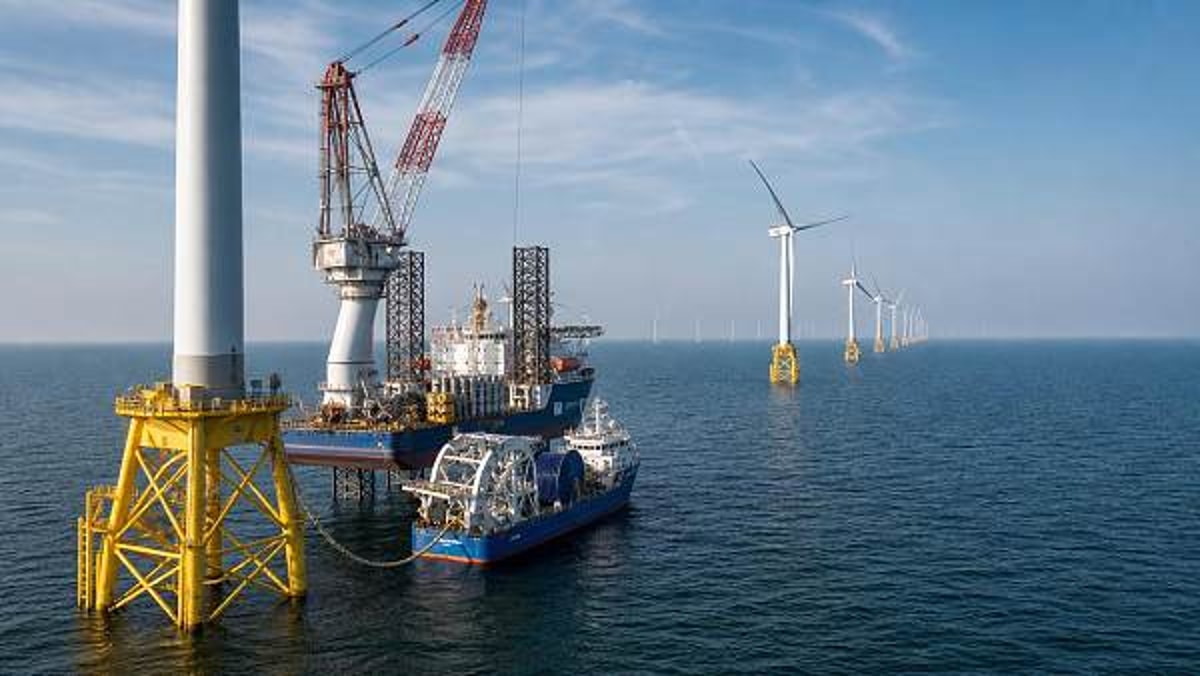
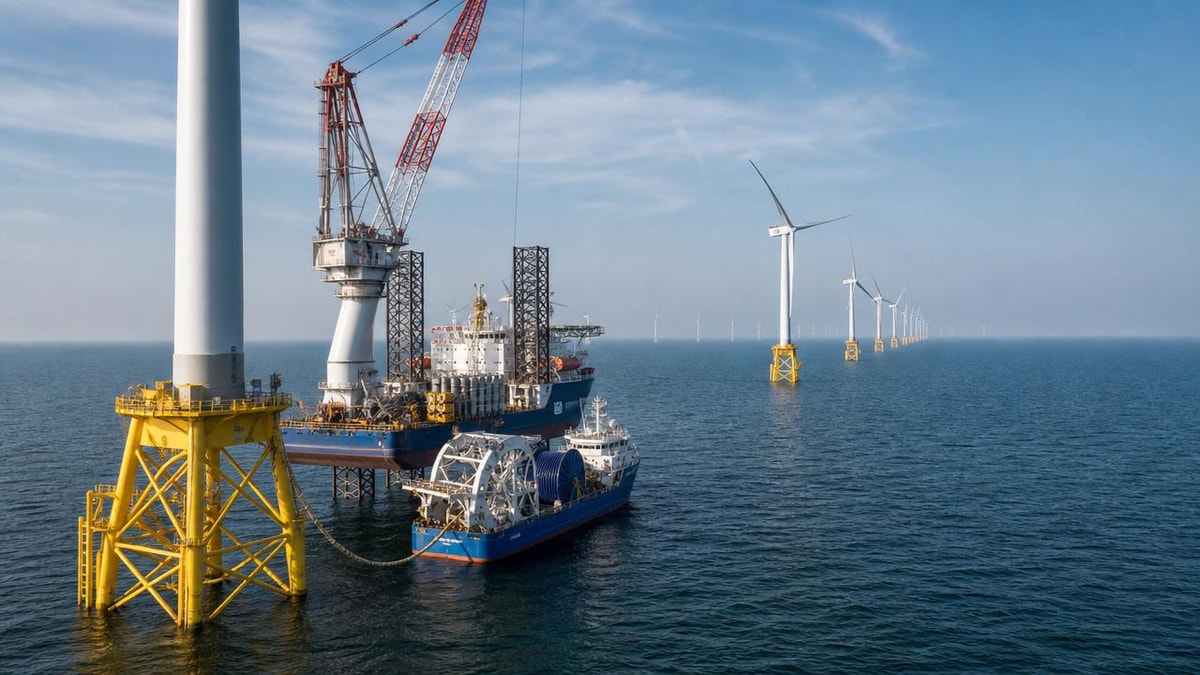
At a strategic level, offshore wind technology combines large-scale energy infrastructure with some of the harshest engineering conditions in the industrial economy. Unlike onshore wind, developers must build, transport, install, connect, monitor, and maintain assets in deep water, corrosive salt environments, and weather-sensitive windows. Every stage adds cost, complexity, and schedule risk.
For business leaders evaluating market entry, procurement exposure, or supplier partnerships, the key issue is not simply turbine price. Total deployment cost is shaped by a layered system: turbine manufacturing, foundations, subsea cables, offshore substations, port capacity, heavy-lift vessels, installation crews, grid connection, marine permits, insurance, and long-term service logistics.
This is why offshore wind technology remains expensive even as turbine ratings increase and policy incentives expand. Scale helps, but scale also raises execution pressure. Larger turbines require larger blades, stronger towers, bigger nacelles, reinforced ports, and more specialized vessels. Cost reductions in one component can be offset by bottlenecks elsewhere in the project chain.
- Capital intensity is unusually high because projects require major up-front spending long before energy revenue begins.
- Execution risk is elevated due to marine weather windows, seabed conditions, and limited installation assets.
- Supply chain concentration keeps pricing firm for critical components such as cables, foundations, and installation vessels.
- Financing cost matters because long development cycles expose projects to inflation, rate changes, and policy uncertainty.
Where do the biggest cost drivers sit in the offshore wind value chain?
For procurement directors and investment teams, breaking offshore wind technology into cost centers is the fastest way to understand margin pressure and sourcing risk. The table below highlights the main deployment cost categories and why they remain difficult to compress at scale.
The most important takeaway is that offshore wind technology is not expensive because of a single over-engineered component. It is expensive because nearly every major input is specialized, capital-heavy, and exposed to timing risk. That makes integrated sourcing intelligence more valuable than isolated price checks.
Why bigger turbines do not automatically mean lower total cost
Higher-capacity turbines can improve energy yield and reduce the number of units per project. However, they also demand stronger installation cranes, larger vessel deck space, more robust foundations, and upgraded port handling capabilities. In other words, generation efficiency improves, but balance-of-plant requirements may rise at the same time.
For enterprise decision-makers, this creates an evaluation challenge. A larger turbine platform may look attractive in a levelized cost model, yet the actual deployment environment could erase expected savings if marine logistics or local infrastructure are not ready.
How does offshore wind technology compare with onshore wind and other energy options?
A comparison framework helps leadership teams judge whether offshore wind technology is expensive in an absolute sense or simply expensive relative to easier alternatives. The answer depends on land access, resource quality, policy design, grid needs, and decarbonization strategy.
This comparison shows why offshore wind technology can still win strategic investment. It offers large-scale renewable generation close to coastal industrial demand, where land is scarce and grid decarbonization pressure is high. The challenge is not relevance. The challenge is disciplined execution.
When does offshore wind make the most sense?
- When coastal markets have strong wind resources but limited land for onshore renewables.
- When governments support long-term contracts or grid integration mechanisms.
- When industrial buyers need large volumes of renewable power near ports, manufacturing clusters, or hydrogen projects.
- When supply chain players can capture value in foundations, cables, substations, digital monitoring, or specialized logistics.
What procurement teams should evaluate before committing capital
In offshore wind technology, poor early-stage procurement assumptions often create larger losses than visible equipment price increases. Enterprise buyers should move beyond unit cost and assess whether the supplier ecosystem can support the full project execution path.
A practical evaluation checklist
- Confirm site conditions early. Water depth, seabed composition, metocean data, and transmission route complexity directly affect foundation and cable design.
- Test supplier capacity, not just technical qualification. A capable manufacturer without available production slots may be a larger risk than a higher-priced but available alternative.
- Map vessel and port readiness. Oversized components can trigger hidden cost if local marshalling ports, crane capacity, or berth availability are insufficient.
- Model contract exposure. Interface risk between turbine OEMs, foundation fabricators, cable installers, and grid contractors can create delay claims and responsibility disputes.
- Evaluate O&M access strategy. Service vessel needs, spare part positioning, and remote condition monitoring will shape lifetime economics, not just construction cost.
These issues matter across the broader industrial landscape because offshore wind technology is linked with advanced manufacturing, marine engineering, digital asset monitoring, energy storage, and supply chain software. Decision quality improves when teams compare not only component bids, but also delivery risk, interoperability, and operational resilience.
Which hidden risks usually make offshore wind technology more expensive than planned?
Many budget overruns come from risk transfer failures rather than headline equipment prices. The hidden issue is that offshore projects involve multiple counterparties operating across long schedules with limited tolerance for delay. If one interface slips, others incur standby charges, remobilization fees, or redesign costs.
Common cost escalation triggers
- Weather downtime during installation, especially when vessel campaigns depend on narrow seasonal windows.
- Cable manufacturing or laying delays, which can postpone energization even after turbines are installed.
- Grid connection bottlenecks, including substation readiness and transmission permitting.
- Inflation in steel, copper, resins, and specialized transport services over multi-year project cycles.
- Regulatory changes affecting local content rules, environmental studies, or auction economics.
For this reason, offshore wind technology is often best evaluated through scenario-based planning rather than static budget assumptions. Leadership teams should ask what happens if vessel rates rise, if cable slots shift by six months, or if the grid interface moves into a new regulatory review period. Those questions are often more valuable than negotiating a small percentage off a single equipment line.
How can enterprises reduce cost exposure across the offshore wind value chain?
Cost reduction in offshore wind technology usually comes from system optimization, not one-off discounting. The most resilient projects align technical design, sourcing strategy, contracting structure, and delivery timing from the outset.
The table below outlines practical levers that procurement and strategy teams can use to control deployment risk while maintaining project bankability.
For cross-sector enterprises, these levers also reveal adjacent opportunity. Companies in advanced manufacturing can target components or automation systems; smart electronics firms can support sensors and monitoring; supply chain SaaS providers can address scheduling and traceability gaps. Offshore wind technology is not only a project cost story. It is also an industrial capability story.
What standards, compliance, and bankability issues should not be overlooked?
Cost and schedule decisions in offshore wind technology are often tied to compliance. Marine construction, grid connection, health and safety, environmental review, and power market regulation all influence how quickly a project moves and how financiers assess risk.
- Technical standards matter for turbine design, electrical systems, cable integrity, and offshore installation procedures.
- Environmental and marine permitting can affect survey timelines, construction windows, and mitigation requirements.
- Local content rules may shape supplier selection, fabrication strategy, and port investment decisions.
- Insurance and lender due diligence often require robust documentation of design review, interface management, and operational assumptions.
For executives, the implication is clear: compliance should be built into procurement planning, not treated as a late-stage approval task. A lower-priced bid that fails documentation, qualification, or regional content expectations can become the more expensive option in practice.
FAQ: what enterprise buyers ask most about offshore wind technology
Is offshore wind technology expensive only during construction?
No. Construction is the largest up-front burden, but lifetime economics also depend on operations and maintenance, vessel access, spare parts logistics, cable reliability, and asset performance over many years. A project that looks competitive at installation can underperform if service strategy is weak or marine access is constrained.
How long is the typical delivery and deployment cycle?
The full cycle can stretch across several years when you include site assessment, permitting, engineering, contracting, fabrication, installation, and grid connection. Actual timing varies by market and project scale, but enterprise planners should expect long lead times for major components, installation vessels, and transmission interfaces.
What should procurement teams prioritize first?
Start with constraints that are hardest to replace: installation assets, cable capacity, qualified fabrication slots, and grid connection timing. Negotiating aggressively on secondary items while ignoring scarce bottlenecks usually weakens the business case.
Can digital tools meaningfully reduce offshore wind technology costs?
Yes, especially in supply chain coordination, progress visibility, predictive maintenance, and interface control. Digital tools do not remove marine complexity, but they can reduce avoidable delay, improve forecasting, and support better cross-vendor accountability.
Why informed market intelligence matters more than ever
As offshore wind technology scales globally, decision-makers must navigate more than engineering. They must track manufacturing expansion, vessel availability, raw material pressure, regional policy shifts, supplier specialization, and technology readiness across interconnected sectors. That is where targeted intelligence becomes commercially valuable.
TradeNexus Pro supports enterprise leaders with focused B2B insight across green energy, advanced manufacturing, smart electronics, healthcare technology, and supply chain SaaS. For companies evaluating offshore wind technology, this cross-sector lens helps connect component risk, logistics visibility, industrial demand, and digital execution tools into one decision framework rather than fragmented information streams.
Why choose us for offshore wind technology intelligence and sourcing insight?
If your team is assessing offshore wind technology opportunities, supplier exposure, or value chain entry points, TradeNexus Pro can help you move from broad market noise to decision-ready analysis. We focus on the issues enterprise buyers actually need to validate before committing time or capital.
- Compare supplier and component categories across manufacturing maturity, delivery risk, and regional availability.
- Evaluate procurement priorities such as technical fit, lead time pressure, and contract interface exposure.
- Review market signals related to port readiness, vessel access, cable bottlenecks, and grid-linked timing risk.
- Discuss custom research needs including value chain mapping, delivery cycle assessment, partner screening, and quote-stage benchmarking.
Contact TradeNexus Pro to discuss parameter confirmation, supplier shortlisting, project timeline assumptions, compliance considerations, custom sourcing scenarios, and quote-stage intelligence for offshore wind technology. For enterprise decision-makers, clarity at the planning stage is often the most effective cost-control tool available.
- supply chain software
- Advanced Manufacturing
- Green Energy
- Smart Electronics
- Healthcare Technology
- Supply Chain SaaS
- Enterprise Decision
- energy storage
- renewable power
- grid integration
- offshore wind technology
- supply chain visibility
- Procurement Directors
- Market Intelligence
- Technology Intelligence
- sensors
- predictive maintenance
- offshore wind
Get weekly intelligence in your inbox.
No noise. No sponsored content. Pure intelligence.
 May 07, 2026Sustainable Building Materials That Cut Carbon Without Cutting DurabilitySustainable Building Materials That Cut Carbon Without Cutting Durability
 May 07, 2026Green Hydrogen Production: What Decides Whether a Project ScalesGreen Hydrogen Production: What Decides Whether a Project Scales
 May 07, 2026Wind Turbine Blades: Why Repairs Cost More Than PlannedWind Turbine Blades: Why Repairs Cost More Than Planned
 May 07, 2026Folding Solar Chargers: What Real Output Looks Like OutdoorsFolding Solar Chargers: What Real Output Looks Like Outdoors
 May 07, 2026Vehicle to Grid Revenue Looks Attractive, but What Are the Limits?Vehicle to Grid Revenue Looks Attractive, but What Are the Limits?
 May 07, 2026Wireless EV Charging Sounds Easy, So Why Is Adoption Slow?Wireless EV Charging Sounds Easy, So Why Is Adoption Slow?
 May 07, 2026Floating Solar Farms: The Hidden Tradeoffs Behind Water SavingsFloating Solar Farms: The Hidden Tradeoffs Behind Water Savings
 May 07, 2026Geothermal Heat Pumps: Why Installation Quotes Differ So WidelyGeothermal Heat Pumps: Why Installation Quotes Differ So Widely
 May 07, 2026Sodium Ion Batteries: Where They Make Sense Before 2030Sodium Ion Batteries: Where They Make Sense Before 2030
 May 07, 2026EV Battery Recycling Is Growing, but the Supply Chain Isn’t ReadyEV Battery Recycling Is Growing, but the Supply Chain Isn’t Ready
 May 07, 2026BMS Boards Selection Problems That Show Up After InstallationBMS Boards Selection Problems That Show Up After Installation
 May 07, 2026Deep Cycle Batteries: Why Runtime Estimates Often Miss the MarkDeep Cycle Batteries: Why Runtime Estimates Often Miss the Mark
 May 07, 2026Carbon Capture Technology Projects Often Stall at This StageCarbon Capture Technology Projects Often Stall at This Stage
 May 07, 2026What Makes Offshore Wind Technology So Expensive to Deploy?What Makes Offshore Wind Technology So Expensive to Deploy?
 May 07, 2026EV Charging Cables: Small Spec Differences, Big Fit ProblemsEV Charging Cables: Small Spec Differences, Big Fit Problems
 May 07, 2026Solid State Batteries: Progress Is Real, Timelines Are Not SimpleSolid State Batteries: Progress Is Real, Timelines Are Not Simple
 May 07, 2026Microgrid Controllers: What Changes Once Systems Scale UpMicrogrid Controllers: What Changes Once Systems Scale Up
 May 07, 2026Energy Efficient HVAC Claims That Deserve a Closer LookEnergy Efficient HVAC Claims That Deserve a Closer Look
 May 07, 2026Biomass Energy Equipment: Why Maintenance Costs Vary So MuchBiomass Energy Equipment: Why Maintenance Costs Vary So Much
 May 07, 2026Smart Meters Wholesale: Which Specs Matter Most in Bulk OrdersSmart Meters Wholesale: Which Specs Matter Most in Bulk Orders
 May 07, 2026Commercial Energy Storage Sizing Mistakes That Raise CostsCommercial Energy Storage Sizing Mistakes That Raise Costs
 May 07, 2026Residential Solar Kits: What Gets Overlooked Before BuyingResidential Solar Kits: What Gets Overlooked Before Buying
 May 07, 2026V2G Technology Is Moving Fast, but What Still Holds It Back?V2G Technology Is Moving Fast, but What Still Holds It Back?
 May 07, 2026Smart Street Lighting Upgrades: Where Savings Often SlipSmart Street Lighting Upgrades: Where Savings Often Slip
 May 07, 2026Portable Solar Panels That Work Better in Real Travel UsePortable Solar Panels That Work Better in Real Travel Use
 May 07, 2026How to Compare AGM Batteries Wholesale Beyond Unit PriceHow to Compare AGM Batteries Wholesale Beyond Unit Price
 May 07, 2026Do Solar Water Heaters Still Pay Off in Mild Climates?Do Solar Water Heaters Still Pay Off in Mild Climates?