Smart Meters Wholesale: Which Specs Matter Most in Bulk Orders
In smart meters wholesale, the specs you choose can directly affect distributor margins, project compatibility, and long-term customer satisfaction. For dealers, distributors, and agents handling bulk orders, knowing which technical features truly matter helps reduce procurement risk and improve market competitiveness. This guide highlights the most critical specifications to evaluate before placing large-volume smart meter orders.
Why specification priorities change from one bulk-order scenario to another
In smart meters wholesale, there is no universal “best” model. A distributor serving utility tenders may need strict protocol compliance and high-volume remote management support, while an agent focused on commercial buildings may care more about submetering accuracy, installation flexibility, and software integration. A reseller targeting emerging markets may prioritize ruggedness, competitive pricing, and simplified deployment over premium analytics features.
That is why bulk buyers should not evaluate smart meters only by price, current rating, or appearance. The right specification set depends on the end-use environment, the installer’s capability, local grid conditions, communications infrastructure, and after-sales expectations. Strong procurement decisions come from matching meter specs to the actual application scenario, not from ordering the most feature-heavy unit available.
For dealers, distributors, and agents, this scenario-based approach also improves inventory planning. It reduces the risk of stocking products that fit only a narrow use case, lowers return rates caused by compatibility issues, and supports more precise sales conversations with contractors, utilities, property managers, and industrial buyers.
The main business scenarios where smart meters wholesale decisions are made
Most smart meters wholesale orders fall into a handful of recurring scenarios. Understanding them helps buyers prioritize the specs that truly affect commercial success.
This comparison shows why smart meters wholesale buyers should start with the target market and project type before discussing unit price. The more clearly you define the use case, the easier it becomes to shortlist the right product platform.
Which core meter specs matter across almost every scenario
Although each market has different priorities, several specifications consistently matter in smart meters wholesale. These are the foundation of good bulk-order decisions.
1. Accuracy class and measurement stability
Accuracy affects billing fairness, regulatory acceptance, and customer trust. For residential and light commercial use, standard accuracy levels may be sufficient, but industrial or high-value billing applications often require tighter tolerances. In wholesale procurement, ask not only for the nominal accuracy class, but also for performance consistency over temperature variation, voltage fluctuation, and long operating cycles.
2. Single-phase or three-phase configuration
This is a basic but critical filter. Residential projects often rely heavily on single-phase meters, while commercial and industrial applications commonly require three-phase models. For distributors, a wrong phase mix can create slow-moving inventory. Review historical sales data by customer segment before confirming product ratios in a smart meters wholesale order.
3. Current range and CT or direct connection type
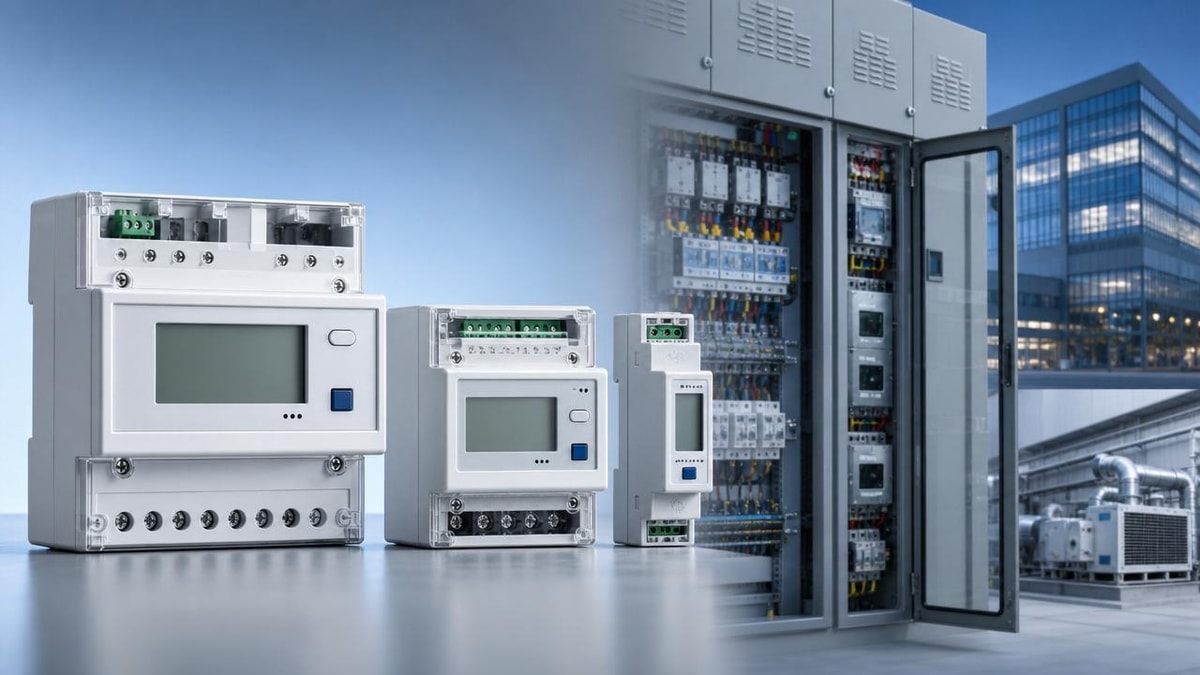
Bulk buyers must understand whether end users need direct-connected meters or CT-operated meters. Small buildings and apartments may prefer direct connection for simpler installation, while factories and large loads often require CT-based metering. If your customers span multiple project types, choose a portfolio that covers common amperage ranges without creating unnecessary SKU complexity.
4. Communication technology
Communication is one of the most important smart meters wholesale decision points. Typical options include RS485, Modbus, M-Bus, PLC, LoRaWAN, NB-IoT, GPRS, 4G, and Wi-Fi. The right choice depends on local network availability, distance, building layout, and data collection method. A technically advanced meter is not useful if the end site lacks the required communication infrastructure.
5. Certifications and standards compliance
For channel buyers, certifications are not optional paperwork. They determine whether the product can enter the target market, pass project review, and avoid customs or regulatory delays. In smart meters wholesale, always confirm which standards apply in your destination region, including metrology approvals, safety standards, EMC compliance, and communication-related requirements.
Scenario-by-scenario: what to prioritize before placing large smart meters wholesale orders
Utility tenders and public infrastructure projects
In this scenario, compliance and interoperability come first. Utilities usually require stable long-term performance, secure remote reading, anti-tamper functions, event logging, and integration with existing AMI or head-end systems. Here, bulk buyers should prioritize protocol compatibility, firmware reliability, upgrade capability, and supplier documentation quality. Low purchase price matters less if the meters fail system integration or field acceptance tests.
Commercial buildings, office parks, and retail properties
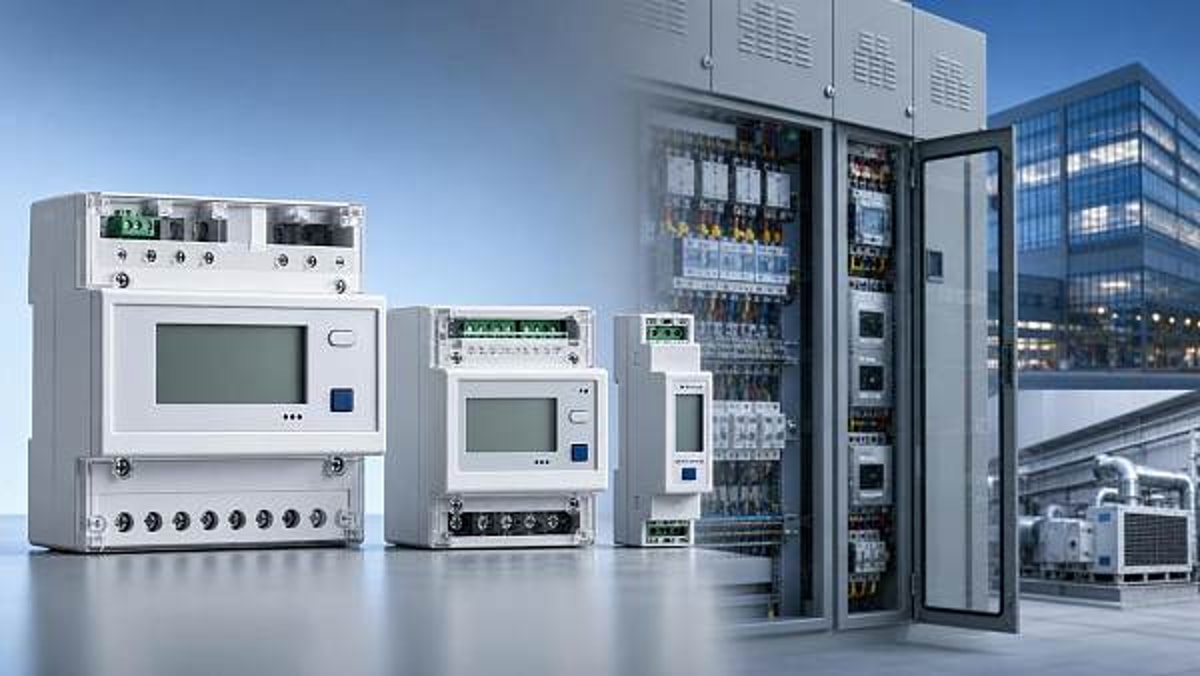
These projects usually need energy visibility at tenant or floor level. The best smart meters wholesale choice often includes compact DIN-rail or panel-mount designs, reliable RS485 or Modbus communication, and data granularity suitable for billing or optimization software. Buyers should also check whether the meter can support demand measurement, time-of-use billing, and easy integration with building management systems.
Industrial plants and energy-intensive operations
Factories care about more than consumption totals. They may require load profiling, voltage and current monitoring, event alarms, and power quality data to support maintenance and operational control. In this scenario, smart meters wholesale decisions should focus on measurement robustness, harmonic monitoring where relevant, CT compatibility, surge resistance, and performance in electrically noisy environments.
Residential developments and submetering rollouts
For apartments, dormitories, and mixed-use developments, installation speed and cost efficiency matter. Meters should be easy to deploy at scale, simple to commission, and practical for long-term billing. Prepaid functions may be attractive in some regions, while others require standard postpaid billing. Distributors should ask whether the project values app-based monitoring, remote disconnect, or simple meter reading workflows.
Export distribution and multi-country resale
For agents and distributors serving multiple countries, flexibility is vital. The smartest smart meters wholesale strategy may be to source models with broad voltage adaptability, modular communication options, multilingual software support, and a certification roadmap covering more than one market. This reduces the need to maintain separate inventories for every region and improves turnover across channels.
Specs that often decide profitability for dealers and distributors
Some specifications are not just technical details; they shape margins, support costs, and repeat sales potential.
- Firmware upgrade capability: helpful when standards evolve or bugs need remote correction.
- Tamper detection: especially important for utilities, rental housing, and prepaid environments.
- Data storage and interval settings: relevant for energy analytics, demand analysis, and dispute resolution.
- Operating temperature and enclosure rating: essential for outdoor cabinets, tropical climates, and dusty sites.
- Terminal and mounting design: affects installation speed, labor error rate, and contractor satisfaction.
- Platform compatibility: reduces friction when customers expect integration with EMS, BMS, or utility software.
- Warranty and failure-rate history: critical in smart meters wholesale because even small defect percentages become expensive at volume.
When evaluating suppliers, ask for field failure data, test reports, and deployment references in use cases similar to your own channel markets. This is especially important for TradeNexus Pro readers who make decisions based on risk-adjusted procurement rather than promotional claims.
Common scenario mismatches that cause bulk-order problems
A large smart meters wholesale order can go wrong even when the product itself is well made. The problem is often poor scenario fit.
- Choosing advanced wireless communication for sites with unreliable signal coverage.
- Buying utility-grade models for simple building submetering, leading to unnecessary cost inflation.
- Ignoring local metrology approvals until late in the sales cycle.
- Overlooking software integration requirements from property managers or industrial clients.
- Selecting a current range that does not match real load conditions.
- Underestimating installer preferences for terminal layout, enclosure size, or mounting method.
These mistakes lead to delayed projects, increased support tickets, inventory write-downs, and strained distributor-customer relationships. The best defense is to build a pre-order qualification checklist around the intended application scenario.
A practical checklist for evaluating smart meters wholesale opportunities
FAQ for dealers, agents, and distributors sourcing in bulk
Should price be the first filter in smart meters wholesale?
Price matters, but not before confirming application fit. A low-cost meter that fails local compliance or communication requirements becomes expensive through rework, returns, and lost credibility.
Which communication option is safest for broad resale?
There is no single safest option. RS485 and Modbus remain widely practical for commercial and industrial settings, while wireless options can be attractive in dispersed deployments. The best choice depends on site infrastructure and customer software expectations.
How many SKUs should a distributor carry?
Enough to cover your major scenarios, but not so many that stock becomes fragmented. Many successful channels build around a core family: one single-phase model, one three-phase direct model, one CT-operated model, and communication variants as needed.
Final guidance: match the spec sheet to the sales scenario
The most effective smart meters wholesale strategy is not to chase the most advanced specification list, but to align technical features with the real buying scenario. Utility projects need compliance depth and system interoperability. Commercial buildings value manageable integration and billing-ready data. Industrial users require resilience and load insight. Residential deployments need cost-efficient scale and easy installation. Export channels benefit from flexibility and certification breadth.
For dealers, distributors, and agents, every bulk order should start with a simple question: where will these meters actually be used, and what outcome matters most to the end customer? Once that answer is clear, specification priorities become far easier to rank. In a competitive market, that discipline turns smart meters wholesale from a product sourcing task into a stronger, lower-risk channel growth strategy.
Get weekly intelligence in your inbox.
No noise. No sponsored content. Pure intelligence.
 May 07, 2026Sustainable Building Materials That Cut Carbon Without Cutting DurabilitySustainable Building Materials That Cut Carbon Without Cutting Durability
 May 07, 2026Green Hydrogen Production: What Decides Whether a Project ScalesGreen Hydrogen Production: What Decides Whether a Project Scales
 May 07, 2026Wind Turbine Blades: Why Repairs Cost More Than PlannedWind Turbine Blades: Why Repairs Cost More Than Planned
 May 07, 2026Folding Solar Chargers: What Real Output Looks Like OutdoorsFolding Solar Chargers: What Real Output Looks Like Outdoors
 May 07, 2026Vehicle to Grid Revenue Looks Attractive, but What Are the Limits?Vehicle to Grid Revenue Looks Attractive, but What Are the Limits?
 May 07, 2026Wireless EV Charging Sounds Easy, So Why Is Adoption Slow?Wireless EV Charging Sounds Easy, So Why Is Adoption Slow?
 May 07, 2026Floating Solar Farms: The Hidden Tradeoffs Behind Water SavingsFloating Solar Farms: The Hidden Tradeoffs Behind Water Savings
 May 07, 2026Geothermal Heat Pumps: Why Installation Quotes Differ So WidelyGeothermal Heat Pumps: Why Installation Quotes Differ So Widely
 May 07, 2026Sodium Ion Batteries: Where They Make Sense Before 2030Sodium Ion Batteries: Where They Make Sense Before 2030
 May 07, 2026EV Battery Recycling Is Growing, but the Supply Chain Isn’t ReadyEV Battery Recycling Is Growing, but the Supply Chain Isn’t Ready
 May 07, 2026BMS Boards Selection Problems That Show Up After InstallationBMS Boards Selection Problems That Show Up After Installation
 May 07, 2026Deep Cycle Batteries: Why Runtime Estimates Often Miss the MarkDeep Cycle Batteries: Why Runtime Estimates Often Miss the Mark
 May 07, 2026Carbon Capture Technology Projects Often Stall at This StageCarbon Capture Technology Projects Often Stall at This Stage
 May 07, 2026What Makes Offshore Wind Technology So Expensive to Deploy?What Makes Offshore Wind Technology So Expensive to Deploy?
 May 07, 2026EV Charging Cables: Small Spec Differences, Big Fit ProblemsEV Charging Cables: Small Spec Differences, Big Fit Problems
 May 07, 2026Solid State Batteries: Progress Is Real, Timelines Are Not SimpleSolid State Batteries: Progress Is Real, Timelines Are Not Simple
 May 07, 2026Microgrid Controllers: What Changes Once Systems Scale UpMicrogrid Controllers: What Changes Once Systems Scale Up
 May 07, 2026Energy Efficient HVAC Claims That Deserve a Closer LookEnergy Efficient HVAC Claims That Deserve a Closer Look
 May 07, 2026Biomass Energy Equipment: Why Maintenance Costs Vary So MuchBiomass Energy Equipment: Why Maintenance Costs Vary So Much
 May 07, 2026Smart Meters Wholesale: Which Specs Matter Most in Bulk OrdersSmart Meters Wholesale: Which Specs Matter Most in Bulk Orders
 May 07, 2026Commercial Energy Storage Sizing Mistakes That Raise CostsCommercial Energy Storage Sizing Mistakes That Raise Costs
 May 07, 2026Residential Solar Kits: What Gets Overlooked Before BuyingResidential Solar Kits: What Gets Overlooked Before Buying
 May 07, 2026V2G Technology Is Moving Fast, but What Still Holds It Back?V2G Technology Is Moving Fast, but What Still Holds It Back?
 May 07, 2026Smart Street Lighting Upgrades: Where Savings Often SlipSmart Street Lighting Upgrades: Where Savings Often Slip
 May 07, 2026Portable Solar Panels That Work Better in Real Travel UsePortable Solar Panels That Work Better in Real Travel Use
 May 07, 2026How to Compare AGM Batteries Wholesale Beyond Unit PriceHow to Compare AGM Batteries Wholesale Beyond Unit Price
 May 07, 2026Do Solar Water Heaters Still Pay Off in Mild Climates?Do Solar Water Heaters Still Pay Off in Mild Climates?