Wireless EV Charging Sounds Easy, So Why Is Adoption Slow?
Wireless EV charging promises cable-free convenience, cleaner urban design, and smoother fleet operations—so why has adoption remained so slow? For decision-makers tracking mobility infrastructure, the answer goes far beyond the technology itself. From cost pressures and efficiency trade-offs to standards, interoperability, and deployment risk, this article explores the real barriers shaping the pace of wireless EV charging.
Why a checklist approach matters before judging wireless EV charging
For information researchers, the biggest mistake is treating wireless EV charging as a simple hardware upgrade. In practice, adoption depends on a chain of decisions: vehicle compatibility, charging efficiency, site economics, maintenance complexity, safety certification, and long-term interoperability. A checklist makes the topic easier to assess because it separates the technology’s promise from the conditions required for deployment at scale.
This matters across industries, not only in passenger mobility. Fleet operators, logistics planners, municipal agencies, property developers, and charging-network investors all evaluate wireless EV charging differently. A public bus depot may prioritize uptime and automation. A premium residential developer may value aesthetics and user convenience. A warehouse yard may care more about opportunity charging and reduced cable wear. Without a structured review, it is easy to overestimate short-term adoption.
In other words, the adoption question is not “Does wireless charging work?” It is “Under what technical, commercial, and operational conditions does wireless EV charging outperform wired alternatives enough to justify the switch?”
First-pass adoption checklist: what to confirm before drawing conclusions
If you need a fast way to evaluate market readiness, start with these core checks. Each one influences whether wireless EV charging remains a pilot concept or becomes a scalable infrastructure decision.
- Vehicle-side readiness: Confirm whether target EV models already support wireless charging receivers or require custom integration. Slow adoption often begins here, because automakers have not widely standardized receiver-side architecture.
- Power level fit: Check whether the charging speed matches the real operating pattern. Wireless EV charging is more attractive for frequent top-up use cases than for drivers expecting the fastest possible high-power sessions.
- Efficiency losses: Compare energy transfer efficiency against wired charging under real alignment conditions, not ideal laboratory settings. Small percentage losses become meaningful at fleet scale.
- Installation cost: Review civil work, grid connection, parking redesign, embedded pad installation, and software integration. Many projects underestimate non-hardware costs.
- Interoperability and standards: Verify compliance pathways and ecosystem maturity. If the infrastructure works only with a narrow set of vehicles or vendors, expansion risk rises.
- Operational advantage: Identify a measurable benefit such as reduced labor, improved vehicle uptime, cleaner site design, better accessibility, or lower connector maintenance.
- Maintenance model: Determine who services ground assemblies, alignment systems, and control software, and how downtime affects utilization.
- Safety and permitting: Review electromagnetic field compliance, foreign object detection, weather protection, and local approval procedures.
If several of these items remain uncertain, slow adoption is not surprising. The barrier is rarely one issue alone; it is usually the combined weight of unresolved technical and commercial conditions.
The main reasons wireless EV charging adoption is still slow
1. Cost is still difficult to justify in mainstream deployments
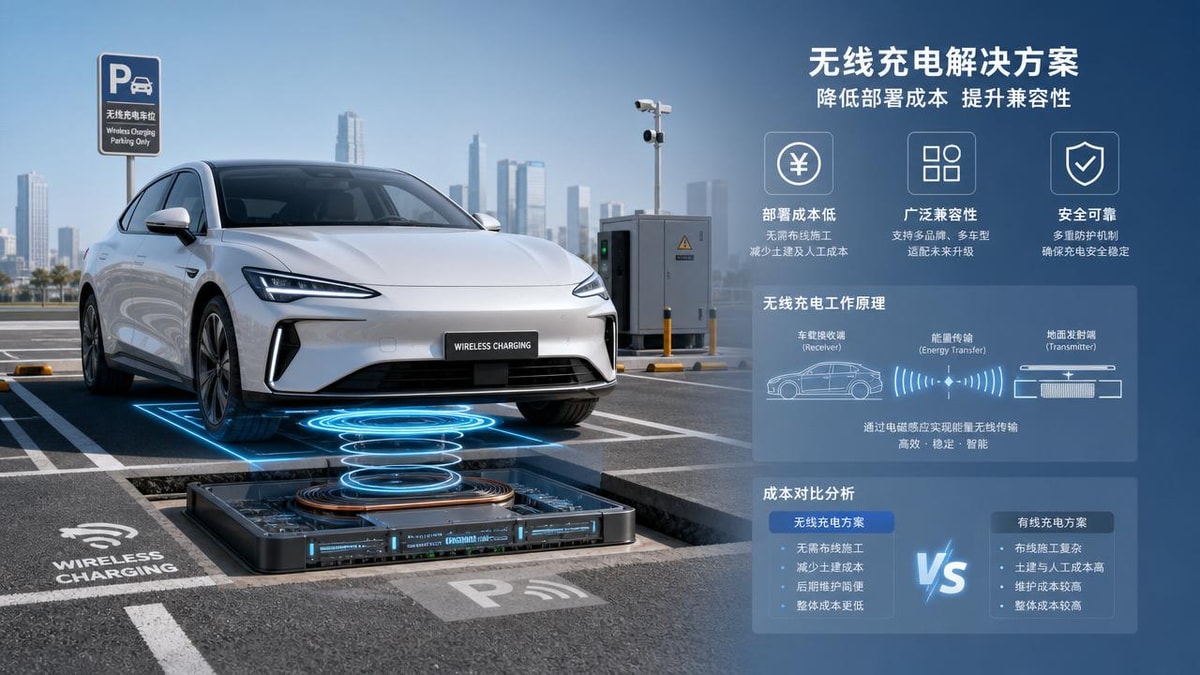
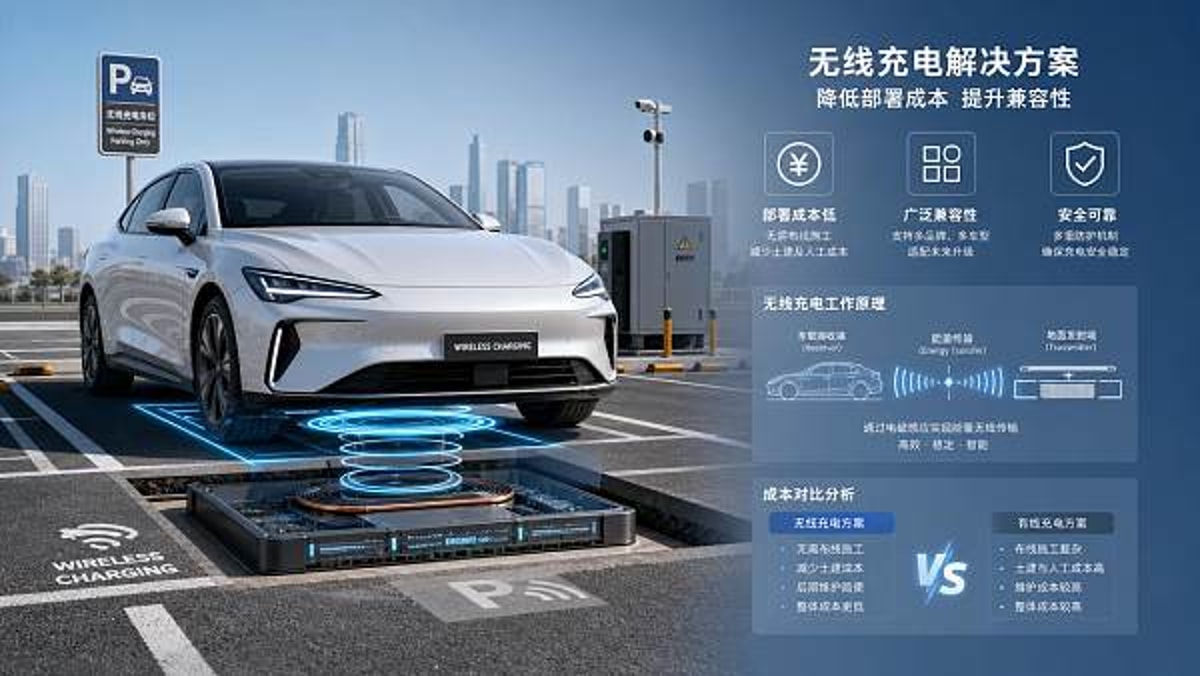
Wireless EV charging infrastructure usually costs more than conventional AC or DC charging when full deployment requirements are included. Buyers must account for embedded charging pads, site preparation, alignment systems, software, certification, and possible vehicle retrofits. For many organizations, the convenience benefit is real but not yet large enough to offset the capital premium.
This is especially important in budget-sensitive public programs and commercial fleet planning, where return on investment must be visible within a defined timeframe. If a wired charger already meets uptime and throughput targets, switching to wireless may look like a nice-to-have rather than a necessary upgrade.
2. Efficiency trade-offs remain a decision barrier
Even though wireless EV charging efficiency has improved, buyers still compare it against the mature performance of cable-based charging. Energy transfer can be sensitive to alignment, air gap, and environmental conditions. For high-utilization fleets or energy-cost-conscious operators, a few percentage points of loss can materially affect lifetime economics.
This does not make the technology unviable. It simply means that the strongest business case usually appears where automation, convenience, or reduced wear on connectors creates enough operational value to compensate for any efficiency gap.
3. Standards and interoperability are improving, but not friction-free
A major reason wireless EV charging adoption is slow is that the ecosystem has not yet reached the same universal confidence level as wired charging connectors and protocols. Buyers want reassurance that today’s infrastructure investment will remain compatible with tomorrow’s vehicles, software environments, and service networks.
Where standardization is still evolving, procurement teams become cautious. They worry about vendor lock-in, unclear upgrade paths, and limited second-source options. In B2B environments, interoperability concerns often delay purchasing more than the technology itself.
4. Automaker support is not yet broad enough
Infrastructure rollout moves faster when OEM support is widespread. At present, wireless EV charging has not been integrated across vehicle portfolios at the scale needed for mass confidence. That creates a classic chicken-and-egg problem: infrastructure investors wait for vehicle support, while automakers wait for stronger infrastructure signals and demand certainty.
5. Many use cases do not need it badly enough yet
A technology can be attractive and still struggle if it solves a non-urgent problem. For many private drivers, plugging in a cable is inconvenient but manageable. For many commercial sites, wired charging already fits existing workflows. Wireless EV charging gains momentum fastest where manual connection creates friction, delays, safety exposure, or maintenance cost.
How to judge wireless EV charging by scenario
Adoption looks slow partly because market conversations often mix unlike scenarios. A better approach is to evaluate wireless EV charging by use case.
Public transit and commercial fleets
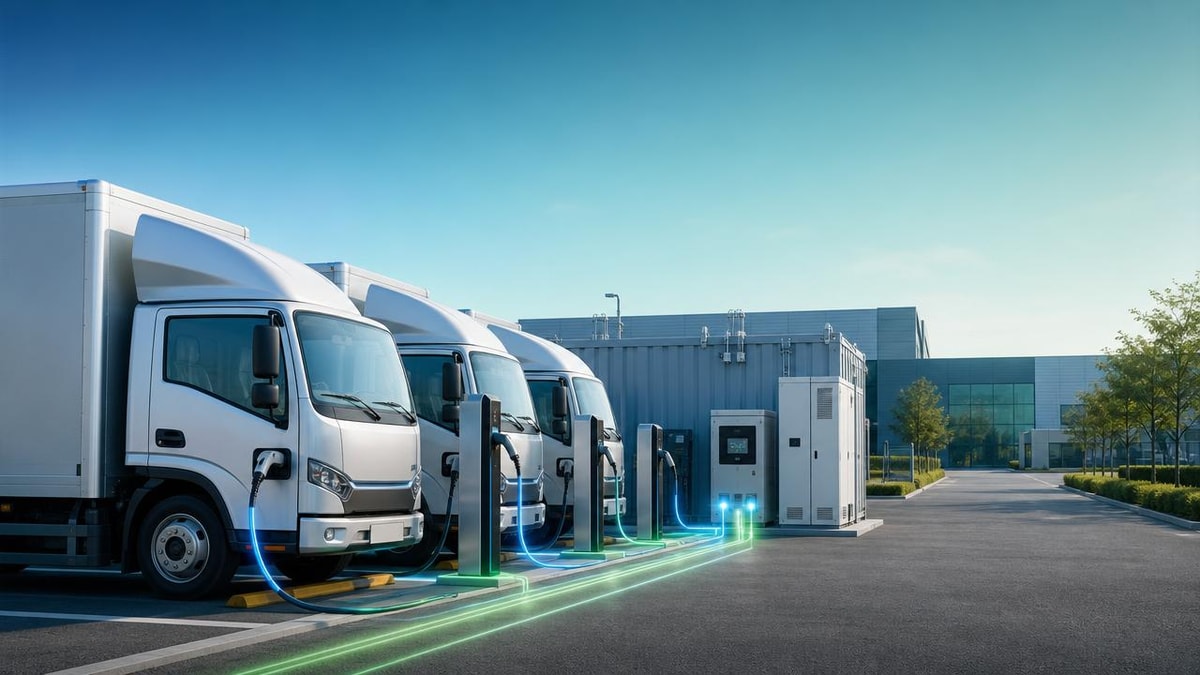
This is one of the strongest early-fit segments. Buses, shuttles, taxis, and delivery fleets can benefit from predictable routes, repeated stop patterns, and opportunity charging. Key checks include dwell time, alignment consistency, daily energy demand, depot redesign cost, and uptime value. Where a vehicle can recharge automatically during scheduled stops, wireless EV charging may support higher asset utilization.
Residential and workplace parking
In these settings, the value case depends heavily on user experience and property strategy. Developers may like the cleaner appearance and reduced cable clutter, but they must compare this with added installation complexity and uncertain tenant demand. For workplaces, accessibility and low-touch charging convenience may be meaningful, yet broad rollout still requires cost discipline and future compatibility confidence.
Logistics yards and industrial facilities
This segment deserves close attention from researchers in supply chain and industrial operations. Wireless EV charging may reduce connector damage, streamline repetitive vehicle movement, and support automation-ready workflows. However, rugged conditions, heavy-duty duty cycles, and integration with existing fleet-management software become critical evaluation points.
A practical decision table for researchers and buyers
Use the table below to sort strong-fit, caution-fit, and weak-fit conditions before assuming whether wireless EV charging is likely to scale in a target market.
Commonly overlooked issues that slow deployment
- Alignment realism: Lab efficiency figures may not reflect daily user behavior. Real parking variance matters.
- Retrofit assumptions: Vehicle integration can be harder than expected, especially outside tightly controlled fleet environments.
- Procurement silos: Facilities teams, fleet managers, IT, energy planners, and finance departments may evaluate different success metrics.
- Maintenance accountability: Ground hardware, software diagnostics, and service response times must be assigned clearly.
- Policy overhang: Incentives may support electrification broadly without specifically accelerating wireless EV charging economics.
- User education: Even automated systems may fail to deliver if drivers do not understand positioning, charging confirmation, or exception handling.
Execution checklist: what enterprises should prepare next
If an organization wants to move from research to evaluation, the next step is not immediate procurement. It is preparation. The most effective reviews of wireless EV charging start with a defined information package.
- Document vehicle types, parking behavior, dwell times, and daily energy needs.
- Map whether the objective is convenience, automation, aesthetics, accessibility, uptime, or reduced connector handling.
- Estimate the full-site cost, including construction, software, maintenance, and downtime risk.
- Ask vendors for demonstrated efficiency under real-use conditions, not only peak figures.
- Verify standards alignment, upgrade path, OEM compatibility, and service coverage.
- Compare against wired alternatives using the same operational KPIs and payback assumptions.
What slow adoption really signals
Slow adoption does not necessarily mean weak long-term potential. In many advanced technologies, the market pauses not because the concept fails, but because supporting conditions are still maturing. Wireless EV charging appears to be in that phase. The convenience case is clear. The strategic value is strongest in selected fleet, transit, property, and industrial settings. But mainstream scale depends on lower system cost, stronger automaker participation, better interoperability confidence, and clearer ROI proof.
For researchers and decision-makers, the best approach is to avoid yes-or-no thinking. Instead, ask where wireless EV charging already solves a high-friction problem, where standards risk is manageable, and where automation or site design advantages create measurable business value.
Final action guide for evaluating wireless EV charging opportunities
If you need to assess a wireless EV charging opportunity more rigorously, prioritize five questions in stakeholder discussions: Which vehicles will be supported, what operating pattern makes wireless preferable, what total efficiency and cost assumptions are being used, how future interoperability will be protected, and what measurable operational gain justifies the premium? These questions quickly separate promising deployments from attractive but premature concepts.
For organizations exploring infrastructure partnerships, fleet transitions, property integration, or export-facing technology positioning, it is also wise to clarify implementation timeline, pilot scope, maintenance responsibility, standards roadmap, and budget threshold before requesting final proposals. That preparation creates a stronger basis for comparing suppliers, reducing deployment risk, and identifying whether wireless EV charging is ready for your use case now or better tracked as a near-future option.
Get weekly intelligence in your inbox.
No noise. No sponsored content. Pure intelligence.
 May 07, 2026Sustainable Building Materials That Cut Carbon Without Cutting DurabilitySustainable Building Materials That Cut Carbon Without Cutting Durability
 May 07, 2026Green Hydrogen Production: What Decides Whether a Project ScalesGreen Hydrogen Production: What Decides Whether a Project Scales
 May 07, 2026Wind Turbine Blades: Why Repairs Cost More Than PlannedWind Turbine Blades: Why Repairs Cost More Than Planned
 May 07, 2026Folding Solar Chargers: What Real Output Looks Like OutdoorsFolding Solar Chargers: What Real Output Looks Like Outdoors
 May 07, 2026Vehicle to Grid Revenue Looks Attractive, but What Are the Limits?Vehicle to Grid Revenue Looks Attractive, but What Are the Limits?
 May 07, 2026Wireless EV Charging Sounds Easy, So Why Is Adoption Slow?Wireless EV Charging Sounds Easy, So Why Is Adoption Slow?
 May 07, 2026Floating Solar Farms: The Hidden Tradeoffs Behind Water SavingsFloating Solar Farms: The Hidden Tradeoffs Behind Water Savings
 May 07, 2026Geothermal Heat Pumps: Why Installation Quotes Differ So WidelyGeothermal Heat Pumps: Why Installation Quotes Differ So Widely
 May 07, 2026Sodium Ion Batteries: Where They Make Sense Before 2030Sodium Ion Batteries: Where They Make Sense Before 2030
 May 07, 2026EV Battery Recycling Is Growing, but the Supply Chain Isn’t ReadyEV Battery Recycling Is Growing, but the Supply Chain Isn’t Ready
 May 07, 2026BMS Boards Selection Problems That Show Up After InstallationBMS Boards Selection Problems That Show Up After Installation
 May 07, 2026Deep Cycle Batteries: Why Runtime Estimates Often Miss the MarkDeep Cycle Batteries: Why Runtime Estimates Often Miss the Mark
 May 07, 2026Carbon Capture Technology Projects Often Stall at This StageCarbon Capture Technology Projects Often Stall at This Stage
 May 07, 2026What Makes Offshore Wind Technology So Expensive to Deploy?What Makes Offshore Wind Technology So Expensive to Deploy?
 May 07, 2026EV Charging Cables: Small Spec Differences, Big Fit ProblemsEV Charging Cables: Small Spec Differences, Big Fit Problems
 May 07, 2026Solid State Batteries: Progress Is Real, Timelines Are Not SimpleSolid State Batteries: Progress Is Real, Timelines Are Not Simple
 May 07, 2026Microgrid Controllers: What Changes Once Systems Scale UpMicrogrid Controllers: What Changes Once Systems Scale Up
 May 07, 2026Energy Efficient HVAC Claims That Deserve a Closer LookEnergy Efficient HVAC Claims That Deserve a Closer Look
 May 07, 2026Biomass Energy Equipment: Why Maintenance Costs Vary So MuchBiomass Energy Equipment: Why Maintenance Costs Vary So Much
 May 07, 2026Smart Meters Wholesale: Which Specs Matter Most in Bulk OrdersSmart Meters Wholesale: Which Specs Matter Most in Bulk Orders
 May 07, 2026Commercial Energy Storage Sizing Mistakes That Raise CostsCommercial Energy Storage Sizing Mistakes That Raise Costs
 May 07, 2026Residential Solar Kits: What Gets Overlooked Before BuyingResidential Solar Kits: What Gets Overlooked Before Buying
 May 07, 2026V2G Technology Is Moving Fast, but What Still Holds It Back?V2G Technology Is Moving Fast, but What Still Holds It Back?
 May 07, 2026Smart Street Lighting Upgrades: Where Savings Often SlipSmart Street Lighting Upgrades: Where Savings Often Slip
 May 07, 2026Portable Solar Panels That Work Better in Real Travel UsePortable Solar Panels That Work Better in Real Travel Use
 May 07, 2026How to Compare AGM Batteries Wholesale Beyond Unit PriceHow to Compare AGM Batteries Wholesale Beyond Unit Price
 May 07, 2026Do Solar Water Heaters Still Pay Off in Mild Climates?Do Solar Water Heaters Still Pay Off in Mild Climates?