How to Compare AGM Batteries Wholesale Beyond Unit Price
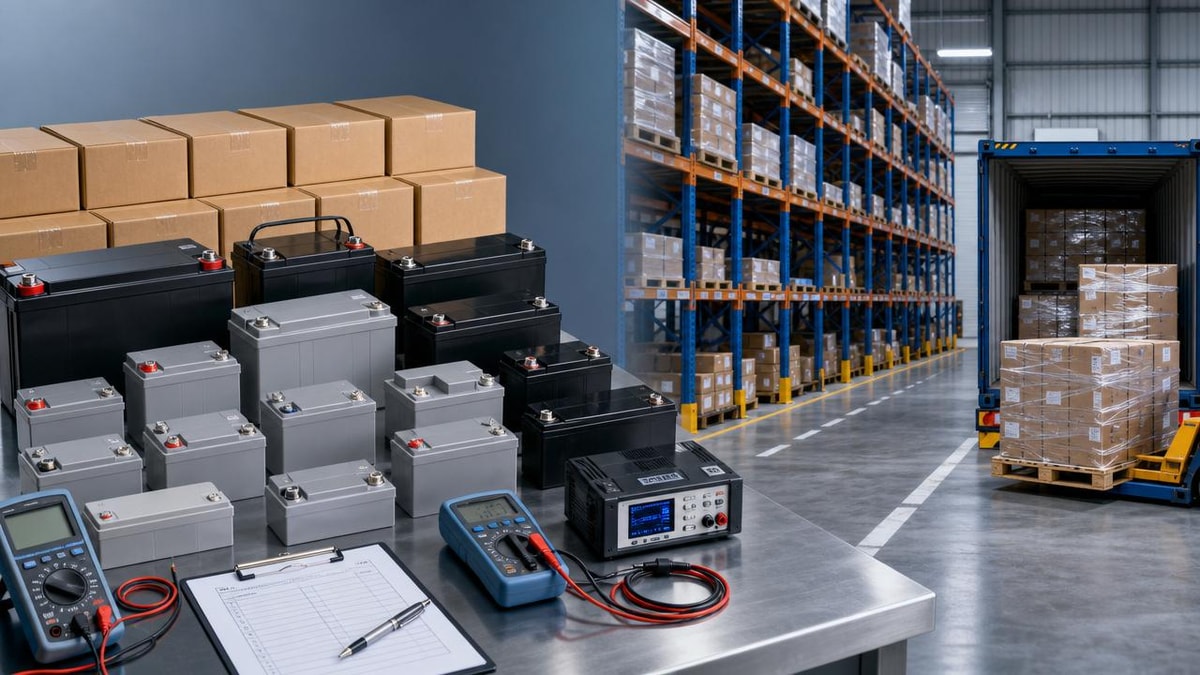
When evaluating AGM batteries wholesale, the lowest unit price rarely tells the full story. Procurement teams must compare cycle life, quality consistency, certifications, logistics reliability, warranty terms, and supplier responsiveness to avoid hidden costs and supply risks. This guide explains how buyers can assess true value, strengthen sourcing decisions, and build more resilient battery procurement strategies.
For purchasing teams managing backup power, mobility equipment, telecom systems, solar storage, security infrastructure, or industrial standby applications, AGM battery sourcing decisions often affect far more than invoice totals. A price difference of 3% to 8% at the quote stage can quickly be erased by shorter service life, higher failure rates, delayed shipments, or weak after-sales support.
In the AGM batteries wholesale market, the strongest suppliers are not simply the cheapest. They are the partners that deliver consistent output across batches, clear documentation, stable lead times, and predictable field performance. Buyers who compare suppliers through a total-value lens typically reduce replacement risk, improve forecasting accuracy, and protect downstream operations.
Why Unit Price Is an Incomplete Metric in AGM Batteries Wholesale
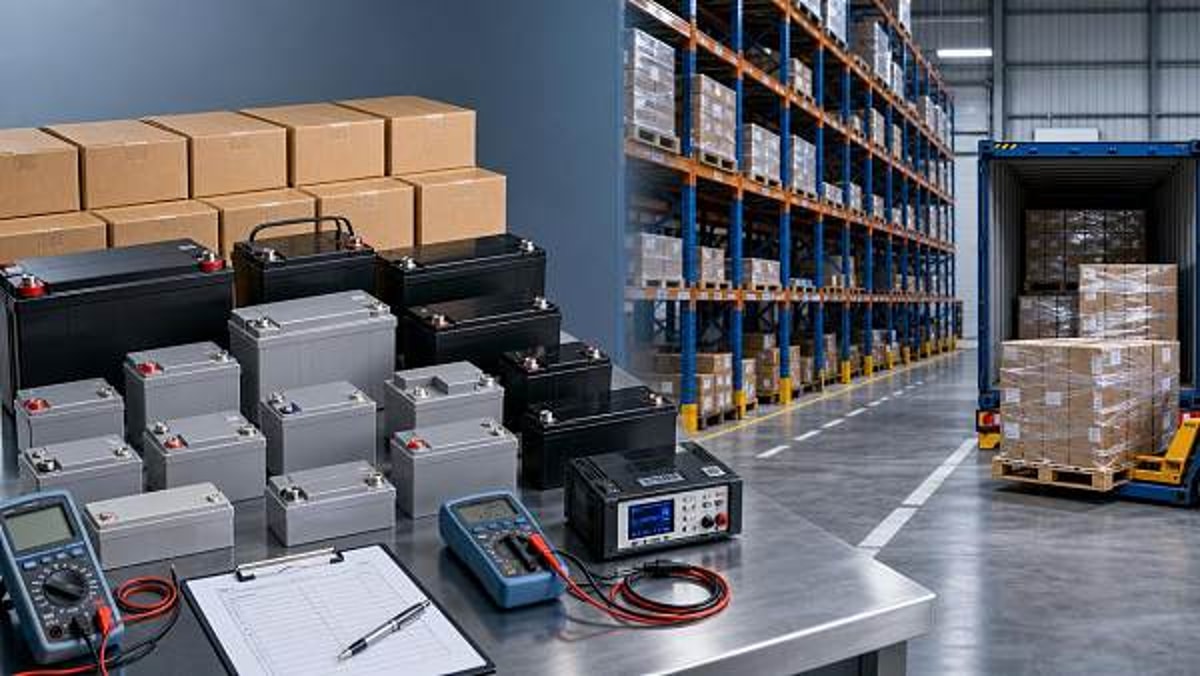
A low ex-factory price may look attractive in a tender sheet, but battery procurement carries hidden variables. AGM batteries are used in systems where failure can interrupt communications, disable backup circuits, or trigger costly service calls. If one shipment shows only a 2% to 4% early defect rate, the operational impact may still be significant when the order volume is 2,000 to 10,000 units.
For procurement managers, the real comparison should include at least six dimensions: cycle life, float performance, consistency between production lots, compliance documents, shipping reliability, and claims handling. In many B2B environments, these factors influence total ownership cost more directly than the first-line unit quote.
Common hidden costs behind a low quote
A cheaper AGM battery can generate extra expense in at least four ways. First, lower usable life means more frequent replacement cycles. Second, inconsistent capacity across the same lot can complicate assembly and quality control. Third, insufficient packaging or poor shipping coordination can increase transit damage. Fourth, a slow response on warranty claims can consume internal labor and delay customer commitments.
Typical cost leakage areas
- Additional incoming inspection time of 1 to 3 days per batch
- Higher field replacement frequency within 6 to 18 months
- Emergency air freight caused by delayed ocean shipments
- Reputational cost when OEM equipment underperforms in the market
The table below helps buyers compare direct price against broader sourcing impact when reviewing AGM batteries wholesale offers from multiple suppliers.
The key takeaway is simple: if a supplier saves a few dollars per unit but causes more failures, slower replenishment, or more service claims, the apparent savings disappear. For most professional buyers, the better benchmark is cost per usable month or cost per verified cycle, not price per unit alone.
Core Technical Criteria Buyers Should Compare
Technical screening is where many AGM batteries wholesale decisions succeed or fail. Even when two suppliers offer the same nominal voltage and capacity, real-world performance can differ because of plate quality, valve regulation design, separator materials, charging tolerance, and production control. A structured review should move beyond catalog claims.
Cycle life and float life
Different applications demand different life profiles. In cyclic use, such as mobility devices or off-grid support, buyers should ask how many cycles the battery can deliver at a defined depth of discharge, often 50% or 80%. In standby use, such as UPS or alarm systems, float life in years may matter more than cycle count.
A supplier quote that lacks test conditions is incomplete. For example, saying “long cycle life” is not enough. Procurement teams should request the discharge depth, ambient temperature, charge voltage range, and end-of-life capacity threshold. Without those 4 variables, comparisons between offers are unreliable.
Capacity tolerance and batch consistency
For OEM buyers and project-based distributors, consistency across production lots is critical. If one batch of 12V AGM batteries delivers noticeably different internal resistance or discharge behavior, system balancing problems may appear after installation. Good suppliers can explain their sampling method, factory test frequency, and acceptance tolerance for outgoing lots.
Useful questions for technical validation
- What is the rated capacity test method and discharge hour rate?
- What is the allowable variance between units in the same shipment?
- How often are formation, sealing, and final voltage tests performed?
- Are there aging or shelf-life recommendations for warehouse storage beyond 6 months?
Temperature performance and charging compatibility
AGM batteries may be installed in environments from around 0°C to 40°C, and some projects face wider seasonal swings. Capacity retention and charging efficiency can change sharply outside standard room conditions. Buyers should confirm operating temperature recommendations, float charging windows, and whether the battery is intended for standby, deep cycle, or mixed-duty use.
The table below shows practical technical checkpoints that make AGM batteries wholesale comparisons more objective during sourcing reviews.
Technical comparison is especially important for procurement teams supporting multiple downstream markets. One universal battery source rarely performs equally well in telecom backup, low-speed EVs, security systems, and renewable storage. Matching the battery profile to the load profile is a more reliable way to buy than simply selecting the cheapest listing.
Commercial and Supply Chain Factors That Shape True Value
In AGM batteries wholesale, commercial structure matters almost as much as technical quality. Buyers often focus on product specifications but underestimate the effect of lead time stability, MOQ flexibility, shipping documentation, and claim support. A supplier that meets technical requirements but misses delivery windows can still damage a project rollout.
Lead times, MOQ, and replenishment planning
Lead times for battery orders can vary from 2 to 6 weeks depending on model mix, seasonal demand, raw material conditions, and transport mode. Procurement teams should clarify whether the quoted lead time applies to samples, first orders, and repeat orders equally. It is also important to ask if the supplier can support rolling forecasts for 3 months or 6 months.
MOQ can also reshape cost. A lower MOQ may improve cash flow for niche applications, while a higher MOQ may be acceptable if the supplier offers stable batch reservation, labeling support, or staggered shipment schedules. The best option depends on warehouse capacity, turnover rate, and customer order patterns.
Packaging, shipping, and compliance paperwork
Batteries are sensitive cargo, and poor logistics execution can create avoidable losses. Buyers should review carton strength, palletization method, terminal protection, labeling accuracy, and document readiness. Even a 1% transit damage rate can become expensive when products must be reworked, credited, or urgently replaced.
Documentation readiness is another procurement checkpoint. Depending on destination market and application, buyers may need test reports, safety declarations, material information, and transport-related paperwork. A reliable supplier should be able to explain what documents are standard, what requires additional lead time, and what is updated per shipment.
Commercial review checklist
- Standard lead time for repeat orders: confirm in days, not just “fast delivery”
- MOQ by model and by private-label packaging configuration
- Average response time for technical or shipping questions, ideally within 24 to 48 hours
- Clear packaging specs and pallet quantities for container planning
For enterprise sourcing teams, supplier responsiveness should be treated as a measurable indicator. If a vendor takes 5 days to answer a basic compliance question during quotation, there is a high chance post-order support will also be slow. AGM batteries wholesale relationships often last over multiple purchasing cycles, so communication speed and accuracy deserve formal scoring.
How to Evaluate Warranty, Claims, and Supplier Reliability
Warranty terms can look similar on paper yet differ greatly in execution. One supplier may promise 12 months but require complex failure proof, while another may offer a practical claims workflow with photo review, batch traceability, and resolution within 7 to 14 working days. Procurement teams should compare not only coverage length but also the process behind it.
What a usable warranty framework should include
A workable warranty framework usually includes five elements: clear start date, covered failure scenarios, excluded misuse conditions, batch identification method, and defined compensation mechanism. Buyers should also ask whether claims are settled by replacement, credit note, or deduction in the next order. Ambiguity in any of these areas can delay recovery of losses.
Signs of a more dependable supplier
Reliable AGM batteries wholesale suppliers tend to provide stable communication, traceable documentation, realistic production schedules, and transparent quality controls. They do not overpromise on every deadline or every custom request. Instead, they define what can be delivered in 15 days, what needs 30 days, and what conditions apply to custom branding or special terminal configurations.
Buyers can improve qualification results by using a scorecard with weighted criteria. For example, technical fit may carry 35%, commercial terms 25%, supply reliability 20%, warranty practicality 10%, and communication quality 10%. This approach creates discipline and reduces overreliance on headline pricing.
Recommended supplier scoring steps
- Shortlist 3 to 5 suppliers with suitable AGM product ranges
- Request matched quotations using the same capacity, terminal, and packaging assumptions
- Review sample performance and document completeness
- Score responsiveness, lead time credibility, and warranty process clarity
- Place a pilot order before annual volume commitment
A pilot order is often one of the most effective risk controls. Before committing to container-scale volumes, buyers can test packaging integrity, label accuracy, booking discipline, and early field performance. Even a first order of 100 to 300 units can reveal issues that are not visible in a sample-only review.
A Practical Procurement Framework for Comparing AGM Battery Suppliers
A disciplined sourcing process helps procurement teams convert scattered vendor claims into comparable decision data. Instead of evaluating AGM batteries wholesale quotes one by one in email threads, buyers should use a structured framework that combines technical, operational, and financial criteria.
Step-by-step review model
Start by defining the application profile. Is the battery for cyclic discharge, standby backup, renewable storage, or mixed use? Then set non-negotiable thresholds such as voltage, capacity class, terminal type, operating environment, and compliance needs. After that, request comparable quotations from at least 3 suppliers using a single RFQ template.
Next, compare landed cost rather than ex-works price alone. Include packaging, documentation, freight assumptions, inspection cost, expected claim rate, and payment terms. Finally, validate the supplier through samples or pilot orders and create a review calendar every 6 or 12 months. Battery sourcing conditions can change with lead prices, transport constraints, and seasonal demand spikes.
Mistakes buyers should avoid
- Comparing different test bases as if they were equivalent
- Selecting a supplier before checking repeat-order lead times
- Ignoring storage conditions for slow-moving inventory
- Accepting vague warranty language without claim workflow details
- Using unit price as the primary score in a technical purchase
For procurement professionals, better AGM batteries wholesale decisions come from a balanced view of performance, risk, and continuity. The goal is not to buy the lowest-priced battery. It is to secure dependable supply at a cost structure that holds up after shipping, installation, operation, and service support are considered.
TradeNexus Pro supports global buyers with deeper market insight, sharper supplier evaluation thinking, and decision-ready B2B intelligence across energy, manufacturing, electronics, healthcare technology, and supply chain systems. If you are reviewing AGM battery sourcing options and want a stronger framework for vendor comparison, supplier screening, or procurement planning, contact us to explore tailored insights and discover more sourcing solutions.
Get weekly intelligence in your inbox.
No noise. No sponsored content. Pure intelligence.
 May 07, 2026Sustainable Building Materials That Cut Carbon Without Cutting DurabilitySustainable Building Materials That Cut Carbon Without Cutting Durability
 May 07, 2026Green Hydrogen Production: What Decides Whether a Project ScalesGreen Hydrogen Production: What Decides Whether a Project Scales
 May 07, 2026Wind Turbine Blades: Why Repairs Cost More Than PlannedWind Turbine Blades: Why Repairs Cost More Than Planned
 May 07, 2026Folding Solar Chargers: What Real Output Looks Like OutdoorsFolding Solar Chargers: What Real Output Looks Like Outdoors
 May 07, 2026Vehicle to Grid Revenue Looks Attractive, but What Are the Limits?Vehicle to Grid Revenue Looks Attractive, but What Are the Limits?
 May 07, 2026Wireless EV Charging Sounds Easy, So Why Is Adoption Slow?Wireless EV Charging Sounds Easy, So Why Is Adoption Slow?
 May 07, 2026Floating Solar Farms: The Hidden Tradeoffs Behind Water SavingsFloating Solar Farms: The Hidden Tradeoffs Behind Water Savings
 May 07, 2026Geothermal Heat Pumps: Why Installation Quotes Differ So WidelyGeothermal Heat Pumps: Why Installation Quotes Differ So Widely
 May 07, 2026Sodium Ion Batteries: Where They Make Sense Before 2030Sodium Ion Batteries: Where They Make Sense Before 2030
 May 07, 2026EV Battery Recycling Is Growing, but the Supply Chain Isn’t ReadyEV Battery Recycling Is Growing, but the Supply Chain Isn’t Ready
 May 07, 2026BMS Boards Selection Problems That Show Up After InstallationBMS Boards Selection Problems That Show Up After Installation
 May 07, 2026Deep Cycle Batteries: Why Runtime Estimates Often Miss the MarkDeep Cycle Batteries: Why Runtime Estimates Often Miss the Mark
 May 07, 2026Carbon Capture Technology Projects Often Stall at This StageCarbon Capture Technology Projects Often Stall at This Stage
 May 07, 2026What Makes Offshore Wind Technology So Expensive to Deploy?What Makes Offshore Wind Technology So Expensive to Deploy?
 May 07, 2026EV Charging Cables: Small Spec Differences, Big Fit ProblemsEV Charging Cables: Small Spec Differences, Big Fit Problems
 May 07, 2026Solid State Batteries: Progress Is Real, Timelines Are Not SimpleSolid State Batteries: Progress Is Real, Timelines Are Not Simple
 May 07, 2026Microgrid Controllers: What Changes Once Systems Scale UpMicrogrid Controllers: What Changes Once Systems Scale Up
 May 07, 2026Energy Efficient HVAC Claims That Deserve a Closer LookEnergy Efficient HVAC Claims That Deserve a Closer Look
 May 07, 2026Biomass Energy Equipment: Why Maintenance Costs Vary So MuchBiomass Energy Equipment: Why Maintenance Costs Vary So Much
 May 07, 2026Smart Meters Wholesale: Which Specs Matter Most in Bulk OrdersSmart Meters Wholesale: Which Specs Matter Most in Bulk Orders
 May 07, 2026Commercial Energy Storage Sizing Mistakes That Raise CostsCommercial Energy Storage Sizing Mistakes That Raise Costs
 May 07, 2026Residential Solar Kits: What Gets Overlooked Before BuyingResidential Solar Kits: What Gets Overlooked Before Buying
 May 07, 2026V2G Technology Is Moving Fast, but What Still Holds It Back?V2G Technology Is Moving Fast, but What Still Holds It Back?
 May 07, 2026Smart Street Lighting Upgrades: Where Savings Often SlipSmart Street Lighting Upgrades: Where Savings Often Slip
 May 07, 2026Portable Solar Panels That Work Better in Real Travel UsePortable Solar Panels That Work Better in Real Travel Use
 May 07, 2026How to Compare AGM Batteries Wholesale Beyond Unit PriceHow to Compare AGM Batteries Wholesale Beyond Unit Price
 May 07, 2026Do Solar Water Heaters Still Pay Off in Mild Climates?Do Solar Water Heaters Still Pay Off in Mild Climates?