EV Charging Cables: Small Spec Differences, Big Fit Problems
EV charging cables may look similar at first glance, but small differences in connector type, amperage, phase compatibility, and insulation can lead to major fit and performance issues in daily use. For operators and end users, choosing the right cable is not just about charging speed—it is about safety, equipment compatibility, and long-term reliability.
In practical B2B and operational settings, these differences affect far more than convenience. A cable that is mismatched by only a few technical points can trigger failed charging sessions, overheating, reduced charging efficiency, or repeated replacement cycles within 12–24 months. For fleet operators, facility managers, installers, and industrial users, understanding how EV charging cables differ is a necessary step in reducing downtime and protecting charging assets.
This article explains where fit problems come from, which specifications matter most, and how users can evaluate EV charging cables with greater confidence before purchase, installation, and long-term use.
Why Small Cable Specifications Create Big Operational Problems
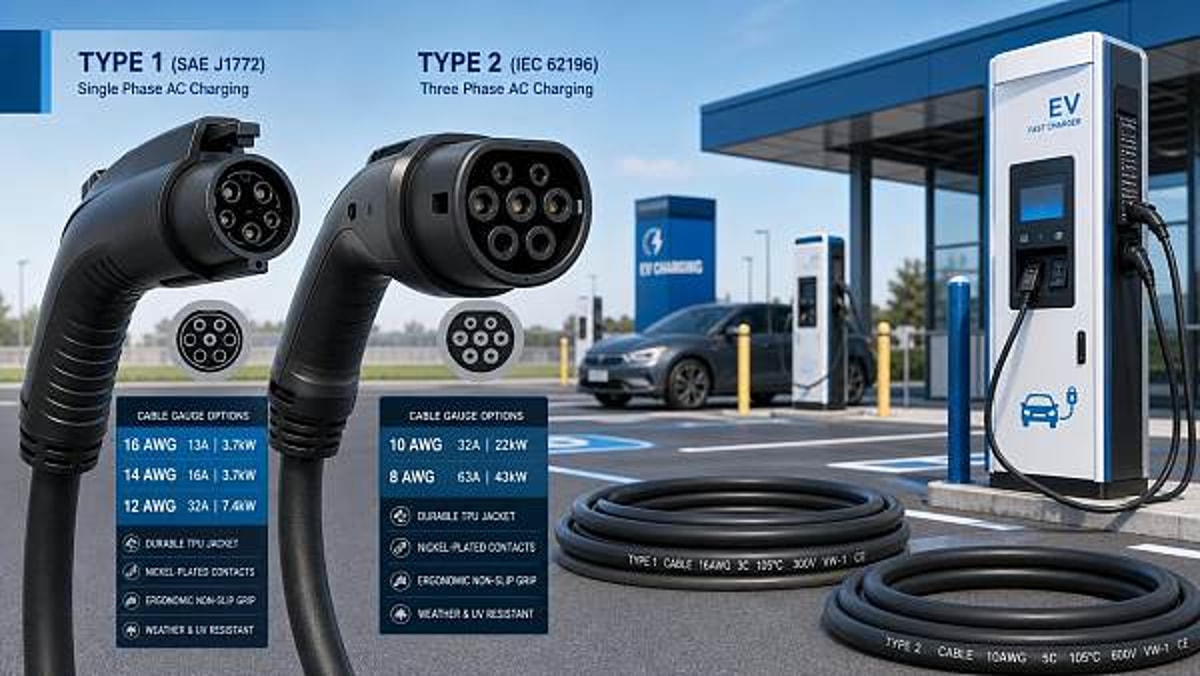
Most fit issues with EV charging cables begin with an assumption that one cable can serve every charger, connector, and operating environment. In reality, even a 1-factor mismatch in connector standard or a 16A versus 32A current rating difference can change charging outcomes significantly. What appears to be a minor specification on a label often determines whether the cable works safely under repeated daily cycles.
For operators, the impact is usually visible in three areas: physical compatibility, electrical performance, and service life. A connector may physically resemble another type but still fail to latch correctly. A cable may support the right plug format but not the required single-phase or three-phase load. In busy commercial charging points, these small gaps can create repeated user complaints in as little as 2–6 weeks after deployment.
Connector Type Is the First Gatekeeper
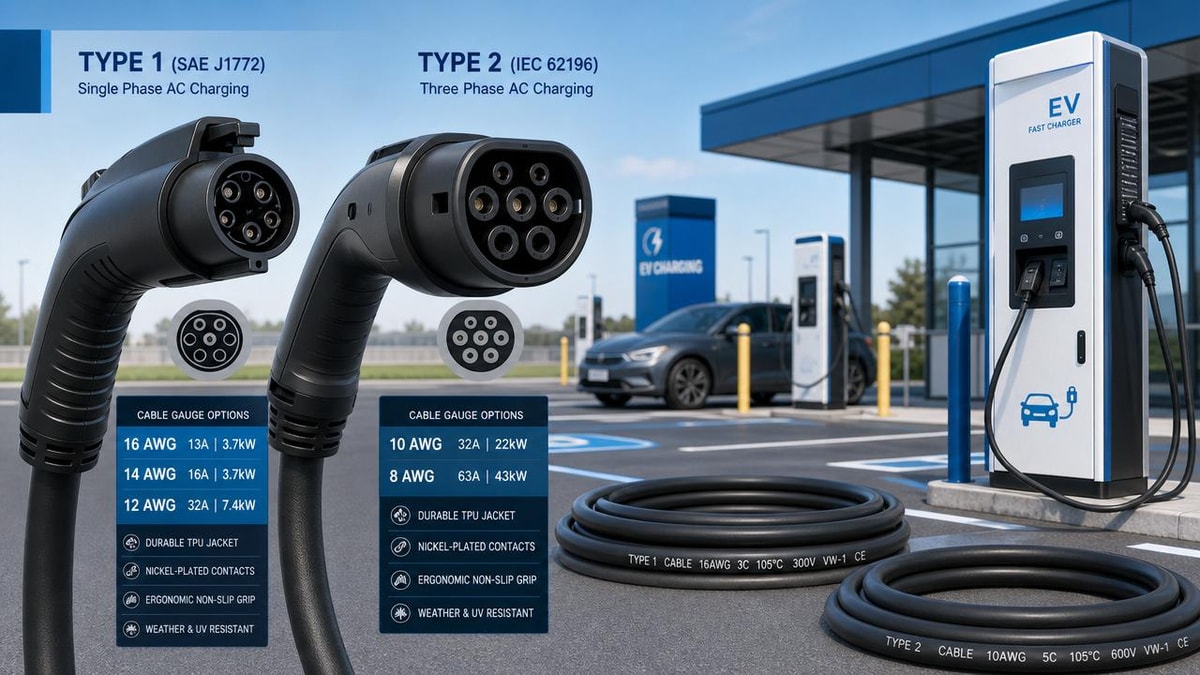
Connector standards vary by region, vehicle platform, and charging mode. Type 1, Type 2, CCS-related interfaces, and region-specific AC charging formats are not interchangeable in practical use. For AC charging applications, the most common confusion happens when buyers focus only on appearance rather than locking design, pin layout, and market-specific compatibility.
A cable with the wrong connector type does not create a minor inconvenience; it can make a charging point unusable. In shared parking environments, residential complexes, workplaces, and mixed-brand fleet operations, even a small error in connector selection can reduce charger usability by 25%–50% for part of the user base.
Amperage and Phase Rating Affect Real Charging Performance
Two cables may both be marketed for EV charging, yet one may be rated at 16A and another at 32A. That difference directly affects charging speed, thermal load, and suitability for different charging stations. If a cable is underspecified for the charger output, charging may be limited, interrupted, or exposed to avoidable heat stress during extended sessions lasting 4–8 hours.
Phase compatibility matters just as much. A cable chosen for single-phase use may not be the correct fit for a three-phase charging setup common in commercial or industrial environments. Users often discover the problem only after installation, when the charger underperforms despite appearing fully functional.
Typical Signs of a Mismatched Cable
- Connector does not lock firmly after insertion
- Charging current is lower than the charger’s advertised output
- Cable jacket becomes unusually warm after 30–60 minutes
- Repeated charging session interruptions under high load
- Visible wear, cracking, or stiffness in outdoor conditions within 1 season
The table below outlines several of the most common EV charging cable specification differences and the practical fit problems they cause for end users and site operators.
The key takeaway is that EV charging cables should be treated as application-specific components, not generic accessories. A cable’s connector, current rating, and environmental design must align with both the charger and the use case, especially where charging is frequent, shared, or exposed to weather.
How to Choose EV Charging Cables for Daily Use, Shared Sites, and Fleet Operations
A reliable selection process starts by mapping the cable to the actual charging environment. End users in home settings may prioritize flexibility, manageable length, and occasional use. Operators at workplaces, public parking areas, logistics depots, or mixed-vehicle fleets need a more disciplined evaluation process covering at least 5 core variables: connector type, amperage, phase, cable length, and environmental durability.
When evaluating EV charging cables, buyers should avoid choosing only on price or headline charging speed. In many cases, a slightly lower-cost cable can lead to more maintenance calls, faster wear, and higher replacement frequency over a 12–36 month operating window.
Five Selection Factors That Matter Most
- Confirm the vehicle-side and charger-side connector standard.
- Match cable current rating to charger output, such as 16A or 32A.
- Check whether the charging setup is single-phase or three-phase.
- Choose a cable length that balances reach and handling, commonly 5m, 7.5m, or 10m.
- Review jacket flexibility, abrasion resistance, and outdoor suitability for heat, moisture, and repeated bending.
Length, Weight, and Handling Are Often Undervalued
Length is one of the most underestimated causes of user dissatisfaction. A 5m cable may be sufficient for consistent home parking alignment, but commercial users often need 7.5m or 10m to support varied vehicle positions. However, longer cables also increase weight, storage difficulty, and drag on the connector if they are not managed properly.
For operators, a poorly chosen cable length can increase misuse. Users may stretch the cable at sharp angles, allow it to rest on rough concrete, or wrap it too tightly after use. Over hundreds of charging cycles, these handling habits accelerate mechanical fatigue.
Typical Cable Choice by Application
The matrix below gives a practical view of how EV charging cables are commonly selected across different operating scenarios.
For most commercial environments, standardization delivers better results than buying a mixed assortment without a policy. Defining 3–4 approved cable configurations for known vehicle types and charger outputs can simplify operations, training, and replacement planning.
A Practical 4-Step Buying Checklist
Before placing an order, operators can reduce fit errors by following a basic 4-step review. First, identify the exact charger interface and its rated output. Second, verify the vehicle types or user population expected at the site. Third, define environmental conditions such as indoor use, direct sun exposure, rain, or winter stiffness risk. Fourth, confirm maintenance expectations, including inspection intervals and expected daily charging frequency.
This process is especially valuable for B2B buyers sourcing EV charging cables across multiple locations. A site with 10 chargers used twice per day requires a different cable strategy than a depot with 20 vehicles charging every night under heavy handling conditions.
Maintenance, Safety, and Common Mistakes After Installation
Even correctly selected EV charging cables can fail early if post-installation handling is poor. In real-world use, many cable issues come from dragging, twisting, crushing under vehicle tires, or storing wet cables in enclosed spaces. Small habits repeated over 100–300 charging cycles can lead to jacket wear, connector strain, and unstable charging performance.
A practical maintenance routine does not need to be complex, but it should be consistent. For low-traffic sites, a visual inspection every 30 days may be sufficient. For commercial or fleet use with frequent daily charging, weekly checks are more appropriate, especially where cables are exposed to dirt, UV, moisture, or repeated pull stress.
What Users Should Inspect Regularly
- Connector pins for discoloration, looseness, or debris buildup
- Outer jacket for cuts, flattening, cracking, or abrasion marks
- Areas near strain relief where bending stress is highest
- Locking function during insertion and removal
- Heat buildup after normal charging sessions of 1–3 hours
Three Frequent Mistakes That Shorten Cable Life
The first mistake is buying more amperage than needed without considering flexibility and handling. Higher-rated cables can be thicker and less manageable, which increases drop and bend stress in daily use. The second is selecting cable length without studying parking patterns. The third is ignoring environmental exposure, especially in outdoor sites with seasonal temperature swings.
Another common problem is treating EV charging cables as permanent, maintenance-free items. In practice, they should be included in site inspection routines just like connectors, pedestals, and user-facing charging hardware. A 5-minute check can prevent a failed charging session during peak usage.
When Replacement Is the Smarter Option
Operators should consider replacement when visible damage appears near the connector head, when the cable repeatedly runs hot under normal load, or when charging instability persists after charger diagnostics show no fault. Repair decisions should be conservative, particularly in public and commercial environments where liability and uptime matter.
For procurement teams, keeping a small buffer stock of approved EV charging cables can reduce service delays. A practical reserve might be 5%–10% of installed cable volume for multi-site operations, depending on usage intensity and replacement lead times.
What B2B Buyers and Site Operators Should Ask Suppliers Before Ordering
Supplier evaluation is just as important as technical selection. Buyers should request clear specification sheets, use-case guidance, and confirmation that the proposed EV charging cables match the intended charger and vehicle mix. The goal is not to collect more marketing material, but to reduce ambiguity before purchase.
In many projects, preventable fit problems happen because purchasing, installation, and end-use teams work from different assumptions. A stronger procurement process connects all 3 perspectives early: electrical requirement, site layout, and daily user behavior.
Questions Worth Asking Up Front
- Which connector standard is supported on both ends?
- What is the continuous current rating and recommended use profile?
- Is the cable intended for single-phase, three-phase, or both environments?
- What length options are available, and how does length affect handling?
- How does the jacket perform in outdoor conditions such as heat, moisture, and cold-weather stiffness?
- What inspection and replacement guidance is recommended for medium- and high-frequency use?
Documentation Reduces Costly Reordering
For multi-location rollouts, documenting approved cable configurations can reduce repeat errors during future procurement cycles. A simple internal reference sheet with 6 fields—connector type, amperage, phase, length, environment, and assigned site type—helps teams reorder consistently and onboard new facilities faster.
This is where strategic industry platforms such as TradeNexus Pro provide value for professional buyers. Instead of relying on fragmented product claims, decision-makers can compare technical context, application guidance, and market-side considerations in one place, improving both supplier conversations and deployment planning.
EV charging cables are small components with oversized operational consequences. The right choice depends on exact connector fit, current rating, phase compatibility, cable length, and environmental durability—not just whether the cable looks compatible at first glance. For users, operators, and procurement teams, a disciplined evaluation process helps avoid downtime, premature wear, and poor charging performance.
If you are reviewing charging infrastructure, planning a fleet rollout, or comparing cable options for commercial sites, TradeNexus Pro can help you assess fit, risk, and sourcing priorities with greater clarity. Contact us today to get a tailored solution, discuss product details, or explore more EV charging infrastructure insights built for serious B2B decision-making.
Get weekly intelligence in your inbox.
No noise. No sponsored content. Pure intelligence.
 May 07, 2026Sustainable Building Materials That Cut Carbon Without Cutting DurabilitySustainable Building Materials That Cut Carbon Without Cutting Durability
 May 07, 2026Green Hydrogen Production: What Decides Whether a Project ScalesGreen Hydrogen Production: What Decides Whether a Project Scales
 May 07, 2026Wind Turbine Blades: Why Repairs Cost More Than PlannedWind Turbine Blades: Why Repairs Cost More Than Planned
 May 07, 2026Folding Solar Chargers: What Real Output Looks Like OutdoorsFolding Solar Chargers: What Real Output Looks Like Outdoors
 May 07, 2026Vehicle to Grid Revenue Looks Attractive, but What Are the Limits?Vehicle to Grid Revenue Looks Attractive, but What Are the Limits?
 May 07, 2026Wireless EV Charging Sounds Easy, So Why Is Adoption Slow?Wireless EV Charging Sounds Easy, So Why Is Adoption Slow?
 May 07, 2026Floating Solar Farms: The Hidden Tradeoffs Behind Water SavingsFloating Solar Farms: The Hidden Tradeoffs Behind Water Savings
 May 07, 2026Geothermal Heat Pumps: Why Installation Quotes Differ So WidelyGeothermal Heat Pumps: Why Installation Quotes Differ So Widely
 May 07, 2026Sodium Ion Batteries: Where They Make Sense Before 2030Sodium Ion Batteries: Where They Make Sense Before 2030
 May 07, 2026EV Battery Recycling Is Growing, but the Supply Chain Isn’t ReadyEV Battery Recycling Is Growing, but the Supply Chain Isn’t Ready
 May 07, 2026BMS Boards Selection Problems That Show Up After InstallationBMS Boards Selection Problems That Show Up After Installation
 May 07, 2026Deep Cycle Batteries: Why Runtime Estimates Often Miss the MarkDeep Cycle Batteries: Why Runtime Estimates Often Miss the Mark
 May 07, 2026Carbon Capture Technology Projects Often Stall at This StageCarbon Capture Technology Projects Often Stall at This Stage
 May 07, 2026What Makes Offshore Wind Technology So Expensive to Deploy?What Makes Offshore Wind Technology So Expensive to Deploy?
 May 07, 2026EV Charging Cables: Small Spec Differences, Big Fit ProblemsEV Charging Cables: Small Spec Differences, Big Fit Problems
 May 07, 2026Solid State Batteries: Progress Is Real, Timelines Are Not SimpleSolid State Batteries: Progress Is Real, Timelines Are Not Simple
 May 07, 2026Microgrid Controllers: What Changes Once Systems Scale UpMicrogrid Controllers: What Changes Once Systems Scale Up
 May 07, 2026Energy Efficient HVAC Claims That Deserve a Closer LookEnergy Efficient HVAC Claims That Deserve a Closer Look
 May 07, 2026Biomass Energy Equipment: Why Maintenance Costs Vary So MuchBiomass Energy Equipment: Why Maintenance Costs Vary So Much
 May 07, 2026Smart Meters Wholesale: Which Specs Matter Most in Bulk OrdersSmart Meters Wholesale: Which Specs Matter Most in Bulk Orders
 May 07, 2026Commercial Energy Storage Sizing Mistakes That Raise CostsCommercial Energy Storage Sizing Mistakes That Raise Costs
 May 07, 2026Residential Solar Kits: What Gets Overlooked Before BuyingResidential Solar Kits: What Gets Overlooked Before Buying
 May 07, 2026V2G Technology Is Moving Fast, but What Still Holds It Back?V2G Technology Is Moving Fast, but What Still Holds It Back?
 May 07, 2026Smart Street Lighting Upgrades: Where Savings Often SlipSmart Street Lighting Upgrades: Where Savings Often Slip
 May 07, 2026Portable Solar Panels That Work Better in Real Travel UsePortable Solar Panels That Work Better in Real Travel Use
 May 07, 2026How to Compare AGM Batteries Wholesale Beyond Unit PriceHow to Compare AGM Batteries Wholesale Beyond Unit Price
 May 07, 2026Do Solar Water Heaters Still Pay Off in Mild Climates?Do Solar Water Heaters Still Pay Off in Mild Climates?