Solid State Batteries: Progress Is Real, Timelines Are Not Simple
Solid state batteries are making measurable progress, but the path to large-scale commercialization remains far from straightforward. For information-driven researchers tracking energy storage, supply chains, and next-generation manufacturing, the real story lies between laboratory breakthroughs and industrial reality. This article examines what is advancing, what is delaying adoption, and why realistic timelines matter as global markets position for the next wave of battery innovation.
What are solid state batteries, and why are they attracting so much attention?
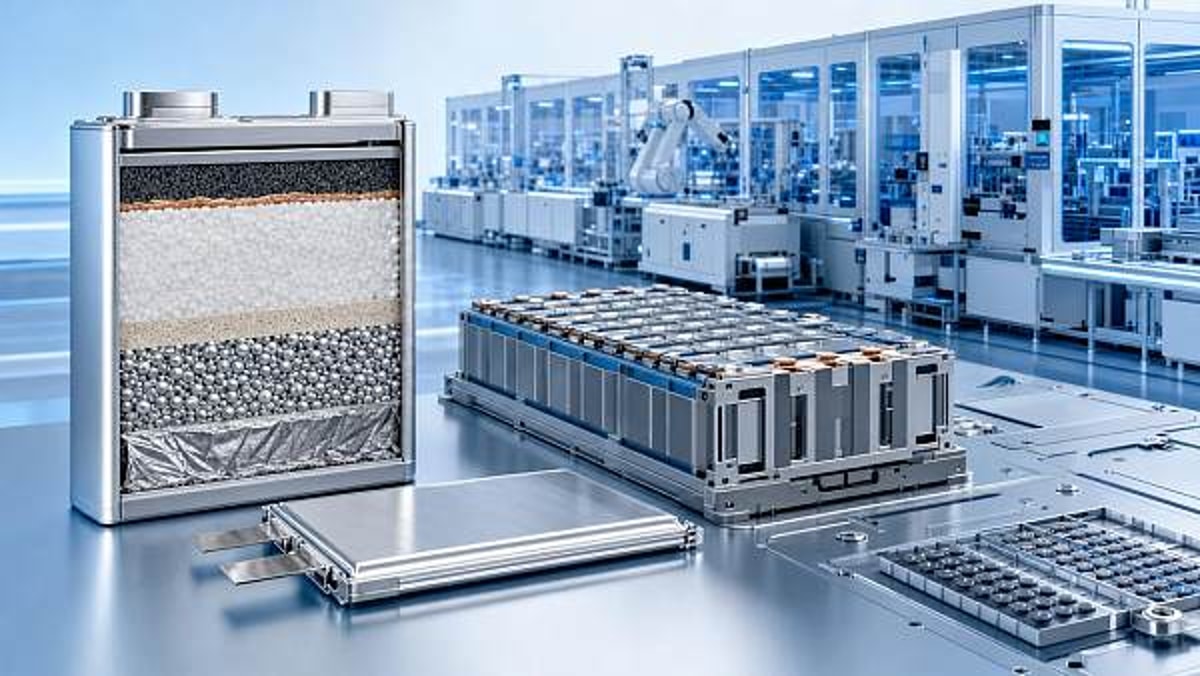
Solid state batteries replace the liquid or gel electrolyte used in conventional lithium-ion cells with a solid electrolyte. That shift sounds simple, but it affects nearly every part of battery design, from safety performance and energy density to manufacturing methods and long-term reliability. The strong interest around solid state batteries comes from the possibility of building cells that store more energy in the same footprint while reducing flammability risk and enabling new material combinations, including lithium metal anodes.
For researchers and business decision-makers, the topic matters because batteries are not just components. They shape electric vehicle range, portable electronics design, industrial backup systems, and the economics of clean energy deployment. In supply chain terms, battery chemistry choices influence raw material sourcing, equipment investment, quality control, certification, and geographic manufacturing strategy. That is why solid state batteries sit at the intersection of advanced manufacturing, green energy, smart electronics, and broader industrial competitiveness.
At the same time, public discussion often compresses the story into a single promise: better batteries are coming soon. A more useful view is that solid state batteries represent a family of technical approaches, not one uniform solution. Sulfide-based systems, oxide-based systems, polymer-based systems, and hybrid architectures all bring different trade-offs. So when markets ask whether progress is real, the answer is yes. When they ask whether timelines are simple, the answer is clearly no.
What progress is actually real today?
The most credible progress in solid state batteries is happening in targeted engineering milestones rather than in sweeping market replacement. Researchers and manufacturers have improved ionic conductivity in several solid electrolyte classes, reduced some interface instability issues, and demonstrated small-format cells with encouraging energy density and cycle performance. Pilot lines are expanding, automotive partnerships are maturing, and material suppliers are building more defined commercialization roadmaps.
Another sign of real progress is the shift from pure lab claims to manufacturability discussions. Serious companies are no longer speaking only about theoretical range gains. They are discussing stack pressure, moisture sensitivity, defect control, dendrite suppression, yield loss, and scale-up compatibility with existing battery production assets. That is a healthy signal. It means the industry is moving from concept validation toward industrial discipline.
In practical terms, near-term adoption is more likely to appear first in niche or premium segments where performance improvements justify higher costs and more complex qualification cycles. These may include premium EV platforms, specialized aerospace electronics, compact medical devices, and defense-related systems. Researchers should therefore avoid the false binary of “not ready” versus “ready everywhere.” Solid state batteries are progressing, but in uneven layers across use cases, formats, and cost structures.
If the progress is real, why are commercialization timelines still uncertain?
Commercialization is difficult because battery success is not defined by one breakthrough. A cell must perform safely, repeatedly, affordably, and at scale. Solid state batteries face challenges across all four dimensions. First, solid-solid interfaces are far less forgiving than liquid systems. Even when conductivity numbers look strong in controlled settings, maintaining stable contact during charging cycles, temperature changes, and mechanical stress remains difficult.
Second, manufacturing integration is a major barrier. Existing lithium-ion production infrastructure was designed around slurry coating, liquid electrolyte filling, and mature quality inspection methods. Some solid state batteries may partially leverage current lines, but many require different materials handling conditions, new lamination or sintering approaches, tighter environmental controls, and revised formation processes. That means capex decisions can slow deployment even when technical progress continues.
Third, yield matters as much as prototype performance. A battery that works in a research cell is not yet a commercially viable product. Industrial buyers need consistent output, acceptable scrap rates, stable sourcing of critical materials, and predictable certification pathways. In many advanced battery programs, the hidden timeline risk comes from the gap between first success and repeatable production. This is where many optimistic forecasts lose credibility.
Finally, market timing depends on competition from improving lithium-ion technology. Conventional batteries are not standing still. Lithium iron phosphate, high-nickel variants, silicon-enhanced anodes, and better pack architecture continue to improve cost and performance. As a result, solid state batteries are not racing against a fixed benchmark. They are competing against a moving target, which makes adoption timing more complex than headline announcements suggest.
How do solid state batteries compare with conventional lithium-ion in real business terms?
For information researchers and procurement-oriented readers, comparison should go beyond technical marketing language. The right question is not whether solid state batteries are theoretically superior, but where they may create enough value to offset risk, cost, and qualification burden. The table below summarizes a practical comparison framework.
This comparison shows why solid state batteries are strategically important but not automatically disruptive in the short term. In sectors with strict validation requirements, even meaningful technical gains may not translate into fast market penetration. Enterprise buyers should treat claims of “replacement” with caution and instead assess whether a specific battery architecture solves a defined commercial problem better than upgraded lithium-ion alternatives.
Which industries and use cases are most likely to adopt solid state batteries first?
The earliest viable markets for solid state batteries are likely to be those where compactness, energy density, safety, or premium differentiation outweigh first-generation cost disadvantages. High-end electric vehicles remain the most visible target because range, packaging efficiency, and safety all carry major value. However, automotive adoption will also be one of the most demanding routes because qualification, durability, and volume requirements are exceptionally strict.
Beyond automotive, smart electronics may provide useful early opportunities, especially in compact or high-performance devices where battery footprint matters. Healthcare technology is another credible area, particularly for specialized equipment requiring stable, safe, and space-efficient power systems. In aerospace and defense, cost sensitivity may be lower than in mass consumer categories, making advanced battery formats more commercially realistic at an earlier stage.
From a global B2B perspective, the strongest near-term opportunity may not be immediate end-market dominance, but participation in the supply chain around solid state batteries. Materials processing, advanced coatings, dry room systems, inspection technologies, automation tools, electrolyte precursor supply, and testing services can all benefit before widespread mass-market adoption occurs. For many companies, that is the more practical entry point.
What are the most common misconceptions researchers and buyers should avoid?
One common misconception is that all solid state batteries are safer by default. While replacing flammable liquid electrolytes may reduce certain hazards, total battery safety still depends on cell design, operating conditions, packaging, thermal behavior, and failure response. A safer material system does not remove the need for rigorous validation.
Another misconception is that one breakthrough announcement equals market readiness. Battery development frequently produces impressive single metrics under selective conditions. A cell may show high energy density but have poor cycle life. It may perform well in small formats but not scale efficiently. It may survive testing but require manufacturing conditions that sharply increase cost. Researchers should read battery news with a systems mindset, not a headline mindset.
A third misunderstanding is that timelines slip only because companies are conservative. In reality, the complexity is structural. Solid state batteries require coordination across material science, process engineering, equipment design, quality assurance, and downstream qualification. Delays are often signs of technical honesty rather than failure. For strategic planning, realistic timing is more valuable than aggressive forecasting that ignores industrial constraints.
What should companies evaluate before investing, sourcing, or partnering around solid state batteries?
Before making commitments, companies should assess solid state batteries through a commercial readiness lens. Start with chemistry and architecture clarity. Ask exactly what kind of solid electrolyte is being used, whether the anode is lithium metal or an intermediate design, and what performance data comes from pouch cells, coin cells, or larger formats. Without that context, comparisons are often misleading.
Next, examine manufacturing compatibility. Can the process adapt to existing lines, or does it require major new equipment and environmental controls? What are the expected yield risks? How sensitive are materials to moisture, temperature, or contamination? These questions matter because supply chain readiness often determines who moves first and who waits.
It is also important to review validation timelines, intellectual property exposure, and sourcing concentration. If a program depends on a narrow set of proprietary materials or one regional supplier cluster, scalability may be limited even if the technology performs well. The best strategic evaluations combine battery metrics with procurement resilience, regulatory path visibility, and long-term partnership credibility.
Quick evaluation checklist for information-driven decision-makers
- Is the solid state batteries claim based on lab cells, pilot cells, or pre-commercial production?
- Which technical bottleneck has been solved, and which ones remain open?
- How does the solution compare with improving lithium-ion alternatives on total cost and time to deployment?
- What manufacturing changes are required across materials, tooling, and inspection?
- Are the supply chain and certification pathways visible enough for the intended market?
So what is the most realistic outlook for solid state batteries over the next few years?
The realistic outlook is steady progress, selective commercialization, and continued timeline volatility. Solid state batteries will likely expand through phased deployment rather than sudden industry-wide replacement. More pilot output, more strategic alliances, more application-specific launches, and more manufacturing learning should be expected. What should not be expected is a simple, universal crossover point where all sectors rapidly switch.
For researchers, this means the most valuable signals will come from repeatable production data, qualification wins, supplier ecosystem development, and capex commitments from credible industrial players. For exporters, manufacturers, and solution providers, the opportunity may lie in enabling infrastructure just as much as in the batteries themselves. Markets that understand this distinction will make better timing decisions.
If you need to further confirm a specific route related to solid state batteries, the first questions to raise should be practical ones: What exact chemistry is involved? What performance data exists outside the lab? What manufacturing changes are required? What is the realistic qualification cycle for the target industry? And what supply chain risks could slow deployment even if the technology works? Those questions create a more reliable basis for evaluation, sourcing, partnership, and long-term strategy.
Get weekly intelligence in your inbox.
No noise. No sponsored content. Pure intelligence.
 May 07, 2026Sustainable Building Materials That Cut Carbon Without Cutting DurabilitySustainable Building Materials That Cut Carbon Without Cutting Durability
 May 07, 2026Green Hydrogen Production: What Decides Whether a Project ScalesGreen Hydrogen Production: What Decides Whether a Project Scales
 May 07, 2026Wind Turbine Blades: Why Repairs Cost More Than PlannedWind Turbine Blades: Why Repairs Cost More Than Planned
 May 07, 2026Folding Solar Chargers: What Real Output Looks Like OutdoorsFolding Solar Chargers: What Real Output Looks Like Outdoors
 May 07, 2026Vehicle to Grid Revenue Looks Attractive, but What Are the Limits?Vehicle to Grid Revenue Looks Attractive, but What Are the Limits?
 May 07, 2026Wireless EV Charging Sounds Easy, So Why Is Adoption Slow?Wireless EV Charging Sounds Easy, So Why Is Adoption Slow?
 May 07, 2026Floating Solar Farms: The Hidden Tradeoffs Behind Water SavingsFloating Solar Farms: The Hidden Tradeoffs Behind Water Savings
 May 07, 2026Geothermal Heat Pumps: Why Installation Quotes Differ So WidelyGeothermal Heat Pumps: Why Installation Quotes Differ So Widely
 May 07, 2026Sodium Ion Batteries: Where They Make Sense Before 2030Sodium Ion Batteries: Where They Make Sense Before 2030
 May 07, 2026EV Battery Recycling Is Growing, but the Supply Chain Isn’t ReadyEV Battery Recycling Is Growing, but the Supply Chain Isn’t Ready
 May 07, 2026BMS Boards Selection Problems That Show Up After InstallationBMS Boards Selection Problems That Show Up After Installation
 May 07, 2026Deep Cycle Batteries: Why Runtime Estimates Often Miss the MarkDeep Cycle Batteries: Why Runtime Estimates Often Miss the Mark
 May 07, 2026Carbon Capture Technology Projects Often Stall at This StageCarbon Capture Technology Projects Often Stall at This Stage
 May 07, 2026What Makes Offshore Wind Technology So Expensive to Deploy?What Makes Offshore Wind Technology So Expensive to Deploy?
 May 07, 2026EV Charging Cables: Small Spec Differences, Big Fit ProblemsEV Charging Cables: Small Spec Differences, Big Fit Problems
 May 07, 2026Solid State Batteries: Progress Is Real, Timelines Are Not SimpleSolid State Batteries: Progress Is Real, Timelines Are Not Simple
 May 07, 2026Microgrid Controllers: What Changes Once Systems Scale UpMicrogrid Controllers: What Changes Once Systems Scale Up
 May 07, 2026Energy Efficient HVAC Claims That Deserve a Closer LookEnergy Efficient HVAC Claims That Deserve a Closer Look
 May 07, 2026Biomass Energy Equipment: Why Maintenance Costs Vary So MuchBiomass Energy Equipment: Why Maintenance Costs Vary So Much
 May 07, 2026Smart Meters Wholesale: Which Specs Matter Most in Bulk OrdersSmart Meters Wholesale: Which Specs Matter Most in Bulk Orders
 May 07, 2026Commercial Energy Storage Sizing Mistakes That Raise CostsCommercial Energy Storage Sizing Mistakes That Raise Costs
 May 07, 2026Residential Solar Kits: What Gets Overlooked Before BuyingResidential Solar Kits: What Gets Overlooked Before Buying
 May 07, 2026V2G Technology Is Moving Fast, but What Still Holds It Back?V2G Technology Is Moving Fast, but What Still Holds It Back?
 May 07, 2026Smart Street Lighting Upgrades: Where Savings Often SlipSmart Street Lighting Upgrades: Where Savings Often Slip
 May 07, 2026Portable Solar Panels That Work Better in Real Travel UsePortable Solar Panels That Work Better in Real Travel Use
 May 07, 2026How to Compare AGM Batteries Wholesale Beyond Unit PriceHow to Compare AGM Batteries Wholesale Beyond Unit Price
 May 07, 2026Do Solar Water Heaters Still Pay Off in Mild Climates?Do Solar Water Heaters Still Pay Off in Mild Climates?