Commercial Energy Storage Sizing Mistakes That Raise Costs
For finance approvers, mistakes in commercial energy storage sizing rarely stay technical—they quickly become budget overruns, weak ROI, and hidden lifecycle costs. From oversizing systems that lock up capital to undersizing assets that fail under peak demand, the wrong decisions can undermine project value. This article explains the most common sizing mistakes, how they raise total costs, and what decision-makers should review before approving investment.
In B2B energy projects, sizing is where engineering assumptions turn into capital commitments. A system sized for the wrong load profile, tariff structure, or expansion horizon can distort payback by 2–5 years, increase idle capacity, and trigger avoidable retrofit costs. For procurement leaders, controllers, and CFO-level reviewers, understanding these errors is essential before approving any commercial energy storage investment.
Why Commercial Energy Storage Sizing Errors Become Financial Problems
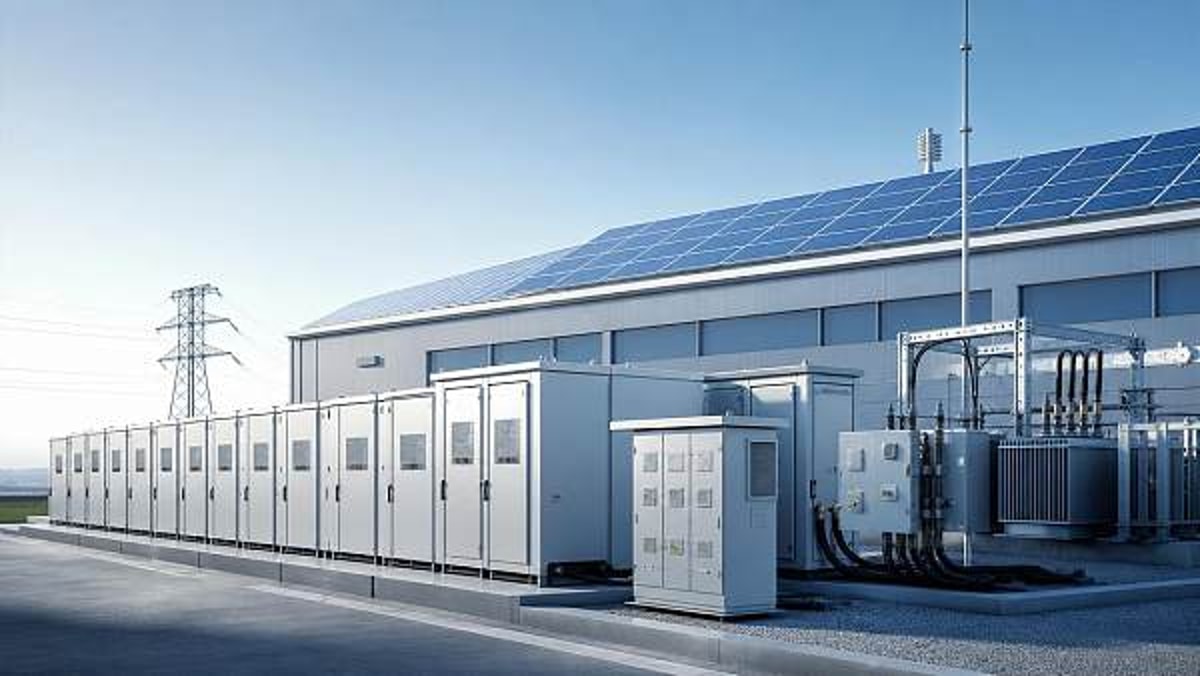
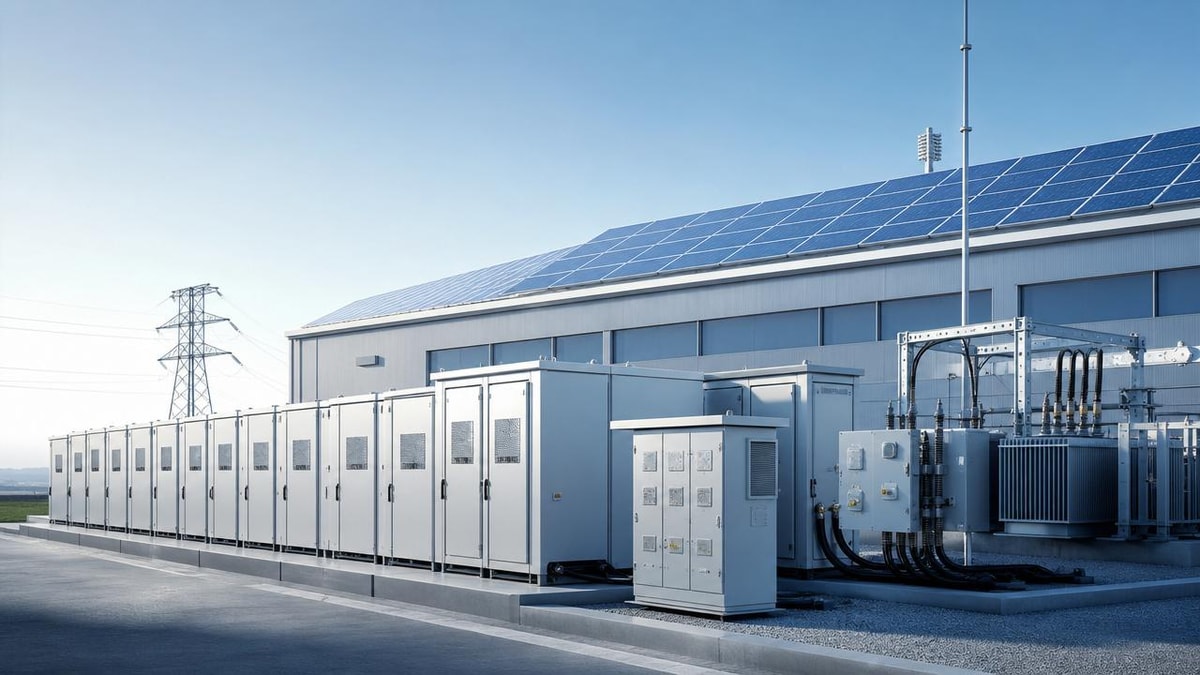
Commercial energy storage is often justified through 4 core value streams: peak shaving, demand charge reduction, backup resilience, and renewable integration. When sizing misses the real operating profile, each of those value streams weakens. The result is not only underperformance in year 1, but also a lower asset utilization rate over a 10–15 year project life.
Many approval teams focus first on battery capacity in kWh and overlook power rating in kW, dispatch frequency, round-trip efficiency, and degradation assumptions. Yet these are the variables that determine whether the system can actually respond during a 15-minute peak event, support a 2-hour outage, or cycle 250–350 times per year without eroding economics.
The finance lens: CAPEX, OPEX, and utilization
A battery that is 30% larger than needed may appear safer on paper, but it can tie up capital that could have been used elsewhere in the business. A battery that is 20% too small may miss critical peak intervals and fail to capture expected savings. In both cases, the issue is not simply technical fit; it is a mismatch between asset cost and monetizable performance.
Common financial symptoms of poor sizing
- Payback extending from 4–6 years to 7–9 years
- Demand charge savings delivered at only 50%–70% of forecast
- Idle battery capacity for most operating hours
- Unexpected augmentation or inverter upgrades within 24–36 months
- Higher maintenance and warranty management costs due to unsuitable cycling patterns
The table below shows how typical sizing mistakes translate into direct financial consequences for a commercial energy storage project.
For finance teams, the most important takeaway is that commercial energy storage value depends on matching capacity and power to actual commercial load behavior. Bigger is not automatically safer, and lower quoted CAPEX is not automatically cheaper over the full lifecycle.
The Most Common Commercial Energy Storage Sizing Mistakes
Sizing errors usually begin upstream, before procurement reaches final approval. They often come from using short data windows, assuming ideal operating conditions, or copying system configurations from unrelated facilities. A warehouse, cold chain site, electronics plant, and office campus may all need commercial energy storage, but their load volatility, outage risk, and tariff exposure differ sharply.
1. Using average consumption instead of interval load data
A monthly bill cannot reveal 15-minute or 30-minute spikes that drive demand charges. If a site peaks at 900 kW for 20 minutes but averages 540 kW, a system sized from average demand will miss the exact interval that determines savings. In many facilities, 12 months of interval data is the minimum baseline, while 24 months is better when seasonal variation is material.
2. Confusing energy capacity with power capability
A 1,000 kWh system and a 500 kW/2-hour system are not interchangeable with a 250 kW/4-hour system, even though both store the same total energy. Finance approvers should ask whether the project value depends on short peak shaving, 2-hour resilience, or longer-duration shifting. The answer determines the correct kW-to-kWh ratio.
3. Ignoring battery degradation and usable capacity limits
Commercial energy storage systems are rarely dispatched at 100% depth of discharge every day without consequences. Depending on chemistry, operating temperature, and cycling profile, usable capacity may be planned closer to 80%–90% rather than nameplate values. If forecasts assume full usable output in year 8 or year 10, the economics may be overstated.
4. Failing to separate critical loads from total facility load
For backup applications, not every circuit must be supported. Some businesses only need 25%–40% of total load covered for 1–2 hours, while others need full continuity for a narrower set of high-value processes. Without critical load mapping, buyers may oversize the entire system based on total connected load, not operationally essential load.
5. Overlooking tariff design and dispatch rules
If savings depend on time-of-use arbitrage, demand charge windows, or export limitations, the storage duration must match those rules. A 1-hour system may look cost-effective, but if the tariff penalizes a 3-hour evening peak, the project can underperform despite a lower initial price. This is a classic approval-stage blind spot.
A practical review checklist
- Check whether at least 12 months of interval data was used.
- Confirm the target use case: peak shaving, backup, arbitrage, or solar self-consumption.
- Review both kW and kWh values, not one alone.
- Ask what usable capacity is assumed in years 1, 5, and 10.
- Verify whether the system is sized for current load only or includes 10%–25% growth allowance.
How to Evaluate Sizing Logic Before Approving Budget
Finance approvers do not need to model every battery dispatch scenario themselves. They do, however, need a disciplined review framework. The strongest proposals for commercial energy storage clearly connect site data, operating assumptions, and savings logic. Weak proposals rely on generic templates, simplified averages, or unrealistic utilization claims.
Key questions that improve approval quality
Start by asking how many operating scenarios were modeled. A credible proposal should typically test at least 3 cases: base load, seasonal peak, and contingency or outage mode. If solar integration is included, there should also be a scenario for variable generation and curtailment risk. This helps determine whether the storage design is robust or only optimized for one ideal month.
Next, review the assumptions behind annual cycling. A system expected to cycle 300 times per year will age differently from one cycling 120 times per year. If the financial case depends on heavy cycling, the proposal should explain replacement timing, warranty limits, and efficiency decline. Otherwise, the headline savings may not survive the middle years of operation.
The table below can be used as a procurement-side scoring tool when comparing commercial energy storage proposals from different vendors or integrators.
This type of scoring helps finance teams compare offers beyond price alone. In many cases, the lowest bid carries the highest hidden exposure because the commercial energy storage model was simplified to make payback appear faster than it is.
Red flags in proposal language
- Payback presented without tariff assumptions
- Capacity shown only as nameplate kWh
- No distinction between continuous power and peak discharge power
- No explanation of commissioning, controls integration, or EMS logic
- Backup duration based on total site load rather than prioritized loads
Right-Sizing Strategies That Protect ROI
Right-sizing does not mean buying the smallest possible battery. It means aligning technical design with financial objectives, tariff conditions, and realistic operational constraints. For most commercial energy storage investments, that requires balancing 5 dimensions: load pattern, duration, response speed, degradation, and scalability.
Build from the revenue or savings mechanism backward
If the project is mainly for demand charge management, prioritize high-power discharge capability and interval-peak targeting. If the project is mainly for outage continuity, start from critical load segmentation and required runtime. If the project supports onsite solar, include midday charging behavior, evening discharge needs, and export restrictions. The use case should define the size, not the other way around.
Use staged sizing where uncertainty is high
In facilities expecting expansion in 12–24 months, staged deployment can reduce financial risk. For example, installing the controls architecture and interconnection capacity upfront while adding battery modules later may prevent overcommitting capital too early. This approach is especially useful in manufacturing, logistics, and healthcare technology facilities with evolving load profiles.
Model conservative, base, and stretch cases
A good approval package should show at least 3 financial scenarios. Conservative cases may assume lower cycle value and faster degradation. Base cases reflect expected operations. Stretch cases show upside if tariffs, dispatch access, or solar self-consumption improve. Approving only the most optimistic case is one of the fastest ways to create post-installation disappointment.
Practical sizing principles for decision-makers
- Match storage duration to the actual cost window, often 1–4 hours in commercial applications.
- Reserve a realistic degradation margin rather than relying on year-1 nameplate values.
- Evaluate expansion flexibility before paying for full future capacity on day 1.
- Review EMS strategy, because dispatch quality can materially affect savings capture.
- Measure success through lifecycle value, not just initial installed cost per kWh.
What Finance Approvers Should Require Before Signing Off
Before final approval, finance teams should require a concise but evidence-based investment pack. At minimum, it should include interval load analysis, use-case definition, kW/kWh rationale, degradation assumptions, tariff mapping, control strategy, and a 10-year economics view. Without these elements, the commercial energy storage project may be technically installable but financially fragile.
It is also reasonable to request clarity on implementation timing. Many commercial projects move through 5 phases: site assessment, load analysis, design validation, interconnection and installation, then commissioning and monitoring. Depending on jurisdiction and grid requirements, the full cycle may take 8–20 weeks or longer. Delays can affect cash flow timing, rebate windows, and expected year-1 savings.
A short approval checklist
- Is the sizing based on interval data rather than monthly averages?
- Does the proposal explain why the selected duration is 1, 2, or 4 hours?
- Are critical loads clearly defined for resilience use cases?
- Has the model included degradation, efficiency losses, and maintenance planning?
- Can the system be expanded without major redesign if site demand rises?
- Does the ROI still work under a more conservative savings scenario?
Commercial energy storage can be a strong balance-sheet decision when it is sized around real site behavior, not generic assumptions. The biggest cost increases usually come from preventable errors: overbuilt capacity, underpowered discharge, unrealistic savings forecasts, and weak allowance for growth or degradation. For finance approvers, the best safeguard is a disciplined review of the sizing logic before capital is committed.
TradeNexus Pro helps enterprise buyers, procurement leaders, and strategic decision-makers evaluate complex B2B energy investments with deeper market context and decision-ready insight. If you are reviewing a commercial energy storage project and need sharper guidance on supplier evaluation, technical-commercial alignment, or investment risk, contact us to get a tailored perspective, explore solution pathways, and learn more about smarter approval strategies.
Get weekly intelligence in your inbox.
No noise. No sponsored content. Pure intelligence.
 May 07, 2026Sustainable Building Materials That Cut Carbon Without Cutting DurabilitySustainable Building Materials That Cut Carbon Without Cutting Durability
 May 07, 2026Green Hydrogen Production: What Decides Whether a Project ScalesGreen Hydrogen Production: What Decides Whether a Project Scales
 May 07, 2026Wind Turbine Blades: Why Repairs Cost More Than PlannedWind Turbine Blades: Why Repairs Cost More Than Planned
 May 07, 2026Folding Solar Chargers: What Real Output Looks Like OutdoorsFolding Solar Chargers: What Real Output Looks Like Outdoors
 May 07, 2026Vehicle to Grid Revenue Looks Attractive, but What Are the Limits?Vehicle to Grid Revenue Looks Attractive, but What Are the Limits?
 May 07, 2026Wireless EV Charging Sounds Easy, So Why Is Adoption Slow?Wireless EV Charging Sounds Easy, So Why Is Adoption Slow?
 May 07, 2026Floating Solar Farms: The Hidden Tradeoffs Behind Water SavingsFloating Solar Farms: The Hidden Tradeoffs Behind Water Savings
 May 07, 2026Geothermal Heat Pumps: Why Installation Quotes Differ So WidelyGeothermal Heat Pumps: Why Installation Quotes Differ So Widely
 May 07, 2026Sodium Ion Batteries: Where They Make Sense Before 2030Sodium Ion Batteries: Where They Make Sense Before 2030
 May 07, 2026EV Battery Recycling Is Growing, but the Supply Chain Isn’t ReadyEV Battery Recycling Is Growing, but the Supply Chain Isn’t Ready
 May 07, 2026BMS Boards Selection Problems That Show Up After InstallationBMS Boards Selection Problems That Show Up After Installation
 May 07, 2026Deep Cycle Batteries: Why Runtime Estimates Often Miss the MarkDeep Cycle Batteries: Why Runtime Estimates Often Miss the Mark
 May 07, 2026Carbon Capture Technology Projects Often Stall at This StageCarbon Capture Technology Projects Often Stall at This Stage
 May 07, 2026What Makes Offshore Wind Technology So Expensive to Deploy?What Makes Offshore Wind Technology So Expensive to Deploy?
 May 07, 2026EV Charging Cables: Small Spec Differences, Big Fit ProblemsEV Charging Cables: Small Spec Differences, Big Fit Problems
 May 07, 2026Solid State Batteries: Progress Is Real, Timelines Are Not SimpleSolid State Batteries: Progress Is Real, Timelines Are Not Simple
 May 07, 2026Microgrid Controllers: What Changes Once Systems Scale UpMicrogrid Controllers: What Changes Once Systems Scale Up
 May 07, 2026Energy Efficient HVAC Claims That Deserve a Closer LookEnergy Efficient HVAC Claims That Deserve a Closer Look
 May 07, 2026Biomass Energy Equipment: Why Maintenance Costs Vary So MuchBiomass Energy Equipment: Why Maintenance Costs Vary So Much
 May 07, 2026Smart Meters Wholesale: Which Specs Matter Most in Bulk OrdersSmart Meters Wholesale: Which Specs Matter Most in Bulk Orders
 May 07, 2026Commercial Energy Storage Sizing Mistakes That Raise CostsCommercial Energy Storage Sizing Mistakes That Raise Costs
 May 07, 2026Residential Solar Kits: What Gets Overlooked Before BuyingResidential Solar Kits: What Gets Overlooked Before Buying
 May 07, 2026V2G Technology Is Moving Fast, but What Still Holds It Back?V2G Technology Is Moving Fast, but What Still Holds It Back?
 May 07, 2026Smart Street Lighting Upgrades: Where Savings Often SlipSmart Street Lighting Upgrades: Where Savings Often Slip
 May 07, 2026Portable Solar Panels That Work Better in Real Travel UsePortable Solar Panels That Work Better in Real Travel Use
 May 07, 2026How to Compare AGM Batteries Wholesale Beyond Unit PriceHow to Compare AGM Batteries Wholesale Beyond Unit Price
 May 07, 2026Do Solar Water Heaters Still Pay Off in Mild Climates?Do Solar Water Heaters Still Pay Off in Mild Climates?